Individual pension savings are the most reliable way to build a secure retirement fund while ensuring a definite tax refund during your annual tax settlement. You have probably experienced envy after seeing office worker friends receive additional tax refunds of several hundred thousand won. In reality, this product has become an essential asset management tool for salaried employees rather than just an option. Many people wonder when they should start preparing for retirement, but starting immediately is the wisest choice. In this article, we will examine the exact tax deduction limits for this account and the differences from other products in great detail. We will explain everything with real-life examples so that even first-time subscribers can easily understand.
=
Complete Comparison Guide: Individual Pension Savings Tax Deduction Limits vs. IRP
1. Basic Concepts and Subscription Conditions for Individual Pension Savings
Individual pension savings are a representative financial product for retirement planning that any citizen of South Korea can subscribe to. In the past, pension trusts handled by banks were common, but nowadays, equity-based investment methods through securities firms are very popular. It has a structure where you consistently deposit a fixed amount each month to accumulate assets over a long period. Not only salaried employees with income but also self-employed individuals and freelancers can subscribe to enjoy the benefits. Since there are no strict eligibility restrictions, any adult can easily open an account. Setting up automatic monthly transfers also has the positive effect of forcing you to save. So-yeon, a young professional who just started her first job, decided to consistently put a portion of her salary into this account. At first, the 500,000 won going out every month felt like a bit of a burden. However, after checking the substantial refund amount deposited into her account during the year-end tax settlement season, her mind changed completely. She finally understood firsthand why her colleagues recommended this product so enthusiastically. Now, she actively encourages her acquaintances to subscribe as well. As you can see, consistent deposits return as the most certain investment for your future self.
Individual pension savings is a long-term asset management product available to everyone, allowing you to secure both retirement funds and tax benefits through consistent deposits.
2. Tax Deduction Limits and How to Calculate Refunds
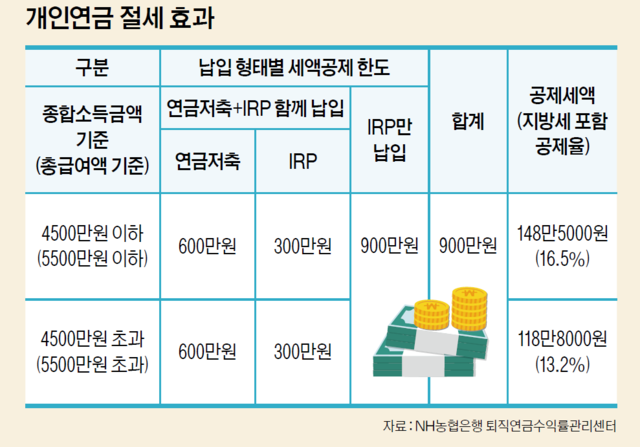
The biggest reason for subscribing to this account is undoubtedly the tax benefit received during the year-end tax settlement. Currently, the annual tax-deductible deposit limit for a pension savings account alone is up to 6 million won. If you utilize an Individual Retirement Pension (IRP) account in addition, you can increase the deduction limit to a maximum of 9 million won. Employees with a total annual income of 50 million won or less have a higher deduction rate, allowing them to receive a larger refund. The amount deposited annually is a key factor that significantly changes the size of the “13th-month salary” for office workers. For example, an employee who deposits the full 6 million won annually will receive a tax refund of at least several hundred thousand won, depending on their tax rate. Min-su, an office worker who used to worry about tax burdens, learned about this account last year. He immediately deposited up to the limit, and this year, a much larger amount than expected was deposited into his bank account during the year-end tax settlement. Feeling as if he had made money for free, he created a virtuous cycle by reinvesting that money. Tax deductions are the most direct policy where the state helps citizens prepare for retirement. Therefore, it is advantageous to carefully consider your salary level and depositing capacity to match the limit.
Pension savings offers tax deductions of up to 6 million won annually, or up to 9 million won when combined with retirement pensions, making it an essential item for office workers’ year-end tax settlements.
3. Clear Comparison of Differences Between Pension Savings and IRP
Many people confuse pension savings with the Individual Retirement Pension (IRP), but the two products have clear differences in their management methods and nature. Pension savings allows individuals to aggressively manage their funds by freely increasing the proportion of equity investments or funds. On the other hand, IRP has a legal obligation to hold at least 30% in safe assets. Therefore, if you want to actively pursue returns by increasing your stock allocation, it is best to actively utilize a pension savings fund account. The two accounts can be opened at different financial institutions, and the pensions are received as a combined amount later. Young-hee, an office worker with a very aggressive investment style, found the mandatory safe asset ratio frustrating. So, she first concentrated her funds in a pension savings fund, where she could invest 100% in risky assets. She then formulated a strategy to use the IRP as a supplementary tool to further fill the deduction limit. Adjusting the proportions of the two accounts according to your investment style is the core of wealth management. It is important to first understand your own style rather than blindly following products that others say are good.
Pension savings allows 100% investment in risky assets, whereas IRP has a significant operational difference requiring a mandatory 30% holding in safe assets.
4. The Enormous Advantage of Converting ISA Maturity Funds to Pension Savings
You can enjoy enormous additional benefits by converting funds that have reached maturity in your Individual Savings Account (ISA) to pension savings. When you transfer maturity funds to a pension account, you receive an additional tax deduction equivalent to 10% of the transferred amount. At this time, you can receive an additional deduction limit of up to 3 million won, maximizing the tax-saving effect. This is an excellent wealth management strategy that kills two birds with one stone by rolling a lump sum while saving on taxes. This is also why many asset management experts unanimously advise utilizing these two accounts in conjunction. There was a person named Cheol-su who diligently managed his ISA for three years and built a substantial lump sum of 30 million won. When it matured, after much deliberation on how to manage the money, he decided to transfer the entire amount to a pension account. As a result, he not only fully enjoyed the additional tax deduction benefits but also secured his retirement funds at once. When he told his friends about this method, they all envied him, asking why he had kept such a great tip to himself. If you study financial systems a little more deeply, many paths open up to legally save on taxes.
Converting ISA maturity funds to a pension account allows you to receive an additional tax deduction benefit of up to 3 million won.
5. Penalties to Watch Out For in Case of Early Withdrawal or Cancellation
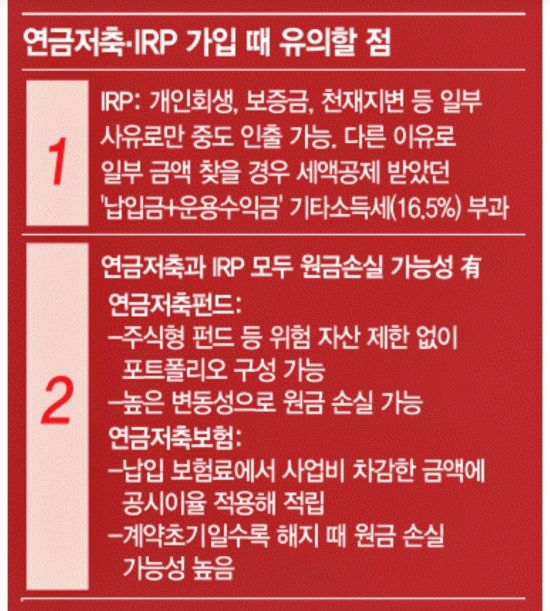
Although this is money set aside for retirement, unexpected emergencies requiring large sums of money can occur. Fortunately, this account allows for early withdrawal under specific circumstances, but you must carefully consider the tax disadvantages. Caution is needed if the reason is not one of the unavoidable circumstances defined by law, such as purchasing a house, bankruptcy, or long-term treatment for oneself. If you arbitrarily cancel due to a change of heart or an urgent need for cash, you must return the tax deduction benefits received up to that point. Furthermore, since other income tax is imposed on operating profits, it is generally best not to break the account. Ji-young, who urgently needed funds for her wedding, decided to cancel her pension account and visited the bank. Fortunately, a bank clerk kindly explained that canceling could result in a tax bomb, and she changed her mind. Instead of canceling the account, she found ways to utilize contract loans or other emergency reserves. Breaking your valuable retirement funds midway completely destroys the compound interest effect, resulting in a huge loss. You must have the mindset of managing emergency funds in a separate account and keeping this account until the end.
Since you must return the tax deduction benefits received in case of early cancellation, it is absolutely advantageous to maintain the account long-term unless it is an unavoidable situation.
6. Utilizing the Integrated Pension Portal and Prospects for Successful Retirement Preparation
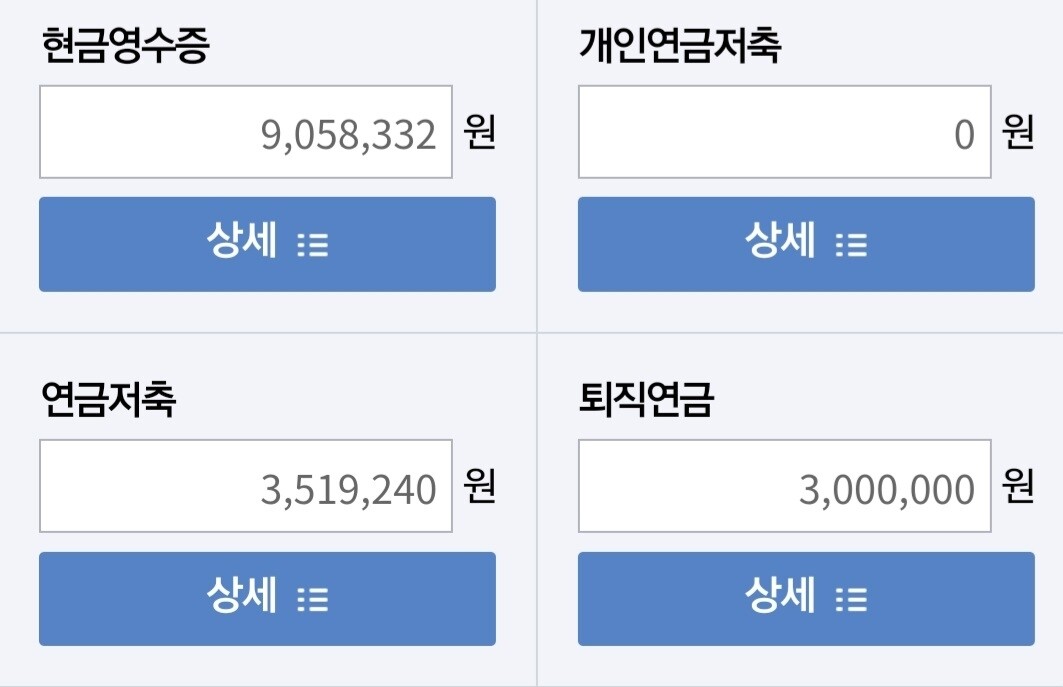
If you want to check at a glance how much of your total pension assets you have contributed so far, you can use the Integrated Pension Portal website. Any citizen of South Korea can check their estimated receipt amount for free, covering public pensions, retirement pensions, and individual pension savings. It is very important to predict your cash flow in advance through this portal as your retirement date approaches. As the aging society deepens, the importance of individual pensions for self-prepared retirement will inevitably grow. Those who pay attention and take action, even if it is a small amount each month, will be the winners of retirement. We hear the term “century-old era” very frequently now, but few people have concretely envisioned their life after retirement. Please open an account immediately today while imagining a warm pension deposit entering your account every month after retirement. If you set up automatic transfers for even small amounts and forget about them, you will eventually experience surprising asset growth. The most certain and reliable filial product for your future self is this account that you start today. Do not hesitate; open your smartphone app right now, check your account, and take the first step.
You should manage all your subscribed pensions at a glance using the Integrated Pension Portal and plan your retirement in advance to prepare for a stable old age.
Frequently Asked Questions
=