
The government has significantly extended and broadened the grace period for the actual residence requirement applied to housing transactions within Land Transaction Permit Zones, sparking considerable changes in the housing market. Homeless buyers can now postpone their move-in date until the end of 2029 when purchasing a home with existing tenants, effectively reopening the door to transactions that had been previously stalled. While some argue that this policy shift dilutes the original intent of regulations against gap investing, the market views it as a practical measure to address the dual challenges of increasing property listings and protecting tenants. In fact, the number of apartment listings in major areas, including Seoul, is rising rapidly, and the issue of guaranteeing tenants’ right to renew their contracts has entered a new phase. Much attention is now focused on whether this measure will simultaneously revitalize frozen housing transactions and stabilize the deposit-and-rent market. Let us carefully examine what practical changes this regulatory easing will bring to both essential homebuyers and multi-home owners.
=
Can Extending the Actual Residence Grace Period in Land Transaction Permit Zones Protect Both Listings and Tenants?

1. Background of the Actual Residence Grace Period in Land Transaction Permit Zones
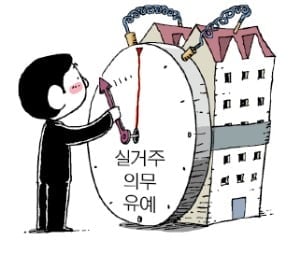
The government’s recent decision to further extend the grace period for the actual residence requirement when purchasing homes in Land Transaction Permit Zones was an inevitable choice aimed at facilitating the smooth sale of properties by multi-home owners. Although a temporary grace period was implemented in conjunction with the expiration of the surtax exemption for multi-home owners in May, side effects persisting in the field have continued to block transactions. In particular, for homes with existing tenants, a blind spot emerged where transactions failed to materialize because buyers were obligated to move in immediately, even if sellers wished to sell. To resolve these issues, the government, as a follow-up measure to the tax reform plan, significantly extended the deadline for homeless buyers to purchase homes with existing full-rent (jeonse) tenants to the end of next year. The case of Mr. Kim, a multi-home owner residing in Mapo-gu, Seoul, easily illustrates the necessity of this system. Mr. Kim attempted to sell an apartment where the tenant’s contract was still valid, but the deal fell through at the final stage due to the regulation requiring the buyer to move in immediately. Thanks to this new measure, Mr. Kim can now sell his home to a homeless buyer without evicting the tenant, offering him some relief. Thus, the government’s policy direction focuses on easing the pressure on multi-home owners facing high holding and capital gains taxes, allowing them to legally dispose of their properties. The intent is to inject vitality into a market that had fallen into a transaction cliff after the designation of permit zones and to encourage voluntary property listings.
The grace period for the actual residence requirement has been extended to help multi-home owners sell their properties smoothly and resolve the transaction cliff.
2. Easing of Capital Gains Surtax for Multi-Home Owners and Increase in Listings

This tax reform plan includes a radical provision that temporarily reduces the capital gains tax surtax for multi-home owners selling homes in designated adjustment areas. It is designed so that owners of two or more homes per household can benefit from a reduced tax rate instead of the heavy surtax rates if they dispose of their properties within a specified period. For example, an owner of three or more homes selling a property next year will be subject to a significantly lower surtax rate, greatly reducing their tax burden. Coupled with the extension of the actual residence grace period, this tax benefit has led to a noticeable increase in the number of apartment listings, particularly in the Seoul market. This market reaction is clearly proven by the numbers from real estate statistical agencies. The total number of apartment listings in Seoul surged by more than 15% in less than a month compared to the time the tax reform plan was announced. Mr. Lee, a multi-home owner in Seocho-gu, hurriedly signed a home sale contract out of anxiety that missing this opportunity would result in a larger tax bomb. As tax-saving listings pile up in the market, buyers are also enjoying the positive effect of having a wider range of choices. Experts predict that properties from multi-home owners seeking to avoid holding and capital gains tax pressures will continue to be steadily supplied to the market.
The combination of eased capital gains surtax for multi-home owners and the actual residence grace period has led to a significant increase in apartment listings in the Seoul area.
3. Recognition of Tenant Contract Renewals and Housing Stability

When the actual residence grace period was first introduced in May, it was only allowed until the end of the tenant’s initial contract period, leading to continuous criticism that tenant protection was insufficient. This was because if a home was sold and the new owner claimed the right to actual residence, tenants could be forced to move out without being able to exercise their legally guaranteed right to renew their contract. However, under the newly revised policy, homeless buyers can now receive the actual residence grace period until the end of the tenant’s renewal contract period, significantly strengthening tenant housing stability. This is a notable aspect that shows careful consideration to minimize the harm suffered by tenants, who are socially vulnerable parties in the transaction process. Mr. Park, an office worker living on a full-rent (jeonse) basis in Nowon-gu, lost sleep over moving concerns after recently hearing that his landlord had put the house up for sale. Fortunately, thanks to the changed regulations, he was able to feel relieved knowing that even if a new buyer comes in, he can renew his existing contract and reside stably until 2029. Thus, the government’s current measure serves as a practical shield that prevents indiscriminate speculation while alleviating the pain of tenants who might otherwise be suddenly pushed out of their homes. However, to have the renewal contract recognized, the lease contract must be signed before the buyer applies for the actual residence grace period, so it is necessary to carefully check the detailed schedule.
Tenant housing stability has been significantly strengthened as the actual residence grace period is now recognized until the end of the tenant’s renewal contract period.
4. Divided Market Views on the Actual Residence Grace Period System

Opinions from the real estate market and experts are sharply divided regarding the extension of the actual residence grace period in Land Transaction Permit Zones and the inclusion of renewal contracts. Supporters praise it as a model compromise that breathes life into the frozen housing transaction market, encourages voluntary listings from multi-home owners, and protects tenants’ housing rights. On the other hand, critics argue that the fundamental purpose of the Land Transaction Permit System, which was introduced to block speculative demand, has been completely diluted by the government’s inconsistent policies. Concerns remain that the system is being distorted in a direction that effectively allows gap investing, potentially sending wrong signals to the market. A representative of a real estate agency in Songpa-gu hints that the atmosphere in the field is more complex than expected. While buyers welcome the ability to purchase homes with existing full-rent tenants, reducing their initial capital burden, there are signs that investment demand is beginning to rise in some areas, exploiting this loophole. It is difficult to avoid criticism that the consistency of the policy is shaken as the government repeatedly patches and supplements regulations according to market conditions. Nevertheless, from the government’s perspective of needing to protect both essential homebuyers and tenants, this measure is functioning as a realistic compromise. Continuous monitoring is required to see what ripples these policy changes will cause in actual market prices.
Market evaluations are divided between criticism that the purpose of the Land Transaction Permit System is being diluted and the practical need to activate transactions.
5. Practical Response Strategies for Buyers and Sellers

To wisely utilize this extension of the actual residence grace period in Land Transaction Permit Zones, both buyers and sellers must formulate meticulous strategies tailored to their respective situations. For multi-home owners or apartment rental business operators, it is wise to plan their sales to minimize tax burdens by strictly adhering to the tax benefit deadline extending to the end of next year. Rather than stubbornly sticking to high prices, they need the decisiveness to identify the timing that maximizes tax-saving effects and quickly list their properties. Conversely, homeless essential homebuyers need a strategy to flexibly plan their finances by taking advantage of this opportunity to purchase while assuming the existing full-rent (jeonse) obligation. Mr. Choi, a homeless buyer looking to purchase a home in Gangnam-gu, lacked the funds for an immediate move-in but was able to contract for his desired apartment on the condition of assuming the full-rent deposit thanks to this grace period extension. Homeless buyers with limited financial resources, like Mr. Choi, must carefully consider the tenant’s remaining contract period and renewal eligibility to evaluate the property’s value. In particular, failing to accurately understand the grace period application deadline and detailed requirements can lead to difficulties in the permit approval process, so it is important to habitually check the guidelines of the local government. Thorough preparation is the only shortcut to achieving both home ownership and asset growth in a rapidly changing regulatory environment.
Buyers and sellers must carefully analyze tax benefit deadlines and lease contract schedules to formulate tailored response strategies.
6. Future Outlook and Recommendations for the Housing Market

The future housing market is expected to experience significant volatility depending on whether the government’s tax reform plan passes the National Assembly and the trends in actual residence grace period applications. If the system settles in a direction that further strengthens the tax burden on high-value homes or non-resident single-home owners, urgent tax-saving listings are likely to continue to appear in the market for a while. Amid this trend, homeless essential homebuyers must develop the foresight to avoid excessive borrowing and select high-quality properties that match their asset size. The government must also establish a long-term and predictable real estate policy direction beyond short-term market stability to reduce confusion among market participants. Readers dreaming of successfully owning a home should not view the current market changes merely as regulatory easing but interpret them as a turning point in a massive trend. Those living as tenants or standing at the crossroads of needing to sell their homes should actively utilize this actual residence grace period extension to reorganize their asset plans. The real estate market always offers more opportunities to those who prepare thoroughly. By gathering accurate information one step ahead of others and responding flexibly, you can protect your assets steadily amidst upcoming market changes.
Since the future market will move according to the release of tax-saving listings and policy volatility, thorough information analysis and preparation are essential.
Frequently Asked Questions
=