Personal pension savings is the most reliable and effective tax-saving tool, offering tax deductions of up to 6 million won annually during year-end tax settlement. Mr. Kim, a corporate employee, only realized the value of his pension savings, which he had been funding monthly like a regular savings account, after checking his refund amount during last year’s year-end tax settlement. Beyond simply preparing for retirement, it saves on taxes every year, making it a necessity rather than an option for corporate employees. However, when actually starting, many people feel overwhelmed by questions such as how much to deposit monthly and which products to choose. In this article, we will thoroughly examine the most advantageous ways to utilize personal pension savings and specific contribution strategies based on current 2026 standards. We will carefully explain the basic concepts step by step so that even beginners can easily follow along, so please read to the end.
=
2026 Personal Pension Savings: Tax Deduction Limits and Enrollment Guide
1. What is Personal Pension Savings?
Personal pension savings is a representative voluntary savings product encouraged by the government to prevent poverty in old age. Since the National Pension alone is difficult to fully support life after retirement, the government is pushing strong tax benefits to allow individuals to prepare on their own. It is structured so that if you deposit a fixed amount monthly, you can receive it in pension form in installments after reaching the retirement age of 55. Unlike in the past, nowadays, enrollment is very active not only in the form of bank savings but also in forms that allow investment in various exchange-traded funds (ETFs) or bonds through securities firms. It is considered a basic formula for asset management because you can grow your assets while getting a tax refund.
Many people are confused about the difference between the National Pension and personal pensions, but there is a significant difference in their nature and operation. The National Pension is a public pension that the state mandates, whereas a personal pension is a private pension that is enrolled and managed according to one’s own choice. Therefore, the amount received at retirement depends entirely on how diligently you have deposited and managed funds. Mr. Park, a colleague, boasts that he has established a solid foundation for his retirement assets by consistently depositing 200,000 won monthly since he was a beginner in the workforce. It may feel like a distant future event right now, but the sense of security this pension account brings grows beyond imagination as time passes.
Personal pension savings is the most representative voluntary pension product that allows you to prepare for old age on your own while receiving government tax benefits.
2. Key Summary of 2026 Tax Deduction Limits
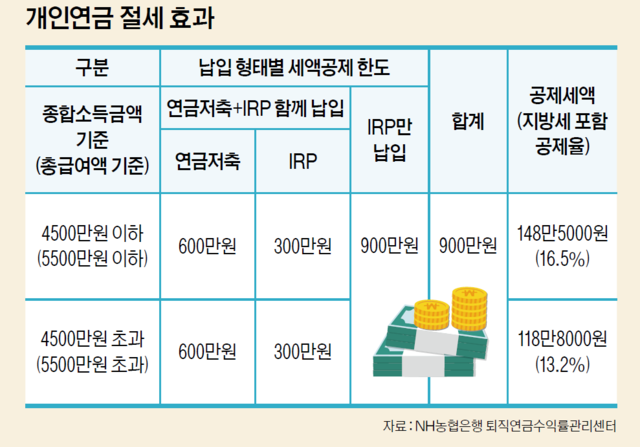
This year, the standalone tax deduction limit for personal pension savings is set at a maximum of 6 million won, attracting significant attention from corporate employees. If you use an Individual Retirement Pension (IRP) in addition to this, you can enjoy tax deduction benefits on the total pension account amount of up to 9 million won. Employees with a total annual income of 55 million won or less can receive a high deduction rate of 16.5%, allowing them to get back up to 1,485,000 won. Even if the total annual income exceeds 55 million won, a refund of up to 1,188,000 won can be secured with a 13.2% deduction rate. For corporate employees who are sensitive to even 100,000 won, a refund of this scale is a huge joy, almost like a monthly bonus.
Looking around, there are surprisingly many people who rush to fill the limit with a lump sum only when the year-end tax settlement period arrives. However, to maximize tax deduction benefits, it is much more advantageous to make regular automatic transfers of a fixed amount monthly. For example, to fully utilize the 6 million won pension savings limit, it is reassuring to set up an automatic transfer of exactly 500,000 won monthly from your account. You need to treat it as an expense item to be set aside first when receiving your salary, rather than casually filling it with leftover money. As the year-end approaches, you will no longer worry about your account balance and sigh; instead, you will enjoy the pleasure of anticipating the refund.
As of 2026, you can receive tax deduction benefits on a standalone pension savings of 6 million won and a total pension account of up to 9 million won.
3. How Much to Deposit Monthly: Monthly Contribution Strategy
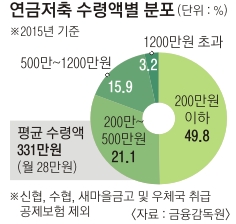
When looking into personal pension savings, you will eventually face the dilemma of how much is appropriate to save monthly. The answer is to carefully consider your current income level and living expense structure, and decide within a manageable range. If you force yourself to fill the 500,000 won monthly limit by drastically cutting living expenses, it may lead to the worst-case scenario of canceling the account midway. The moment you cancel, you must return all the tax benefits received so far and are also subject to miscellaneous income tax, so it is absolutely forbidden. Therefore, it is much wiser for beginners in the workforce to start lightly with a manageable amount, such as 100,000 or 200,000 won monthly.
For middle-aged and older individuals whose income is gradually increasing, or corporate employees in higher tax bracket ranges, it is best to set the amount to match the limit from the start. Ms. Lee, who works in a dual-income household, splits the deposits into the pension account with her husband monthly to maximize the year-end tax settlement refund. They actively utilize a method of calculating the remaining limit every time their performance bonus comes in and filling the shortfall in a lump sum. The wisdom to flexibly adjust contribution strategies according to one’s cash flow cycle determines the success or failure of long-term investment. Rather than blindly following others, you should calculate a realistic amount tailored to your financial capacity, presence of children, and lifestyle.
Instead of an excessive amount, you should determine a realistic amount that you can consistently deposit monthly, tailored to your income and spending capacity.
4. Which Financial Institution and Product to Choose
Financial institutions where you can enroll in pension savings are broadly divided into bank trusts, insurance company life and general insurance, and securities firm funds. In the past, there was a clear tendency to prefer banks or insurance companies due to principal guarantee, but the atmosphere has changed completely recently. Securities firm pension savings accounts, which allow autonomous investment to beat inflation and grow assets in the long term, have become the mainstream. Using a securities firm account allows you to directly invest in various domestic and international ETFs or bonds to maximize the effect of compound interest.
Mr. Choi, a corporate employee, has been collecting stable dividend stocks and index-tracking products since switching to a securities firm account a few years ago. This was due to the sense of crisis that if he had enrolled relying only on bank deposit interest rates, he might become poor in retirement as he could not keep up with inflation. In fact, experts also recommend building a portfolio centered on high-quality assets suitable for a long-term investment tendency within the pension account. You can carefully compare fee conditions and event benefits through securities firm apps and choose the one most convenient for you. The secret to success is to steadily ride on assets that trend upward without being shaken by short-term stock market volatility.
If you want long-term asset growth, a securities firm pension savings account that allows diverse investments is more advantageous than principal-guaranteed products.
5. Utilizing the Integrated Pension Portal and Asset Inquiry Methods
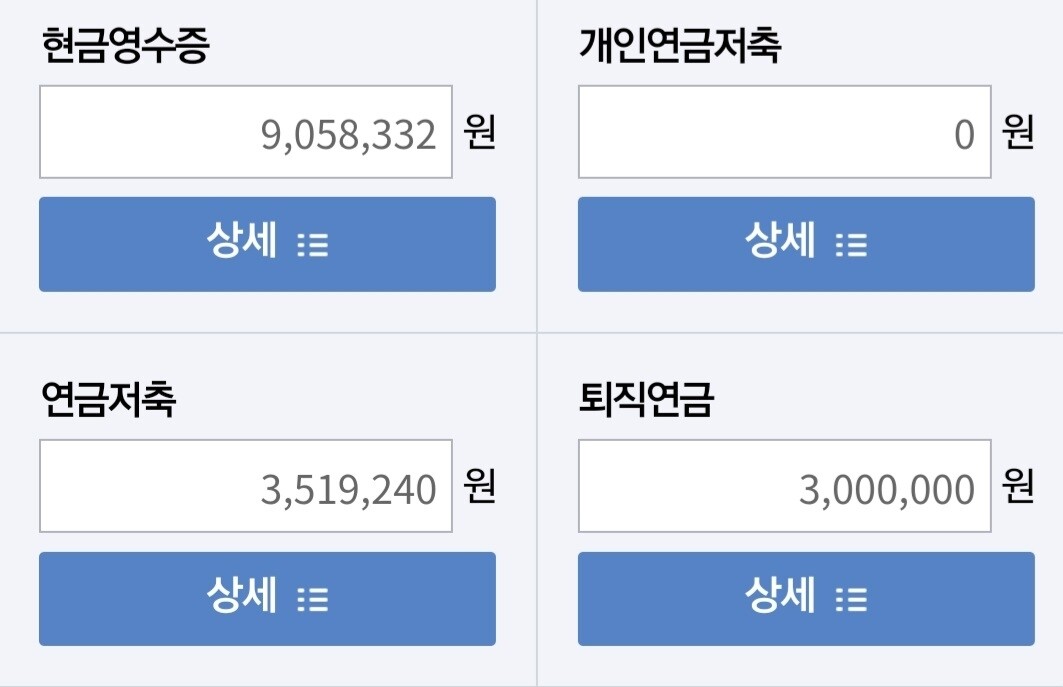
If you want to check all the pension information you have enrolled in at a glance, you should actively utilize the Integrated Pension Portal operated by the Financial Supervisory Service. It is very convenient because you can inquire for free in one place about the National Pension, retirement pension, and even personal pension savings. Upon first use, after a simple identity verification and consent procedure, details of all pension assets nationwide are linked within about 3 business days. For those who have changed jobs multiple times during their working life, there is also the fun of finding forgotten retirement pensions or small pension savings.
Mrs. Jeong, a housewife, recently logged into the Integrated Pension Portal and let out a loud cheer upon discovering a pension account she had left behind at a previous job. After visually confirming the scattered assets, it became possible to make specific calculations on how much more is needed until retirement. The habit of regularly checking your pension asset status every year is the most reliable defense against retirement bankruptcy. You can easily check it from home using a computer or smartphone without the need to carry complex documents and visit multiple banks or securities firms in person. It is strongly recommended that busy modern people take time on the weekend to map out their hidden pension assets.
Using the Integrated Pension Portal, you can easily and conveniently inquire about the National Pension, retirement pension, and personal pension without fees.
6. Risks of Early Cancellation and Wise Prospects for Old Age Preparation
The part that requires the most vigilance while maintaining personal pension savings for a long time is the temptation of early cancellation that arises when urgent funds are needed. Life inevitably involves sudden large expenses, but breaking the pension savings is like betraying your future self. If you absolutely need money, you should use methods such as taking a collateral loan within the pension account or withdrawing only the amount that did not receive tax deductions, rather than canceling. The government is also preparing institutional supplements reflecting the difficulties of such enrollees, so it is wise to request a consultation at the counter before unconditionally canceling.
In the upcoming aging society, it is virtually impossible to live a comfortable old age with only the pension guaranteed by the state. Those who plant seed money in pension savings with the mindset of saving a few cups of coffee monthly from now on will be the true winners after retirement. Please actively utilize the strengthened tax benefits and diverse investment products currently available in 2026 to prepare for the future one step ahead of others. Never forget that the difference in small habits completely changes the account balance 10 or 20 years later. Show the execution to turn on your smartphone right now and open a pension account suitable for you or check your monthly contribution amount.
Avoid early cancellation as it brings significant losses, and continue long-term old age preparation by utilizing various systems.
Frequently Asked Questions
=