Today’s stock market is creating a day where investors cannot let their guard down due to changes in various external variables and economic indicators. It is a time when the mindset of choosing stocks you would be willing to hold even if the market closed tomorrow is more essential than ever. Rather than feeling anxious about news of falling indices on the screen, we must cultivate a perspective that looks at the intrinsic value of companies. We must remember that even if bad news breaks in the stock market, the essence of owning shares in a good company does not change. In this article, we will examine the various factors currently shaking the stock market and take a detailed look at specific response strategies we should adopt. Let us build a solid investment criterion together that will not be shaken by the waves of the market.
=
Investment Strategies for Surviving Today’s Stock Market Volatility and the Core of Value Investing
1. Learning Value Investing from the Oracle of Omaha
The process by which Warren Buffett built his massive conglomerate offers us many lessons today. He has repeatedly emphasized focusing solely on the intrinsic value of companies, regardless of how the market changes. Our habit of checking our stock accounts daily via smartphone apps and reacting emotionally to short-term fluctuations is far from Buffett’s philosophy. We must ask ourselves if we could comfortably hold our current stocks if the stock market were to close for the next five years.
Stories of people around us making big money through short-term trading may be tempting, but this is a method that is difficult to sustain over the long term. Buying stocks of high-quality companies ultimately means becoming a partner in that business. We must avoid the mistake of being shaken by short-term price fluctuations and selling our shares at a loss. True investment is a long-term journey where we share in the fruits of a company’s growth as time passes. Therefore, we must develop the habit of carefully examining a company’s financial condition and business structure, rather than being swept away by today’s volatility.
It is important to maintain an attitude of investing in the intrinsic value of companies without being shaken by short-term stock price fluctuations.
2. Global Market Trends and the Pressure of Interest Rates
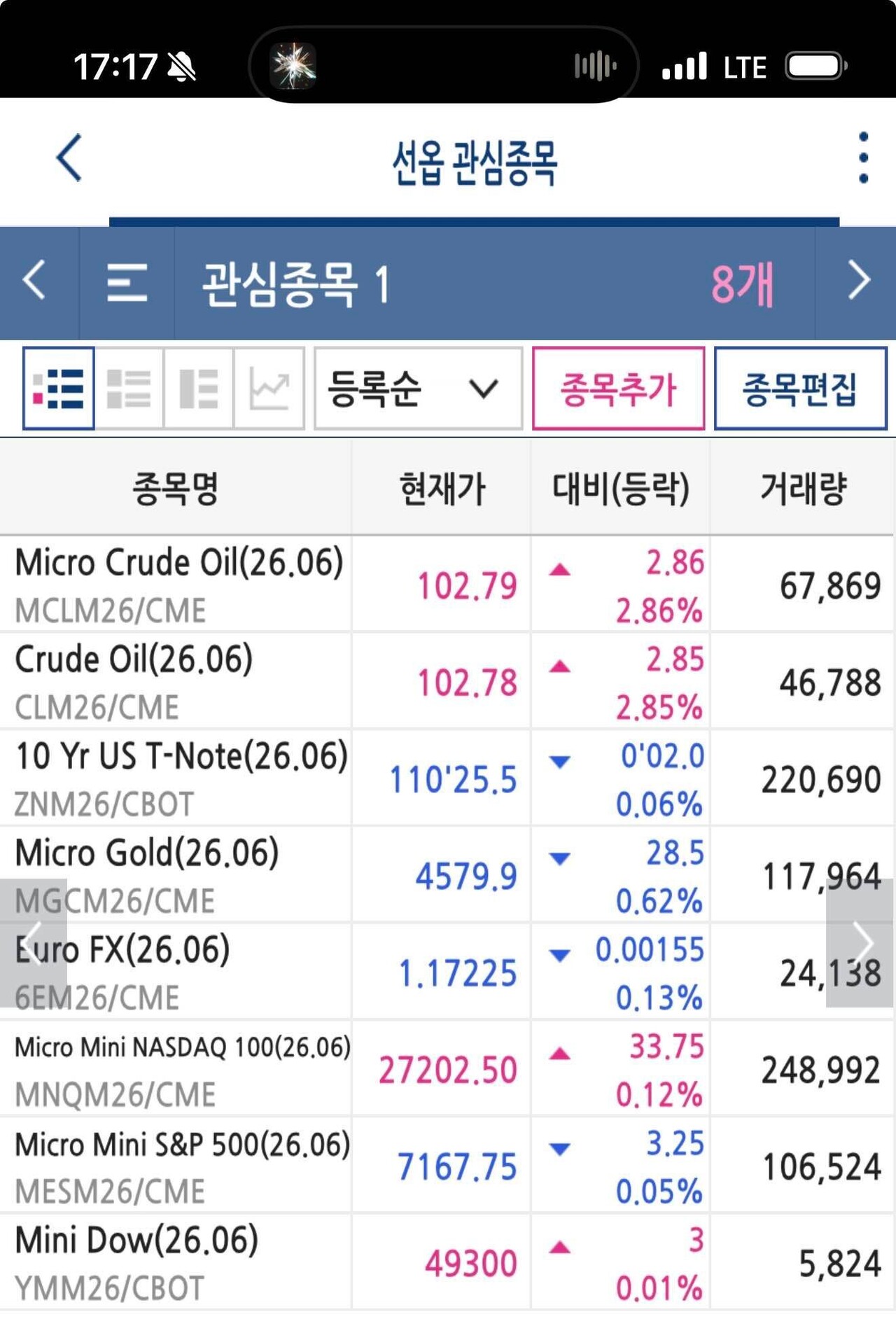
With U.S. Treasury yields remaining at high levels, a significant burden is being placed on investor sentiment in the stock market. A question is spreading throughout the market: if safe assets like bonds guarantee high returns, why must we stay in the risky stock market? This interest rate environment often brings particularly harsh trials for investors focused on growth stocks.
Furthermore, movements in international oil prices and changes in the geopolitical situation in the Middle East compound to increase market uncertainty. While investor sentiment may improve temporarily as oil prices fall, it is still too early to feel at ease. Experts unanimously warn that the leading sectors in the future will vary greatly depending on the direction of oil prices and interest rates. In times like these, we must not take macroeconomic indicators lightly and should monitor trends in the bond and commodity markets as well.
High Treasury yields and oil price volatility are key variables that determine investor sentiment in the stock market.
3. Investing in Non-Listed Companies: A Rising New Investment Destination
One of the new changes in the recent stock market is that a path has opened for individual investors to access non-listed growth companies. An area that was once the exclusive domain of a few institutions or the wealthy is now becoming more accessible to the general public. Due to the characteristic that prices are not formed in real-time every day like listed stocks, unique valuation regulations may apply.
These new financial products offer unique opportunities for investors who want to diversify their portfolios. However, caution is needed as overlooking the lack of liquidity inherent in non-listed assets can lead to trouble. We must carefully consider when our invested funds can be converted to cash and whether the company’s growth potential is translating into actual results. We need the wisdom to quickly read the flow of regulatory changes and review new investment means one step ahead of others.
While a path has opened for individuals to invest in non-listed companies, liquidity and risks must be thoroughly reviewed.
4. The Semiconductor Boom and Approaching Future Industry Trends
The semiconductor industry still holds the most important key to determining the direction of the stock market. Experts predict that the semiconductor boom will continue for several years and that the status of memory semiconductors will change completely from the past. Along with the development of artificial intelligence technology, demand for high-performance memory semiconductors is increasing explosively.
Even investors who have suffered greatly in the stock market in the past can seize an opportunity for redemption if they accurately read the changes in the approaching industries. We need the insight to find companies located at the core of the supply chain, going beyond simply following famous stocks. To lower the probability of failure, we must discover promising industries with a long-term perspective looking ahead to 2027 and 2028. Finding the point where the direction of technological evolution aligns with a company’s performance is the shortcut to successful investing.
The semiconductor boom in the AI era provides new investment opportunities centered on memory semiconductors.
5. The Correlation Between Gold Prices and the Stock Market
Whenever the stock market shows unstable fluctuations, gold, a safe asset, invariably draws attention. When a cold wind blows through the stock market and bad news pours in, large amounts of capital flow into the gold market, causing gold prices to soar. In fact, even as the weekend approaches, the price of one won of gold remains at a high level, attracting investor interest.
Stocks and gold form a relationship between representative risky and safe assets, tending to move in opposite directions. If you want to lower the volatility of your portfolio, it is wise to mix in some safe assets like gold rather than investing solely in stocks. An asset allocation strategy serves as an excellent shield to prevent your account from being wiped out when a rough crash occurs. Instead of being seized by market fear and selling everything, we should use this as an opportunity to solidify the composition of our assets.
A strategy of diversifying the portfolio into safe assets like gold is essential when the stock market is unstable.
6. Changes in Capital Market Systems After the Chuseok Holiday
After a long holiday, our stock market will see many changes along with the reform of capital market systems. Various systems to help investor convenience, such as the extension of after-hours trading by the Korea Exchange, are being introduced one after another. These institutional changes increase trading autonomy but also require more agile responses from investors.
If we fail to adapt to the new environment, we may unknowingly maintain disadvantageous trading habits, leading to increased losses. We must calmly digest the feedback from global stock markets accumulated during the holiday and look at the market coldly as soon as trading resumes. To survive in the market environment that lies ahead, we need the effort to continuously study and check our investment methods. Ultimately, the person who survives long in the stock market is not the one who gets information faster than others, but the one who sticks to principles.
New trading strategies must be established in line with capital market system reforms, such as the extension of after-hours trading.
Frequently Asked Questions
=