Among exchange-traded products (ETPs) related to crude oil and natural gas, a staggering nine out of ten are structured as leveraged or inverse products, necessitating extreme caution from investors. According to recent market trend reports released by financial regulators, while the overall size of the commodity ETP market has increased slightly, the concentration in high-risk products has reached a critical level. In particular, over 93% of natural gas products and more than 88% of crude oil products adopt high-risk derivative structures. Unlike common stock investments, these derivative products carry the trap of fatal compounding effects as prices fluctuate. Therefore, approaching them with the complacent assumption that prices will simply return to their original levels can result in the rapid loss of a significant portion of the principal. This article examines the current state of the commodity derivative market and specifically explores why these products pose such risks to general investors.
=
9 Out of 10 Crude Oil and Natural Gas ETPs Are Leveraged or Inverse: Investment Caution Required
1. The Dangerous Concentration in Commodity Derivatives
As price volatility in the international commodity market has intensified this year, public interest in related financial products has also risen. However, a closer look inside the market reveals just how severe the dangerous concentration has become. The share of leveraged and inverse products in the overall commodity ETP market has already far exceeded the average of the general stock market. While the proportion of such products in the broader stock market remains in the single digits, the commodity sector exhibits a distorted structure reaching several dozen percent. The situation is even more shocking when limited to crude oil and natural gas stocks. If you pick ten products related to these two key energy resources, more than nine are high-risk derivative products that encourage two-way betting. Investors, driven by the sweet expectation of large profits, easily overlook the structural risks of these products. However, if the direction of the underlying asset deviates even slightly, leveraged products inflict the pain of falling twice as fast during downturns.
More than nine out of ten crude oil and natural gas ETPs are high-risk products structured as leveraged or inverse instruments.
2. The Terrifying Trap of Negative Compounding
The phenomenon to be most wary of when investing in leveraged and inverse products is that the movement of the underlying asset does not accurately match the return rate. For example, assume that the price of a certain crude oil rises today and returns to its original price tomorrow. Although the underlying asset itself has returned to its starting point, a leveraged product tracking it at two times will see its principal eroded because daily fluctuations are calculated on a compounded basis. This phenomenon is professionally known as the negative compounding effect, and it becomes the main culprit causing account balances to melt away the longer one invests. In a sideways market where the market fails to establish a direction and swings violently up and down, this asset value erosion accelerates further. Mr. Kim, an office worker, suffered a major loss after putting his retirement fund into a leveraged product based on the belief that oil prices would eventually rebound. He witnessed the bizarre scene where prices had gradually returned to their original levels, yet his account balance had been cut in half. Unless one is a professional seeking short-term profits through day trading, it is virtually impossible for an individual investor to consistently avoid this compounding trap.
When the underlying asset fluctuates up and down, the negative compounding effect significantly reduces actual returns and erodes the principal.
3. Hidden Loss Risks from Widening Premiums/Discounts
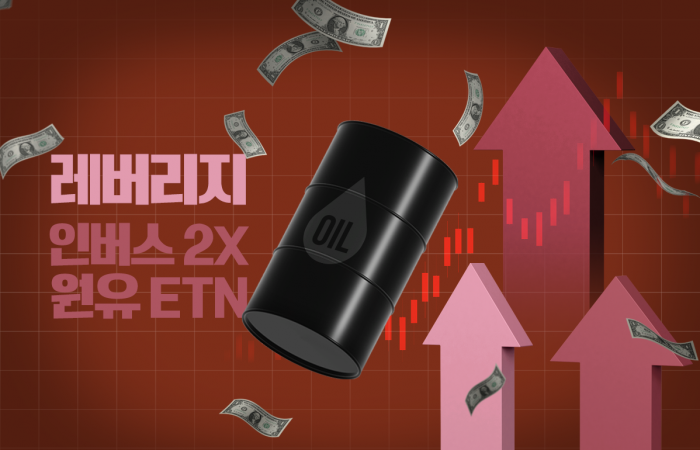
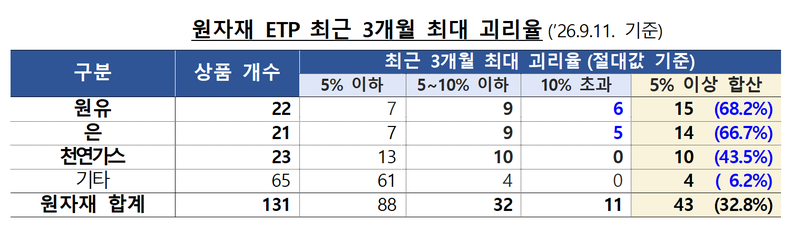
Another crucial indicator that must be checked when trading ETPs is the premium/discount rate, which represents the difference between the market price and the actual asset value. Recent market surveys have detected abnormal signs where the error rate exceeds 0.5% in a significant number of commodity products. This overvaluation phenomenon is particularly prominent in products related to crude oil and silver, demanding investors’ attention. An unreasonably large positive premium/discount rate means that the market price is trading at a much higher level than the actual value. Buying products at bubble-inflated prices can lead to substantial losses when the market price eventually converges to its inherent value. In reality, many investors have experienced the destruction of their accounts without understanding the cause after impulsively buying based solely on chart trends. Financial regulators are taking this widening premium/discount phenomenon seriously and have warned that they will strengthen monitoring. Therefore, it is essential to carefully verify whether the premium/discount rate of a specific product remains within a normal range before pressing the buy button.
When the market price is formed higher than the actual asset value (widening premium), significant losses occur as the price returns to its normal level.
4. The Fear of Extreme Outcomes: Delisting
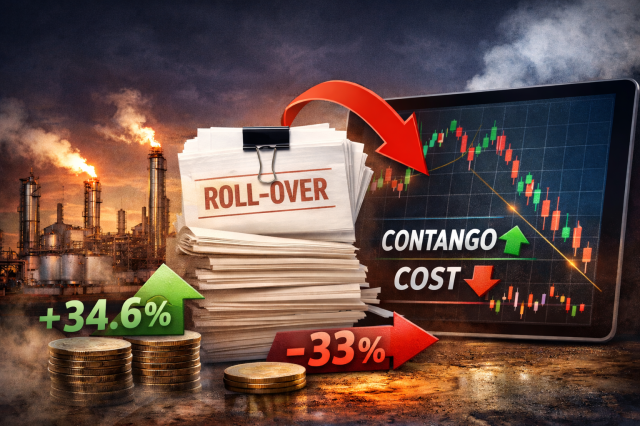
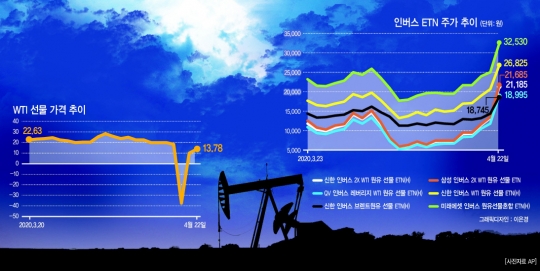
The most frightening scenario in the commodity derivative market is the sudden delisting of a held product. Over the past few years, a significant number of issued exchange-traded notes (ETNs) have been designed to be automatically liquidated if their price falls below a certain benchmark. For example, if a product’s price plunges below 1,000 KRW, early liquidation procedures are initiated immediately, regardless of the investor’s will. One cannot be safe just because a product was issued long ago; if the price becomes too low, it is often delisted due to poor management. The commodity market is an extreme environment where prices can crash by several dozen percent overnight due to geopolitical crises or supply chain shocks. In such a situation, holding leveraged or inverse products can lead to the tragedy of the price hitting rock bottom and instantly breaking the 1,000 KRW line. Once delisting is decided, investors face the devastating result of losing any chance of recovery, receiving only the settlement of the remaining residual assets. It is a foolish action to close one’s eyes to this extreme risk of losing the entire principal, driven solely by the temptation of high returns.
There is a risk of automatic liquidation or delisting if the price falls below the benchmark, potentially resulting in the loss of the entire principal.
5. Intensive Regulatory Scrutiny and Expanded Consumer Warnings
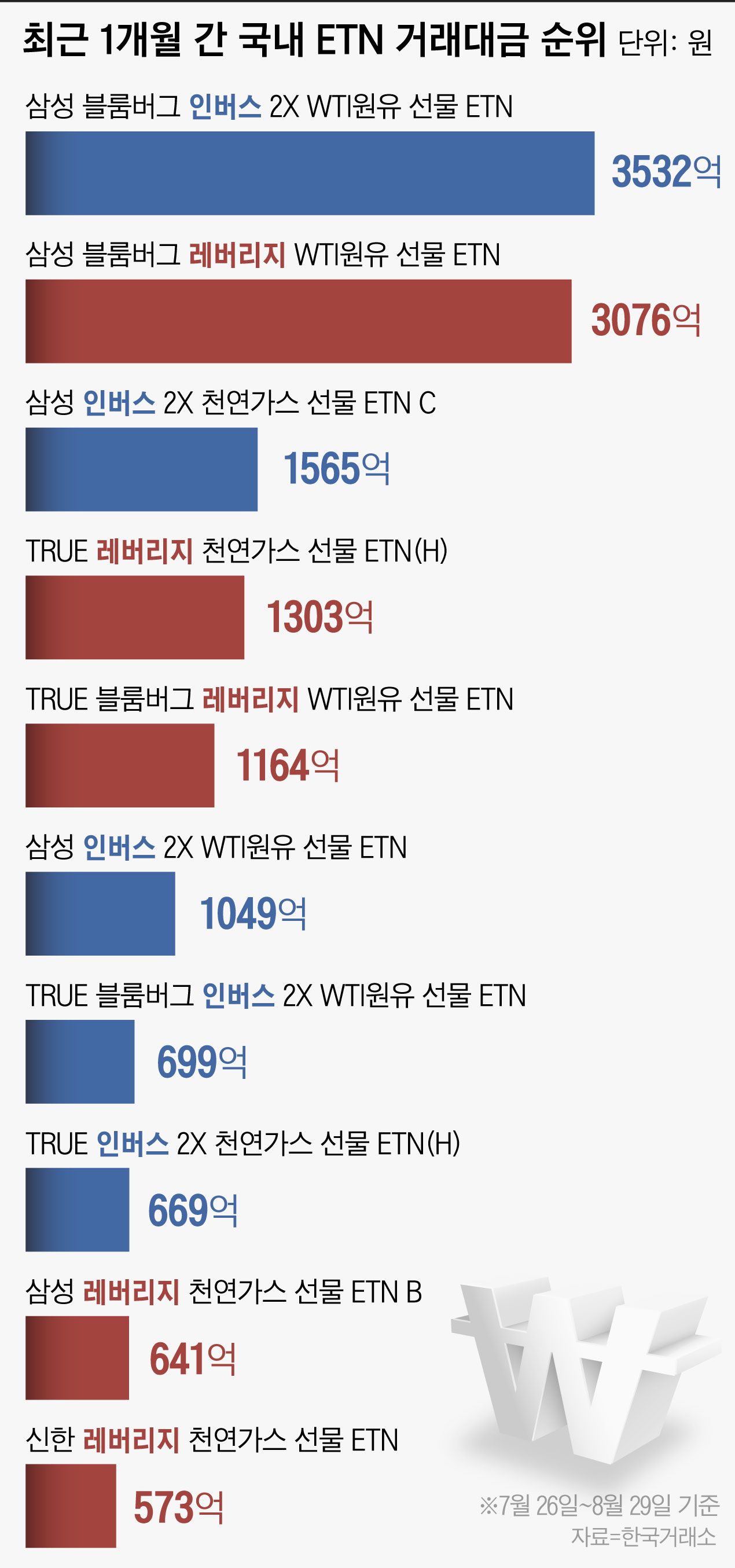
As the situation has reached this point, relevant agencies such as the Financial Supervisory Service (FSS) have stopped standing by and have taken decisive action. The authorities are monitoring in real time for surges in trading volume and abnormal premium/discount rates, focusing on high-risk commodity-related products. If commodity market volatility exceeds limits due to international political instability and signs of widespread investor damage emerge, consumer warnings will be issued immediately. These measures go beyond simple warnings, pressuring securities firms to restrict trading or strengthen cautionary notices for such products. It is a defensive measure to prevent the painful memories of countless individual investors who suffered from indiscriminate derivative investments in the past from repeating itself. This government movement serves as the last safety device to protect the market when it overheats. Investors must not ignore regulatory warnings and should coldly assess how risky their current portfolios are. They must remember that blindly jumping in based solely on sweet recommendations from experts can make them the target of risks that the state itself is warning about.
Financial regulators are intensively inspecting abnormal signs in high-risk derivative products and plan to issue consumer warnings if damage spreads.
6. Wise Commodity Investment Strategies and Future Outlook
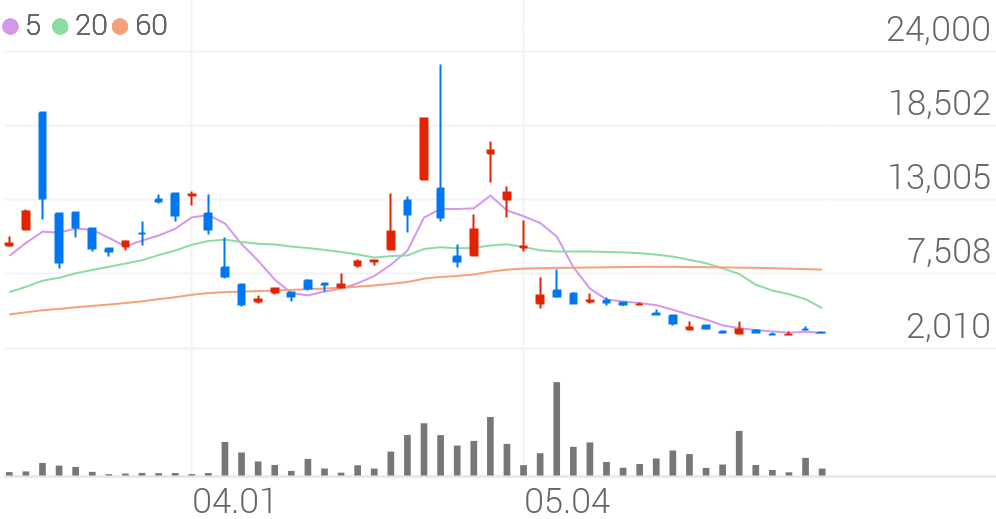
Going forward, the international commodity market is likely to continue an unpredictable rollercoaster trend due to geopolitical conflicts and supply chain instability. The more uncertainty dominates, the more one must face the true nature of leveraged and inverse products hidden behind flashy return rates. It is wise to abandon the mentality of seeking a windfall in a short period and restructure the portfolio based on safe underlying assets that match one’s risk tolerance. If one must invest in crude oil or natural gas, considering standard products or physical asset-linked methods that minimize the damage from compounding effects is advisable. Being swayed by rumors or sensational success stories on internet broadcasts and jumping into excessive debt investing or day trading is a direct path to asset destruction. One must remember that investing is like a marathon; once one takes a major fall, it takes enormous time and effort to recover. At this very moment, prioritizing account safety, practicing thorough diversification, and maintaining cold risk management are more essential than ever.
To survive in a volatile market, one must stay away from high-risk derivative products and establish a long-term investment strategy centered on safe underlying assets.
Frequently Asked Questions
=