
Scott Bessent, the US Secretary of the Treasury, held a phone call with Japan’s Finance Minister Satsuki Katayama on the 25th, clearly stating that a stronger yen reflecting Japan’s solid economic fundamentals is desirable. This statement highlights the US government’s strong interest in the recent trend of the yen weakening as it approaches the 160-yen mark. In fact, the yen, which had rapidly recovered from around 164 yen to the 155-yen level following a joint currency intervention by both countries at the end of last July, has since shown a downward trend. Attention is focused on the background of the top financial officials of the US and Japan communicating closely to stabilize the market in such a volatile currency market. In this article, we will examine in detail the economic significance of Secretary Bessent’s remarks and the impact that the coordinated currency policy between the US and Japan will have on the market going forward. You, our readers, have likely felt the impact of currency fluctuations on your daily economy, so let’s explore together what changes this news might bring.
=
US Treasury Secretary Says Stronger Yen Reflecting Japan’s Solid Fundamentals Is Desirable

1. Phone Call Between Secretary Bessent and Finance Minister Katayama
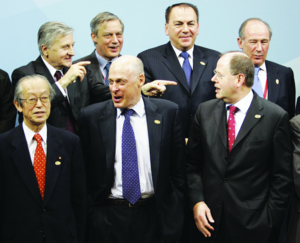
US Treasury Secretary Scott Bessent personally disclosed via his social media that he had a productive conversation with Japan’s Finance Minister Satsuki Katayama. The two agreed that a stronger yen properly reflecting Japan’s robust economic fundamentals is highly desirable at this point. This emphasized that currency value should be formed based on the actual strength of the national economy, rather than artificially adjusting exchange rate figures alone. They also agreed that maintaining close communication and coordination between the two countries is important to prevent excessive volatility in the foreign exchange market. Foreign exchange market participants are on high alert, interpreting these remarks from the two senior officials as a signal suggesting the possibility of future market intervention.
This call is significant as it follows the discussions held earlier in the week between US President Donald Trump and Japanese Prime Minister Sanae Takaichi. The fact that the finance chiefs immediately followed up with coordination after the top leaders demonstrated the solid cooperative relationship between the two nations once again. While travelers who frequently visit Japan or consumers who enjoy direct shopping may have felt it was advantageous to exchange currency when the yen was cheap, exchange rate stability is far more important from the perspective of the national economy. If the exchange rate tilts too much in one direction, it can worsen the profitability of import and export companies and cause significant turmoil in the overall macroeconomy. Therefore, the US Treasury Secretary’s remarks are interpreted as a strong expression of policy will to induce the exchange rate to reflect the actual value of the Japanese economy.
US Treasury Secretary Bessent and Japanese Finance Minister Katayama held a call and agreed that a stronger yen reflecting Japan’s solid fundamentals is desirable.
2. Follow-up Measures to the Trump-Takaichi Summit
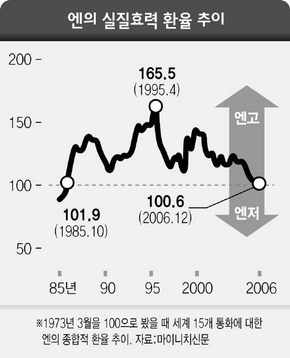
It is widely analyzed that Secretary Bessent’s remarks were made abruptly as a continuation of the US-Japan summit held a few days ago. On the 22nd, US President Donald Trump clearly expressed concern about the recent phenomenon of the weakening yen during his summit with Japanese Prime Minister Sanae Takaichi. After the Japanese cabinet meeting, Finance Minister Katayama directly informed the media of this fact, clearly revealing the US leader’s intentions. Since a US President directly expressing concern over the weakening of another country’s currency has a significant impact on the exchange rate market, market insiders are inevitably on edge.
In fact, in the foreign exchange market, if the value of a specific currency drops sharply, concerns grow that trade imbalances will worsen and domestic industries may suffer. From the US perspective as well, excessive dollar strength or the excessive weakness of a partner country’s currency acts as a factor reducing the competitiveness of its own export companies. Just as housewives worry about grocery prices and watch exchange rate trends, leaders guiding the national economy are closely monitoring the ripple effects of subtle exchange rate changes. As discussions between heads of state led to specific coordinated statements from the practical finance lines, the foreign exchange market faced strong policy pressure. This high-level communication is likely to lead to actual market intervention or policy changes, going beyond mere diplomatic rhetoric.
Concerns over the weak yen were discussed at the Trump-Takaichi summit, leading to follow-up coordination between the finance chiefs.
3. Current Yen Exchange Rate Trends and Recent Volatility
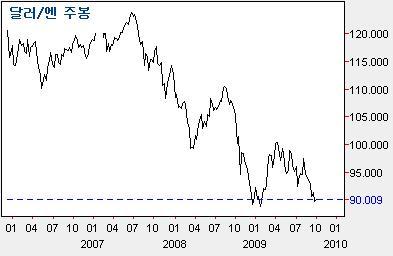
The yen exchange rate showed strength, dropping sharply from around 164 yen to the 155-yen level when the US and Japan jointly intervened in the currency market at the end of last July. At the time, market participants confirmed the government’s strong will, withdrew their selling pressure, and watched the yen’s value rise. However, the effect of the joint intervention gradually weakened over time, and the yen has since followed a steady downward trend, currently approaching the 160-yen mark. The yen has reached a point where the Japanese government and central bank’s concerns are inevitably deepening as the exchange rate rises to this level again.
For office workers preparing for overseas travel or individual investors investing in Japanese stocks, it is easy to think that it is advantageous to exchange currency when the yen is cheap. However, for policymakers responsible for the national economy, the 160-yen line acts as a psychological resistance line and a warning light threatening economic stability. If the exchange rate remains at such a high level, imported raw material prices will soar, domestic prices will become unstable, and the burden of living expenses for ordinary citizens will increase. The US Treasury Secretary’s direct statement that a stronger yen is desirable is largely aimed at reinforcing the need for such currency defense. It is necessary to closely watch how the exchange rate market will react to these public statements from the US in the future.
The US sounded the alarm as the yen, which had fallen to 155 yen due to a joint intervention at the end of July, showed weakness again as it approached the 160-yen line.
4. The Gap Between Japan’s Economic Fundamentals and Actual Currency Value
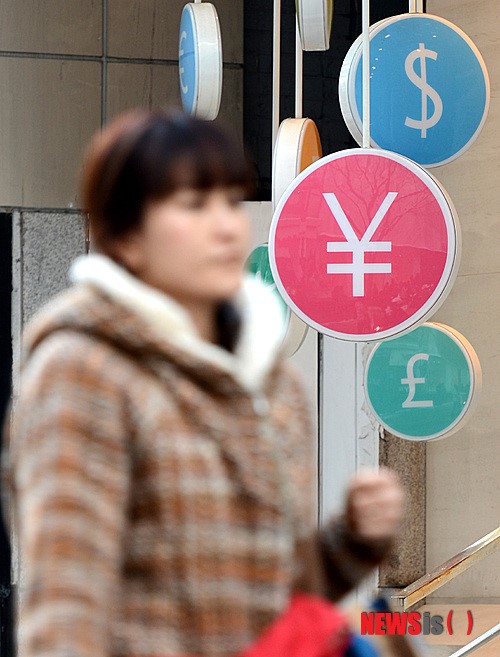
Despite having excellent fundamentals such as solid corporate performance and stable employment indicators, the Japanese economy has seen its yen value undervalued. Since financial markets only reflect interest rate differentials and capital flow factors, the yen has shown excessive weakness compared to the actual strength of the national economy. It is similar to feeling regret when seeing a highly capable person around us being unfairly evaluated low. The core point Secretary Bessent pointed out is exactly this, meaning that given Japan’s actual economic strength, the yen should be stronger than it currently is.
In international financial markets, if currency value tilts too much in one direction, the gap with the real economy widens, eventually leading to bubbles or side effects. If the massive profits Japanese companies earn overseas do not receive proper exchange rate evaluation, the vitality of the entire national economy could decline in the long term. Just as ordinary citizens experience the phenomenon where their salaries remain the same while prices rise, distortions occur in the market if the value of a national currency does not keep up with the real economy. The US Treasury Department’s public pointing out of this economic gap is effectively throwing a strong signal to international financial markets. It remains to be seen whether market participants will reassess the true strength of the Japanese economy and turn to buying the yen in the future.
The US Treasury Department pointed out that the yen value is excessively undervalued compared to Japan’s excellent economic fundamentals.
5. Close Communication Between the US and Japan and Will to Stabilize the Forex Market
The exchange rate is a very sensitive indicator determined by the complex interaction of a country’s economic power, trust in the international community, and policy coordination. The close communication shown by the US Treasury Secretary and the Japanese Finance Minister this time demonstrates a strong will to resolve instability in the foreign exchange market. It is a policy to stabilize the market with major economic powers coordinating their efforts, moving away from the past approach where each country looked out for itself. Just as neighbors gather to pool their heads and find solutions when problems arise in the neighborhood, a solid coordination system is essential between nations.
Foreign exchange market speculators tend to take advantage of moments when governments are out of sync, pushing exchange rates in one direction to realize huge profits. However, if the top policy lines of the US and Japan speak with one voice and coordinate closely, as in this case, speculators will find it difficult to move. Because the dollar and the yen are the most traded major currencies in the global financial market, cooperation between the two countries has a significant impact on the entire global market. It is safer for individual investors to read and respond to these macro-level policy coordination trends rather than reacting emotionally to exchange rate fluctuations. There is anticipation that the solid cooperative relationship between the US and Japan will lead to actual results inducing a stronger yen in the foreign exchange market in the future.
The close communication between the US and Japanese finance chiefs is a strong will to prevent excessive volatility in the foreign exchange market and check speculators.
6. Future Exchange Rate Market Outlook and Implications
With US Treasury Secretary Bessent’s remarks, the foreign exchange market is more likely to enter a stable phase with reduced sharp volatility. Although the yen showed an unstable trend as it approached the 160-yen line again, the strong verbal intervention and policy coordination of the two governments will act as a brake. It is the same principle as naturally pressing the brake to ensure safety when driving a car at too high a speed. Investors and companies have reached a point where they must revise their future exchange rate strategies keeping in mind this US policy direction.
Experts predict that as long as external factors are well controlled, the yen will gradually find stability given Japan’s solid economic fundamentals. However, since exchange rates move like living things with various variables complexly intertwined, complacency is forbidden, and continuous monitoring is necessary. Citizens preparing for overseas study or business trips, or entrepreneurs running Japan-related businesses, must carefully check exchange rate trends daily. Since the US and Japan have declared that they will continue close coordination to manage the market, a gradual trend is expected rather than a sharp crash. I hope you, our readers, will actively cope with economic changes based on this exchange rate news, and I will end my article here.
Thanks to the strong coordination and verbal intervention of the US and Japan, the future yen exchange rate is expected to reduce sharp volatility and gradually find stability.
Frequently Asked Questions
=