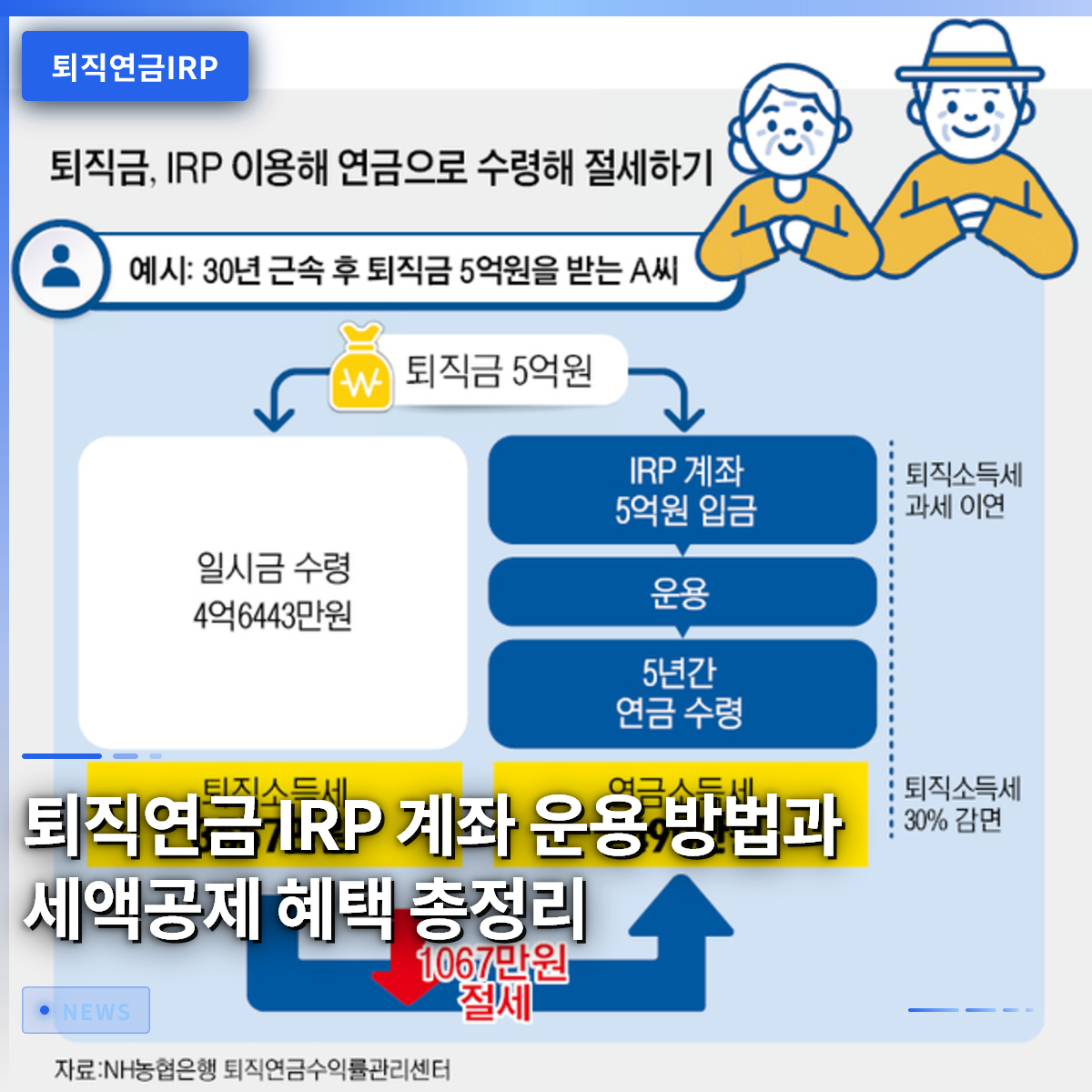
The Individual Retirement Pension (IRP) account is an essential financial product that working professionals must utilize to accumulate retirement funds and reduce their tax burden. In the past, many people simply deposited money and left it untouched, but recently, thanks to the availability of various exchange-traded fund (ETF) trading options and convenient regulatory improvements, active asset growth has become possible. With significant tax deduction benefits available during the annual year-end tax settlement, a trend of IRP enrollment is sweeping among employees. However, if you do not accurately understand the account’s characteristics and management regulations, you may face penalties for early termination or incur unnecessary fees, so caution is required. In this article, we will thoroughly examine everything from the basic concepts of IRP accounts to the latest regulatory changes and smart management strategies. If you follow along step by step, managing your retirement assets, which may have seemed complex, will become much easier.
=
A Complete Guide to Managing Your IRP Retirement Account and Maximizing Tax Deductions
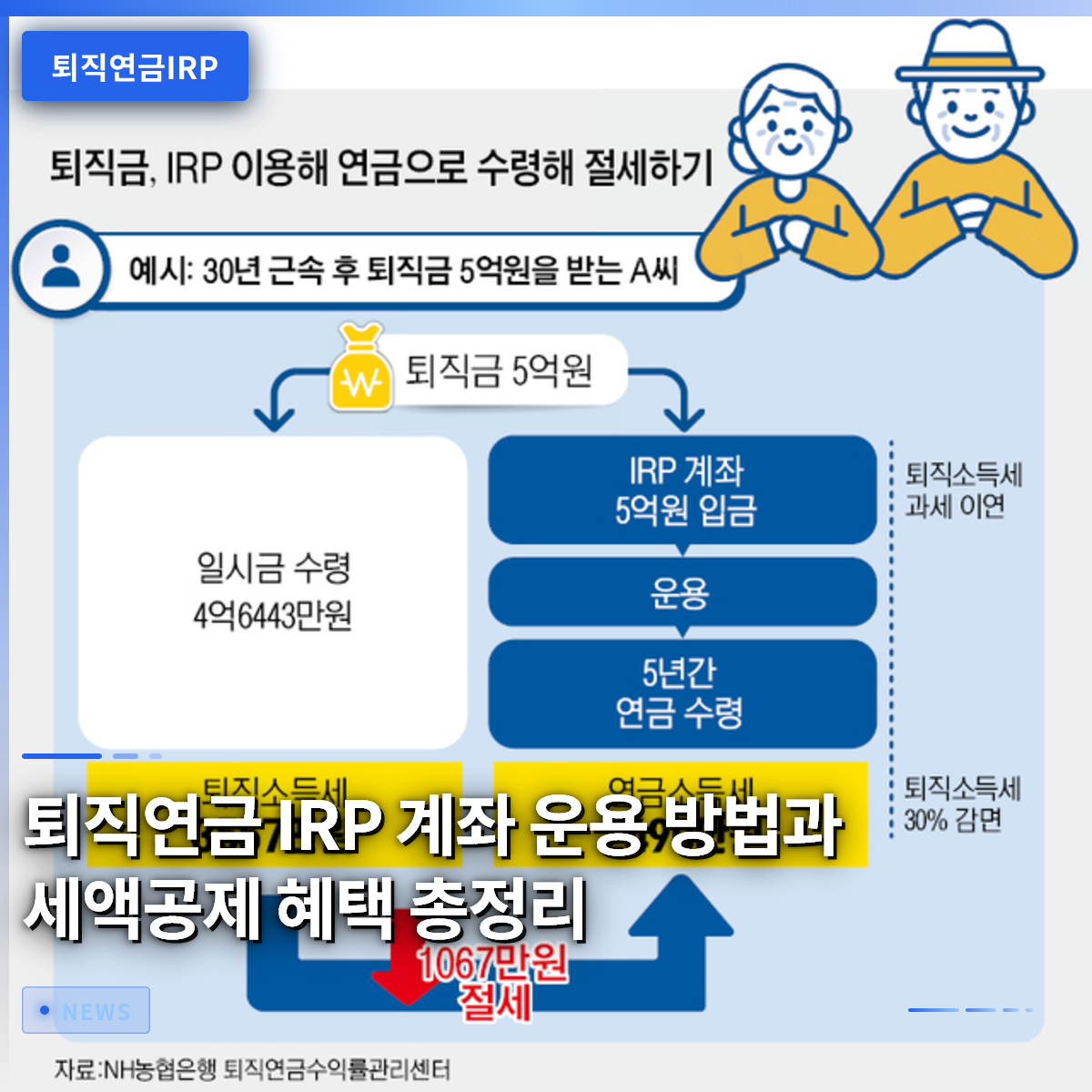
1. What is an IRP Retirement Account?

The IRP, known as the Individual Retirement Pension, is a system that allows employees to voluntarily contribute during their employment or to consolidate their severance pay upon changing jobs into a single account to be used as retirement funds. It is a mechanism encouraged by the state to prevent the problem of employees spending their severance pay on living expenses with each job change, leaving them with little to no money at the time of retirement. Unlike the Defined Contribution (DC) accounts funded monthly by employers, a major advantage of the IRP is that individuals can make additional contributions themselves to enjoy tax benefits. You can enroll through various financial institutions such as banks, securities firms, and insurance companies, and select products that suit your investment style. For example, Mr. Kim, a working professional, found peace of mind by consolidating his severance pay from a previous job and his monthly savings into a single account for management. The core of this system is its role as a sturdy fence that safely and systematically secures valuable assets until retirement.
The IRP is a tax-advantaged account that consolidates severance pay and personal contributions to prepare for retirement.
2. Year-End Tax Settlement Deductions You Don’t Want to Miss
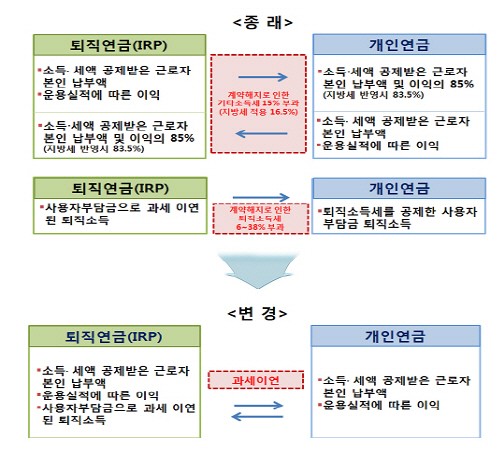
During the year-end tax settlement period, often referred to as the “13th month’s salary,” the IRP account is considered the most powerful tax-saving tool for working professionals. Since you can receive a tax deduction at a certain rate on your annual contributions, it is a wealth management item that employees must definitely take advantage of. The deduction rate varies depending on total income, and the structure involves receiving a refund of income tax on the amount paid within the annual contribution limit. For example, if you consistently contribute a certain amount annually, you can directly see a noticeable increase in the refund amount during the year-end tax settlement. It is common to see colleagues sighing over a tax burden while those who utilized this account are instead receiving substantial refunds. However, since the contribution limits for IRP and pension savings products are managed in a combined manner, it is wise to calculate your total savings scale in advance. You can enjoy the double benefit of saving on taxes and accumulating retirement funds, so it is recommended to set up automatic monthly transfers for a fixed amount.
The IRP offers significant tax deduction benefits during the year-end tax settlement, making it an essential tax-saving tool for employees.
3. Faster Investment Speeds Through Latest Regulatory Improvements
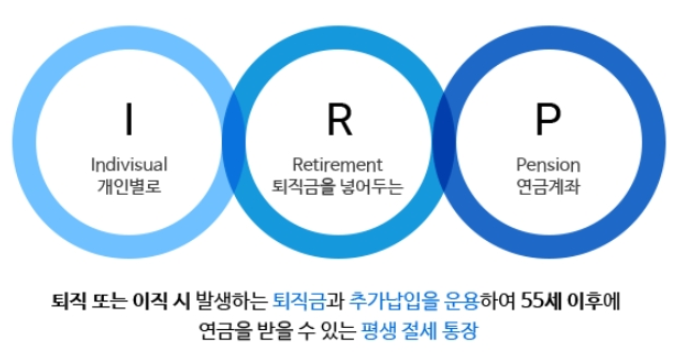
Recently, the financial sector has received a warm response by significantly improving trading systems to allow retirement pension subscribers to manage their assets more conveniently. In the past, the structure was frustrating: after selling a held exchange-traded fund (ETF), you had to wait several days until the settlement date before you could buy another product. However, thanks to the recently introduced same-day trading service, you no longer need to wait for the sale proceeds to arrive; you can immediately buy another ETF on the same day. Since sale execution results are also reflected in the system within minutes, it has become possible to respond nimbly to market conditions. In fact, Mr. Park, a working professional who usually adjusts his equity asset allocation, is very satisfied with being able to change his portfolio immediately in line with rapidly changing market trends. Such developments in the financial system that enhance investor convenience provide a solid foundation for managing retirement assets more efficiently.
The introduction of the same-day trading service allows for immediate reinvestment after selling assets, significantly enhancing trading convenience.
4. The 30% Safe Asset Rule and Smart Asset Allocation
When investing in equity assets within an IRP account, there are strict ratio regulations that must be followed. There is a rule requiring that a certain percentage of the total accumulated funds must be allocated to safe assets, which may initially seem complex to novice investors. Risky assets with a high equity ratio can only be filled up to a maximum of 70%, and the remaining 30% must be composed of safe assets such as deposits or bond-type products. If you actively buy equity ETFs and exceed the limit, additional purchases will be restricted, so you should consider in advance what to use to fill the remaining space. Recently, the range of choices has widened with the launch of mixed products that appropriately blend equities and bonds, as well as various bond-type products recognized as safe assets. Ms. Lee, a working professional, was initially worried that the mandatory safe asset ratio would lower her returns, but after finding and filling the account with high-quality bond-type products, she has achieved stable performance. Understanding the regulations well and choosing safe assets that match your profile is the key to maintaining the overall return rate of your account.
You must understand the 70% risky asset and 30% safe asset ratio regulation and fill the account with appropriate products.
5. Cautions for Early Termination and Fee Structures
Since the IRP account is a long-term product for retirement preparation, caution is required as early termination can lead to unexpected financial losses. If you terminate the account for unavoidable reasons, you must not only return all the tax deduction benefits received but also pay miscellaneous income tax. Because a product enrolled for tax benefits can turn into a tax burden, it is safer to contribute only amounts that you can maintain in the long term. Additionally, since fee structures for account management vary by financial institution, it is wise to carefully compare fee conditions before enrolling. Recently, many financial institutions have waived or significantly reduced fees for non-face-to-face (online) enrollments, opening up ways to reduce cost burdens. When funds are urgently needed, it is much more advantageous to look for alternative methods, such as taking out a collateral loan within the account, rather than terminating it unconditionally. Remember that consistently maintaining the account until retirement age ultimately brings the greatest benefit.
Early termination requires returning tax benefits, so long-term maintenance is essential, and fee conditions must be checked carefully.
6. Future Outlook and Practical Strategies for Retirement Preparation
For us living in the era of longevity, the IRP account is not an option but an essential survival strategy for a prosperous retirement. Going forward, the government and the financial sector are expected to continue supplementing various systems and making the investment environment more convenient to facilitate the formation of retirement assets for citizens. Starting today, try to reduce unnecessary expenses from your salary account and develop the habit of consistently accumulating funds in this account every month. Even small amounts, when enjoyed with compound interest and tax deduction benefits over several decades, will grow into a substantial asset by the time of retirement. Those who quickly grasp changing financial regulations and actively manage their assets will ultimately secure leisure in their retirement. Do not delay any longer; check the status of your account through your primary financial institution’s app today and take the first step toward your future.
Consistent contributions and active asset management are more important than anything else in preparing stable retirement funds.
Frequently Asked Questions
=