While “income deduction pension savings” is the common term, this financial product technically offers tax credit benefits rather than income deductions. However, many people still use the incorrect term. The accurate name is a pension savings account, which has become an essential tax-saving tool for employees because a certain percentage of annual contributions is refunded during year-end tax settlement. If you want to significantly increase the refund amount that always feels insufficient, you should pay close attention to this account right now. You no longer need to envy colleagues who receive refunds ranging from hundreds of thousands to over a million won during their year-end tax settlement. In this article, we will detail the core information employees must know, from the exact deduction limits of pension savings to tips for saving on fees. We will explain things clearly using real-world examples, avoiding complex financial jargon so that anyone can easily understand.
=
Essential Tax Credit Limits and Fund Comparison Tips to Know Before Opening a Pension Savings Account
1. The Exact Meaning of “Income Deduction Pension Savings” and the Difference from Tax Credits
The product commonly referred to as “income deduction pension savings” is accurately classified as a tax credit product under actual tax regulations. Income deductions reduce the taxable income itself, whereas tax credits directly subtract a specific amount from the calculated tax. Therefore, for employees, the refund effect of the tax credit method feels much more direct and powerful. In the past, pension savings insurance sold by insurance companies was the mainstream, but recently, there is a clear trend of switching to pension savings funds at securities firms to increase assets. Since you can receive a tax refund of up to 16.5% on annual contributions, it offers advantages that cannot be compared to ordinary savings products. Anyone, from young professionals who just started working to middle-aged and senior employees approaching retirement, can join and enjoy the benefits. Understanding this structure accurately allows you to strategically prepare for your year-end tax settlement without unnecessary misunderstandings.
“Income deduction pension savings” is actually a tax credit product, serving as a powerful tax-saving tool that directly refunds taxes on contributions.
2. Maximizing the Combined Tax Credit Limit of Pension Savings and IRP

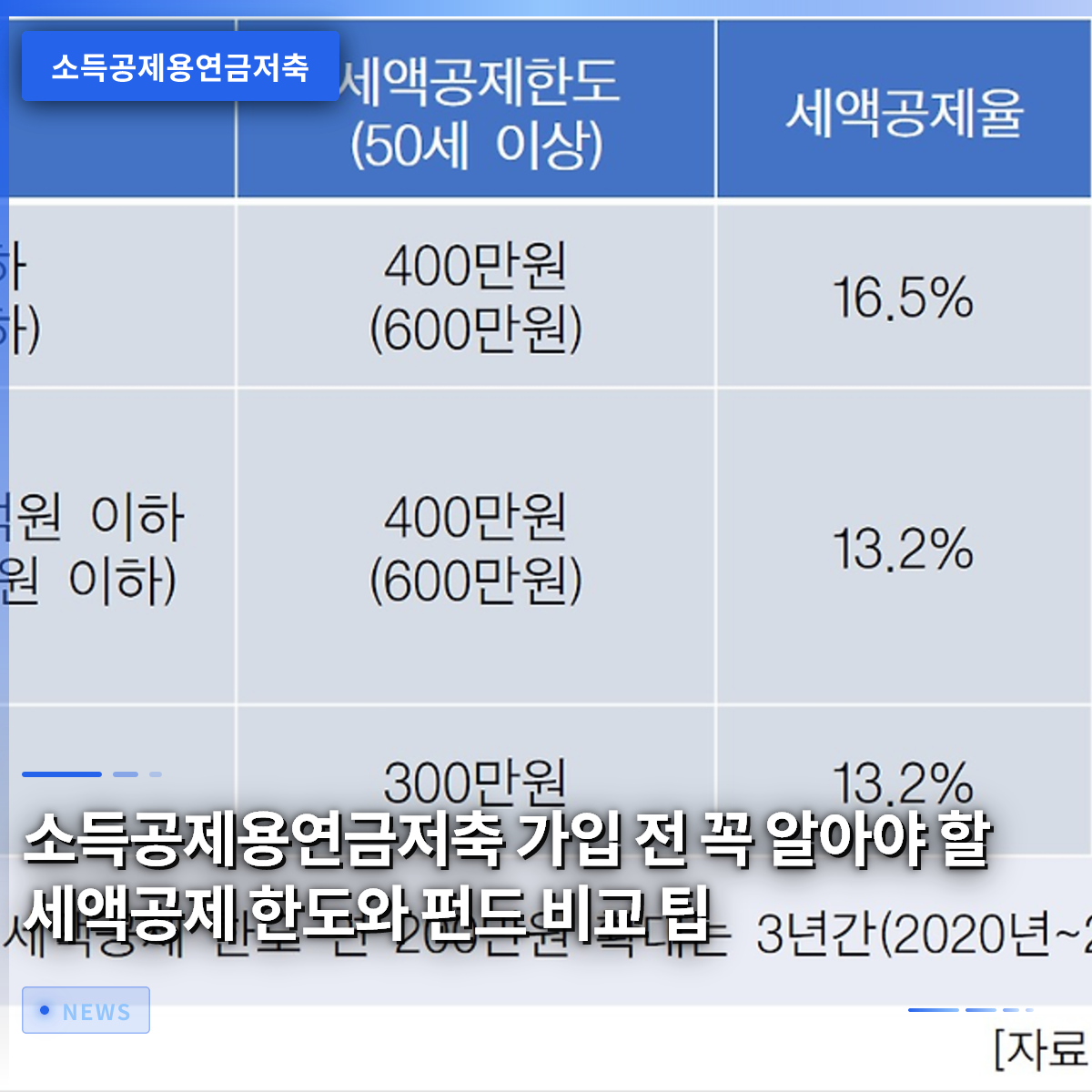
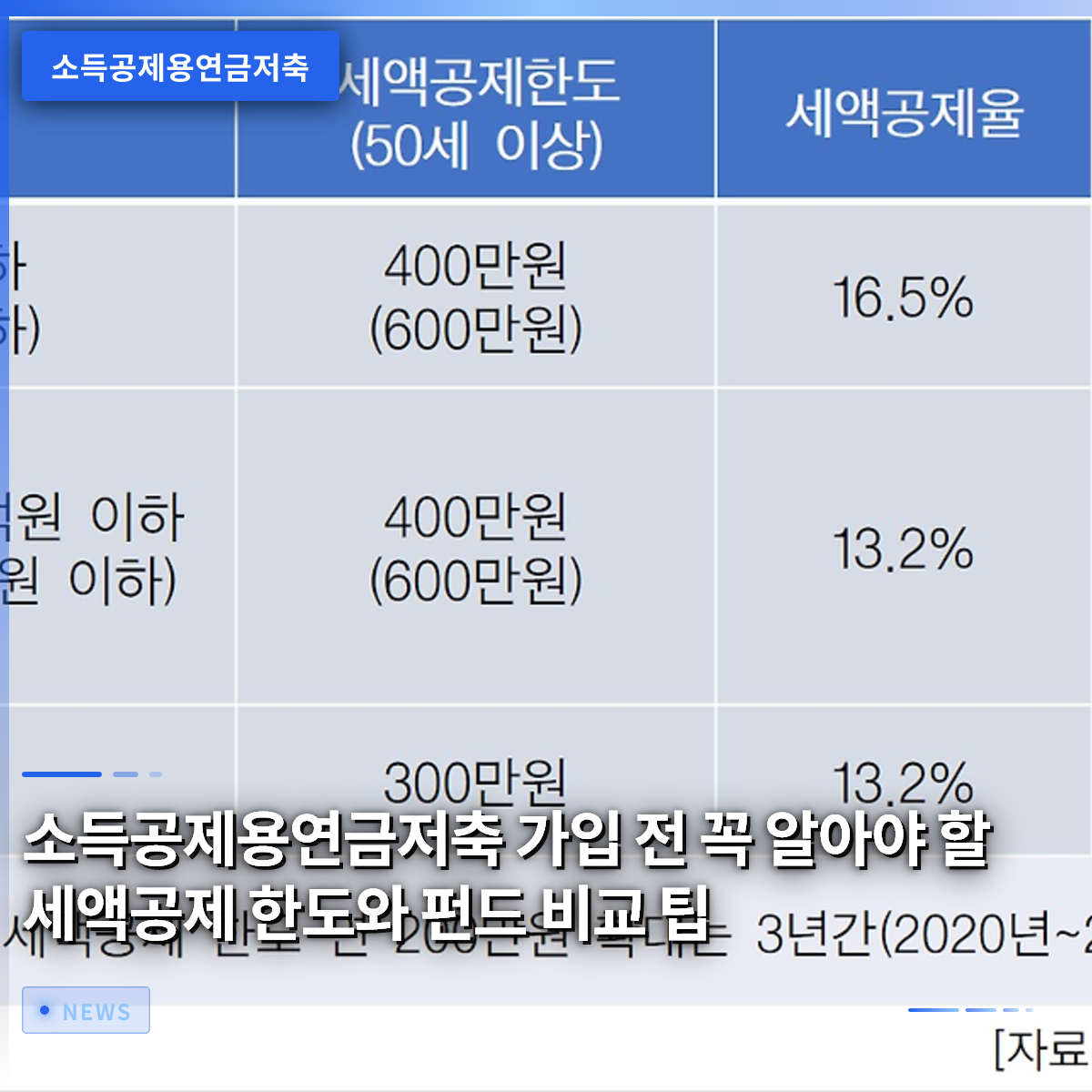
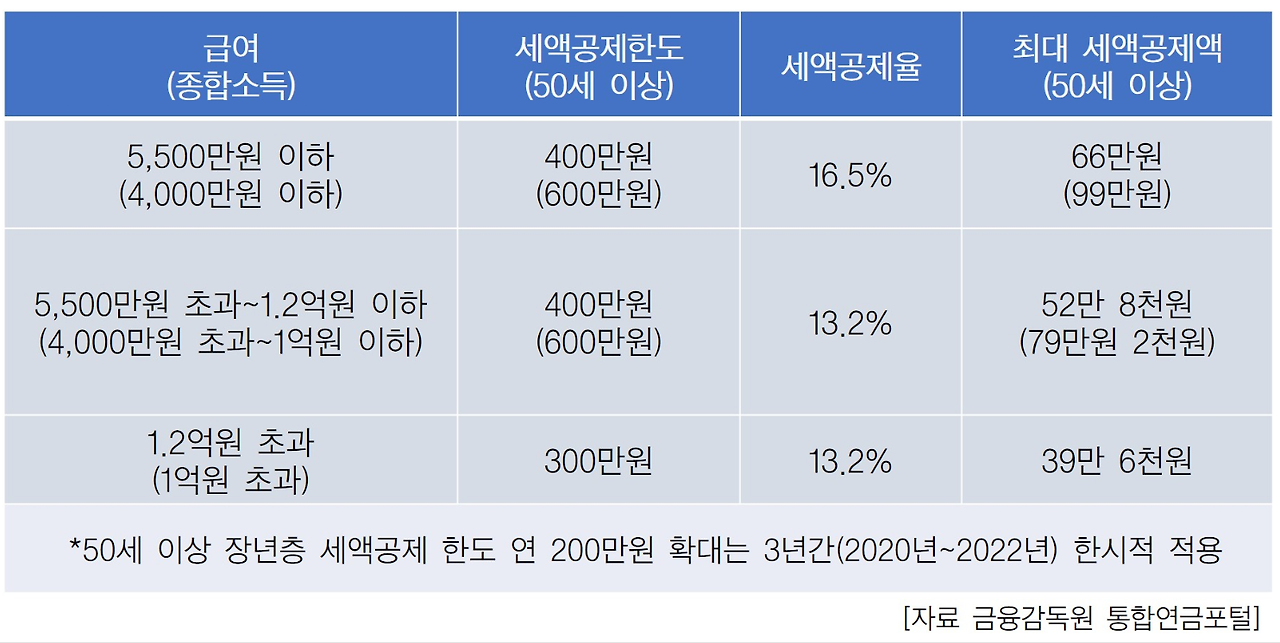
If you open only a pension savings account, the annual tax credit contribution limit is up to 6 million won. By additionally utilizing an Individual Retirement Pension (IRP) account and contributing an extra 3 million won, you can increase the total limit to 9 million won. If your total annual salary is 55 million won or less, a 16.5% credit rate applies, allowing you to receive a maximum refund of 1.485 million won. Even if your total annual salary exceeds 55 million won, a 13.2% credit rate applies, enabling you to secure a maximum refund of 1.188 million won. For example, by splitting a fixed monthly amount between pension savings and IRP contributions, you can fill the limit while reducing the financial burden. Most people who have experienced a “jackpot” in their year-end tax settlement have fully utilized the limits of these two accounts. It is a magical structure that turns the worry of a tax bomb during the annual year-end tax settlement into anticipation for a refund.
Using pension savings and IRP together increases the limit to a maximum of 9 million won, maximizing your refund amount.
3. What is the Difference Between Pension Savings Insurance and Pension Savings Funds?

Many people join pension savings insurance recommended by banks or insurance companies, only to be disappointed with the returns and switch to securities firms. While pension savings insurance has the advantage of principal protection, its fatal weakness is low returns that fail to keep up with inflation. On the other hand, pension savings funds opened at securities firms allow direct investment in various products such as stocks, bonds, and Exchange-Traded Funds (ETFs), which is advantageous for asset growth. However, given the nature of these long-term products, you must carefully compare and select based on the initial business costs and fee structures. In fact, meticulous employees compare fees across financial institutions and switch to low-fee fund accounts to boost their returns. Since retirement funds must be managed over a long period of ten years or more, even small differences in fees or returns can lead to significant outcomes. It is most important to wisely choose the method that suits your investment style between stability and profitability.
Choose insurance if you want principal protection, and choose a pension savings fund with favorable fees if you aim to increase long-term returns.
4. The Secret to Receiving Pensions After Age 55 and Reducing Taxes
The “income deduction pension savings” you have been contributing to for a long time becomes eligible for receipt in the form of a pension only after you reach the age of 55. In a situation where income may stop immediately after retirement, a regular monthly pension serves as a reliable survival strategy and support. In particular, if you transfer your severance pay to a pension account to receive it as a pension rather than a lump sum, you can significantly reduce retirement income tax by 30 to 50 percent. Even at the pension receipt stage, the pension income tax rate is applied at a very low rate of 3.3% to 5.5%, minimizing the tax burden. Be careful, as arbitrarily canceling the account before age 55 due to urgent financial needs requires you to return all the tax credit benefits received thus far. By planning to receive the pension strategically around your retirement date, you can create a stable cash flow for retirement while avoiding a tax bomb. The earlier you start preparing for retirement, the greater the financial comfort you will enjoy at this pension receipt stage, beyond your imagination.
Receiving it as a pension after age 55 applies a low tax rate and significantly reduces the tax burden on severance pay.
5. Precautions for Employees When Joining Pension Savings
One thing you must always remember when opening a pension savings account is that you must contribute for at least five years to maintain tax benefits. If you cancel midway due to unavoidable circumstances and need the money, miscellaneous income tax will be imposed, potentially resulting in a loss. Therefore, rather than setting an unreasonably large amount, you should determine an amount you can consistently maintain, considering your monthly income level. Additionally, for employees, if the pension account is not managed properly during job changes or resignation, there is a risk of tax disadvantages. In such cases, it is safer to utilize the transfer system to move the funds to the new company’s retirement pension or a personal account rather than canceling the existing account. Pension income can also work in your favor when calculating National Health Insurance premiums to maintain dependent status, so it should be carefully considered. Accurately check the regulations before joining to ensure that the tax-saving benefits you have worked hard to build do not vanish due to a minor mistake.
You must maintain the account for at least five years, as early cancellation incurs disadvantages. It is important to set a consistent contribution amount suitable for your income.
6. A Pension Savings Strategy to Make 2026 the First Year of Retirement Preparation
It is wise to make this year the first year of protecting your assets and preparing for a secure retirement in line with the era of high prices. If you keep postponing with the excuse that you lack spare funds each month, the retirement period may suddenly approach, leading to regret. Right now, open your smartphone app, compare the pension savings conditions of securities firms or banks, and start with a small amount. You can catch two rabbits at once: feeling the sensation of receiving an annual bonus through tax credit benefits while simultaneously securing future retirement funds. It is also necessary to maintain an attitude of frequently checking your account’s management strategy in line with government system changes or tax law revision directions. The most important thing is the courage to act now while imagining yourself smiling ten or twenty years from now. Based on what you have learned today, start pension savings contributions from this month and transform yourself into a true tax-saving expert.
Make this year the starting point for retirement preparation and secure both tax savings and future assets through pension savings right now.
Frequently Asked Questions
=