Recently, major domestic and international stock indices have experienced significant volatility due to geopolitical instability and a surge in oil prices, heightening investor concerns. It is all too common to open your brokerage account in the morning, see a sea of blue (indicating losses) instead of red (gains), and let out a sigh. Just as prices at the corner store can fluctuate wildly overnight, the stock market is also in constant flux. For instance, many of you likely remember the sinking feeling when the Dow Jones Industrial Average plummeted by hundreds of points shortly after the New York Stock Exchange opened last time. In this article, we will thoroughly examine the core reasons behind these phenomena. Furthermore, we will discuss specific strategies for how to protect and manage your assets going forward.
=
Guide to Analyzing the Causes of Today’s Stock Market Decline and Global Market Outlook
1. Current Status and Recent Trends of Domestic and International Stock Indices
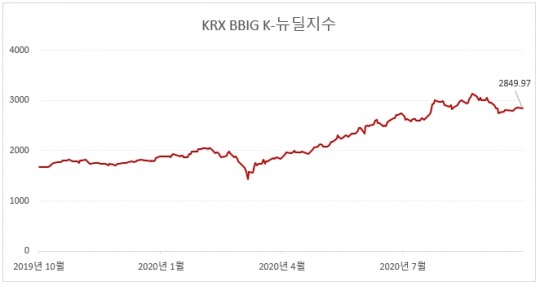
The KOSPI, the representative index of the domestic stock market, has been experiencing significant intraday fluctuations recently, keeping investors on edge. Looking at recent records, while the KOSPI showed a downward trend, the KOSDAQ index rebounded slightly, indicating a clear divergence in performance across different sectors. Just as a captain becomes tense when a ship encounters rough waves, our stock market is currently struggling to find its direction. Beginner investors often find themselves agonizing over whether to hit the sell button every time the index drops. Meanwhile, movements in overseas markets are even more intense. The Dow Jones Industrial Average and the Nasdaq Composite Index, listed on the New York Stock Exchange, are also under continuous downward pressure. In particular, as AI-related tech stocks undergo corrections, the entire related indices are wobbling. It is not just a story about others when you hear that a friend who invested in U.S. stocks lost sleep after seeing their account balance shrink overnight. Complex economic variables are intertwined behind the simultaneous volatility in both domestic and international markets.
Domestic and international stock indices are experiencing significant fluctuations due to internal and external economic variables, causing anxiety among investors.
2. The Impact of Rising Treasury Yields and Oil Prices on Indices
The primary culprit behind the simultaneous decline of the three major U.S. stock indices recently is the concurrent rise in Treasury yields and oil prices. When interest rates on borrowing money in the market increase, companies face constraints on investment and growth due to higher interest burdens. It is exactly the same logic as when our mortgage rates rise, making the monthly interest payments feel suffocating. When a company’s financial situation worsens, its performance naturally deteriorates, which directly leads to a drop in stock prices and indices. On top of this, heightened tensions in the Middle East have led to an unprecedented situation where international oil prices have broken through $100 per barrel. Oil is like the blood of all industries; when raw material prices rise, the cost of manufacturing goods snowballs. It is similar to a local snack shop having to raise prices or sacrifice profits when the cost of flour and gas for making tteokbokki goes up. As these companies lose profitability due to increased cost burdens, the overall vitality of the stock market inevitably declines.
The sharp rise in Treasury yields and oil prices increases corporate costs and freezes investment sentiment, dragging indices down.
3. Semiconductor Market Volatility and Movements of Major Companies
The semiconductor sector, a core pillar of the domestic stock market, is also experiencing significant volatility in line with global market trends. Global semiconductor giants are busy raising large amounts of capital through U.S. stock listings and aiming for inclusion in major indices. However, some semiconductor-related stocks have undergone significant corrections due to emerging concerns regarding AI regulations and safety. When companies that manufacture the core components of the smartphones and computers we use daily are unstable, the overall index cannot remain intact. In fact, looking at the stock price trends of major electronics firms, they dance to the tune of foreign investors’ buying and selling pressure. Many office workers sigh or smile as they look at the Samsung Electronics stock price fluctuation graphs shown on news screens every morning. Because the weight of specific companies in the overall index is so large, their movements effectively become the report card for the entire market. Therefore, until the uncertainty in the semiconductor industry is resolved, the index is likely to continue a roller-coaster ride.
The semiconductor sector fluctuates significantly based on global regulations and earnings expectations, serving as a key variable that determines the direction of the overall stock market.
4. Utilizing Derivatives and Investment Strategies
In market conditions where stock indices experience sharp rises and falls, various investment products attract attention beyond simple stock purchases. Derivatives are a prime example, allowing investors to trade the right to buy or sell stock indices or specific stocks at a predetermined price on a future date. Investors who believe the market will rise buy related products, while those who expect a decline bet on the opposite direction. It is like selling umbrellas on rainy days and sunglasses on sunny days, adapting tools to market conditions. Of course, it must be remembered that while these derivatives offer substantial rewards when profitable, they also carry very high risk of loss. Seeing the hundreds of new product names released daily by securities firms might give you a headache, but it reflects the diversity of choices available. If a beginner investor jumps into complex products without careful consideration, they are likely to lose their principal in an instant. Therefore, it is necessary to wisely and cautiously approach investments by coldly assessing one’s own investment style and capital size.
Investment opportunities using derivatives increase with index fluctuations, but due to the high risk involved, thorough caution is required.
5. The Relationship Between Macroeconomic Indicators and Investor Sentiment
Macroeconomic indicators, such as the release of the U.S. Consumer Price Index (CPI), act as a compass determining the direction of global financial markets. If the inflation rate comes in higher than market expectations, anxiety spreads that central banks may not be able to lower interest rates. Just as a rise in grocery prices leads to the government tightening the money supply, a cold wind blows across the entire economy. Every time such macroeconomic news is released, foreign and institutional investors in the stock market quickly restructure their portfolios. Individual investors often fail to grasp these macroeconomic trends in time and end up buying at the peak, resulting in losses. By the time the news is widely known, all information is already reflected in market prices, making it a perfect timing for incurring losses. The reason experts emphasize checking interest rates and exchange rates daily is that these macroeconomic indicators form the skeleton of stock prices. To avoid being swept away by market waves, one must consistently read economic news and cultivate the ability to understand the meaning of indicators.
Accurately reading macroeconomic trends, such as inflation indices and interest rate policies, is essential to respond flexibly to market changes.
6. Future Stock Market Outlook and Response Strategies
Future stock indices will be determined by the stability of the Middle East situation, oil prices, and the interest rate policies of central banks in various countries. Since market volatility is bound to be high for the time being, investing with borrowed money must be absolutely avoided. When a storm is approaching, the wisest stance for a fisherman is to stay in the harbor and mend nets rather than going out to sea. Instead of panicking and unconditionally cutting losses just because your stocks are falling, you should re-examine the intrinsic value of the companies. It is advisable to employ a split-buying strategy with spare funds and cultivate a long-term investment habit. The stock market has always cycled through crises and opportunities, and just as the ground hardens after rain, a bull market will eventually return. Those who calmly pick up solid stocks while others are terrified and selling will ultimately be the ones to smile. Starting today, do not let short-term market fluctuations dictate your emotions; establish your own clear principles to complete a successful investment.
During periods of high volatility, one should avoid leveraged investing and protect assets through split-buying and a long-term perspective.
Frequently Asked Questions
=