Domestic individual investors have completely broken away from the trend of heavily selling U.S. stocks in the early part of this month, pouring over 1 trillion won back into the market within just a few days. In particular, a significant portion of the total buying volume—more than half—has been concentrated in a specific leveraged product that tracks three times the daily price movements of semiconductor stocks, sparking considerable buzz. This abrupt shift in attitude by investors commonly known as “Seohak Gaemi” (Korean retail investors in the U.S. market) is the result of a mindset that views recent stock price declines as opportunities for bargain hunting. In fact, they have taken back control of the market by net buying a massive amount of U.S. stocks over the four days starting from the 14th. In this article, we will examine in detail why individual investors have turned their attention back to the U.S. market and what the specific product they are heavily buying actually is. Let’s carefully look at the significance of the bets they have placed amid the waves of the stock market.
=
Korean Retail Investors Pour $1.1 Trillion into 3x ETFs, Marking a Major Shift in U.S. Stock Buying
1. The Shift in Capital Flow of Korean Retail Investors from Selling to Buying

Until the beginning of this month, domestic investors appeared to be stepping back, continuously disposing of their holdings in the U.S. stock market. In fact, for a period of over ten days starting from the beginning of the month, net selling of hundreds of millions of dollars continued, creating an atmosphere of capital outflow. However, this chilly atmosphere changed 180 degrees in just a few days, leading to a completely new phase. According to data from the Securities Information Portal of the Korea Securities Depository, domestic investors bought over $1.3 billion worth of U.S. stocks in just four days from the 14th to the 17th. During this period, total buy settlements reached a massive level, significantly exceeding sell settlements and clearly shifting to a net buying position. As a result, the cumulative net selling record from the beginning of the month was quickly offset, and on a total cumulative basis, they recorded a net buy of over $1 billion. The reason investors changed their stance so rapidly in such a short period is that they spotted an opportunity amidst the sharp price fluctuations in the stock market. As the mentality spread that quality assets should be bought cheaply when prices drop, capital flooded back into overseas markets like a tide. In particular, the characteristic of individual investors who react sensitively to market trends was clearly demonstrated in this transaction process. By abandoning a passive waiting stance and actively placing buy orders, they reignited market activity. Despite concerns from others, the act of executing funds according to their own conviction is always a phenomenon that draws significant attention in the stock market. Experts predict that this massive movement of funds will have a considerable impact on the overall direction of the stock market in the future.
Domestic investors who were selling U.S. stocks in the early part of the month shifted to large-scale net buying within just four days.
2. The $1.1 Trillion Bet Concentrated in the Semiconductor 3x Leveraged Product
The most striking aspect of this capital concentration is the fact that money flowed into a specific semiconductor-related leveraged product like a wave. During the period in question, domestic investors bought over $800 million worth of the product commonly known as “SOXL.” Converted into Korean won, this means a massive amount of capital exceeding 1.1 trillion won was concentrated in a single product. This one product accounted for a staggering 62 percent of the total net buying amount for U.S. stocks. Out of every ten dollars newly entering the U.S. market, more than six dollars went directly into this product. This product is a high-risk, high-return investment tool designed to track three times the daily price movements of semiconductor-related stocks. The background for investors boldly betting on such a high-risk product lies in strong expectations for a revival in the semiconductor industry. The calculation was that if a rebound occurs after a significant price drop, it could yield much higher returns than regular stocks. In fact, stories of acquaintances making big money with this product spread through social media, further stimulating individual buying sentiment. The main driving force behind opening their investment wallets was the expectation that entering now could generate large profits similar to previous peaks. However, this concentrated investment is like a double-edged sword, carrying the risk of enormous losses if the direction is wrong. Nevertheless, Korean retail investors showed a willingness to accept high volatility and made bold choices without hesitation.
1.1 trillion won, accounting for 62 percent of the total net buying amount, was concentrated in the semiconductor 3x leveraged product.
3. The Bargain Hunting Mentality Appearing at Prices Down 60 Percent from the Peak

Looking at the price trend of the product that individual investors have been buying heavily this time, one can understand why so much capital has poured in. The product was a popular stock that had been thriving, recording high prices exceeding $300 just a few months ago. However, facing a fierce wave of decline over the past few months, its price was ruthlessly pushed down to around $100. In just three months, the price was cut by more than 60 percent from its peak, spreading a perception among investors that they had caught the bottom. For investors who remember its past glory, the current price appeared to be an incredibly attractive sale price. This mentality was sufficient to stimulate the typical bargain-hunting instinct often seen in the stock market. Thinking that they could buy at a much lower price than before, hesitant investors began reaching for their accounts one after another. The flood of analytical articles stating that the market has truly hit the bottom and only has room to rise also fueled buying. Recalling the memory of seeing red lights on their trading screens every time, they showed a firm resolve not to miss this opportunity. The complacent thought that it has fallen enough and cannot get any worse led to large-scale fund execution. All eyes are now on whether this bargain-hunting strategy will yield successful results this time as well.
The formation of price levels down more than 60 percent from the peak stimulated the bargain-hunting instinct of individual investors.
4. Major Stocks Noted Besides SOXL and the Preference for Safe Assets
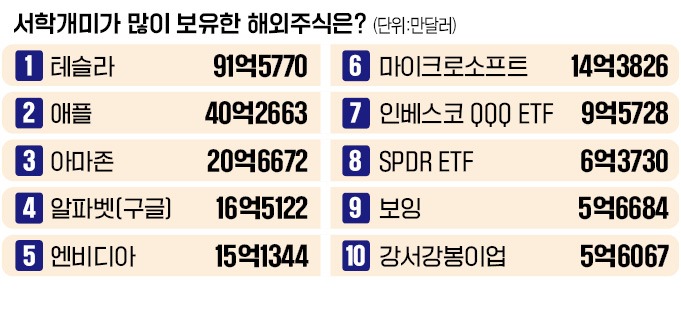
The buying basket of individual investors this week did not contain only semiconductor leveraged products. Among large-cap tech stocks, e-commerce giant Amazon, electric vehicle representative Tesla, and the leading player in AI semiconductors also made the list. Tens of millions of dollars flowed into these large blue-chip stocks as well, taking a form of diversified investment. However, compared to the amount concentrated in semiconductor leverage, it was relatively small, clearly showing where the core of this investment lay. Additionally, other products that generate returns in the opposite direction when the semiconductor industry declines were heavily sold, indicating a cleanup of bets on the decline. A notable point is that movements to secure safe assets simultaneously with aggressive investments were also detected. Tens of millions of dollars steadily flowed into stable products investing in very short-term U.S. Treasury bonds. This indicates an intention to leave some funds in a safe zone rather than pouring all money into risky areas due to the market’s high volatility. It was a clever investment strategy to build a minimum defensive line even amid the fierce waves of the stock market. This investment behavior, pursuing both offense and defense, well shows how sensitively individual investors are analyzing the market these days. These buying patterns observed across various stocks are interpreted as a setup to flexibly respond no matter which direction the stock market flows.
In addition to semiconductor leverage, buying of large-cap tech stocks and a preference for safe assets like short-term Treasury bonds appeared simultaneously.
5. Structural Risks That Must Be Understood in Leveraged Investing
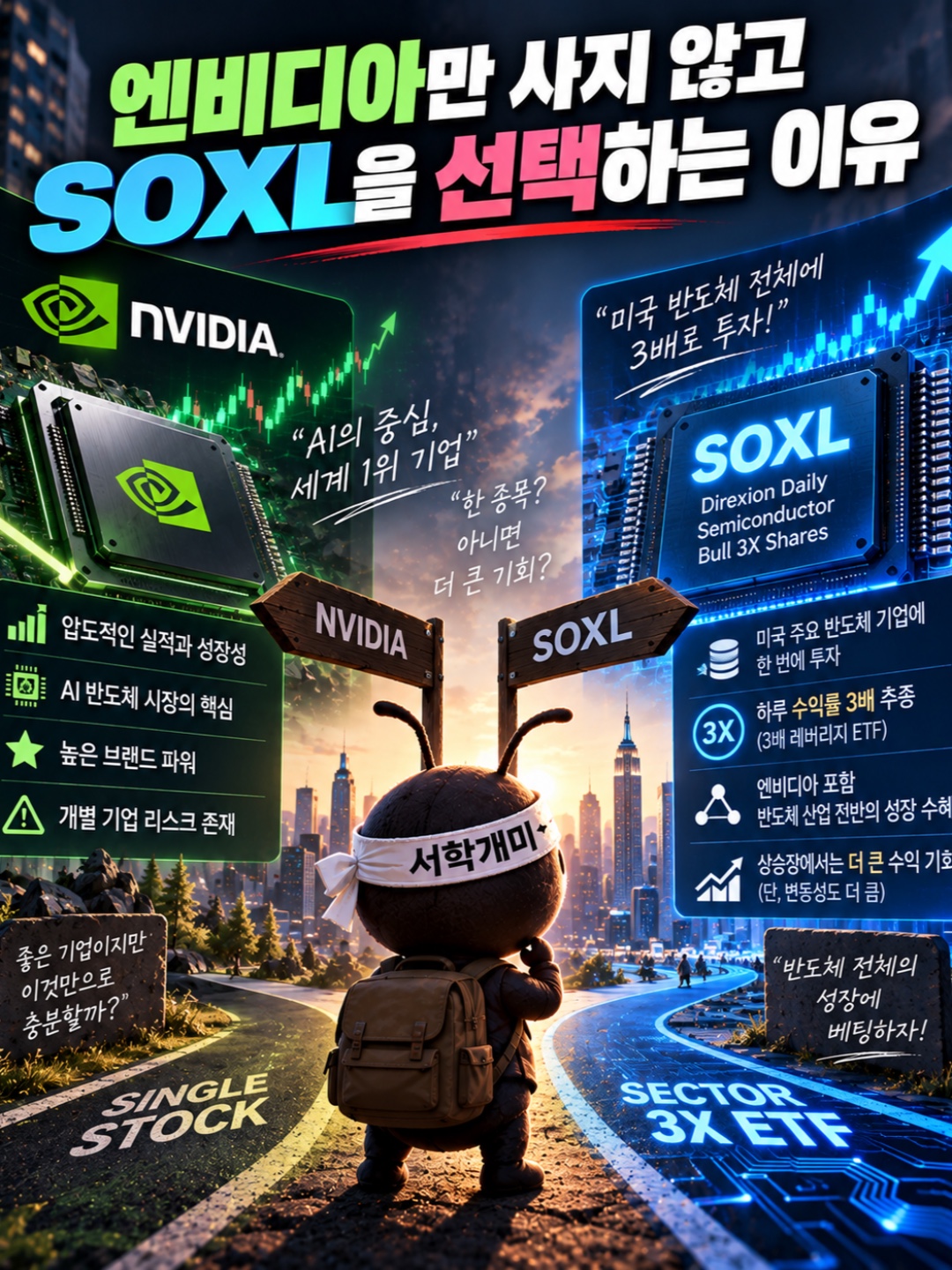
Experts warn that a simple bargain-hunting approach can be extremely dangerous due to the nature of leveraged products that track multiples of daily returns. Contrary to common misconception, these products do not accurately generate returns equal to the percentage increase of the underlying index over the long term. As officially stated by the fund managers, if held for a long period exceeding one day, errors may occur in the return rate due to the compounding effect. In other words, if a sideways market continues where the underlying index goes up and down repeatedly, the principal may actually decrease even if the stock price remains in the same place. If one approaches such products blindly just because the price is cheap, without properly understanding this product structure, they are likely to suffer significant losses. In fact, there are countless painful memories of many beginner investors falling into this compounding trap, suffering large losses, and leaving the market in the past. To survive in the stock market, one must move away from impulsive trading driven by the impulse to follow the crowd. One must thoroughly study exactly how the product being invested in works and in what situations it can incur fatal losses. If one fails to face the cool risk factors hidden behind the sweet return rates visible on the surface, they may lose their precious assets in an instant.
Leveraged products carry a high risk that the return rate will not match the underlying index due to the compounding effect when held long-term.
6. Future Stock Market Outlook and Wise Advice for Korean Retail Investors

No one can guarantee whether the large-scale capital injection made this time will be recorded as a successful investment or become another source of pain. U.S. interest rate policy, inflation indicators, and whether there is actual improvement in semiconductor industry performance are expected to act as key variables determining future stock prices. The passionate enthusiasm shown by Korean retail investors is injecting vitality into the market, but it is also raising concerns about excessive speculation. Therefore, one must absolutely refrain from investing with unreasonable debt and should approach cautiously within the range of assets they can afford. If you want successful investing, you need the leisure to calmly watch macroeconomic trends rather than being elated or depressed by short-term stock price fluctuations. Rather than blindly following stocks that others are buying, the wisdom to manage your portfolio with your own firm criteria is required. The market always presents opportunities and crises simultaneously, and surviving in it is the portion of thoroughly prepared investors. Taking this incident as an opportunity, please reconsider your investment style and practice healthier and more sustainable asset management. Thorough analysis and cold judgment will be the only compass that allows for safe navigation in the rough sea of stocks.
One should be cautious as reckless follow-trading without thorough analysis and one’s own criteria can lead to significant losses.
Frequently Asked Questions
=