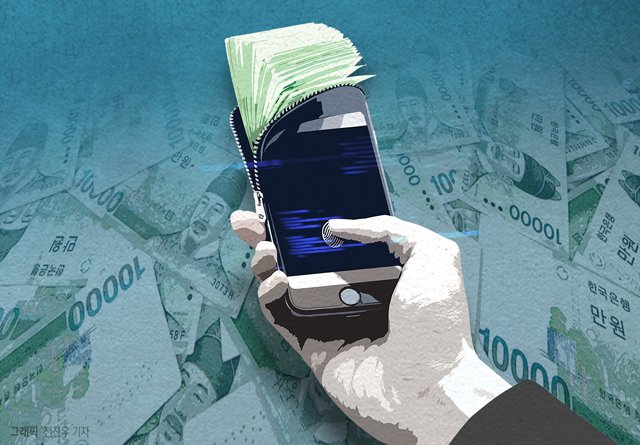
Recently, interest rates on card company loan products, including card loans and cash services, have surged to the brink of the legal maximum limit of 20 percent, further tightening the financial squeeze on ordinary citizens who need to borrow money. Even the card company counters, which employees and self-employed individuals who failed to meet bank loan criteria often turn to as a last resort, are now offering such high rates that interest burdens are snowballing. In an already difficult economic environment, the risk of vulnerable groups, unable to withstand high interest rates, being pushed out of the legal financial system and falling into the quagmire of illegal private lending has become very significant. In reality, ordinary neighbors around us are often forced to bear interest rates approaching 20 percent per annum to secure urgent living expenses. In this article, we will examine in detail the causes of the rising interest rates on card company loans, the difficulties faced by borrowers with low-to-mid credit scores, and potential countermeasures. At a time when changes in government policy and the stance of financial institutions are urgent, we aim to take a sober look at the reality facing the livelihood economy and consider ways to respond.
=
Low-to-Mid Credit Borrowers Face Crisis of Being Pushed into Illegal Lending as Card Loan Rates Approach the Legal Cap
1. Surging Card Loan Interest Rates
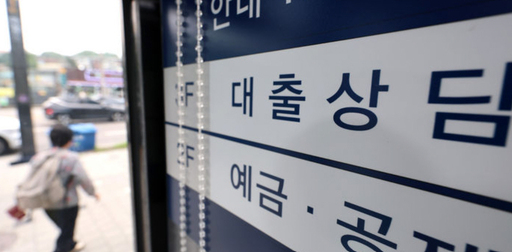
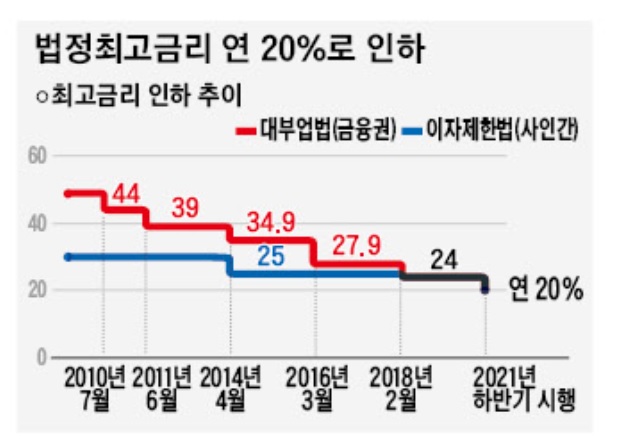
Recently, the average interest rates on card loans and cash services operated by specialized card companies have reached the high 19 percent range, hovering just below the legal maximum interest rate of 20 percent. In segments primarily used by customers with relatively low credit scores, the maximum interest rate has already recorded the high 19 percent range, effectively reaching the limit. Ordinary citizens who have been struggling to secure funds from the banking sector have been left with no choice but to opt for these high-interest products. Despite the significantly increased interest burden compared to the past, people in immediate need of living expenses have no alternative. This phenomenon is not merely an individual debt issue but is acting as a major factor exacerbating wealth inequality and credit disparity across society. The background of such a steep rise in interest rates involves a complex interplay of various economic factors, and the suffering of ordinary citizens is expected to continue for the time being. For borrowers who must repay principal and interest monthly, even a 1 percent difference in interest rates constitutes a massive burden that significantly impacts their livelihood. Although the government imposes a cap on the legal maximum interest rate, the realistic pressures of the financial market are causing the interest pain felt by ordinary citizens to actually grow larger. Looking around, the risk level of household debt in our society has reached its limit, with an increasing number of people seeking other loans to cover card payments.
As card company loan rates approach the legal limit of 20 percent, the interest burden on borrowers with low-to-mid credit scores is reaching its peak.
2. Pressure from Funding Costs
The reason card companies are forced to set loan interest rates this high is that their funding costs have increased as market interest rates have risen. With the interest rates on receivables financing bonds in the bond market trending upward, the costs for card companies to borrow money have visibly ballooned. While there is a legal cap on the interest rates applied to loans, there is no clear cap on the costs card companies incur to raise funds in the market. With costs continuing to rise while the interest rates they can charge for profit are capped, card companies are in a position where they must either reduce loan supply or raise interest rates. Furthermore, as the economic situation becomes unstable, delinquency rates are rising, intensifying pressure on financial institutions to manage soundness. To mitigate risks, card companies are raising their own lending thresholds, which ultimately backfires on those who desperately need funds. Cash services and revolving credit, which were easily accessible in the past, have become nearly impossible to obtain due to stricter review criteria. These defensive measures to protect the profits of financial companies are pushing socially vulnerable borrowers with low-to-mid credit scores even deeper into financial blind spots.
Due to rising funding costs and increasing delinquency rates, card companies are tightening lending, causing the financial lifeline for ordinary citizens to dry up.
3. The Balloon Effect and Limitations of Online Lending
As traditional lending channels like card loans and cash services have become blocked, borrowers with low-to-mid credit scores have begun seeking new alternatives such as Online Investment-Linked Finance (Onlending). In fact, the balloon effect is clearly detectable, with the balance of personal credit loans in the investment-linked finance market growing sharply over the past few months. Although ordinary citizens are flocking to these platforms to put out financial fires, this industry also has structural limitations, as it is linked with savings banks to execute loans. Because it cannot completely escape the government’s net of household debt total volume regulations, it is impossible to supply funds indefinitely. With funding demand exploding while supply remains limited, those who do not meet the criteria are inevitably rejected again. As market supply and demand diverge, borrowers with low-to-mid credit scores are being pushed into a situation where they must inevitably step into even riskier financial transactions. This phenomenon is a clear signal that the safety net of our economy is not functioning properly and warns that countermeasures are urgently needed.
While the loan balloon effect has increased demand for online finance platforms, regulatory limitations prevent it from being a fundamental solution.
4. The Path Toward Private Lending
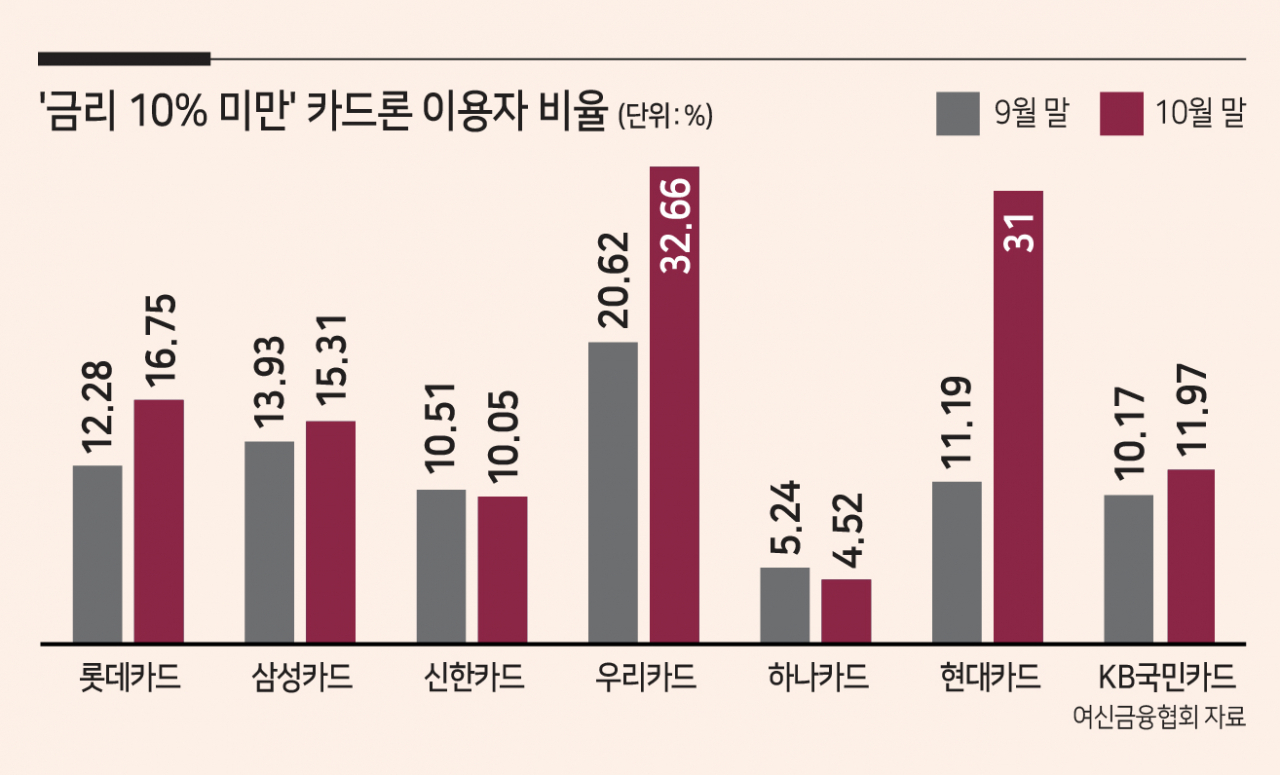
With even the last bastion of the formal financial system crumbling, borrowers with low-to-mid credit scores are ultimately heading toward registered loan companies or the illegal private lending market, which does not even appear in statistics. The steady increase in loan balances at loan companies is clear evidence of how severe the financial distress among ordinary citizens is. For those rejected by banks, ignored by card companies, and turned away from alternative finance, the only remaining option is essentially loan sharks. Ordinary citizens who fall into the swamp of illegal private lending face ruin, with their daily lives collapsing under the weight of absurdly high interest rates and threats. Even if they start with a very small amount, the inability to handle the snowballing interest often leads to family disintegration and, in many cases, extreme choices. Although the government and financial authorities have declared war on illegal private lending and are conducting crackdowns, it is very difficult to eradicate the problem due to the sheer intensity of demand. If no policy ingenuity is devised to accommodate these individuals within the legal system, the number of victims of private lending will continue to increase in the future.
Borrowers with low-to-mid credit scores rejected by the formal system are being pushed into illegal private lending and high-interest loan companies, suffering significant harm.
5. Policy Support and Institutional Improvement
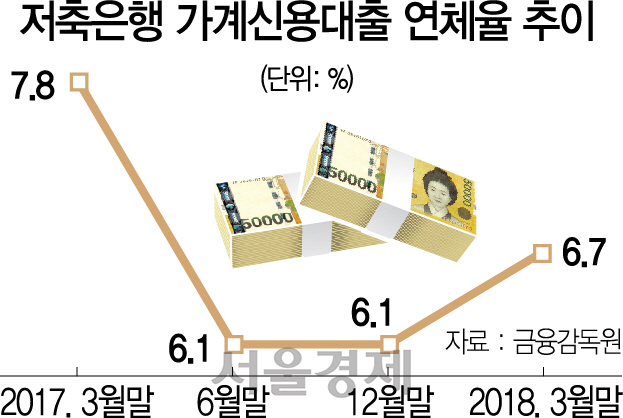
To prevent borrowers with low-to-mid credit scores from falling into illegal private lending, effective policy support and institutional supplementation at the government level are urgent. Rather than simply suppressing interest rates through regulation, incentives are needed to encourage financial companies to supply products for vulnerable groups. The scale of policy financial products that allow ordinary citizens to borrow at low interest rates should be significantly expanded, and review procedures should be refined to be more realistic. Additionally, financial education should be strengthened to help with proactive debt management, and programs providing a stepping stone for recovery through debt adjustment should be activated. A comprehensive approach is required that goes beyond simply lending money to linking borrowers with opportunities for income generation that allow them to actually repay their debts. Only through the combined efforts of warm societal concern and meticulous policy design can financially excluded groups be protected within the social safety net.
To prevent ordinary citizens from falling into private lending, the government needs to expand effective policy finance and provide multi-faceted support.
6. Outlook and Reader Action
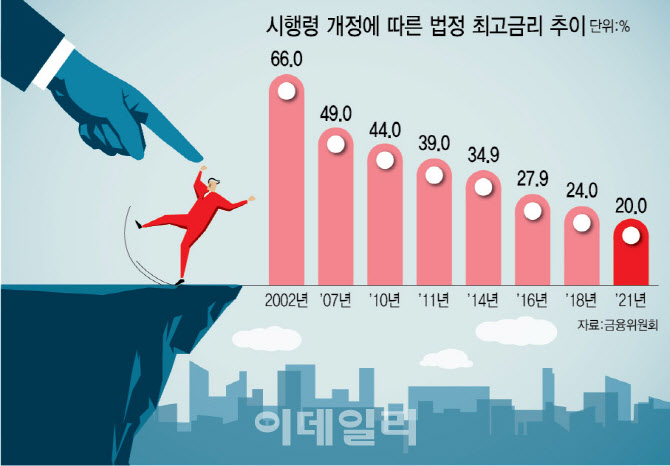
Experts predict that the high-interest-rate environment is likely to persist for the time being, meaning that difficulties in the livelihood economy will not be easily resolved. At times like these, it is wise to reduce unnecessary expenses, manage one’s credit score, and be cautious about indiscriminate borrowing. If you find yourself in financial difficulty, it is prudent to first look into support products from public institutions such as the Korea Finance Promotion Corporation before resorting to high-interest products. One should not be lured by advertisements from unethical loan companies in the neighborhood but should actively utilize legal debt adjustment systems to break the vicious cycle of debt. Only when we all recognize the severity of household debt and foster a social atmosphere where we can help one another can we overcome this crisis. Although it is a difficult time, we hope you will wisely navigate this period by coolly assessing your financial status and preparing for the future.
In the era of prolonged high interest rates, thorough financial management and the active utilization of public support systems are more important than ever.
Frequently Asked Questions
=