OpenAI is actively pursuing a massive private funding round of $1.2 trillion ahead of its initial public offering. Just six months after raising $122 billion at a valuation of $852 billion in March, the company is opening another investment round. This funding round was initiated by investors who proactively made offers, a testament to the intense heat in the artificial intelligence industry. This strategic move is interpreted as an effort to secure substantial cash for training AI models and ensuring stable service operations. Let’s take a detailed look at what ripples this astronomical investment attraction will send through the AI industry. Readers will be able to instantly grasp the massive currents of the current tech market.
=
OpenAI Pushes for $1.2 Trillion Private Funding Round Amid Valuation Outlook
1. Background of the $1.2 Trillion Private Funding Round

The target valuation for OpenAI’s current private funding round is a staggering $1.2 trillion. This represents a significant jump compared to the remarkable figure of $852 billion recorded in March this year. The background of this sharp increase in valuation over just half a year is the unceasing interest from investors. Remarkably, it is reported that investors approached the company first with investment proposals, rather than the company reaching out. The reason for this influx of capital is that the costs of developing and maintaining high-performance AI models are beyond imagination. To meet the daily growing demands of users and build massive computing infrastructure, continuous cash injections are essential. In reality, tens of thousands of high-performance semiconductors are running non-stop behind the AI chat programs we use every day. The electricity bills and equipment costs to maintain this infrastructure far exceed the scale of typical manufacturing industries. OpenAI’s Chief Financial Officer has repeatedly emphasized that all investment decisions will be made with high returns on investment as the top priority. This is an expression of the will to create a structure that generates definite profits, not just to raise money. If this private funding round concludes successfully, the company’s financial health is expected to become even more robust.
OpenAI is pursuing a $1.2 trillion private funding round just six months later, based on proactive proposals from investors.
2. Fierce Valuation Competition with Rival Anthropic

The moves of Anthropic, which forms a rival dynamic with OpenAI in the AI market, are also very noteworthy. Anthropic, which is preparing for an IPO within the year, shocked the market by being valued at $965 billion in May. If OpenAI’s targeted new funding round is successfully completed, the valuation rankings will be reversed. It is highly likely that OpenAI will easily surpass Anthropic’s record and reclaim the top spot in the industry. The sight of these two giants checking each other while raising their valuations evokes memories of the golden age of Silicon Valley. This competitive dynamic does not stop at just numbers; it has a tremendous impact on the actual speed of technology development. This is because they must showcase superior AI models first to gain market leadership and attract more investors. Among acquaintances, it is easy to see people comparing the latest AI performance of both companies daily, debating which program is more useful. Among developers, discussions about which company’s research papers are more innovative are a staple topic at gatherings every day. This fierce competition ultimately serves as the driving force that dramatically accelerates the development of AI technology.
If OpenAI’s new funding round is successful, it will surpass its rival Anthropic’s valuation and solidify its position as the industry leader.
3. Internal Voices on Safety and Development Speed

Even as OpenAI raises astronomical amounts of capital, serious considerations regarding the safety of the technology continue within the company. The Chief Financial Officer recently drew a line in an interview, stating that they are not concerned about deliberately slowing down AI development for safety reasons. They have clearly stated their policy of maintaining speed while thoroughly establishing standards to guarantee safety. However, CEO Sam Altman is maintaining a slightly more cautious stance on this matter. He stated that, considering the current global safety-related situations, now is not the right time to list on the stock market. The judgment is that establishing a system to perfectly control social regulations and technical side effects must come before going public. Researchers working in the field are also engaged in fierce daily debates between performance improvement and ethical verification. Verification procedures have become more rigorous than ever due to concerns that AI-generated outputs could cause social confusion. This aligns exactly with the situation where ordinary office workers adopt AI to improve work efficiency while simultaneously worrying about security incidents. The company is focusing on building transparent communication and strong internal control systems to dispel these social concerns.
OpenAI is striving to balance safety and development speed, maintaining a stance of strengthening its fundamentals rather than rushing to list on the stock market immediately.
4. Use of Massive Cash for High-Performance AI Training

The massive funds secured this time are expected to be largely invested in training high-performance AI models and server operating costs. Large language models have the characteristic that required computational power increases exponentially as the amount of data grows. For example, to possess the ability to perfectly understand and reason in human language, information equivalent to millions of books in libraries worldwide must be learned. The electricity and server cooling costs incurred in this process alone easily exceed the annual revenue of small and medium-sized enterprises. Investors clearly understand why OpenAI constantly needs capital at this point. Every time a new feature is added, users expect faster and more accurate answers, but the infrastructure supporting this is built with sweat and tears in unseen places. The development team works day and night to perform optimization tasks to prevent server overload and prevent performance degradation. As self-employed individuals and office workers around us begin to actively use AI assistants in their work, the importance of server stability has grown even greater. If the service stops or errors out even briefly, millions of users will experience significant inconvenience simultaneously. Therefore, this private funding round is not just about inflating the company’s valuation but is an essential measure for the survival of the service.
The raised funds will be focused on training high-performance AI models and stably operating large-scale server infrastructure.
5. Cool Capital Allocation Strategy Centered on Return on Investment
OpenAI has clearly stated its position to reduce indiscriminate spending and strictly evaluate return on investment through this investment round. In the past, technology development itself was the supreme task, so the prevailing atmosphere was that it didn’t matter how money was spent as long as performance improved. However, as the company has grown massive and reached the stage of looking toward an IPO, strict economic calculation has emerged as a crucial issue. They intend to coldly evaluate how much value can actually be created relative to the invested amount. This is also what countless venture investors and major financial institutions worldwide have most wanted to hear. Inside the company, there is an atmosphere of introducing strict performance metrics for each project and boldly cutting inefficient research. Just as ordinary companies consider cost-effectiveness when setting budgets, the AI industry has also reached a point where it must prove a solid business model. The reason more people around us are investing in AI-related stocks or derivatives is precisely due to these expectations of improved profitability. The management’s message of pursuing sustainable growth rather than unconditional growth is sending a positive signal to the market. How much actual revenue OpenAI’s commercialized products will generate in the future will be the core criterion for proving its valuation.
OpenAI plans to establish a sustainable growth structure by strictly using return on investment as the standard for future capital allocation.
6. Future Outlook and the Future of the AI Market
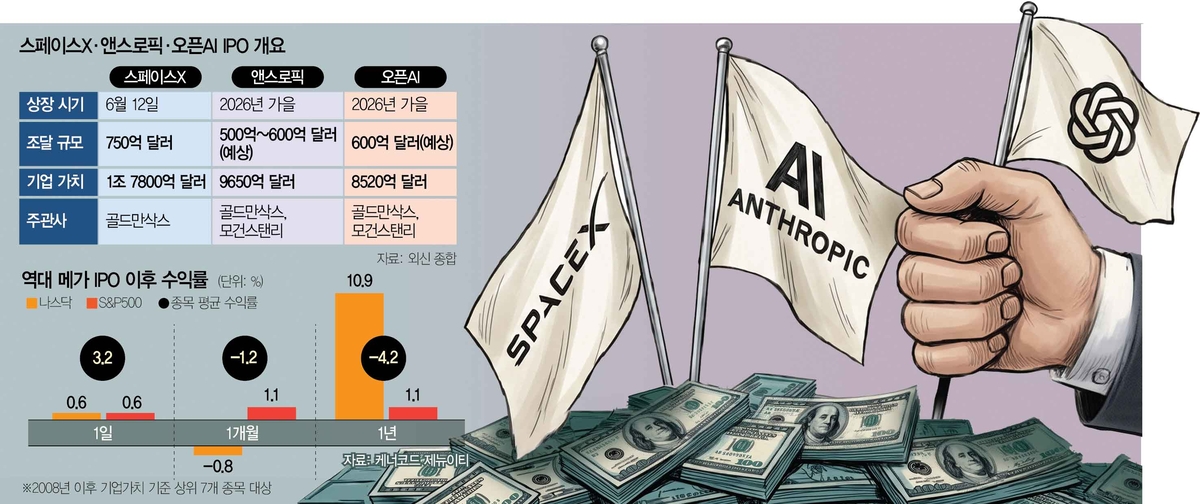
OpenAI’s push for this $1.2 trillion private funding round is a significant milestone showing the direction of the entire AI industry. The pace of technological development is so steep that capital flows are moving breathlessly, and competition among major corporations is becoming fiercer. Depending on how the new investment is finally concluded in the coming months, the landscape of the global tech market could be completely transformed. General readers need to pay attention to these massive capital movements, not just watch the emergence of new programs. As the impact of technology on our daily lives and jobs grows day by day, wisdom is required to consistently monitor related news. In conclusion, OpenAI is continuing its breathless pace to catch both safety and profitability. The strategy of solidifying its fundamentals rather than listing on the stock market immediately and playing the long game is receiving positive evaluation in the market. The eyes of the world are on Silicon Valley to see who will seize the leadership in the coming AI era. This is why we all must prepare for the future with wise eyes in the ever-changing tech ecosystem. We will continue to analyze and deliver related news to our readers quickly and accurately as it comes in.
OpenAI’s current funding round demonstrates the massive capital flow in the AI market and will be a crucial opportunity that determines the landscape of the entire tech ecosystem.
Frequently Asked Questions
=