
The price gap between SK Hynix’s American Depositary Receipts (ADRs) and its domestic shares is widening, drawing intense attention from domestic investors. As the Korean stock market experiences extreme volatility daily, a clear trend of capital flowing toward the relatively stable US market has emerged. In fact, the US market premium, which began to build steadily from the initial listing, has recently surged to nearly 40%, displaying an unusual pattern. This raises curiosity about why investors are seeking the US stock market despite the additional tax burden. In this article, we will thoroughly examine the causes of the high premium recorded by SK Hynix ADRs and the background behind the expanding divergence from the domestic stock market. We will deeply analyze from an investment perspective how the price difference between the underlying shares and ADRs may evolve in the future. By comprehensively analyzing market sentiment and supply-demand conditions, we aim to help you make wise investment decisions.
=
SK Hynix ADR Listing: US Premium Nears 40% in Two Months, Sucking in Korean Retail Investors

1. The Reality of the Widening Divergence Between ADRs and Underlying Shares
The price difference between SK Hynix’s ADRs and its domestic shares has widened beyond imagination, shocking the market. According to Korea Exchange data, while the domestic stock price closed with a significant decline, the ADRs listed in the US market actually recorded an upward trend, creating a stark contrast. By calculating the exchange ratio and exchange rate to convert into Korean Won, it is easy to see that a huge gap exists between the domestic stock price and the ADR price. Compared to the past, this price gap shows a trend of expanding more sharply over time. Despite downward pressure on the converted price due to the recent two-month depreciation of the Won, the price difference has actually widened further. This serves as evidence of how intense the buying enthusiasm is among US market participants, going beyond simple exchange rate fluctuation effects. Domestic investors are leaving the exhausted domestic market behind and rushing toward the US stock market. The fact that this phenomenon occurs despite the structure where ADRs incur higher taxes than domestic stocks is highly suggestive. Investors place greater value on the stability and sustained premium offered by the US market, even if it means bearing additional costs. The ADR price itself is set at one-tenth the level of the underlying shares, making it very accessible for small investors. This reduction in entry barriers has acted as a decisive factor for individual investors to flood into the US market. Consequently, a bizarre phenomenon is emerging where selling pressure floods the domestic stock market while buying pressure remains unceasing in the US stock market.
The price gap between SK Hynix ADRs and underlying shares is fluctuating around 50%, attracting exceptional interest from investors.
2. A Surprising Premium Nearing 40% in Just Two Months Since Listing
Since their debut in the US stock market, SK Hynix ADRs have consistently traded at a high premium compared to the underlying shares. Looking at specific figures, the premium, which was in the mid-30% range on a daily average in July, has surged to levels approaching 40% as of this month. It is evaluated as a very unusual phenomenon for such a high premium to be maintained and expanded in the short period of two months since listing. Generally, as time passes, the price difference between underlying shares and ADRs is expected to narrow through arbitrage trading. However, in this case, the gap is widening, directly reflecting the high expectations of US investors. Market experts analyze that this phenomenon stems from a structural supply-demand imbalance rather than a temporary fad. The biggest reason for the sustained high premium is the relative stability of the US market and the high preference for AI-related semiconductor stocks. Investors participating in the US market are giving points for being relatively free from the political and economic volatility of the Korean market. Additionally, the convenience of easily trading through US stock accounts serves as a sturdy pillar supporting the premium. A paradoxical situation is also unfolding where even domestic investors, disappointed by the sluggishness of the domestic stock market, are buying ADRs through overseas accounts. This buying spree acts as a driving force to push up ADR prices further, creating a flow that is hard to tell whether it is a virtuous or vicious cycle. Ultimately, the 40% premium figure serves as a mirror showing how much the value of the company perceived in the global market diverges from the evaluation in the domestic market.
The ADR premium has continued to rise, approaching 40%, proving the high valuation from the global market.
3. Intensive Buying by Korean Retail Investors and Contrasting Capital Flows in the Domestic Market
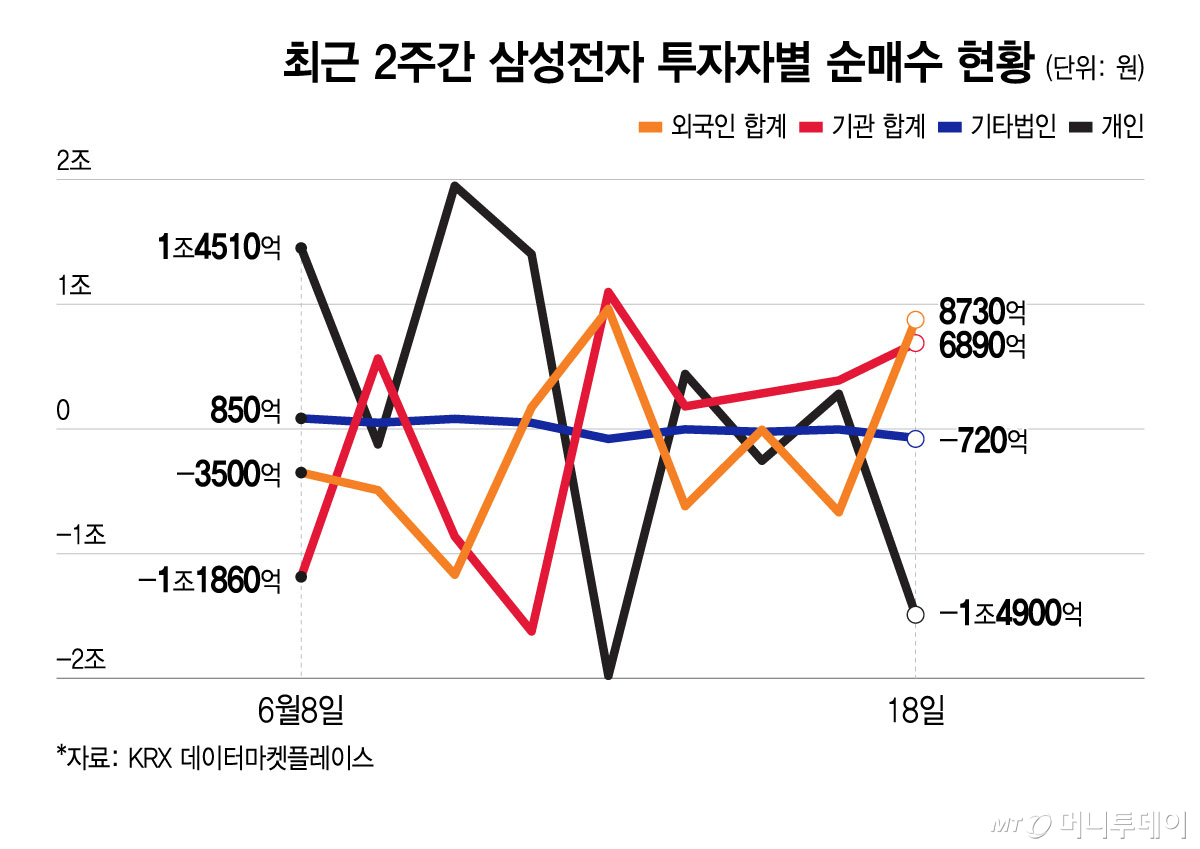
According to statistics from the Korea Securities Depository, domestic investors have continued a net buying streak by injecting a massive amount of capital since the ADR listing. On the other hand, the opposite phenomenon is occurring in the domestic stock market, where individuals, foreigners, and institutions are all launching fierce selling attacks. Domestic investors have been dumping shares to realize profits or reduce losses every time the stock price rises, holding back the index’s rise. Foreign and institutional investors have also recorded large-scale net selling, openly withdrawing funds from the Korean stock market. A complex supply-demand structure has formed where a significant portion of this outflow is absorbed through other corporate channels, such as the company’s own share buybacks. While the domestic stock market is under downward pressure from various negative factors, Korean retail investors’ funds have been sucked entirely into the US market. This massive capital shift clearly demonstrates how much the investment appeal of the domestic stock market has declined. Investors remaining in the domestic stock market are complaining of deep fatigue from repeated stock price drops and volatility. In contrast, Korean retail investors who have turned to the US market are expressing satisfaction while enjoying stable returns and the fruits of high premiums. Of course, buying ADRs does not guarantee success, and the risk of correction due to high premiums always exists. Nevertheless, the reason investors are ignoring the domestic market and boarding the plane to the US is clear. It is because a sentiment that it is no longer easy to find hope in the domestic stock market has spread, leaving a heavy task for future domestic stock market policies.
While Korean retail investors flocked to US ADRs, the domestic market saw a massive dump of selling volume, showing an extreme contrast.
4. Expectations for Inclusion in the Philadelphia Semiconductor Index and Additional Upside Drivers
The securities industry is strongly suggesting that SK Hynix ADRs will be included in major US semiconductor indices in the future. Experts predict that inclusion in the relevant index could materialize as early as next year, heralding a massive inflow of funds. If successfully anchored in a global index, a huge amount of passive funds will be forcibly injected, providing an opportunity for the company’s value to be re-evaluated. While various negative factors and supply-demand distortions are weighing down stock prices in the domestic market, these positive factors are supporting stock prices in the US market. Because there are abundant secondary momentum factors waiting, analysis gains weight that the price gap with the underlying shares will not easily narrow for the time being. US market participants are interpreted as actively pressing the buy button by pre-reflecting this future value. Voices are also growing that the domestic stock market is overreacting to short-term negative factors, leading to undervaluation of the stock price. However, until the signal for a substantive stock price recovery is fired, it is difficult to stop the flow of investors’ eyes turning to US ADRs. If the major positive factor of index inclusion materializes, the popularity of ADRs is likely to soar even higher. As a result, the US market is establishing itself not just as a refuge but as a new investment hub, deepening the decoupling phenomenon from the domestic stock market.
Expectations for future inclusion in major US semiconductor indices are acting as a strong positive factor further increasing the value of ADRs.
5. Expert Diagnosis and Scenarios for Future Resolution of the Divergence
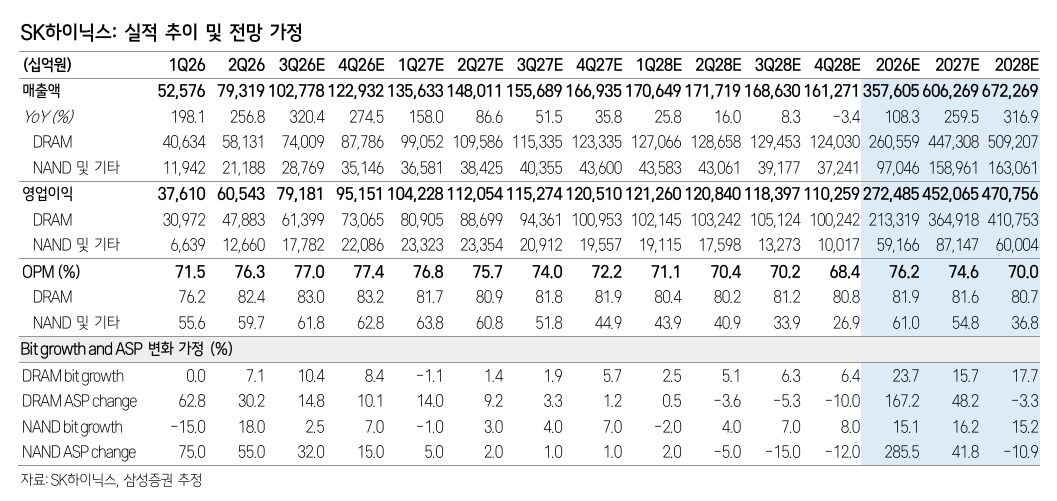
Market experts are analyzing that the currently observed extreme divergence and premium phenomenon are unlikely to last forever. Since underlying shares and ADRs essentially share the value of the same company, they are bound to converge in a certain direction from a long-term perspective. Currently, the domestic stock market is in a phase of excessive undervaluation, reflecting too many negative factors compared to the actual fundamental strength of the companies. As time passes and the domestic stock market regains stability and investor sentiment recovers, the price gap between the two markets will naturally narrow. It is the prevailing view that while the gap is widening due to supply-demand negative factors and selling pressure for now, it will find balance in a few months. Therefore, advice continues to urge caution regarding strategies of buying ADRs at high premiums immediately. Investing blindly without comprehensively considering exchange rate fluctuation risks and depositary costs can lead to significant losses. Conversely, there is a view that for long-term investors in domestic underlying shares, the current excessive decline could actually be a good opportunity. While recalling the adage that when market fear reaches its peak, it may be the bottom, a calm response is needed. Ultimately, whether the divergence between the two markets narrows from above or below depends on future semiconductor industry conditions and stock market trends.
Since underlying shares and ADRs will eventually move in the same direction, experts expect the price gap to narrow in a few months once the stock market stabilizes.
6. Key Checkpoints for Investors and Future Outlook
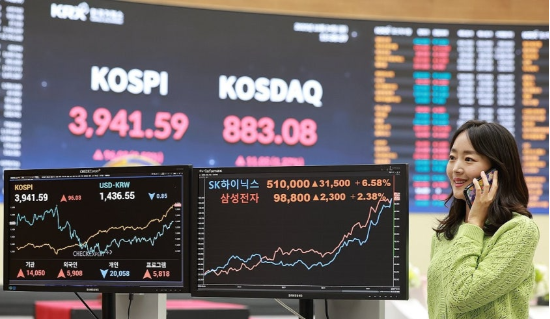
The SK Hynix ADR boom is a symbolic event showing changes in the global investment environment, going beyond a mere fad. Investors are facing the limitations of the domestic stock market and expanding their territory to overseas markets in search of better returns and stability. While the 40% premium figure may feel burdensome, understanding the structural causes hidden behind it is of utmost importance. Going forward, it is necessary to closely monitor exchange rate movements, the schedule for inclusion in US semiconductor indices, and the timing of a rebound in the domestic stock market. This is a time when wisdom is required to adhere to one’s own investment principles based on thorough analysis rather than hasty chasing. The more volatile the market, the more a cool-headed attitude of looking at the market without being swayed by emotions determines successful investment. In conclusion, this incident painfully highlights why structural improvement of the Korean stock market is urgent. To prevent capital outflow and win back investors’ hearts, substantive measures to enhance market transparency and appeal must be backed up. Whether the choice of Korean retail investors remains a wise hedging tool or ends as temporary overheating will be proven by stock price trends over the next few months. We recommend that readers not be dazzled only by the immediate premium but also examine the company’s essential competitiveness and macroeconomic indicators. Thorough preparation and flexible response are the only way to protect assets and create unearned income in this chaotic market. We sincerely encourage you to formulate a wise investment strategy to make upcoming opportunities your own.
It is most important to formulate a cool-headed investment strategy by checking thorough market analysis, exchange rates, and index inclusion schedules.
Frequently Asked Questions
=