Personal pension savings are the most reliable tax-saving tool, allowing you to maximize tax deduction benefits during your annual tax settlement while securing a solid retirement fund. To put it simply, combining pension savings and individual retirement pensions to meet the annual contribution limit is the most advantageous strategy for asset management. I often see office workers scrambling to fill their pension accounts in a panic only when December arrives. However, by consistently contributing through monthly automatic transfers, you can avoid the impact of market volatility and benefit from a lower average purchase price. In this article, we will thoroughly examine everything busy professionals need to know about personal pension savings. We will clearly explain everything from complex tax conditions to practical methods for calculating your payout amount.
=
The Ultimate Guide to Personal Pension Savings Tax Deduction Limits and Payout Calculation
1. Basic Concepts and Necessity of Personal Pension Savings
Personal pension savings are one of the first financial products we should prepare for retirement. Since the National Pension provided by the state is often insufficient to keep up with inflation, additional personal preparation is essential. In the past, many people simply deposited their money in bank savings or fixed-term deposits, but with the prolonged era of low interest rates, investing has become a necessity. For instance, Mr. Kim, an office worker, started contributing a fixed amount to a pension savings fund in his mid-30s, laying the foundation for building a substantial asset base. The earlier you start, the more you can maximize the effect of compound interest, which significantly changes your account balance at retirement. Rather than vaguely thinking you will earn and spend it later, it is wise to start now, even with a small amount. To live comfortably after retirement, it is crucial to diversify your cash flow. It is time to apply the wisdom of growing your wealth while saving on taxes, going beyond merely accumulating money.
Personal pension savings are an essential asset management tool required to create a stable cash flow after retirement and save on taxes.
2. Tax Deduction Limits and Maximization Strategies
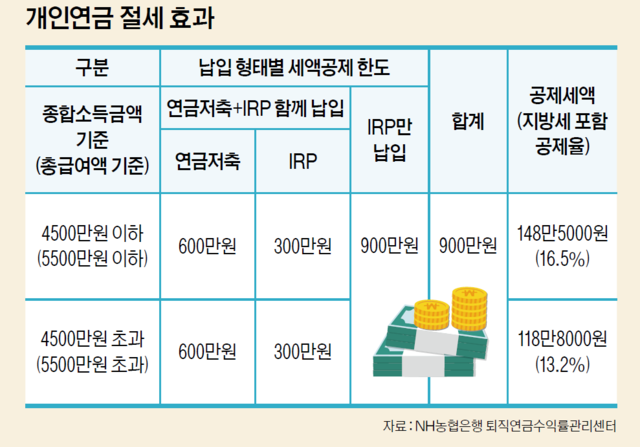
The first thing to look at when opening a personal pension savings account is the annual tax deduction limit and tax-saving benefits. Under the current system, you can receive tax deduction benefits of up to 9 million KRW annually when combining pension savings and individual retirement pensions. Pension savings alone allow for a deduction of up to 6 million KRW, and adding an individual retirement pension increases the limit to 9 million KRW. When you see the tax refund amount during your annual tax settlement, you will understand why office workers cherish this account so dearly. Since the deduction rate varies based on annual income, it is advisable to check your taxable income bracket in advance and adjust your contribution amount accordingly. In the second half of the year, you need a strategy to check your remaining deduction limit and make additional contributions to maximize tax savings. Instead of blindly filling the limit, you should approach it through monthly automatic transfers within a range that does not strain your income level.
The core of tax savings during annual tax settlement is combining pension savings and individual retirement pensions to fill the annual tax deduction limit of up to 9 million KRW.
3. Organic Utilization of Tax-Saving Accounts and ISA Linkage
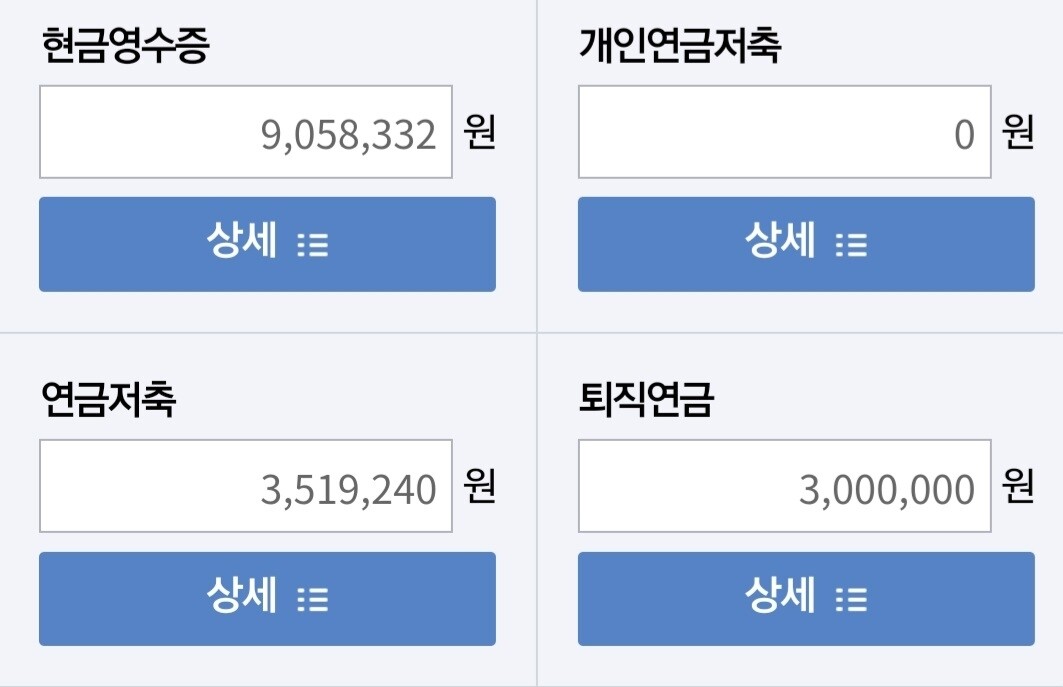
Rather than focusing on just one account, you should manage multiple tax-saving accounts as a single, comprehensive asset management system. For example, transferring a lump sum from a matured Individual Savings Account (ISA) to a pension account allows you to secure both additional tax deductions and tax-exempt benefits simultaneously. Mr. Park, an office worker, transferred a portion of his matured ISA funds to his pension savings account, securing both retirement funds and tax savings. By organically linking existing accounts with newly opened pension products, you can accelerate asset growth. Utilizing various asset diagnosis tools and management services provided by financial institutions allows you to monitor your account status frequently. However, please note that some funds newly opened at branches or specific products eligible for tax benefits may be excluded from general automatic monitoring. Therefore, it is essential to accurately understand the nature of your products and manage them individually with careful attention.
You should transfer matured ISA funds to pension accounts and organically link multiple tax-saving accounts to enhance asset management efficiency.
4. Methods and Conditions for Calculating Pension Payouts
As retirement approaches, you must carefully calculate how much you will receive monthly. The pension payout amount is determined by a combination of the principal contributed, investment returns, and the payout period, so it is best to calculate it in advance. Generally, you can start receiving the pension after age 55, and receiving it over a period of 10 years or more is most advantageous for tax rates. If the payout period is too short, you may be subject to higher tax rates such as miscellaneous income tax or comprehensive financial income tax instead of pension income tax, so caution is required. In fact, if you withdraw too large an amount at once, exceeding the payout limit, you may face a heavy tax burden, so you should distribute your monthly payout amount appropriately. You should also study the criteria for National Health Insurance premiums and comprehensive financial income tax in advance and plan your retirement to avoid difficulties. You need to accurately calculate your expected post-retirement income and compare it with your monthly living expenses.
Pension payout amounts vary based on the principal, return rate, and payout period; receiving it in installments over 10 years or more after age 55 is advantageous from a tax perspective.
5. Understanding Pension Income Tax and the Taxation System
When receiving a pension in retirement, you will pay pension income tax, which is applied differently based on age, unlike general employment income. The tax rate is 5% for those aged 55 to under 70, 4% for those aged 70 to under 80, and 3% for those aged 80 and above, decreasing as you get older. Thanks to these low tax rate benefits, retirees can significantly reduce their tax burden and secure a stable living expense. If your annual pension payout does not exceed a certain amount, you can choose separate taxation, avoiding the hassle of filing a comprehensive income tax return. Listening to stories from retired acquaintances, there is a clear difference in quality of life between those who understand the tax structure and plan their payouts accordingly and those who do not. Since tax laws may be amended slightly each year, you should refer to expert lectures or the latest tax-saving guides to respond quickly to changes. Tax knowledge is not just about knowing the rules; it is a powerful weapon that determines the size of your actual retirement assets.
Pension income tax rates decrease as the recipient’s age increases, and separate taxation is possible if the amount is below a certain threshold.
6. Practical Strategies for a Successful Retirement
Based on the content reviewed so far, you should create your own retirement asset management plan that you can start implementing immediately. Retirement preparation has the characteristic that the longer you delay, the more the economic burden snowballs. Try setting up automatic transfers on your payday and consistently contributing to your pension savings fund and retirement pension account. You will experience the true value of systematic investing, which allows you to buy more shares when the market falls. The small decisions you make today will create the comfort of tomorrow as you prepare to welcome your upcoming retirement period with style and abundance. Please open your main bank or securities company app right now, check the status of your pension account, and fill in any missing contributions.
Consistently accumulating pension assets through monthly automatic transfers and regularly checking your account are the keys to a successful retirement.
Frequently Asked Questions
=