There are cases where, despite diligent contributions, you remain in a blind spot regarding tax benefits. This is often due to the habit of failing to meet the annual contribution limit of 6 million KRW for pension savings funds and postponing it to the following year. Considering that the preparation period for year-end tax settlement is already underway through the first half of 2026, now is the most critical time. It is not enough to simply open an account and deposit money. You need the skill to withstand yield volatility while maximizing tax benefits. In this article, we explain why asset allocation is important right now through real-world examples. We will also look at the differences between pension savings funds and individual pension accounts (IRP).
=
2026 Pension Savings Fund: Maximizing Retirement Returns While Preventing Tax Deduction Limit Overruns
1. Basic Structure of Pension Savings Funds and the Real-World Impact of Tax Benefits
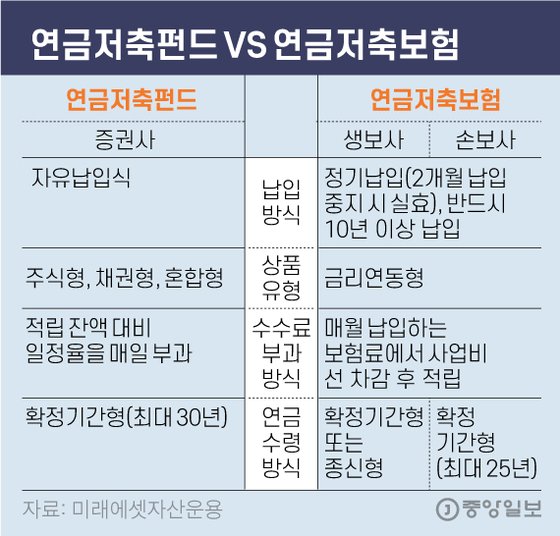
A pension savings fund is an account where you can directly adjust your contribution amounts. With an annual contribution of 6 million KRW, you can receive a benefit that directly reduces your income tax by up to 720,000 to 810,000 KRW, depending on your income level. This is a structure where the deduction is applied directly to the taxable income amount, regardless of corporate tax rates. Employees can enjoy the effect of a consistent reduction in a certain percentage of their monthly income. However, do not forget that you will have to pay taxes again upon withdrawal, based on the taxable income at that time. This is called “deferred taxation,” and high-income earners may potentially benefit from a lower tax rate. Since it is calculated by combining the principal investment and interest earnings, you must build a solid initial capital base.
Pension savings funds operate on a deferred taxation structure, where you receive a tax deduction at the time of contribution and are taxed upon withdrawal, resulting in significant tax savings for long-term investments.
2. Tips for Selecting Fund Types Suited to the 2026 Market Conditions
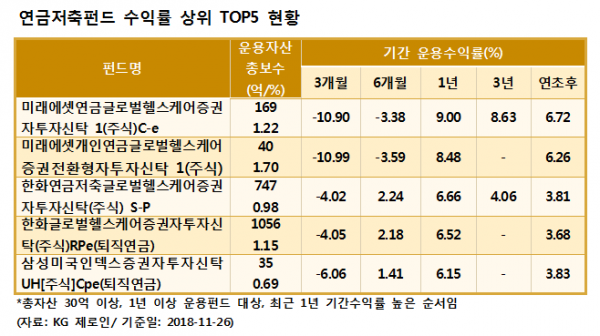
Currently in 2026, many experts assess that the global market has entered a stable phase of interest rate cuts. Accordingly, portfolio construction focused on steady growth, rather than the sharp volatility of the past, is effective. In particular, the 4-6 strategy, which mixes East Asian high-dividend stocks or global bond funds rather than highly volatile US Nasdaq index-tracking funds, is gaining popularity. However, from the perspective of long-term investment of three years or more, a global equity fund that diversifies investments across world stock markets remains the fundamental approach. New subscribers should actively utilize the “Systematic Investment” feature offered in securities firms’ mobile apps. It is more stable to rely on an automatic purchase system that offsets risk rather than meticulously checking market conditions every month.
Volatility management has become important depending on market conditions, and diversification and systematic investment are essential at this point.
3. How to Leverage the Synergy Between ISA Maturity Funds and Pension Savings
A strong opportunity arises for those whose ISA accounts, held for more than three years, are reaching maturity. If you transfer ISA maturity funds to a pension savings account within 60 days, you can receive an additional tax deduction of up to 3 million KRW. This benefit is applied separately from your existing pension savings contributions. For example, if you contribute 3 million KRW to a pension savings fund and supplement the remaining limit with ISA funds, you can look forward to a total tax benefit equivalent to 9 million KRW. This is one of the few paths that allows you to grow investment assets while saving on taxes, going beyond simply calculating interest earnings. Every December, many people regret missing this period. As of October, there is still time, but you should first check the eligibility with your securities firm’s customer service center or mobile app.
Transferring ISA maturity funds to a pension savings account within 60 days allows you to enjoy an additional tax deduction benefit of up to 3 million KRW.
4. Comparing the Pros and Cons of Pension Savings and Individual Pension Accounts (IRP)
Many people confuse these two accounts, but the biggest difference lies in the management method. Pension savings funds offer very high flexibility, allowing customers to directly buy and sell their desired funds or ETFs. On the other hand, Individual Pension Accounts (IRP) are divided into self-directed and customer-selected types managed by financial institutions, but they typically have the constraint that a certain percentage (usually 20% or more) must be allocated to safe assets. If looking only at the tax benefit limit, IRP offers more room. In addition to the 6 million KRW pension savings limit, a total of up to 9 million KRW can be deducted, including self-employed individuals without employment income. However, if you want to increase the proportion of equity assets, pension savings funds offer a more advantageous position. You should differentiate your approach depending on whether your financial goal is “stable growth” or “maximizing returns.”
Pension savings funds offer higher management flexibility, while the total tax deduction limit is larger when including IRP, so holding both for diversification is recommended depending on your purpose.
5. Reducing Initial Costs by Utilizing Securities Firm Events
In the second half of 2026, major securities firms are running various promotional events to attract customers. Large securities firms like KB Securities offer dedicated ETF purchase coupons to new or dormant customers. This usually results in a cost reduction effect of about 30,000 KRW. Additionally, they promise to pay up to 100,000 KRW in NaverPay points to customers who net purchase domestic equity funds. These benefits, even if small, play a role in stabilizing investment psychology in the long run. You must carefully check the “Events” menu at the top of the securities firm’s mobile app before signing up. This is because the actual burden amount varies depending on whether an event is applied, even if the same amount is deposited.
It is wise to check for tailored events from each securities firm to reduce subscription costs and opportunity costs.
6. Mistake Prevention Guide and Action Plan for the Second Half of 2026
The most common mistake in daily life is forgetting the pension savings contribution schedule. You must contribute by the end of December to receive the benefits for the following year, so now, in October, is the optimal timing. However, if you exceed the limit, the excess amount will not be deducted. Therefore, develop the habit of pausing contributions after December 25 each year. Be sure to re-verify the deduction status through the withholding tax certificate during year-end tax settlement. Setting up automatic transfers from an account in your name greatly increases convenience. Log in right now to check your current asset status and accumulation rate. Small differences in habits determine your retirement assets 10 years from now.
Regular checks to prevent exceeding the contribution limit and setting up automatic transfers are the easiest ways to prevent losses.
Frequently Asked Questions
=