
As of 2026, the digitalization rate for actual-damage medical insurance claims has reached 74%, yet inefficient methods such as paper receipts and fax submissions still persist at some hospitals. Recently, financial regulators have strongly encouraged the transition to 5th-generation actual-damage insurance, leading to increased dissatisfaction among existing policyholders. However, the intent behind this move—to prevent excessive medical treatment and ensure financial soundness—is clear. Many people wonder why the process remains cumbersome, even though they can now file claims with just a few taps on their smartphones, recalling the days when they had to carry receipts around to insurance agencies. In the current landscape where private charting companies and the public Solsun24 system coexist, it is crucial to know which filing path offers the fastest and most accurate way to receive insurance payouts. In this article, we will specifically examine the reality of actual-damage insurance claims as of October 2026 and the essential points to check when transitioning to 5th-generation insurance. Through this, you will learn how to manage your insurance wisely, avoiding unnecessary paperwork and ensuring you don’t miss out on benefits by preparing while you are still healthy.
=
2026 Status of Digital Medical Insurance Claims and a Must-Read Guide to the 5th-Generation Transition

1. The Evolution of Digital Claims: Persistent Inconveniences

The digitalization of actual-damage insurance claims has not achieved the seamless success initially expected, and paper-based processes remain prevalent in the field. As of the end of July, while a significant number of medical institutions have completed linkage with Solsun24, they still represent a minority compared to the total number of medical facilities, resulting in inconsistent consumer experiences. When I visited a local clinic for lower back pain last month, I was informed that digital claims were possible, but I ultimately had to submit a card receipt and detailed itemized statements in an envelope. During this process, the settlement systems between the medical staff and the insurance company were not fully synchronized, causing a delay of nearly a week before the insurance payout was made. This experience highlights that variations in “speed” and “accuracy” persist even with digitalization. The government is expected to strengthen incentives for medical institution participation and hint at sanctions for non-participating institutions, suggesting institutional progress. However, from the consumer’s perspective, one must remain vigilant, expecting improvements in the second half of the year or next year rather than the current year.
Emphasizes the remaining inconveniences due to variations between medical institutions despite the activation of digital claims, and the need for institutional improvements.
2. 5th-Generation Actual-Damage Insurance: Mandatory or Optional?

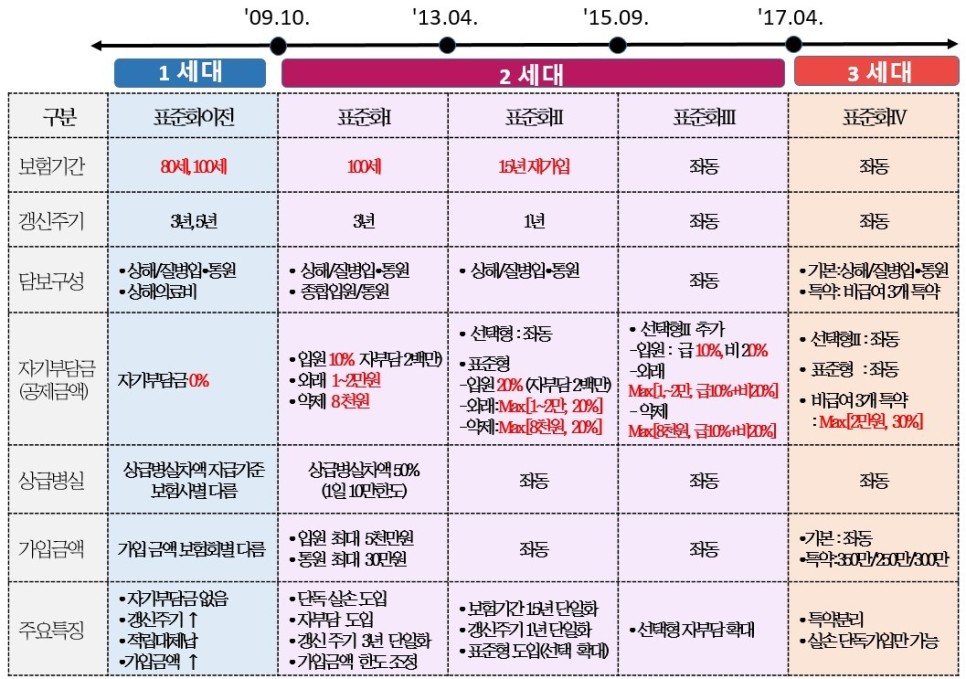
The 5th-generation actual-damage medical insurance, launched in May 2025, is a core strategic product by financial regulators aimed at reducing excessive medical treatment and ensuring fair management of insurance funds. The hesitation among existing 1st and 2nd-generation policyholders to transition to the 5th generation stems from concerns over reduced coverage for non-covered items and increased out-of-pocket costs. For instance, frequently used non-covered items such as manual therapy and fillers often have restricted coverage ranges or lower limits in 5th-generation insurance. For example, a friend mentioned that while physical therapy costs were previously fully covered, providing peace of mind, they are now only recognized within an annual limit, which is quite confusing. On the other hand, 5th-generation insurance has the advantage of reducing indiscriminate misuse, which can lower the magnitude of premium increases in the long run, benefiting long-term policyholders. The Financial Supervisory Service is operating consultation desks to help existing policyholders voluntarily transition. Therefore, you should carefully compare your past medical history with your anticipated future medical needs. Rather than simply settling for the current situation, strategic judgment is required, considering the premium burden three or five years down the line.
The background of the 5th-generation insurance introduction, existing policyholders’ complaints and benefits, and the importance of comparing the economic viability of the transition timing.
3. Private Platforms vs. Public Solsun24: Which is Better?
In addition to the public platform Solsun24, private charting companies like G&Net already provide claim services linked to a significant number of medical institutions. There has been controversy over articles that emphasize only the public service as if private options do not exist. From a consumer’s perspective, however, the only thing that matters is the result of a “successful claim.” Private platforms offer the advantage of intuitive user interfaces and frequent notifications, allowing real-time tracking of claim progress. In contrast, the public Solsun24 is linked with some large or general hospitals but remains insufficient for neighborhood clinics. Based on my experience, filing claims through private platforms resulted in fewer errors in receipt photo recognition, significantly reducing additional document requests during the insurance company’s review stage. However, one point to note is that even when using a private platform, the data is ultimately transmitted to the insurance company, so security settings must be maintained through the latest version of the smartphone app. Regardless of the platform used, it is advisable to develop the habit of directly contacting the insurance company’s customer service center if the claim status remains stagnant for more than three days after submission.
Comparison of differences between the public Solsun24 and private claim platforms, along with tips on efficiency and security management from a consumer’s perspective.
4. Practical Tips for Minimizing Claim Rejections Through Document Preparation
The most common reasons for rejection during the insurance review process are “unclear necessity of treatment” or “missing documents.” Especially for non-covered items, it is difficult to prove why the treatment was necessary with just a simple medical fee receipt, leading to a high probability of rejection. When I received injection therapy for shoulder inflammation, my attending physician added a note to the statement saying “Injection therapy is unavoidable for more than 3 sessions,” and the insurance payout was made without hesitation. For conditions requiring repetitive procedures, such as manual therapy or antibody injections, checking whether the “annual frequency limit” has been exceeded is a key checkpoint. After the 2026 revised bill, additional treatments due to personal necessity that exceed the managed care frequency standards are often excluded from both national health insurance and actual-damage insurance, so caution is required. Therefore, a culture of asking medical staff in advance about claim eligibility or out-of-pocket ratios before treatment must be established. When preparing or requesting documents, clearly stating “For Actual-Damage Insurance Claim” helps guide the hospital to fill in any missing items, which is the practical way to prevent financial loss.
Analysis of causes for non-covered item claim rejections, key phrases to include when preparing diagnostic certificates and opinion letters, and pre-verification procedures.
5. Intelligent Strategies to Improve Insurance Payout Rates Through Health Management
Since actual-damage insurance compensates for “actual losses,” preventive management significantly impacts insurance premiums and coverage. There is an increasing trend of cases where individuals taking medication for hyperlipidemia or suffering from chronic diseases are hospitalized due to side effects from arbitrarily combining health functional foods. In such cases, insurance companies may refuse payment citing violation of the duty of disclosure or grounds for non-coverage, so it is essential to inform pharmacists or doctors of all items currently being taken. Do not dismiss symptoms such as loss of appetite or fatigue in cancer patients as simple aging; obtain an accurate diagnosis from a specialist to establish grounds for an actual-damage claim. Non-covered medical fees vary widely depending on hospital rates, medical staff expertise, and ingredient purity, so insurance applicability for the same procedure can differ by location. I share my annual health checkup results with my insurance company to check for potential premium discounts or expanded coverage benefits for the following year. It is necessary to shift one’s mindset from viewing insurance merely as a payment obligation to recognizing it as a “health management tool” that is continuously managed based on personal health data.
The impact of maintaining health status on insurance premiums and payouts, and advice on securing accurate claim documents based on diagnosis.
6. Managing Actual-Damage Insurance in the Second Half of 2026: What to Do Now
The period from now until the end of 2026 can be considered a golden time to check and improve the health of your actual-damage insurance. First, re-verify the type (1st to 5th generation) and coverage details of your current actual-damage insurance policy via the insurance company’s app. Second, review your hospitalization and outpatient records from the past year and check for any rejected insurance claims. Third, continuous monitoring of financial platforms is necessary to see if the conditions for transitioning to 5th-generation insurance have become more favorable for you. Fourth, for family policyholders, it is advisable to integrate management into a single platform considering the convenience of simultaneous claims. Fifth, if you have plans for childbirth or surgery, consult with the insurance company in advance to formulate a strategy to prevent potential claim disputes. Sixth, do not forget that all these processes are a long-term investment aimed at reducing your personal health risks and future medical burdens.
Emphasizes the checklist for actual-damage insurance reviews to be completed by year-end and long-term medical cost-saving strategies.
Frequently Asked Questions
=