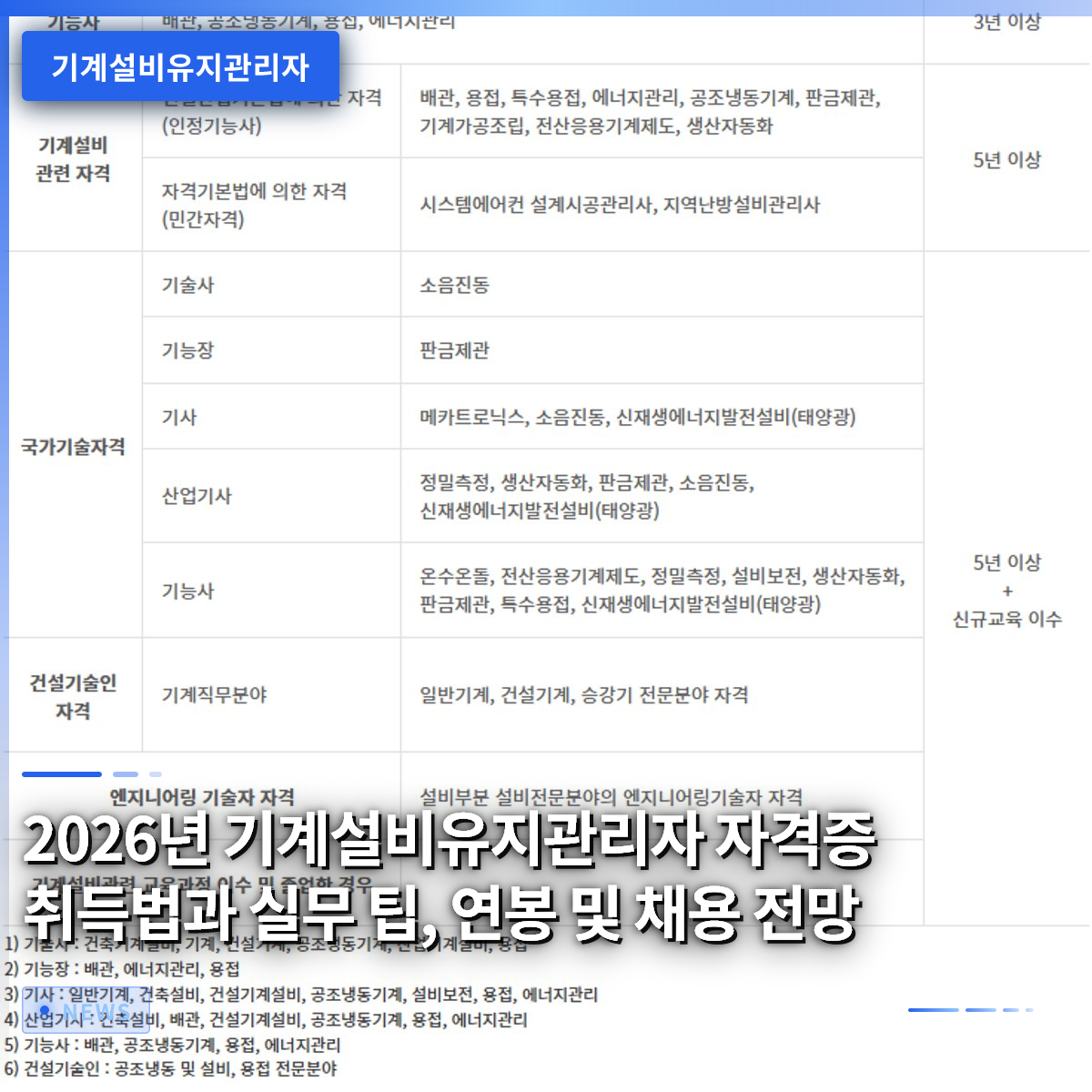
As of 2026, obtaining the Mechanical Equipment Maintenance Manager certification allows you to work as a professional responsible for equipment inspection and preventive maintenance in industrial settings. The need for mechanical equipment operation personnel is increasing due to the growing demand for logistics automation in Russia and the expansion of natural gas petrochemical complexes in Central Asia. Consequently, there are an average of over 1,200 job postings for Mechanical Equipment Maintenance Managers annually, and certification holders are often preferred. Therefore, familiarizing yourself with the exam schedule and practical tips in advance can enhance your employability.
How to Obtain the Mechanical Equipment Maintenance Manager Certification in 2026: Practical Tips, Salaries, and Hiring Prospects
1. Certification Types and Eligibility Requirements
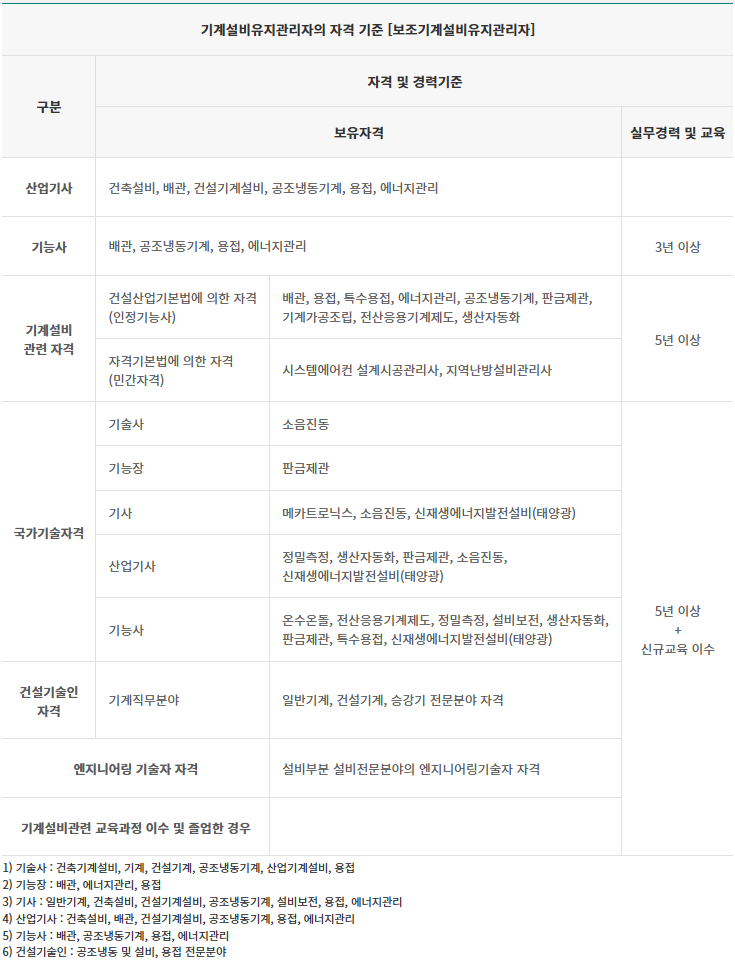
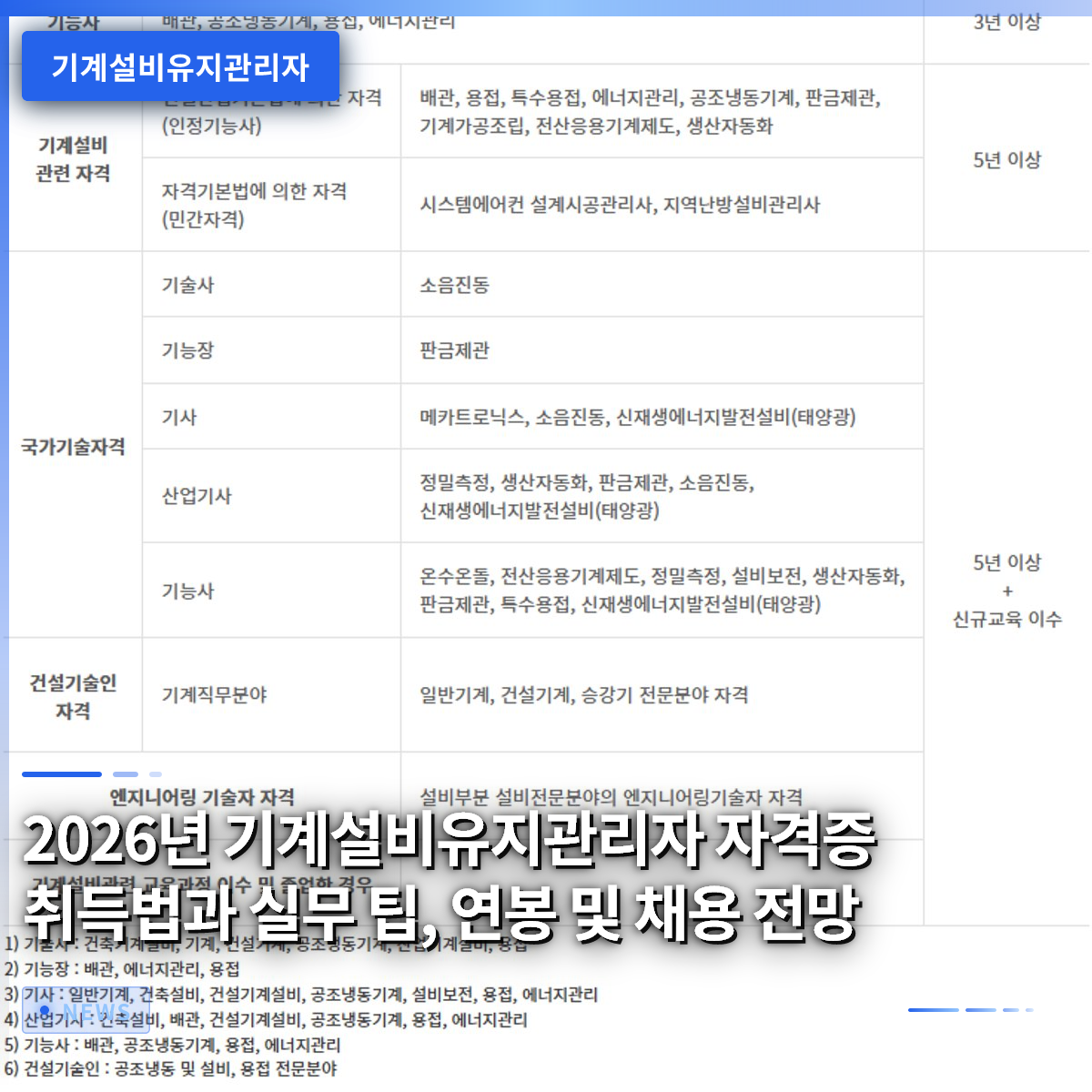
The Mechanical Equipment Maintenance Manager certification is divided into two levels: Industrial Engineer and Professional Engineer. Candidates with a junior college degree or equivalent can apply for the Industrial Engineer level, while the Professional Engineer level requires a four-year university degree or at least two years of practical experience in a related field. Both levels require passing the written and practical exams administered by the Korea Human Resource Development Service (HRD Korea). Applications are submitted online through the HRD Korea website. Required documents include a final academic transcript, a certificate of work experience (if applicable), and a copy of a valid ID. The application period opens twice a year, in the first and second halves of the year; exact dates should be verified in the official announcements. If you do not meet the requirements, you will be restricted from taking the exam, so prior verification is essential. In particular, experience requirements can be satisfied with on-site work certificates, so it is advisable to prepare these if you have relevant experience. Once prepared, you can proceed to the first-stage written exam.
Choose the level that aligns with your goals and verify your academic and experience requirements in advance.
2. Exam Schedule and Preparation Methods
The written exam is held twice a year, in March and September. The practical exam is conducted within one month after passing the written exam, with a separate schedule. Exact dates can be confirmed in the HRD Korea exam announcements. The standard textbook is the Mechanical Equipment Maintenance Manager certification textbook published by the Korea Occupational Safety and Health Agency (KOSHA). Past exam question books reflecting recent trends are available at bookstores and online. Many online lecture sites offer free sample lectures, which can be helpful to listen to first. Reviewing one subject for 30 minutes a day can help solidify basic concepts. Creating an error notebook and repeatedly solving incorrect problems aids in improving your skills. It is also advisable to take mock exams close to the test date to practice time management.
Check the exam schedule and create a consistent study plan using textbooks, past papers, and online lectures.
3. Job Responsibilities in Practice
Mechanical Equipment Maintenance Managers inspect the normal operation of mechanical equipment in factories or buildings. Routine inspections involve measuring temperature, pressure, and vibration, and recording any abnormal signs. This inspection data serves as the foundation for creating preventive maintenance plans. Defects discovered during inspections are repaired immediately or parts are replaced. After repair work, the work details are recorded in detail for reference in the next inspection. Adhering to safety rules significantly reduces the risk of accidents. Maintenance work is carried out in close coordination with production lines or equipment operation teams. Prior coordination is necessary to ensure that work schedules do not affect production plans. Therefore, communication skills are also a key competency.
On-site duties primarily include equipment inspection, maintenance, record-keeping, and safety management, with team collaboration being essential.
4. Latest Industry Trends and Demand
In Central Asia, petrochemical complexes using natural gas as a raw material are continuously operating, and equipment operating hours are increasing. Since such equipment operates in high-temperature and high-pressure environments, regular inspections and preventive maintenance are essential. Consequently, the role of Mechanical Equipment Maintenance Managers is becoming increasingly important on-site. In Russia’s logistics industry, the expansion of automated equipment has led to an increase in the number of mechanical devices such as conveyors and sorting robots. Automated equipment requires rapid diagnosis and repair because even minor errors can significantly impact the production line. As a result, demand for Mechanical Equipment Maintenance Managers responsible for maintaining automated equipment is rising. South Korea’s exports of machinery and steel are showing an upward trend, driven by improvements in manufacturing PMI in the United States and China. In line with increased exports, domestic manufacturing sites are actively striving to increase equipment utilization rates. The need for personnel to handle regular inspections and preventive maintenance to maintain equipment utilization is growing. With the introduction of artificial intelligence technology, the number of robot and sensor equipment is increasing, and these also require periodic inspections. In environments where skilled workers and AI collaborate, Mechanical Equipment Maintenance Managers must be able to understand and handle new technological equipment to remain competitive. Therefore, a commitment to continuously learning the latest technological trends is required.
The role of Mechanical Equipment Maintenance Managers is expanding across various industries, including Central Asian petrochemicals, Russian logistics automation, increased domestic machinery exports, and AI-skilled worker collaboration.
5. Hiring Market and Salary Levels
Recently, job portals register over 100 job postings related to Mechanical Equipment Maintenance Managers on a monthly average. Personnel are continuously sought in various industries, including manufacturing, energy plants, and logistics centers. In particular, regions with active adoption of automated equipment often list this certification as a preferred qualification. For new hires, annual salaries commonly range from 28 million to 35 million KRW. With more than three years of experience, one can expect an annual salary between 40 million and 50 million KRW. However, actual amounts vary depending on company size, region, and job complexity, so checking job postings directly is the most accurate method. Many companies provide severance pay, night shift allowances, and educational support in addition to the four major social insurances. As you gain experience, pathways to promotion as an equipment engineer or maintenance team leader open up. Therefore, obtaining the certification is a good starting point when planning a long-term career.
The demand for Mechanical Equipment Maintenance Managers in the hiring market is stable, with a wide salary range based on experience and existing promotion opportunities.
6. Actions You Can Take Right Now
As the certification exam date approaches, the preparation period may become insufficient, so it is advantageous to make a plan now. In particular, since applications for the second-half exam are expected to open soon, checking information in advance will prevent you from missing out. Early preparation helps increase the probability of passing and reduces stress. First, check this year’s exam announcements and application periods on the HRD Korea website. Second, prepare the necessary academic and experience documents in advance and create scanned copies. Third, order textbooks and past exam books, and listen to sample lectures on online lecture sites. Fourth, create a weekly study schedule and review for at least 30 minutes every day. Fifth, take mock exams to get a feel for the real test and supplement any weak areas.
You can increase your chances of passing by sequentially checking exam announcements, preparing documents, creating a study plan, and practicing for the real exam.