The method of splitting deposits into 9.9 million won or transferring funds under the guise of living expenses, as often taught on YouTube channels, is a dangerous and illegal workaround that cannot escape the National Tax Service’s (NTS) rigorous tax net. Recently, many people have encountered unverified asset transfer methods through internet broadcasts or social media services and blindly followed them, only to face massive tax assessment bombs. The tax law does not simply look at the format of fund transfers or the words written in the memo field; instead, it carefully examines the actual economic capacity of the parties involved in the money exchange to determine whether taxation is applicable. Therefore, rather than relying on uncertain rumors to try to reduce taxes, the safest approach is to understand the precise legal criteria and respond transparently. In this article, we will examine in detail the common misconceptions about gifting warned by tax experts and the correct methods for proving assets. We hope this serves as an opportunity for readers to re-evaluate the common fund transfer tips heard around them and avoid the risks of unnecessary tax investigations.
=
9. If You Believe Radical YouTube Tax-Saving Tips, You’ll Face a Tax Bomb: The Truth About Split Deposits

1. Transfers Under the Guise of Living and Education Expenses

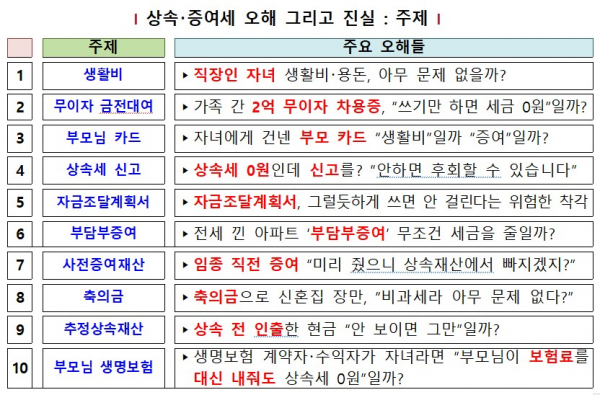
When parents regularly send funds to children who have jobs or can earn their own money under the name of living or education expenses, it can clearly be considered a gift. Many parents mistakenly believe that if they deposit money into their children’s accounts and simply write “living expenses” in the transfer memo field, they are exempt from taxes. However, the core criterion for determining non-taxable living or education expenses under tax law is the recipient’s economic capacity. If parents continuously supplement the living expenses of a child who has sufficient income to support themselves, it is evaluated as a substantial transfer of wealth. If such fund movements come to the attention of the NTS, all past amounts exchanged may be aggregated, resulting in an unexpected tax assessment notice. Therefore, if the child is an economically independent adult, parents must make very careful decisions regarding unilateral living expense support.
The tax risks associated with giving living expenses to adult children with income are much greater than one might think. If parents continue to support housing costs or pocket money even though the child is earning a salary and living independently, this is clearly classified as gifted assets. Tax authorities look more closely at the income level and asset formation process of the person actually spending the money rather than the formal transfer memo. Therefore, if you want to help your child, it is safer to use the gift property deduction limit and file a legal declaration rather than blindly sending cash. You must be careful, as simply claiming the name “living expenses” without accurately knowing the tax law criteria can lead to serious trouble later. Remember that even monetary transactions between family members can be seen as strict asset transfer actions from the NTS’s perspective.
Living expenses given to children with income are not tax-exempt and may be taxed as substantial gifts.
2. The Reality of Split Transfers Under 10 Million Won
The idea that repeatedly depositing amounts like 9.9 million won or 5 million won, keeping each transaction under 10 million won per day, will definitely go unnoticed by the NTS is a major misconception. Financial institutions have systems that automatically monitor cash transactions above a certain amount, and suspicious transactions are immediately reported to relevant agencies. If cash exceeding 10 million won moves in a single day, the details are immediately transmitted to the Financial Intelligence Unit (FIU) through the Large Cash Transaction Reporting System. Actions such as intentionally splitting amounts into 9.9 million won chunks to send or withdraw in an attempt to evade enforcement can also be detected by the bank’s Suspicious Transaction Reporting (STR) system. You cannot feel safe just because a tax audit does not arrive today; past records will all be revealed when buying real estate or when inheritance occurs. If traces of split deposits are discovered during account tracking, all previous transactions may be deemed intentional concealment of gifts, leading to aggravated penalties.
Attempts to cleverly bypass financial institution monitoring networks inevitably lead to greater tax disadvantages. Patterns of repeatedly sending small amounts using bank counters or automated teller machines easily trigger financial authorities’ monitoring algorithms. The NTS has strong inquiry rights to examine financial transaction records from several years in the past. Insisting on the ambiguous amount of 9.9 million won and utilizing the accounts of acquaintances or family members is judged as having a clear intent to evade taxes. It is not uncommon for people to face massive tax bombs, including charges of tax evasion, while trying to save on taxes. Therefore, rather than looking for workarounds, it is necessary to move funds transparently and pay taxes properly when required.
The trick of splitting transfers into 9.9 million won chunks will be caught by financial monitoring networks and result in a larger tax bomb later.
3. Why Filing a Declaration Is Safe Even Within the Non-Taxable Limit

Many people believe that if they are transferring assets to their children within the 50 million won gift property deduction limit over 10 years, they do not need to file a tax declaration. While it is true that no immediate tax payment is required if within the deduction limit, tax experts recommend filing the paperwork as much as possible. Even within the range where no tax is legally generated, filing in advance serves as solid proof when the child later buys real estate or large assets. By completing the tax declaration in advance, you can officially receive recognition from the NTS that the funds were legally acquired seed money. If there are no declaration documents to prove this, the child may be unable to explain the source of funds when buying a house, potentially resulting in taxes being levied on the entire amount. Do not take the filing procedure lightly just because no tax is due; actively leaving documents behind is the smart shortcut to tax saving.
Filing a declaration with the tax office in advance when transferring assets to children is an excellent shield that blocks potential future tax risks. When acquiring real estate, past declared gift records serve as decisive evidence to increase the acquisition price during the calculation of capital gains tax. If you omit the declaration and try to explain the source of funds after time has passed, it becomes difficult to find related receipts or proof, potentially leading to significant losses. The procedure of filing with the tax office may feel a bit cumbersome, but it is much more beneficial to resolve it definitively with the help of an expert. You must secure a legally recognized source of assets approved by the state so that your children can confidently continue their economic activities. Remember that a complacent attitude of skipping declarations because no tax is due can return as a tax bomb dozens of times larger in the future.
Even for amounts within the deduction limit where no tax is due, you must file a declaration to prepare for future source of funds investigations.
4. Common Misconceptions in Inheritance and Gifting

Many people misunderstand that passing a parent’s credit card to a child to use freely or letting a child drive a car registered in the parent’s name incurs no gift tax at all. However, the act of continuously paying credit card bills from the parent’s account is substantially equivalent to gifting cash to the child. Monetary transactions within the family circle are easy to overlook, but the NTS’s tax criteria are strictly rooted in legal provisions. If a child has benefited from reduced living expenses or the free use of high-value assets by utilizing the parent’s economic power, all of this is included in the taxable scope. In particular, during inheritance tax investigations after a parent’s death, credit card usage records from the past several years are often thoroughly scrutinized. At this time, card bills or living expense support records that cannot be explained by legitimate income are all added to the inherited estate, shocking the bereaved family.
The tax blind spots arising from monetary transactions between family members are deeply embedded in our daily lives more than one might think. Parents paying for their children’s academy fees or contributing to car purchase costs is a warm parental heart, but under tax law, it is viewed as a strict asset transfer. Support provided without properly meeting legal requirements will eventually act as a fatal weakness in the NTS’s tax audit scenarios. Many people end up facing penalty tax bombs and shedding tears after blindly believing unverified tax-saving tips circulating on YouTube channels or internet blogs. Tax experts advise that the more asset movement occurs between family members, the more transparently contracts should be written, and if necessary, the form of lending with appropriate interest should be adopted. An attitude that lightly regards tax standards due to emotional bias will inevitably lead to significant losses rather than protecting the family’s wealth.
Everyday support such as using a parent’s card or borrowing their car can be evaluated as a gift under tax law, so extreme caution is required.
5. The Dangers of YouTube Tax-Saving Rumors and How to Respond
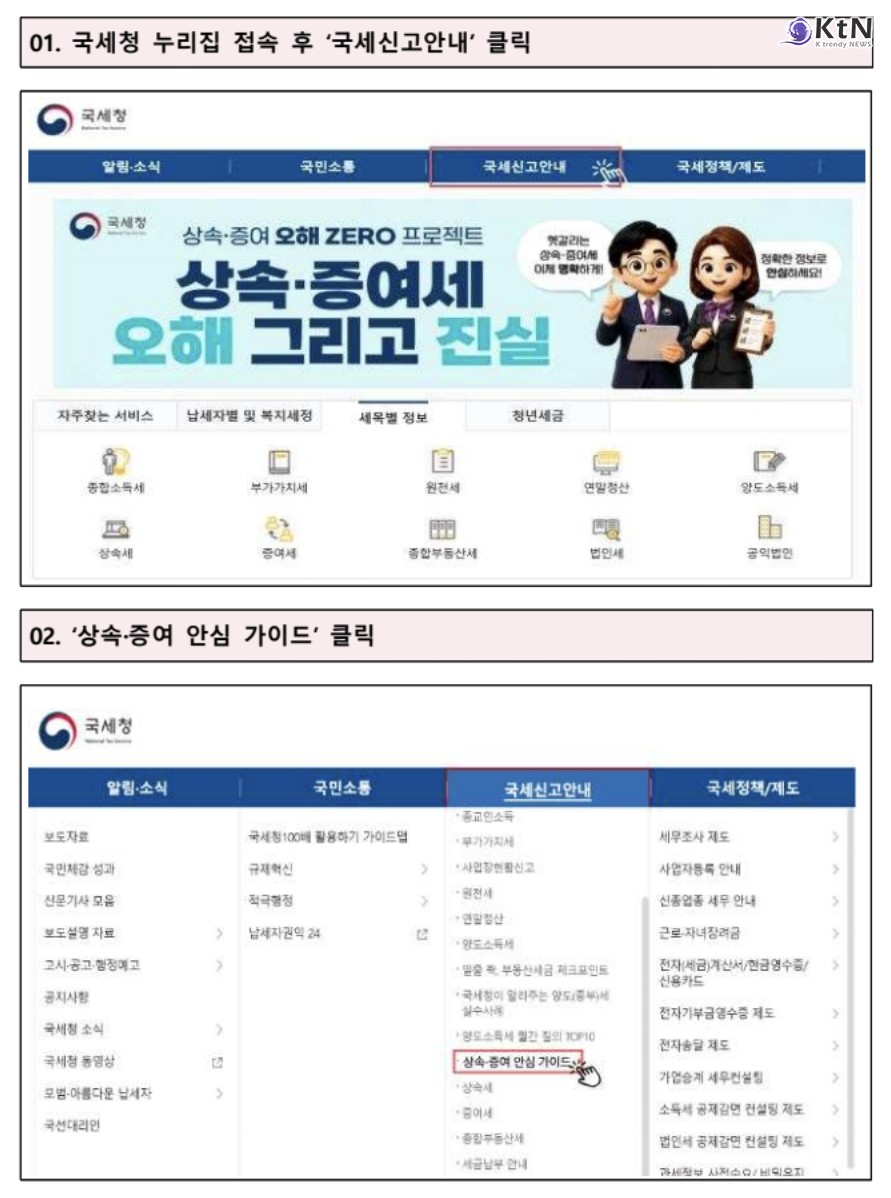
The internet is flooded with content that packages sensational and illegal tax-saving workarounds as great secrets to boost view counts. General viewers without specialized tax knowledge are easily lured by these sweet words and risk unknowingly stepping onto the path of tax evasion. The NTS is precisely tracking and catching malicious tax evasion using increasingly sophisticated computer systems and analysis algorithms every day. The complacent belief that claims made behind a YouTube screen will work the same way at a tax office counter will return as a boomerang of harsh tax assessments. If you want to reduce taxes, you should not listen to unverified internet rumors but seek advice from a nearby tax expert and follow the standard procedures. Planning tax savings within the legal framework is the only way to protect valuable assets and conduct economic activities with peace of mind.
If you follow the tricks shouted out in internet broadcasts and get caught, you may have to face not only penalty taxes but also legal punishment. Tax laws are being revised daily, and the NTS’s fund tracking technology has become so sophisticated that it exceeds the imagination of ordinary people. Even minor cash movements or loan-form transactions that were previously overlooked are now subject to thorough verification. Therefore, before following irresponsible YouTube tax-saving tips just because “everyone is doing it,” you should calmly re-evaluate whether it is legally safe. The most certain and quick way to save on taxes is not to look for workarounds, but to maintain transparent declarations and thorough proof documents. Do not put valuable assets at risk by relying on uncertain information; always practice tax management based on principles.
Do not believe illegal tax-saving rumors circulating on YouTube; you must consult a tax expert to find a legal path.
6. The Future and Prospects of Proper Asset Management

It is expected that the NTS’s asset management and taxation system will evolve to become more sophisticated and powerful by combining with artificial intelligence technology. Primitive methods such as cleverly hiding cash or splitting amounts to send, as in the past, will soon be detected in real-time perfectly. Therefore, the best strategy to protect assets is not to hope for luck by looking for workarounds, but to develop the habit of managing taxes transparently and honestly from the start. When exchanging money within the family, a mature attitude is needed, such as always writing clear promissory notes or going through legal gift declarations. We recommend using this opportunity to realize the dangers of unverified information and re-examine your asset status from scratch. If you continue wise and safe asset management in line with changing tax law standards, you can completely escape the risk of tax bombs.
Transparent tax filing is not just an obligation but the strongest shield that safely protects our family’s assets and an investment for the future. You must exercise the wisdom to maintain a fund management approach faithful to principles, without being swayed by sensational internet rumors. It is more important than ever to regularly diagnose your asset situation with a tax expert and seek legal tax-saving methods. To avoid losing hard-earned assets to the disgrace of a tax bomb, start carefully reviewing your financial transaction records today. Please do not forget that honest and transparent asset management is ultimately the fastest and safest way to protect wealth. We hope that all of us will correctly understand tax law standards and respond wisely to enjoy a peaceful and stable economic life.
Only the habit of transparent and legal asset management is the sole way to protect your assets amid the increasingly sophisticated NTS monitoring.
Frequently Asked Questions
=