It has been revealed that South Korea’s income redistribution function through its tax and welfare systems remains at the lowest level among OECD member countries. Income inequality before accounting for taxes, various pensions, and government subsidies is relatively moderate, but the ranking drops to the bottom once all these factors are included. Looking around, there are truly many people who complain that their quality of life does not improve despite hard work, due to the burden of taxes and inflation. After paying taxes on their earnings, the amount of money they actually have in hand is small, and the welfare benefits provided by the state are difficult to feel compared to other developed countries. In this article, we will thoroughly examine the specific figures and reasons why South Korea’s pre- and post-tax Gini coefficient improvement rate is so low. Let us carefully analyze where exactly the policy gaps are occurring.
=
The Income Redistribution Effect of Taxes: Why South Korea Ranks Near the Bottom in the OECD
1. The Reality and Illusion of Income Inequality: A Look Through the Gini Coefficient
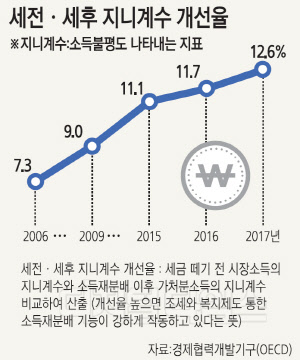
Comparing pre-tax and post-tax Gini coefficients reveals the true face of income inequality in South Korea with great clarity. The Gini coefficient is a representative indicator showing how unequally income is distributed, where values closer to 0 indicate equality and values closer to 1 indicate inequality. The pre- and post-tax Gini coefficient improvement rate is calculated by comparing the market income Gini coefficient before taxes are deducted with the disposable income Gini coefficient after reflecting taxes and welfare benefits. A higher improvement rate signifies that the state is faithfully using its tax and pension systems to reduce the wealth gap. However, unfortunately, South Korea’s improvement rate records a dismal level when compared to the average of OECD member countries. When talking to colleagues or self-employed individuals, they all agree that while the tax burden has increased, the welfare they actually feel in their daily lives is lacking. Indeed, according to data from the Statistics Korea and the OECD, South Korea’s market income inequality is among the most favorable among member countries. This means that the gap at the stage of earning money through work is not very large. However, in the process where the state collects taxes and redistributes them in the form of welfare allowances or pensions, the power to narrow the income gap weakens rapidly. As a result, the inequality ranking based on disposable income after all taxes are deducted plummets vertically to the lower ranks. It means that even though the rewards for hard work are collected as taxes, they are not being effectively returned to the vulnerable groups.
While South Korea has a small income gap when earning money through work, its redistribution effect after taxes and welfare is among the lowest in the OECD.
2. A Dismal Report Card: 28th Out of 29 OECD Countries

According to recently released statistics, South Korea’s pre- and post-tax Gini coefficient improvement rate was recorded at 17.6 percent. This corresponds to a very shameful ranking of 28th out of the 29 OECD member countries for which statistics were released. Considering that the average improvement rate for all 29 surveyed countries reaches 34.4 percent, South Korea’s score does not even reach half of the average. With only Costa Rica having a lower improvement rate than South Korea, the country is effectively stuck in the bottom group. European welfare advanced countries reduce the income gap created in the market by nearly half through taxes and social security systems. For example, countries like Slovakia, Belgium, and Finland easily surpass an improvement rate of 40 percent. Even major developed countries like the United States and the United Kingdom record much higher improvement rates than South Korea, actively mitigating income inequality. Thinking about the income tax and four major social insurance premiums that office workers pay regularly, one cannot help but feel a sense of grievance. Taxes are collected at a developed country level, but the social safety net and welfare benefits fall short, which naturally leads to accumulating public dissatisfaction. The contradiction continues where the country’s overall economic scale is around the top 10 in the world, yet its income redistribution report card remains at a developing country level.
South Korea’s income redistribution improvement rate is 17.6 percent, ranking 28th out of 29 countries, which is only half the level of the advanced country average.
3. Past and Present: Slight Improvement, But Rankings Stagnant
The silver lining is that the absolute value of South Korea’s income redistribution improvement rate is slowly trending upward compared to the past. As recently as 2015, the improvement rate was only 11.6 percent, but it steadily rose to 19.0 percent by 2020. This indicates that the government has shown some improvement in indicators by increasing various subsidies and expanding welfare budgets. However, it is not something to celebrate just because the absolute number has risen slightly, as the pace of change in neighboring countries is much faster. Since other developed countries are also continuously supplementing their welfare systems, South Korea’s relative ranking has been stuck in place for decades. In 2011, it was 23rd out of 26 countries, and in 2018, it was 31st out of 33 countries, consistently hovering in the lower ranks. When listening to the stories of relatives who are self-employed or acquaintances approaching retirement, they say that the tangible impact of welfare benefits is still low. Complaints are endless that while taxes rise every year and prices are not cheap, the support provided by the state feels like a mirage. This is evidence that while the external form of the system may have grown, the sophisticated policy design that actually reduces the income gap is still lacking. In a situation where aging is progressing at a faster rate than in other countries, this stagnation could become a massive time bomb for our economy.
Although the improvement rate has risen slightly compared to the past, South Korea has failed to escape the lower ranks for decades as other countries have also developed.
4. The Particularly Serious Blind Spot in Income Redistribution for the Elderly
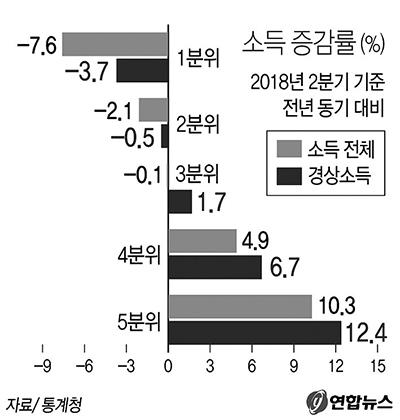
The biggest problem with South Korea’s income redistribution is that it still does not function properly for the elderly living their post-retirement lives. Looking at it by age group, the improvement rate for the working-age population (18 to 65 years old) was 13.7 percent, ranking 27th out of 29 countries. On the other hand, the improvement rate for the elderly population (66 years and older) was slightly higher at 29.6 percent, but the ranking remained at 28th. This is why my heart grows heavy whenever I encounter elderly people picking up scrap paper or moving from one shabby job to another. Looking at the overall OECD average, it is 24.8 percent for those aged 18 to 65, while it reaches a whopping 57.1 percent for those aged 66 and older. It is a common sight in developed countries for the state to significantly reduce the wealth gap through taxes and welfare as the age group gets older. However, the gap between the South Korean average for the elderly and the OECD average is as large as 27.4 percentage points. After retirement, the welfare system, which should serve as a sturdy fence for the state, fails to act as a proper shield in South Korea. The reality that elderly people who have worked diligently their whole lives and retired easily fall into the pit of poverty is directly proven by these statistical figures.
Not only the working-age population but also the elderly show a huge gap with the advanced country average in income redistribution improvement rates, recording bottom-tier rankings.
5. A Society Going Backwards: Pre- and Post-Tax Rankings Reversed
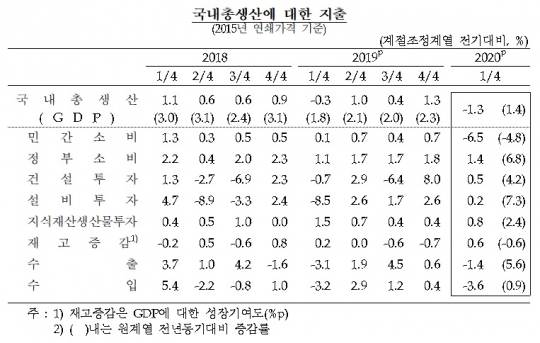
The income inequality issue for South Korea’s elderly shows the most dramatic reversal phenomenon in the world during the process of deducting taxes and adding welfare. The market income Gini coefficient for the elderly (66 and older) is 0.540, making it the second highest in inequality among member countries after Switzerland. This means that if you only look at the gap in money earned while working, elderly poverty is at the world’s highest level. However, when moving to the disposable income Gini coefficient that reflects government taxes and pension allowances, the ranking plummets by a whopping 25 spots to 27th. This massive drop is an overwhelming figure that clearly places South Korea in 1st place among the 29 surveyed member countries. Recalling the plight of the older generation who are at a loss due to broken income after retirement, one can understand how painful this statistic is. It is evidence that despite collecting taxes and executing welfare budgets, the practical effect of reducing the poverty rate among the elderly is extremely minimal. This is because although the Basic Pension and National Pension exist, the amounts are still grossly insufficient to maintain a livelihood. These numbers blatantly expose the structural flaw where one falls into extreme poverty the moment they stop working. If the state cannot efficiently allocate taxes to safely protect old age, the future of our society can never be bright.
South Korea’s elderly face extreme income inequality when not working, and the drop in ranking after taxes and welfare is the largest in the world.
6. Our Tasks and Outlook for Improving Income Redistribution
In conclusion, for South Korea’s tax and welfare systems to restore their function of mitigating income inequality, fundamental major surgery is needed. Rather than simply focusing on collecting more taxes, we must devise a sophisticated strategy on how to efficiently deliver the collected taxes to the most vulnerable groups. In particular, as we face the era of rapid aging, it is urgent to build a robust social safety net that can prevent retired elderly people from falling into poverty. Fair and transparent welfare distribution must be achieved so that the taxes paid diligently by citizens from youth to old age are not wasted. To create a healthy society where we live together with our neighbors, our society can no longer turn a blind eye to this issue. The government and political circles must focus all their efforts on tax reform and resolving welfare blind spots from a long-term perspective, rather than being preoccupied with immediate approval ratings. Readers, please keep an eye on whether our society’s tax and welfare systems are moving in the right direction. Only by gathering small voices can we create the driving force for South Korea to step up as a true advanced welfare state. I sincerely hope that in the upcoming OECD statistics, South Korea will proudly rank in the upper tier.
We must resolve elderly poverty and strengthen the income redistribution function through a comprehensive reform of the tax collection and welfare delivery systems.
Frequently Asked Questions
=