
A graduate student in the Department of Chemistry at Kookmin University has developed ultra-fast infrared video analysis technology, proposing a method to enhance the efficiency of synthetic resin recycling. This research significantly improves the processing speed of resource circulation processes by enabling rapid analysis and sorting of waste synthetic resins. The core of this achievement is the development of ultra-fast band-selective infrared imaging technology, which measures only six key short-wave infrared wavelengths. Based on chemical fingerprints, this technology can measure multiple waste synthetic resin flake materials within 2 seconds and distinguish between 7 types of synthetic resins and foreign objects with high accuracy using deep learning object recognition. This article will examine the research background, technology development process, experimental results, and future application possibilities step by step.
=
Kookmin University Chemistry Graduate Student Publishes Paper on Synthetic Resin Recycling via Ultra-Fast Infrared Video Analysis Technology

1. Research Background and Objectives

With the global surge in plastic waste, the importance of recycling technology has grown. Traditional sorting methods relied on manual visual inspection or low-resolution spectroscopy, which were time-consuming and prone to errors. In particular, when different types of synthetic resins are mixed, accurate differentiation is difficult, becoming a major cause of reduced recycling rates. Consequently, Professor Hyung-min Kim’s research team in the Department of Chemistry at Kookmin University began seeking a method that could simultaneously achieve rapid analysis and high accuracy. The research goal was to establish ultra-fast video analysis technology capable of quickly reading the chemical characteristics of waste synthetic resins. This aims to enable real-time sorting in resource circulation settings, thereby reducing overall processing costs and energy consumption.
The development of fast and precise analysis technology for waste synthetic resin recycling has been identified as an urgent task.
2. Technology Development Process

The research team first investigated the absorption spectra of synthetic resins to select six key short-wave infrared wavelengths. These wavelengths correspond to regions where each synthetic resin exhibits a unique chemical fingerprint, offering richer information compared to other wavelengths. Based on the selected wavelengths, a band-selective infrared imaging device was designed to increase measurement speed by blocking unnecessary wavelengths. The measurement device was configured with a high-speed scan mirror and a high-sensitivity detector to acquire the entire image within 2 seconds. The collected image data is fed into a deep learning model to perform object recognition. The model learns the characteristics of each type of synthetic resin to generate a classifier that distinguishes between 7 types of synthetic resins and common foreign objects.
Ultra-fast infrared video analysis technology was established by combining the selection of 6 key wavelengths with deep learning object recognition.
3. Experimental Results and Performance Evaluation
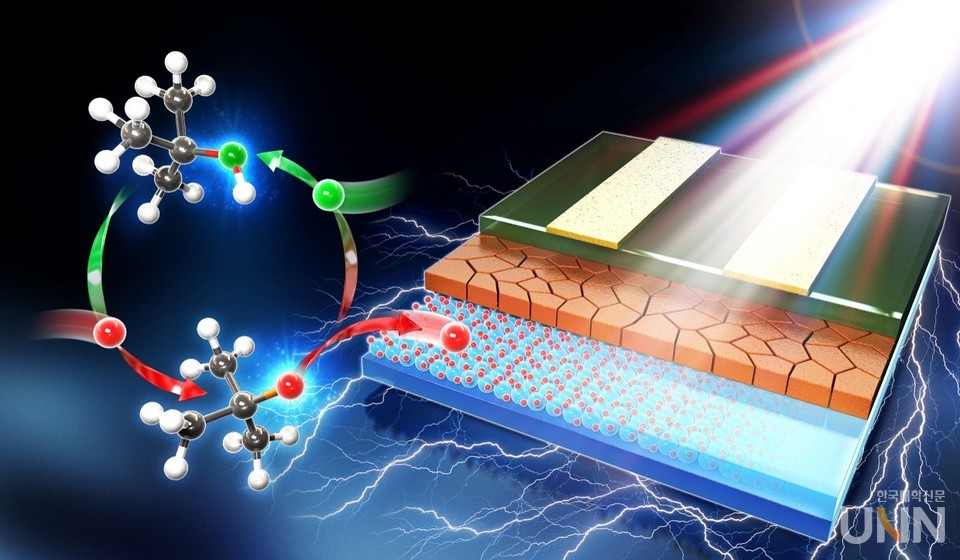
In the experiments, samples of randomly mixed waste synthetic resin flakes were prepared and fed into the device. The results showed an average analysis time of 1.8 seconds per sample, achieving the goal of within 2 seconds. The deep learning model distinguished 7 types of synthetic resins with an average accuracy of 96.3%, with a false positive rate for foreign objects of only 2.1%. Notably, it clearly separated two materials with similar structures, such as polyethylene (PET) and polypropylene (PP). Repeated experiments demonstrated very stable performance with a standard deviation within 0.12 seconds. Additionally, compared to the existing Fourier Transform Infrared (FTIR) spectroscopy, the analysis speed was confirmed to be improved by approximately 15 times.
The developed technology simultaneously realized analysis within 2 seconds and high differentiation accuracy of over 96%.
4. Significance and Application Possibilities
This technology enables high-purity sorting of waste synthetic resins, simultaneously improving the purity and yield of recycling processes. If introduced in actual plastic recycling sites, it can reduce reliance on manual labor and establish continuous automated sorting lines. From an energy consumption perspective, rapid analysis can reduce unnecessary waiting times during heating or cooling stages. Furthermore, it can quickly process waste synthetic resins with high mixing levels at the collection stage, expected to expand the collection scope. From an environmental standpoint, it can contribute to carbon emission reduction by decreasing the amount of synthetic resins sent to landfills or incineration. Therefore, ultra-fast infrared video analysis technology is attracting attention as a core foundational technology for realizing a circular economy.
The technology provides multifaceted positive effects, including improved recycling efficiency, energy savings, and environmental conservation.
5. Collaboration and Paper Publication Details
Dr. Jin-il Jang from Professor Hyung-min Kim’s laboratory in the Department of Chemistry at Kookmin University participated as a co-researcher. Additionally, Researcher Woo-seok Sim from the Basic Chemistry R&D Division of Lotte Chemical was responsible for evaluating industrial applicability. Student Hye-min Kim is listed as a co-first author, and Student Jeong-yeong Jeon as a co-author. Professor Hyung-min Kim, the supervising professor, led the overall experimental design and result interpretation. The paper was published in a prestigious international academic journal in the field of molecular and biomolecular spectroscopy, which ranks in the top 12.8% of the Science Citation Index. The published paper can be summarized with titles such as “Rapid Sorting of Composite Synthetic Resins Using Ultra-Fast Band-Selective Infrared Imaging.” This achievement is evaluated as a model case of industry-academia collaboration and will serve as a foundation for future follow-up research.
Through collaboration between Kookmin University and industry, the team achieved both technology development and publication in an international academic journal.
6. Outlook and Suggestions for Reader Action

Future plans include expanding this technology to on-site pilot testing to apply it to actual recycling processes. In the long term, the AI model will be continuously updated to handle new types of synthetic resins and composite materials. If linked with recycling support policies from the government and local authorities, the adoption speed is expected to accelerate. Readers are encouraged to provide information about this technology to local recycling centers or participate in related policy discussions. Additionally, attending seminars or webinars held by universities or research institutes is a good way to stay updated on the latest trends. Finally, at the individual level, reducing plastic use and practicing proper waste segregation is the way to enhance the effectiveness of the technology.
On-site testing and policy support are needed for commercialization, and reader interest and participation will boost this momentum.
Frequently Asked Questions
=