How you receive your retirement pension can significantly impact your living expenses in old age and your tax burden. Many employees struggle with deciding whether a lump sum or an annuity is more advantageous upon retirement. In reality, the method of receipt affects income deduction benefits and the taxable standard, potentially resulting in differences of tens of millions of won over the long term. This article explains the characteristics of individual pension plans, lump sums, and annuity receipts based on the retirement pension receipt systems currently in effect in 2026. It also provides practical tips for reducing taxes and real-world examples to help readers calculate the potential savings themselves. Finally, it presents the latest financial institution services and future outlooks on the system to provide a foundation for making informed decisions.
=
A Complete Guide to Receiving Your Retirement Pension: Individual Pension Plans, Lump Sums, Annuities, and Tax-Saving Tips
1. What is an Individual Pension Plan (IRP) Account?
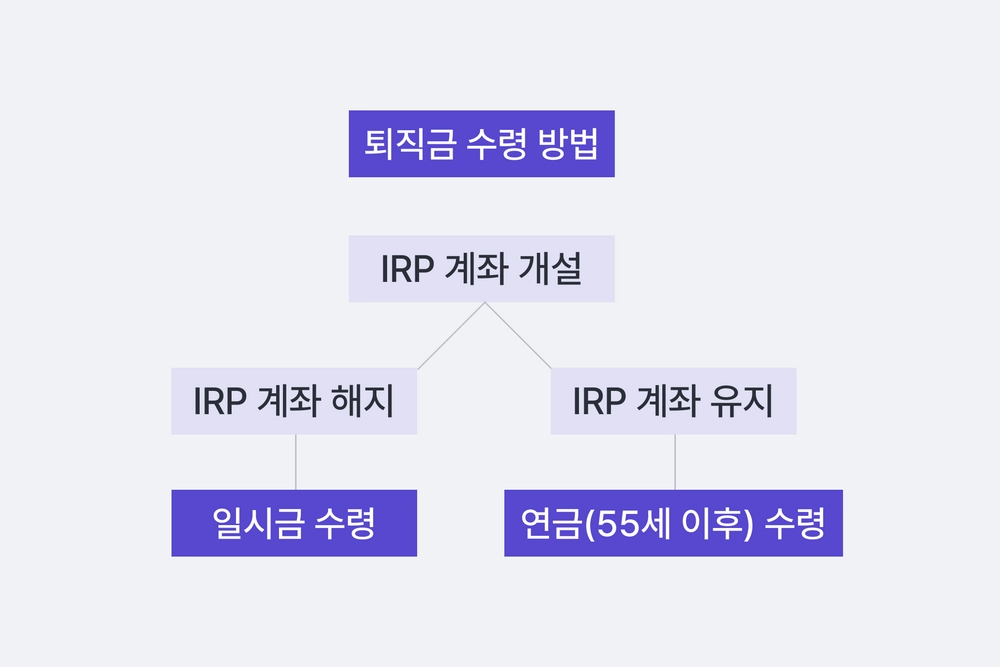
An Individual Pension Plan (IRP) account is a system that allows employees to directly accumulate and manage their severance pay. The amount accumulated in this account can be withdrawn later as an annuity or as a lump sum. The eligibility condition is having worked for at least one year prior to retirement, and unlike corporate pension plans, individuals have the direct right to select investment products. The annual accumulation limit is 18 million won, and income deductions can be claimed for this amount, resulting in significant tax savings. Investment returns are tax-exempt, making it suitable for long-term investment. For example, if you accumulate 1.5 million won annually and achieve a 5% return, you can build assets of approximately 50 million won after 20 years.
An Individual Pension Plan (IRP) account is a tool that allows you to efficiently grow your severance assets by providing both income deductions and tax-exempt investment benefits.
2. Pros and Cons of Receiving a Lump Sum
Receiving severance pay as a lump sum allows you to have a large amount of money immediately, which is useful for purchasing a home or paying off debts. However, the lump sum is considered entirely as income and becomes subject to the comprehensive income tax for that year. Therefore, if you enter a high tax bracket, the tax burden can increase sharply. For example, if you receive 500 million won as a lump sum, taxes of over 200 million won may be imposed if the maximum tax rate of 45% is applied. On the other hand, while reinvesting a lump sum may offset some taxes through investment returns, it comes with market risks. Therefore, receiving a lump sum is suitable for those who have a clear plan for using the funds and can bear the tax burden.
A lump sum provides immediate liquidity but comes with a high tax burden, so careful after-tax simulation is necessary.
3. Annuity Receipt Methods and Tax Benefits

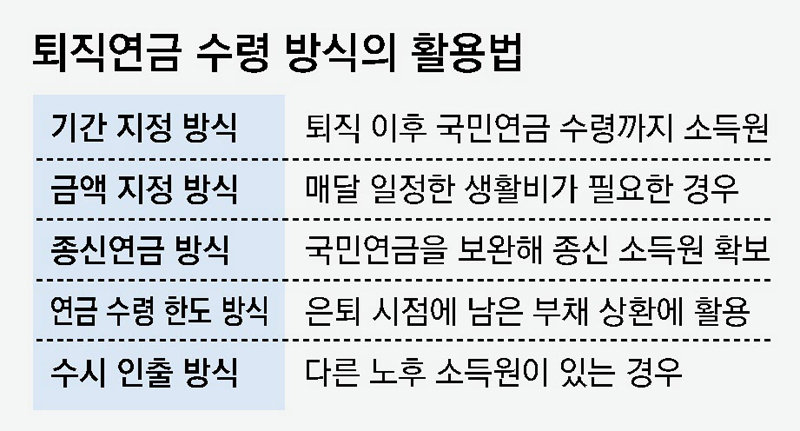
If you receive your pension as an annuity, you receive a fixed amount each year, which disperses your income. As a result, it often falls below the comprehensive income tax brackets, leading to a lower tax rate. Additionally, a separate pension income deduction is applied to annuity income, further lowering the taxable standard. For example, if you receive 30 million won annually as an annuity, the taxable standard drops to around 10 million won after deductions, significantly reducing taxes. Even when receiving an annuity, you can continue to manage your accumulated funds within the Individual Pension Plan (IRP) account, allowing you to keep generating returns. However, the minimum age to start receiving an annuity is 55, and a minimum receipt period of 10 years or more is recommended.
Receiving an annuity is a stable source of income in old age that can significantly reduce the tax burden through income dispersion and pension income deductions.
4. Comparing Tax Differences Through Real-World Cases
Mr. Kim received 500 million won in severance pay after 30 years of service. If he receives the full amount as a lump sum, he must pay approximately 200 million won in comprehensive income tax for that year. On the other hand, if he chooses to accumulate 300 million won in an Individual Pension Plan (IRP) account and receive 200 million won as an annuity, both the income deduction for the accumulated amount and the pension income deduction are applied simultaneously. In this case, the taxable standard drops to around 80 million won, reducing the tax to approximately 15 million won. In other words, even for the same amount, the tax difference can exceed 100 million won depending on the receipt method. Additionally, the accumulated 300 million won could grow to approximately 500 million won after 10 years assuming a 5% return, demonstrating an asset growth effect. Therefore, simulation through consultation with an expert before receipt is essential.
As seen in real-world cases, changing the receipt method can significantly reduce the tax burden while simultaneously capturing asset growth opportunities.
5. Latest System Changes and Financial Institution Services in 2026
Starting in 2026, some tax preference factors for retirement pension receipts have been adjusted. The annual contribution limit for Individual Pension Plan (IRP) accounts has been raised from 18 million won to 20 million won, and the mid-term withdrawal income deduction rate has increased from the previous 15% to 20%. Additionally, the Financial Services Commission has expanded the implementation of a “Customized Counseling Service” for retirement pension recipients, providing tax scenarios based on the time of receipt. Major banks and securities firms have launched services that integrate non-face-to-face account opening with AI-based portfolio recommendation features. These services display return simulations and tax predictions necessary for choosing a receipt method on a single screen. Therefore, users can immediately check the optimal receipt strategy by entering their years of service, expected severance pay amount, and other income.
The 2026 system revisions and digital services from financial institutions make the decision to receive a retirement pension more data-driven and easier.
6. Future Outlook and Recommendations for Readers
The retirement pension market is expected to place greater emphasis on personalized asset allocation in the future. Risk assessment using artificial intelligence and tax optimization algorithms will become standard features, leading to increased flexibility in the timing of receipt. Additionally, as government tax policies are likely to continue to be refined, it is important to develop the habit of regularly checking for the latest information. Readers are recommended to immediately run a tax simulation based on their expected severance pay and years of service. To do this, they can utilize free online calculators or book consultations provided by financial institutions. After deciding on the receipt method, they should regularly review their portfolio and set a rebalancing schedule to secure long-term returns. Finally, sharing retirement living plans with family through communication helps make financial decisions more robust.
Utilize the latest tools and information to find the most advantageous receipt method for your current situation, and prepare for a stable retirement through regular reviews.
Frequently Asked Questions
=