The IRP (Individual Retirement Pension) account is an essential tax-saving tool that working professionals should prioritize every year during the year-end tax settlement season, as well as a core instrument for building a secure retirement asset. While it was once viewed merely as a place to hold severance pay, it has now firmly established itself as a vehicle for individuals to make additional contributions to enjoy both tax deductions and investment returns. Mr. Kim, a working professional, has been consistently depositing his surplus funds into this account every month, allowing him to receive tax refunds of several hundred thousand won annually during year-end settlements and truly enjoy the benefits of smart financial management. Unlike the past, when options were limited to bank deposits and savings accounts, investors can now directly choose from a wide variety of Exchange-Traded Funds (ETFs) and bond products, significantly broadening the scope for asset growth. Through this article, we will thoroughly examine the basic concepts of the account, how to utilize the limits effectively, and the most advantageous withdrawal methods. If you want to achieve both retirement preparation and tax savings, please read on to the end.
=
IRP Pension: A Complete Guide to Tax Deduction Limits, Recommended Products, and Withdrawal Methods
1. Subtitle
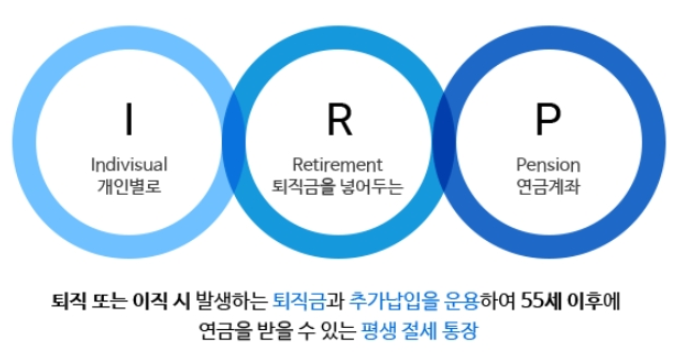
What is an IRP Pension and Why Should You Join? Paragraph 1: The IRP (Individual Retirement Pension) is a system that allows employees to accumulate their severance pay in an account under their own name when they change jobs or retire, enabling them to receive it in the form of a pension after the age of 55. In the past, severance pay was managed strictly according to company-designated methods, but now it is an era where individuals can directly choose their financial institution and determine their investment strategy. Any working professional can join, and even without severance pay, individuals can make additional contributions to reduce their income tax, making it a powerful financial tool. In particular, because it offers tax deduction benefits during the annual year-end tax settlement, it is considered a must-have item for working professionals. If you look at the secrets behind colleagues who boast about receiving large year-end tax refunds, you will find that most of them are actively utilizing this account.
Paragraph 2: The biggest reason this system is popular among working professionals is its compound advantage of allowing them to prepare for retirement while saving on taxes. It legally reduces the income tax you pay annually, and that saved money can be reinvested as principal to enjoy the benefits of compound interest. In fact, people who started opening accounts and saving small amounts early in their careers find themselves facing significantly larger assets at retirement compared to those who only held regular bank deposits. It is a rare financial product that helps reduce the unavoidable tax burden of working life while also securing future assets. Therefore, if you have not yet opened an account, it is wise to open one at your nearest financial institution immediately and start making small monthly contributions.
The IRP Pension is an essential account for working professionals that allows them to accumulate retirement funds while enjoying annual tax deduction benefits.
2. Subtitle

Annual Tax Deduction Limits and Contribution Strategies Tailored to You Paragraph 1: The total annual contribution limit for receiving tax deductions through pension accounts is set at a maximum of 9 million won. Of this, up to 6 million won can be contributed to a Pension Savings account, and by utilizing an IRP account in conjunction, you can fully enjoy tax deduction benefits on a combined total of up to 9 million won. If your total annual income is 55 million won or less, a high deduction rate of 16.5% is applied, allowing you to receive a refund of up to 1.485 million won. Even if your total income exceeds this amount, a deduction rate of 13.2% is applied, allowing you to save up to 1.188 million won in taxes. Mr. Lee, a working professional, used to feel the pain of paying taxes every year-end settlement season, but since he started filling this account, he has been enjoying the joy of receiving tax refunds instead.
Paragraph 2: However, you should be careful not to force yourself to meet the limit if it negatively impacts your immediate living expenses, as this would be putting the cart before the horse. It is important to carefully analyze your monthly income and expenditure structure and set an amount that you can comfortably pay via automatic transfer each month. While it is also good to deposit a lump sum urgently at the end of the year, making monthly split contributions can also have the effect of lowering the average purchase price of your assets. You should develop the habit of frequently checking the National Tax Service’s HomeTax year-end settlement simplification service to see how much more you need to contribute to reach the maximum deduction limit. Smart working professionals maximize the practical benefits of tax incentives by making additional contributions to their accounts whenever they receive a bonus or have surplus funds.
By filling the annual contribution limit of up to 9 million won, you can receive tax deduction benefits of up to 16.5%.
3. Subtitle
Utilizing the 30% Safe Asset Rule and Diverse Investment Products Paragraph 2: When managing a pension account, there is a regulation requiring that at least 30% of the total assets must be allocated to safe assets. In the past, this rule led to complaints that funds were locked in bank deposits or principal-guaranteed products, resulting in returns that could not keep up with inflation. However, recently, various Exchange-Traded Fund (ETF) products that fall within the category of safe assets while also possessing equity-like characteristics have been launched, significantly broadening the range of choices. For example, by utilizing bond-hybrid ETFs or ETFs classified under specific safe asset categories, you can pursue aggressive returns while complying with regulations. Mr. Park, a working professional, uses this system to meet the safe asset ratio while combining products that provide stable dividends, achieving returns significantly higher than bank deposit interest rates.
Paragraph 2: Within the remaining 70% limit for risky assets, you can aggressively grow your assets by investing in domestic and international equity ETFs or various asset allocation products. Investors who hold products tracking major US indices or those diversified into high-quality domestic companies to enjoy long-term compound interest effects are increasing rapidly. In particular, for young working professionals who have decades until retirement, a strategy of increasing the proportion of equity assets to actively grow their wealth is advantageous. As retirement approaches, you should periodically review your portfolio by gradually increasing the proportion of safe assets to reduce volatility. Experts advise that it is essential to periodically switch products according to your investment style and remaining years, rather than simply leaving the account unattended.
You can aim for aggressive returns with various ETFs in the remaining 70% while complying with the mandatory 30% safe asset rule.
4. Subtitle
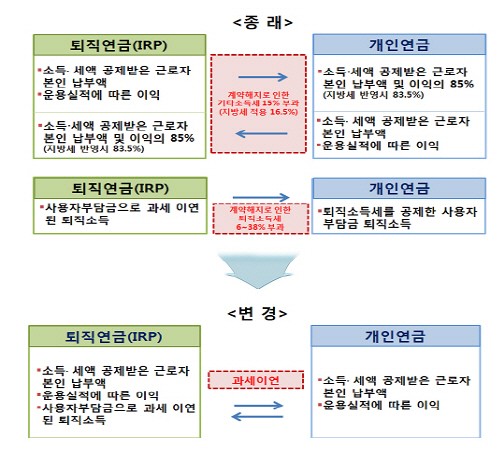
Severance Pay Deferral and Strategies for Utilizing Individual Investor Bonds Paragraph 1: Severance pay received when changing jobs or retiring is, in principle, paid after tax deductions. However, if you transfer it to an IRP account, you can defer paying taxes until later. This is called the tax deferral effect, and since the money that would have gone to taxes remains in the account to continue investing, it is immensely helpful for asset growth. If you had received it in cash without transferring it, you would have had to pay severance income tax immediately, reducing the principal available for reinvestment. In fact, Mr. Jung, a working professional who has changed jobs, was able to continue investing with a larger principal without tax deductions by transferring his previous employer’s severance pay directly to his account. If you receive severance pay, you should absolutely not receive it directly into a regular checking account; you must transfer it to a pension account to secure the tax deferral benefit.
Paragraph 2: Additionally, starting this year, the option to directly purchase 10-year and 20-year individual investor bonds through pension accounts has opened up, further diversifying your choices. These bonds, which can be purchased through major banks or securities firms, are products that combine the stability of government guarantees with the advantages of long-term investment. They are attracting attention as an excellent alternative for investors who find the volatility of equity products burdensome or wish to securely park their retirement funds in bonds. By moving beyond uniform deposit and savings products to include government-issued bonds in their portfolios, the stability of asset management has been significantly enhanced. By appropriately allocating government bonds and equity ETFs according to your investment style, you can build a sturdy shield for your retirement assets that remains unshaken.
You can transfer severance pay to the account to receive tax deferral and enhance stability by utilizing the recently introduced individual investor bonds.
5. Subtitle
Points to Note Upon Termination and How to Avoid a Tax Bomb Paragraph 1: Since the IRP account is a long-term savings product for retirement, special caution is required when terminating it midway or withdrawing funds, as you may incur unexpectedly high taxes. If you terminate the account midway for personal reasons rather than unavoidable circumstances, you must return all the tax deduction benefits you have received, and other income tax will be imposed on your investment returns. While no tax is levied on the principal of your own contributions that did not receive tax deductions, a high tax rate of 16.5% is applied to the principal that did receive deductions and the interest earned. Low-rate mid-term withdrawals are only possible for legally defined exceptional withdrawal reasons, such as purchasing a home or medical treatment, so you must be careful before joining. Mr. Kang, a working professional, was so shocked by the unexpectedly high tax deduction amount he would have to pay upon attempting to terminate his account due to an urgent need for funds that he withdrew his request.
Paragraph 2: To avoid the risks of mid-term termination, you need the wisdom to contribute only with surplus funds that you will not need immediately and to use a separate emergency fund account when urgent cash is needed. If you are in a situation where you must withdraw funds unavoidably, it is more advantageous to look into the partial withdrawal system allowed by law rather than terminating the entire account. Terminating the account without authorization and destroying the tax benefits and compound interest effects you have built up over several years in an instant is the action most to be avoided from a financial management perspective. As retirement approaches, you are required to calculate your liquidity in advance and coordinate the timing of cashing out assets within the account. Only those who accurately understand the characteristics of long-term products and maintain them until the end can welcome a warm and prosperous retirement.
High tax rates are applied to tax deduction benefits and returns upon mid-term termination, so you should generally aim to maintain the account.
6. Subtitle
Pension Withdrawal Methods After Age 55 and Completing Tax Savings Paragraph 1: Even when you turn 55 and complete the 10-year membership period to finally receive your pension, the amount of tax you pay varies completely depending on how you receive it. Funds filled with severance pay are subject to pension income tax, and personal contributions that received tax deductions are subject to pension income tax rates, allowing you to save significantly more on taxes compared to receiving a lump sum. The longer the withdrawal period, the lower the annual pension income tax rate, which greatly helps in creating a stable cash flow after retirement. If you withdraw the money all at once, taxes on the lump sum are imposed all at once, potentially resulting in a tax bomb, so it is much more advantageous to receive it in installments as a pension. Mr. Kim, a retiree, is enjoying a comfortable retirement while minimizing his tax burden by receiving his pension in monthly installments equivalent to his living expenses.
Paragraph 2: When withdrawing money from the account after retirement, creating a withdrawal strategy in the order of lowest tax burden is considered a hidden secret of the pros. By well combining the legally defined withdrawal order with your personal pension receipt plan, you can achieve the effect of dramatically reducing the taxes you pay over your lifetime. In a financial environment where aging is accelerating and individual responsibility is emphasized, how well you manage this account will determine the quality of your retirement life. The small practice of contributing little by little right now will become a solid magic that completely changes your retirement life decades from now. Starting today, please check your year-end tax settlement records and steadily prepare for future prosperity through your account.
Receiving your pension in installments after age 55 significantly reduces taxes compared to a lump sum and secures a stable cash flow.
Frequently Asked Questions
=