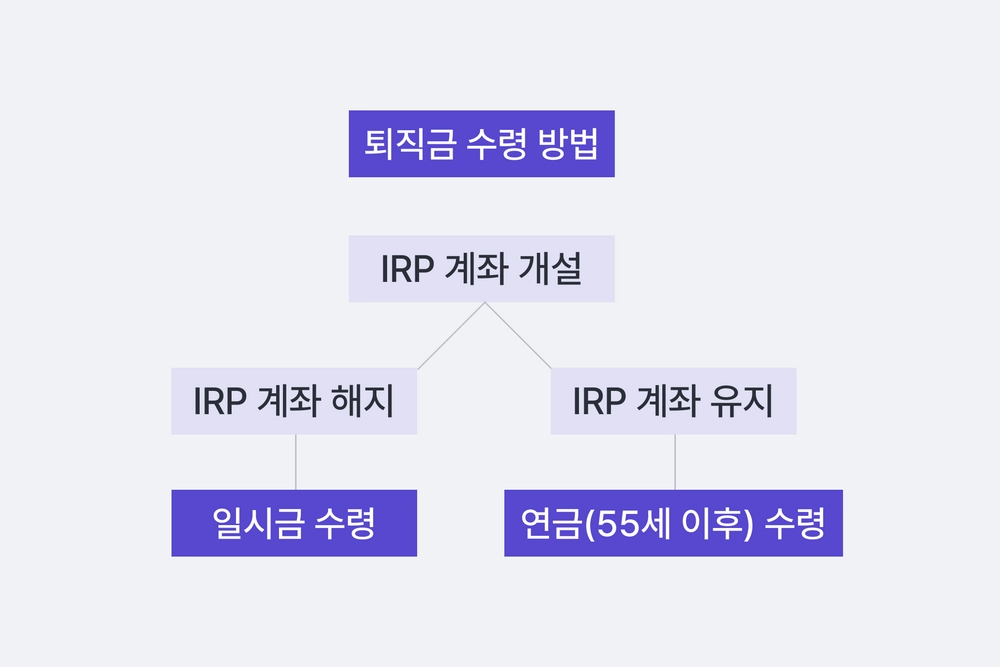
The key to retirement pension withdrawal methods is that you can significantly reduce your tax burden by receiving the funds as an annuity through an IRP account after turning 55. Last year, Manager Kim, who had just retired, nearly faced a massive tax bill after receiving his entire retirement savings in a lump sum. However, he avoided this crisis by transferring the funds to an Individual Retirement Pension (IRP) account on the advice of those around him. To fully enjoy the tax deferral benefits, it is essential to transfer the retirement benefits to a pension account in your own name rather than directly to a personal checking account. Many employees regret their decisions after simply following the company’s procedures on their last day of work, only to be shocked by the tax notice they receive later. To protect the valuable retirement assets we have diligently saved by tightening our belts every month, we must accurately understand the system and respond wisely. In this article, we will carefully examine the most advantageous retirement pension withdrawal tips and specific application procedures as of 2026.
=
Retirement Pension Withdrawal Methods: Comparing Lump Sum vs. Annuity Taxes at Age 55 and IRP Application Procedures
1. Conditions for Receiving Retirement Pension at Age 55

To thoroughly understand retirement pension withdrawal methods, you must first accurately meet the legal age requirement of 55. While employed, you cannot withdraw funds at will unless you qualify for mid-term settlement reasons; eligibility for withdrawal arises only at the time of retirement. Last year, Section Chief Lee, who took an early retirement, was unable to apply for the start of his pension because his birthday had not yet passed, and he barely managed to complete the application after gathering the necessary documents. You can check the exact timing of when you can receive your benefits by inquiring about your enrollment period and accumulated balance at a financial institution or through a mobile app. If you left your company well before the mandatory retirement age, you must continue to manage or hold the funds in your IRP account until you reach the pension receipt age. During this period, you must be extremely careful, as withdrawing funds arbitrarily will cause you to lose all the tax benefits you have received thus far. A retirement pension does not simply deposit into your bank account just because you have reached the age requirement; it begins only when you personally submit a claim to the financial institution. The time required to cash out varies depending on the type of product being managed, so you should coordinate your schedule in advance to align with your retirement date. Deposit products can only be withdrawn upon maturity, while performance-linked products like funds require a sell order and take a few additional days to process. Therefore, it is wise to consult with the pension specialist at your primary bank or securities firm starting one month before your retirement. Rushing through the process can lead to unnecessary fees or unwanted losses, so it is best to prepare step by step.
Eligibility for receiving a retirement pension is granted only after turning 55. Since the cash-out period varies by investment product, prior coordination is essential.
2. Tax Differences Between Lump Sum and Annuity Receipt
The most powerful tool for reducing taxes in retirement pension withdrawal methods is receiving the funds as an annuity rather than a lump sum. If you receive your retirement benefits as a lump sum, you are subject to retirement income tax. However, converting this into an annuity provides a benefit that can reduce taxes by up to 30 percent. Last year, Mr. Park, who retired, insisted on taking a lump sum because he needed a large amount of cash despite the advice of those around him. He later deeply regretted paying a substantial amount in taxes. In contrast, Mr. Park’s colleague received a fixed amount monthly as an annuity over 10 years, paying significantly less in taxes while the remaining funds continued to grow. The annuity income tax rate decreases with age, offering benefits as low as 4 percent for those over 70 and 3 percent for those over 80. The government implements policies that significantly alleviate the tax burden for those who extend their pension receipt period, aiming to support a stable retirement life for the elderly. By distributing the annual pension receipt amount so that it does not exceed a certain threshold, you can secure a favorable position by being excluded from comprehensive income tax. Receiving a large sum all at once can easily tempt you into unnecessary consumption, but receiving a fixed amount as living expenses each month makes expense management much easier. Therefore, unless you have immediate large expenses, it is far more beneficial to receive the funds over a long period through a pension account rather than withdrawing them as a lump sum.
Receiving retirement benefits as an annuity rather than a lump sum allows you to receive a tax reduction of up to 30 percent on retirement income tax.
3. IRP Account Transfer and Tax Deferral Benefits

When considering retirement pension withdrawal methods, the process of transferring your retirement benefits to an Individual Retirement Pension (IRP) account is a crucial step in avoiding a tax bomb. If a company pays retirement benefits directly to an employee’s personal account without going through an IRP account, the tax is withheld immediately, resulting in significant loss. If you submit the IRP account number issued by the financial institution to your company’s HR department, the retirement benefits will be transferred to your account in full, without any tax deduction. This is professionally known as tax deferral, a highly beneficial system that delays tax payment until you actually withdraw and use the money. Last year, Junior Manager Jung, who had retired, knew this in advance and submitted a copy of his IRP account to the company, allowing him to safely transfer all funds without withholding tax. In this process, the principal and investment returns, which were not pre-deducted for taxes, remain in the account, working magic by generating even greater investment returns. If a mistake occurs during the transfer and the money is mistakenly deposited into a general account, you must immediately contact the financial institution and the company’s responsible department to request a correction. Once tax has been withheld and paid, the process of reversing it is very complex and cumbersome, so it is best to prevent mistakes from the start. If you want to build a secure retirement pipeline, you must open a pension account in your own name before leaving the company.
Transferring retirement benefits to an IRP account allows you to enjoy the tax deferral benefit, delaying tax payment until you actually receive the pension.
4. Application Procedures by Bank and Securities Firm
To actually implement retirement pension withdrawal methods, you must follow specific claim procedures through the mobile app or branch of your financial institution. Recently, non-face-to-face services have become so well-established that there is no need to wait for a number ticket at a branch in the heat. By opening your smartphone app and navigating to the pension management menu, you can comfortably handle everything from claiming retirement benefits to opening an IRP account and selecting a receipt method from home. Last year, Manager Choi, who had retired, submitted all documents and confirmed the schedule in just 10 minutes through his primary bank’s mobile app. Of course, for elderly individuals who are not familiar with smartphone operations, it is much safer to visit a nearby branch counter in person with their ID. With the help of a counter clerk, you can receive detailed guidance on the differences in taxes based on the type of investment product and the receipt period, helping to prevent mistakes. When filling out the application form, you can freely choose whether to receive the pension monthly or quarterly, depending on your financial situation. Once the application is completed, the financial institution will review it and begin pension payments to the designated account on the specified date. If your circumstances change and you wish to modify the receipt method, you can make changes at any time through the financial institution’s app, so there is no need to worry greatly.
You can easily claim your retirement pension through a smartphone mobile app or by visiting a branch, and you can select the receipt frequency according to your personal circumstances.
5. Points to Note and Common Mistakes
Cases of unexpected disadvantages due to minor negligence during the retirement pension withdrawal process occur every year without fail. The most common mistake is cashing out all the funds for personal consumption after receiving the retirement benefits without properly considering the tax benefits. Additionally, if you terminate an IRP account before turning 55, you may have to return all the tax deduction benefits you have received thus far. Last year, Mr. Kang, who retired, broke his account midway due to urgent expenses and was subsequently assessed a huge tax under the category of other income. To prevent your hard-earned retirement assets from evaporating in taxes, you must carefully check whether you qualify for the legally defined exceptions for early withdrawal. Unless you are in an exceptional situation permitted by law, such as purchasing a house or bankruptcy, it is much more advantageous to maintain the account and receive the funds as an annuity. Furthermore, utilizing the account transfer system to consolidate pension accounts scattered across multiple financial institutions makes asset management much easier. You should compare fee conditions and investment product returns to consolidate your assets in a more favorable location, which will increase the actual amount you can receive in retirement. Instead of relying on hearsay, you need to adopt an attitude of checking your situation based on official guidance materials from the National Tax Service or the Financial Supervisory Service.