We have received welcome news that officials from Thailand’s financial authorities and key financial institutions have visited Seoul to directly inspect Korea’s advanced over-the-counter (OTC) bond market infrastructure. The primary objective of this visit goes beyond a simple tour; it is to gain in-depth knowledge of Korea’s representative dedicated bond trading platform, K-BOND, as well as its credit rating system and price information calculation methods. In the past, we were busy trying to catch up with the systems of advanced foreign financial nations, but now we are witnessing a shift in status where Southeast Asian countries are coming to learn from our capital market operational know-how. In particular, the large-scale visit, which included the head of the Thai Bond Market Association along with officials from the Ministry of Finance and the central bank, proves that the transparency and efficiency of the Korean capital market are being recognized globally. Let us carefully examine the specific background and significance of how the two countries plan to expand their financial infrastructure cooperation.
=
Thailand Takes Note of Korea’s Bond Market: Benchmarking K-BOND and Credit Rating Systems
1. Background and Interests of the Thai Delegation’s Visit
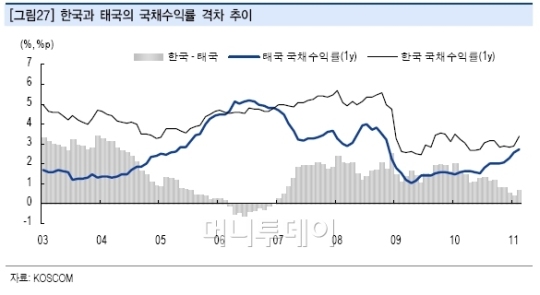
A large delegation, including the chairman of the Thai Bond Market Association and other key executives and board members, has visited Korea, drawing significant attention. This visit group, which totals a massive 14 people, includes not only practitioners from major Thai commercial banks and securities firms but also high-ranking officials from the Ministry of Finance and the central bank. The decisive reason they are closely watching the Korean capital market is its transparent and efficient OTC bond trading structure and price determination methods. The Thai financial sector has determined that it needs a more advanced regulatory framework and market surveillance system to match the growth of its domestic market. They have identified the Korean capital market infrastructure as the most exemplary case that can resolve these concerns. The delegation first visited the Financial Investment Association located in Yeouido, Seoul, to listen to the compressed growth process of the Korean capital market. They showed particular interest in the secret behind maintaining market soundness despite rapid economic development, pouring out questions. They demonstrated enthusiasm by meticulously recording how the system is applied and operates in the actual field, going beyond simple theoretical explanations. The fact that the Korean financial system is becoming a textbook for Southeast Asian nations is a testament to the resilience of our capital market.
A large delegation, including Thailand’s Ministry of Finance and Central Bank, visited Korea to learn about the excellent infrastructure of the Korean OTC bond market.
2. K-BOND Leads Innovation in OTC Bond Trading
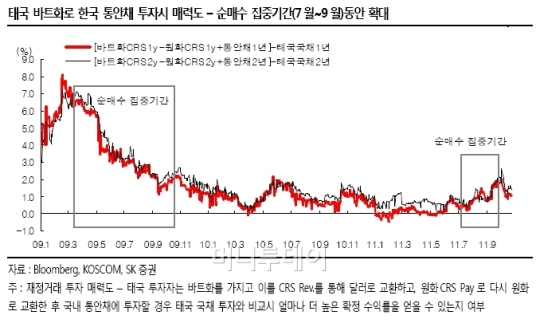
K-BOND, which serves as the core framework of the Korean OTC bond market, received the most enthusiastic attention from the Thai delegation during this visit. K-BOND is the key player that digitized the complex and opaque OTC bond trading process and facilitated two-way order submission, thereby maximizing market liquidity. In the past, there was a pain point where transactions were concluded via phone or messengers, leading to low price transparency and high transaction costs. However, since the introduction of this dedicated platform, market participants have been able to check accurate real-time order information and execute contracts swiftly. The Thai visitors were impressed while watching demonstrations by practitioners on how this computerized system increases trade execution rates and reduces errors. They specifically asked questions about the process of aggregating and processing various order information generated during transactions in real time. They confirmed that this computerized network makes a decisive contribution to inducing fair competition among market participants and strengthening price discovery. Thai financial authorities also expressed their intention to transplant this advanced trading system to their domestic market to achieve both trading activation and investor protection simultaneously.
K-BOND, the dedicated OTC bond trading platform, impressed the Thai delegation with its transparent order information provision and trading convenience.
3. The Art of Self-Regulation and Market Information Management
The Thai Bond Market Association is a unique organization that serves as both a self-regulatory organization and a market information center and price evaluation agency within its country. Due to this nature, association officials focused on learning the know-how of how Korea’s Financial Investment Association supervises the market and enforces self-regulation. The Korean market is highly rated for its high level of market trust, equipped with thorough member supervision functions and a transparent market information provision system. Since both institutions share the common mission of market surveillance and standard-setting, a sense of empathy was quickly formed as conversations progressed. They showed deep trust in the information provision process that calculates bond yields and various indices and discloses them transparently to general investors. They shared the philosophy that only when the market is operated transparently can both individual and large institutional investors entrust their funds with peace of mind. Korea’s self-regulatory capabilities and market data management systems, honed over decades, will serve as a good guide for Thailand’s future direction. Both sides agreed to share regulatory experiences and improve systems through regular practical meetings in the future.
The two institutions, which both perform self-regulation and market information management functions, agreed to expand the scope of cooperation by sharing mutual know-how.
4. Transparency of the Corporate Bond Credit Rating System
Another topic that captured the Thai delegation’s attention as much as K-BOND during this meeting was the domestic corporate bond credit rating system. The system for accurately measuring the risk of bonds issued by companies and assigning corresponding credit ratings is akin to a safety net for the capital market. Korea has built fair and objective credit rating models by credit rating agencies over a long period, creating an environment where investors can invest with confidence. The Thai visitors meticulously analyzed the criteria credit rating agencies use to diagnose corporate financial conditions and assign ratings. The institutional importance is significant because proper credit rating is essential for detecting default risks in advance and preventing investor losses. Deep discussions also continued on the secret behind how Korean credit rating agencies have maintained independence and secured credibility in the market. The Thai side confessed that advancing their credit rating system is an urgent task as the scale of their corporate bond market grows. It is expected that, on the occasion of this benchmarking, efforts to improve the transparency and objectivity of the credit rating system in Thailand will accelerate.
Korea’s system, which ensures the objectivity and independence of corporate bond credit ratings, is one of the parts Thai financial authorities most want to emulate.
5. The Future of Financial Infrastructure Cooperation Between the Two Countries
This visit by the Thai delegation is significant not just as a one-time visit but as it has opened the door to substantial exchange between the capital markets of the two countries. The chairman of the Financial Investment Association mentioned the similarity in the roles performed by both institutions and promised continuous experience sharing and know-how transfer. The two institutions plan to closely cooperate in the future on bond market data sharing, as well as the advancement of price evaluation techniques and market infrastructure improvement. This private-sector-led financial cooperation serves as a solid cornerstone for strengthening the economic partnership between the two countries. It is also a source of national pride that Thailand, an emerging Southeast Asian economy, has chosen Korea as a model case for financial benchmarking. As Korean-style trading systems and self-regulation models permeate various parts of the Thai financial market, business opportunities between financial companies in both countries will naturally increase. The potential areas for cooperation, such as joint development of financial products and exchange of expert personnel, are limitless. We hope that the positive ripple effects of this meeting will serve as a catalyst for the simultaneous growth of the capital markets of both countries.
On the occasion of this meeting, the two countries agreed to significantly expand practical exchanges in bond data, price evaluation, and overall market infrastructure.
6. Korea’s Rising Status in the Global Capital Market
It is an undeniable historical fact that Korea’s capital market was once in the position of a chaser, busy trying to keep up with the systems of advanced countries. However, by completing original and efficient trading computer networks like K-BOND, Korea has now transformed into a confident exporter. The sight of various Southeast Asian countries, including Thailand, lining up to learn from Korea’s financial infrastructure makes us feel the reality of our changed status. From the perspective of investors, the transparency and advancement of the domestic capital market are positive factors that increase trust in the market in the long term. We sincerely hope that the Korean capital market will continue to play a leading role on the global stage and achieve a greater leap forward. We also ask our readers to pay warm attention to this globalization process of the domestic capital market. As the transparency of the bond market increases, the asset management environment for individual investors becomes safer and more advantageous. We promise to quickly deliver news about our financial system, which is recognized overseas. We recommend that you exercise wisdom to accurately read the trends of the changing capital market and make smart investment decisions.
The Korean bond market has now positioned itself not just as a chaser, but as a leader presenting financial standards for the Asian region.
Frequently Asked Questions
=