The Employment Insurance system serves as a robust safety net for our lives, going far beyond simply providing financial support when one leaves a job. However, when it comes time to apply for unemployment benefits after resignation, the complex conditions often leave people feeling overwhelmed. In particular, lacking a clear understanding of the 180-day enrollment requirement or the criteria for involuntary termination in 2026 can easily lead to disappointment. It is not uncommon to hear news reports about individuals being caught attempting to fraudulently claim benefits by holding nominal executive positions on paper without actually attending work. Through this article, you can gain a thorough understanding of the benefits you are rightfully entitled to and the essential precautions you must take. We will also guide you through the often-overlooked application procedures for unemployment benefits amidst the evolving labor laws.
=
2026 Employment Insurance Unemployment Benefits: Conditions and Support for Self-Employed Individuals
1. Basic Conditions for Receiving Unemployment Benefits in 2026

Receiving job-seeking benefits does not mean money will automatically appear in your bank account simply because you have quit your job. First and foremost, your cumulative enrollment period in Employment Insurance must be at least 180 days within the 18 months preceding your final date of employment. For office workers on a standard five-day work week, this typically requires consistent premium payments for approximately seven months. A common mistake many people make is failing to distinguish between voluntary and involuntary resignation. In principle, those who resign due to a change of heart or personal reasons are excluded from unemployment benefits. Eligibility is generally granted only when objective reasons are recognized, such as wage arrears, workplace bullying, or health issues that make it impossible to continue working.
Even if you meet all these conditions, benefits are only paid if you actually have the willingness and ability to work. No matter how long your enrollment period is or how unfairly you were treated, you cannot receive job-seeking benefits if you are currently hospitalized or lack the intention to seek employment. After reporting your unemployment, you must visit the Employment Center and submit evidence that you are actively engaging in job-seeking activities. It is not rare to see cases where individuals neglect this requirement, leading to warnings or the suspension of their benefits. Therefore, it is crucial to develop the habit of verifying your Employment Insurance enrollment days and ensuring your reason for leaving is accurately reported before you even decide to resign. To avoid the pitfall of your company processing your departure as a personal resignation despite agreeing to treat it as a dismissal or constructive dismissal, you must strictly monitor the processing of your Separation Certificate.
To receive unemployment benefits, you must have at least 180 days of enrollment within 18 months and a valid reason for involuntary termination.
2. Employment Insurance Accessibility for Artists and Freelancers
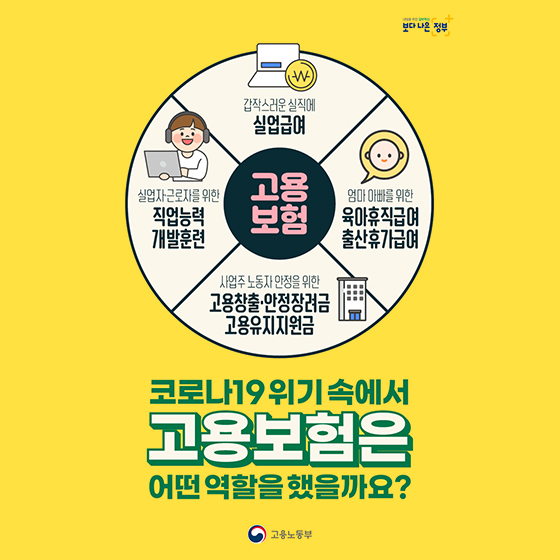
In the past, only regular employees were protected by Employment Insurance, but now artists and freelancers can also enjoy these benefits. Artists who have signed cultural and artistic service contracts and are actively working can enroll in Employment Insurance to receive job-seeking benefits and maternity/paternity leave benefits. If the contract amount exceeds a certain threshold, freelancers in the cultural and artistic fields can also enter the safety net. This is a significant help, as they can apply for unemployment benefits even if their contracts end or their income drops sharply due to a halt in creative activities. However, since accurate reporting of remuneration or income is required for artists’ Employment Insurance as well, you must carefully verify the applicability of Employment Insurance when signing contracts.
In reality, many individuals working as artists or freelancers still fail to receive benefits due to missed Employment Insurance enrollments. This is particularly common among those working on small-scale projects, where employers may neglect to report premiums or individuals may simply be unaware of the system. Clearly confirming the withholding of Employment Insurance premiums or the responsible party for payment when drafting contracts is the quickest way to prevent future disadvantages. Similar to regular workers, artists must meet specific enrollment unit criteria to be eligible for unemployment benefits. The government continues to refine the system to protect workers in such incomplete employment situations, so it is advisable to frequently check for the latest information.
Artists and freelancers can enjoy unemployment benefits and maternity/paternity leave benefits through contract-based Employment Insurance.
3. How to Utilize Employment Insurance Premium Support for Self-Employed Individuals

Self-employed individuals, who were previously excluded from government employment support due to their non-employee status, can now also receive assistance through Employment Insurance. To support sole proprietors and small business owners facing the risk of business closure, the government operates the Self-Employed Employment Insurance system. While monthly premiums may seem burdensome, there is a support program that refunds a significant portion of the premiums, up to a maximum of five years, depending on the grade. Since you can receive support for more than half of the premiums, this system acts as a reliable insurance policy that allows you to receive unemployment benefits in the event of business closure. It provides valuable funds to help you rebuild when you are forced to close your business due to an economic downturn.
However, many small business owners around us miss the enrollment deadline simply because they are unaware of this support system. Since you often need to apply within a certain period after completing your business registration to receive full benefits, it is important to take an interest in this from the early stages of opening your business. Enrolling in Self-Employed Employment Insurance provides various linked benefits beyond just unemployment benefits, such as support for vocational training costs and re-employment counseling. Unlike in the past, when individuals had to bear all risks alone, utilizing the national support network can significantly mitigate the shock of business closure. Instead of relying solely on acquaintances, it is recommended that you directly check your eligibility through small business-related institutions or labor and employment websites.
Enrolling in Self-Employed Employment Insurance allows you to receive government premium support, enabling you to claim unemployment benefits and recovery support in case of business closure.
4. Strengthened Crackdowns on Fraudulent Benefits and False Enrollments
Recently, illegal activities have been detected where some businesses register acquaintances or relatives as “ghost employees” to enroll them in Employment Insurance and fraudulently obtain government subsidies. News reports frequently highlight cases where individuals are given executive or team leader titles on paper without actually attending work or performing any duties. Maintaining a fraudulent insured status in this manner can lead to the cancellation of eligibility upon investigation by the public corporation and even criminal prosecution. The Employment Insurance fund is composed of valuable tax money that should be used for workers who have truly lost their jobs or are facing difficulties. To prevent such fraudulent claims, the government conducts regular and intensive planned investigations, gradually tightening its surveillance net.
In many cases, individuals who exploit personal relationships to improperly receive company funds and create Employment Insurance histories to claim unemployment benefits face full reimbursement orders. The Korea Workers’ Compensation & Welfare Service and the Ministry of Employment and Labor continuously analyze computer networks to detect situations where there is no actual work performance. To avoid being unfairly implicated, it is important to transparently manage your records to ensure that your actual work content matches your Four Major Social Insurance reports. Lending your name at the request of a company representative or enrolling in insurance without working can result in severe legal liability for you. We must all remain vigilant to establish a fair ecosystem where only those who work honestly and pay premiums rightfully receive benefits.
Fraudulent Employment Insurance enrollment or registering employees on paper to claim benefits leads to severe penalties and reimbursement.
5. Changes in Employment Insurance Amidst 2026 H2 Labor Law Revisions
In the second half of this year, various labor laws are being revised, bringing significant changes to the institutional environment surrounding Employment Insurance. With the revision of the Equal Employment Opportunity Act and the Enforcement Decree of the Employment Insurance Act, the Spousal Childcare Support System is being expanded and implemented more broadly. To alleviate the financial burden on families raising children, the payment conditions and support amounts for childcare leave benefits have been improved to reflect reality. Additionally, penalties for wage arrears and severance pay arrears have been significantly strengthened, reinforcing protection mechanisms for workers in bankrupt businesses. These changes play a major role in reducing injustices experienced by workers in the workplace and filling gaps in the employment safety net.
Every time new laws are enacted, the amount of support you can receive may increase or application methods may change, so it is necessary to be diligent in checking for updates. For example, the incentive system for companies that hire young people as regular employees and maintain their employment for a certain period is continuously being refined. Programs like the Youth Employment Leap Incentive encourage long-term retention of young workers in small and medium-sized enterprises that meet the insured count requirements. However, since government support funds for such programs can be suspended if the employment retention rate is low, cooperation between companies and workers is essential. In the rapidly changing labor market, those who quickly find and utilize policies favorable to themselves can enjoy greater benefits.
H2 2026 legal revisions have further expanded Employment Insurance systems for childcare support and protection of workers with unpaid wages.
6. Successful Unemployment Benefit Applications and Future Strategies
To smoothly receive unemployment benefits by properly utilizing the Employment Insurance system, thorough preparation and following the correct application sequence are essential. Before leaving your job, you must verify with your HR department, via phone or online, that your Separation Certificate has been properly transmitted to the Employment Center. Immediately after resignation, the standard procedure is to complete job-seeking registration through WorkNet, finish the eligibility application training online, and then visit the Employment Center. At the center, you must fill out the job-seeking benefit application form and express your active intention to re-employ to be assigned an unemployment recognition date. If required documents are missing, the processing of your case may be delayed, so it is advisable to prepare your ID and bank account copy in advance.
As the employment market becomes more diverse and non-regular employment forms increase, the role of Employment Insurance will become increasingly important. Policies must evolve to encompass all groups, including those previously excluded from the existing system, such as small self-employed individuals and short-term contract workers. We hope that you will keep in mind the core conditions of Employment Insurance and the rules for preventing fraudulent benefits shared today, so you can protect your valuable rights. Whether you are currently employed or have left your job, you need to maintain the attitude of frequently checking your employment records and correcting any issues immediately. A smart employee or business owner should view Employment Insurance not as a mere tax, but as the most reliable shield protecting them.
Following a systematic application sequence and managing your employment history is the shortcut to receiving unemployment benefits.
Frequently Asked Questions
=