Many employees who do not fully understand how to receive their retirement pension end up regretting their decision to take a lump sum, only to face taxes amounting to millions of won. If you are an employee approaching retirement, the top priority is to first confirm whether your retirement pension is a Defined Benefit (DB) plan, a Defined Contribution (DC) plan, or an Individual Retirement Pension (IRP). This is because the account used to receive the funds and the tax benefits differ entirely depending on whether the company manages the money or if you manage it directly. Last year, Manager Kim, who had recently retired, carelessly received his entire severance pay as a lump sum and was left stunned after paying a seven-figure amount in retirement income tax. In contrast, a colleague who had done a bit of research beforehand transferred the funds to an Individual Retirement Pension account and received them as a pension, enjoying a tax reduction of up to 70%. In this article, we will discuss in detail the procedures for receiving retirement pensions by type and tax-saving tips that you must know to protect your valuable retirement funds.
=
Complete Guide to Receiving Your Retirement Pension: Comparing IRP Account Pensions vs. Lump Sums and Tax Benefits
1. Identifying Your Retirement Pension Type
Before diving into the methods of receiving your retirement pension, you must accurately determine whether you are enrolled in a Defined Benefit (DB) or a Defined Contribution (DC) plan. In a DB plan, the company directly manages the funds and pays a predetermined amount at the time of retirement, so employees have little to worry about. However, in a DC plan, the company contributes annually, and the employee directly invests and manages these funds in various financial products, meaning the final amount received varies depending on the rate of return. Recently, many employees are actively changing products and managing their assets to achieve higher returns, but if losses occur, it can significantly impact their retirement plans. Therefore, you should develop the habit of frequently checking your current accumulated balance through your company’s HR department or the website of the financial institution where you are enrolled.
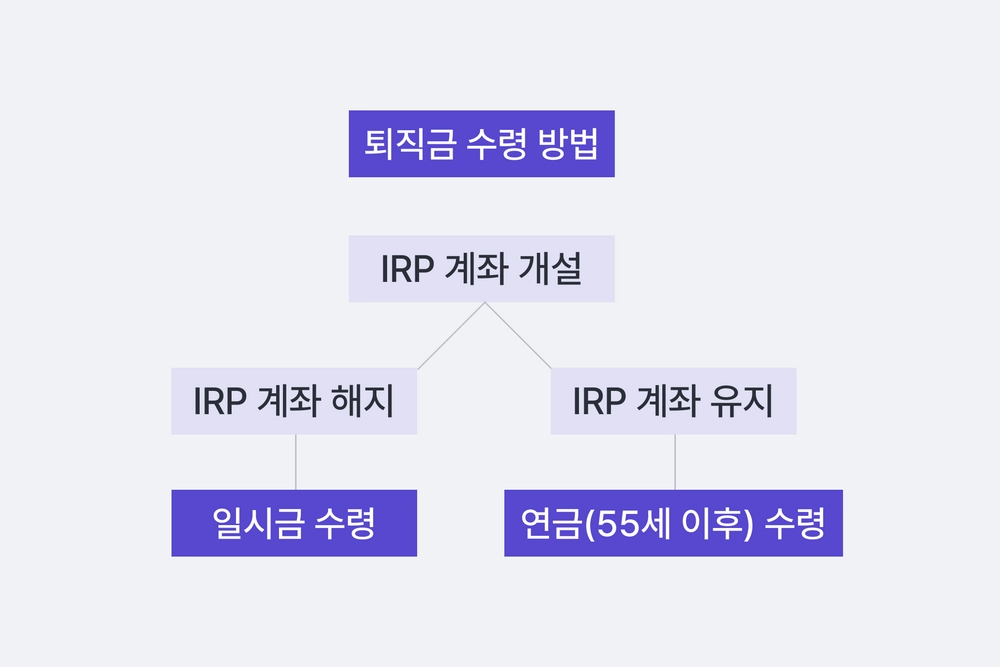
In addition to these, there are three main categories, including the Individual Retirement Pension (IRP) account, which allows employees to make additional contributions or manage severance pay received when changing jobs. Funds accumulated in DB or DC plans must be transferred to an IRP account before you can proceed with the formal receipt process. For example, when an employee working in Seoul resigns, the company is legally obligated to deposit the retirement benefits into an IRP account in the employee’s name. Since the documents required to close the account or convert it to a pension may vary slightly by financial institution, it is safer to check in advance. This is the first step that determines the final amount deposited into your account, so knowing the exact nature of your current account is of utmost importance.
The first step in receiving your retirement pension is to accurately identify your enrollment type (DB, DC, or IRP) and prepare an Individual Retirement Pension account.
2. Comparing Pension Receipt vs. Lump Sum Receipt
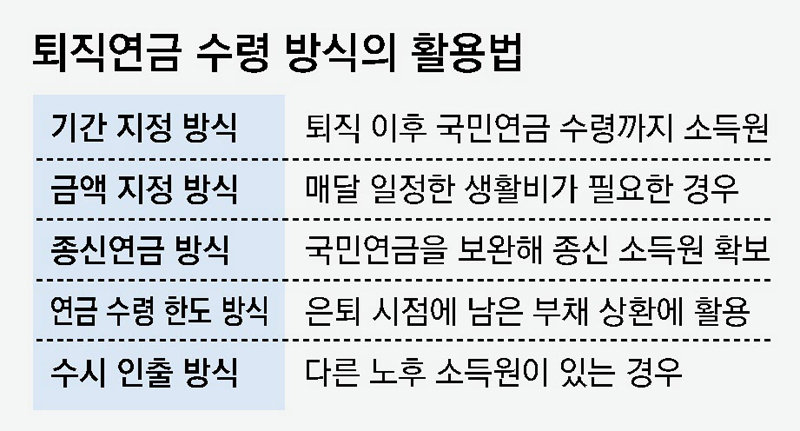
When choosing how to receive your retirement pension, deciding whether to take a lump sum or receive it monthly as a pension is a critical decision that determines your retirement life. If you do not immediately need a large sum of cash, you should remember that receiving it as a pension is overwhelmingly advantageous from a tax perspective. To encourage employees to use their retirement funds stably, the government offers a substantial benefit of reducing retirement income tax by up to 70% when received as a pension. For example, if you would owe 1 million won in taxes by taking a lump sum, you would only owe 300,000 won if you receive it as a pension, effectively saving 700,000 won.
In reality, it is common to see people who insist on taking a lump sum for their children’s wedding or home purchase after retirement, only to hit a tax bomb and see their retirement funds shrink instantly. On the other hand, by receiving a fixed amount monthly for living expenses and continuing to invest the remaining funds, you can defend against inflation while minimizing the tax burden. Of course, in special circumstances such as needing to pay off debts immediately after retirement or facing high medical costs, receiving a lump sum may be unavoidable. However, unless there are special circumstances, it is a wise financial strategy to receive it as a pension over a period of 10 years or more. You must carefully compare the size of the tax benefits with your expected lifespan after retirement to choose the most suitable receipt method.
Choosing to receive your pension instead of a lump sum allows you to reduce retirement income tax by up to 70%, making it much more advantageous for managing retirement funds.
3. IRP Account Opening and Transfer Procedures

To formally receive your retirement pension, you must open an Individual Retirement Pension account in your own name to proceed smoothly. You can easily open an account from home using the mobile apps of various financial institutions, such as banks or securities firms, without visiting a branch. After opening the account, you should provide the account information to your company’s HR department and request that the retirement benefits be safely deposited into that account. At this time, there may be slight differences in the payment schedule depending on the type of retirement pension product you were previously enrolled in, so it is advisable to coordinate the schedule with the financial institution’s customer service center in advance.
For example, assets managed in various products such as equity funds or bonds may take an additional day or two to be liquidated. Once all assets are converted to cash and properly deposited into the IRP account, you are finally eligible to apply for the commencement of pension payments. Some employees try to have the company handle this complex procedure casually, only to find their valuable severance pay frozen or incur higher taxes. By following the step-by-step instructions on the mobile app screen, anyone can easily open an account and safely transfer funds. Comparing fee conditions and additional benefits offered by different financial institutions will also enable smarter asset management.
To receive your retirement pension, you must open an Individual Retirement Pension account in your own name and complete the procedure to safely transfer the accumulated funds from your company.
4. How to Apply for Pension Receipt and Required Documents
Once all accumulated funds have been transferred to your IRP account, you must proceed to the stage of formally applying for pension payments. You can select the pension application menu on the financial institution’s mobile app or internet website, or visit a nearby branch with your ID. In addition to your ID, you must prepare basic supporting documents required by the financial institution, such as a retirement income withholding certificate or documents proving your period of employment. Mr. Park, an employee, had a close call where his pension start date was delayed by a month, causing difficulties in accessing living expenses, because he postponed submitting documents to go on an overseas trip immediately after retiring.
When filling out the application form, you must specify in detail how much you want to receive monthly, the frequency of payments, and which bank account will be designated for receipt. Setting the pension payment cycle to arrive regularly on a specified date each month is much more advantageous for creating household budgets and planning finances. Once the application is successfully completed, it goes through the financial institution’s review process, and upon approval, you can check the balance in your pension account starting from the designated date. If there are omissions or errors in the documents, you will have to reapply following the guidance of the staff, so filling it out carefully from the start is the quickest way to save time. This is a crucial turning point for creating a stable cash flow after retirement, so you should complete the application procedure calmly and accurately.
By filling out the pension receipt application through a financial institution’s app or branch and submitting your ID and supporting documents, you can receive your pension regularly every month.
5. Maximizing Tax Benefits and Tax-Saving Strategies
The most critical element in how you receive your retirement pension is ultimately how much tax you can save, and a strategic approach is essential. The longer the period you receive the pension, the greater the tax reduction benefit; the structure is such that the tax reduction rate increases further after 10 years have passed since the commencement of the pension. Additionally, by adjusting your annual pension receipt amount to stay below a certain limit, you can exclude it from comprehensive income tax, thereby wisely reducing your health insurance premiums as well. Some smart retirees employ a strategy of receiving their severance pay as a pension while simultaneously utilizing personal pension savings accounts to maximize their tax deduction limits.
Understanding changes in financial investment income regulations and tax reform trends in advance can become a powerful weapon for protecting and growing your assets. For example, if you manage domestic equity index funds within a pension account, you can flexibly defer taxes on trading gains until you receive the pension, unlike in a general account. To fully enjoy this compound interest effect, the right approach is to continue investing in products within the account and withdrawing small amounts as a pension, rather than withdrawing the money in a lump sum at the time of retirement. Tax experts unanimously emphasize that the success or failure of retirement fund planning is determined by how much tax you can legally reduce. Setting your pension receipt period to 10 years or more, tailored to your expected retirement living expenses and asset size, is the most reliable way to avoid a tax bomb.
By setting a longer pension receipt period and adjusting the annual receipt amount, you can simultaneously enjoy the benefits of retirement income tax reduction and health insurance premium savings.
6. Outlook on Retirement Pension Management for a Successful Retirement
The method of receiving your retirement pension is not just a technique for withdrawing money, but a core task in life planning to live a prosperous and stable life in an extended old age. With the arrival of the 100-year-old era, where life after retirement lasts more than 30 years, the consideration of how to divide and manage the large asset of a retirement pension has become more important than ever. In the future, it is expected that more refined and close-knit financial support systems for retirees, such as AI-based personalized asset management services or premium safe deposit box services, will become widespread. Therefore, to keep up with the changing financial environment, you should frequently check the rate of return on your retirement pension to ensure it is not neglected and actively seek expert advice.
Even if you do not plan to leave your company immediately, you need to take an interest in how you are managing your DC or IRP account from a young age. Only those who study the receipt methods in advance and prepare for various scenarios, rather than panicking as the retirement date approaches, can welcome a leisurely and happy old age. Starting today, please begin with the small action of logging into your retirement pension account to check your enrolled products and calculating your expected monthly living expenses and pension receipt amount after retirement. Thorough preparation and a wise receipt strategy will serve as the most powerful and reliable shield to support your remaining life without financial worries.
Through thorough preliminary preparation and systematic asset management, receiving your retirement pension in the form of a pension allows you to spend your extended old age securely without financial worries.
Frequently Asked Questions
=