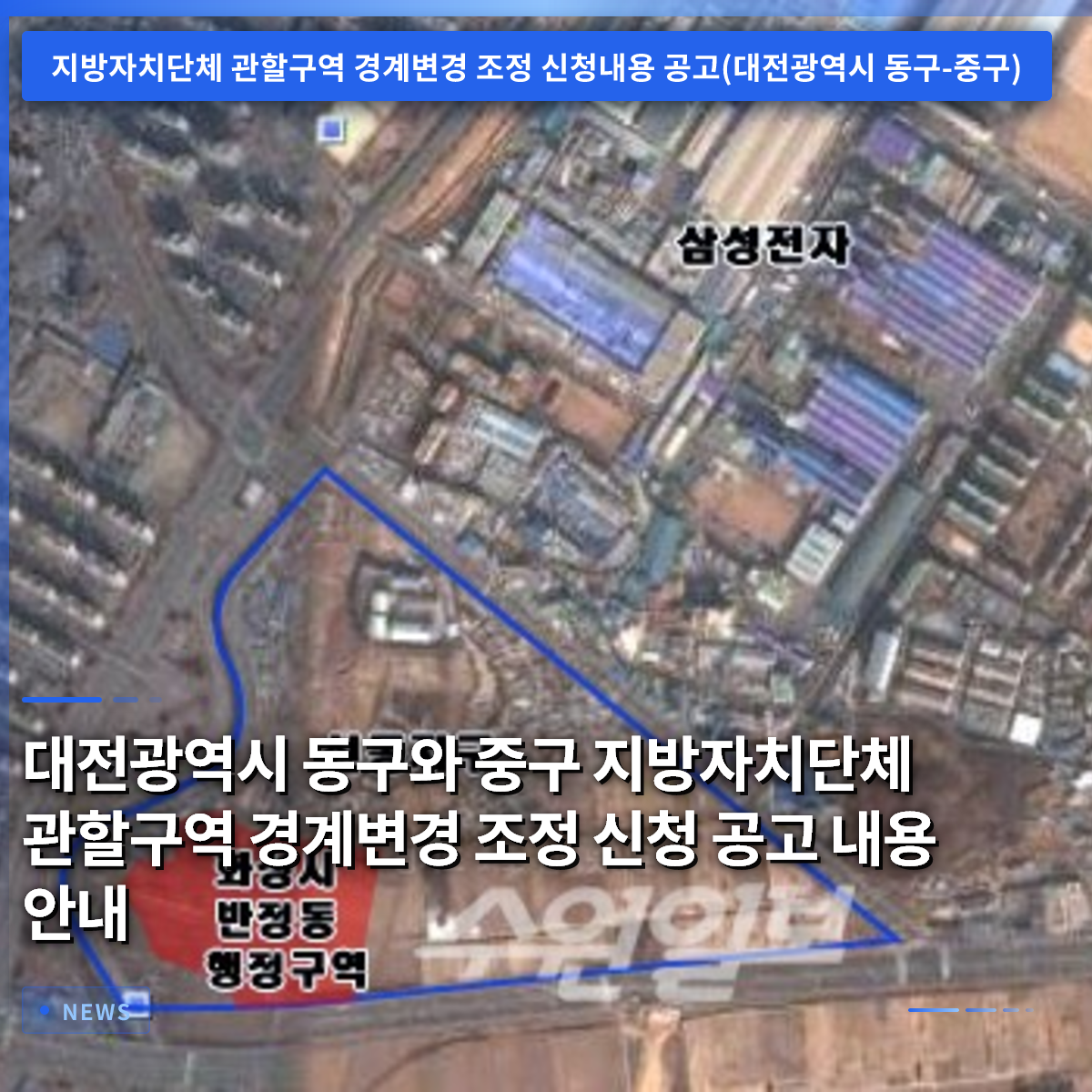
Local residents are closely watching the official announcement by the Ministry of the Interior and Safety regarding the application to adjust the administrative boundaries between Dong-gu and Jung-gu in Daejeon Metropolitan City. Adjusting administrative boundaries is not merely a matter of administrative convenience; it is a critical issue closely tied to the living convenience that residents actually experience. For instance, it can be an opportunity to resolve long-standing grievances for residents who have faced inconveniences due to mismatched administrative districts despite sharing the same living area separated by a single road. This announcement serves as a signal that the formal adjustment process has begun following consultations and opinion-gathering between the two local governments. Therefore, residents living in or owning property in the affected areas need to carefully examine the details of this application. Understanding the specific procedures, such as the upcoming public inspection period and how to submit opinions, will greatly help in protecting their rights.
=
Notice on the Application for Adjustment of Administrative Boundaries Between Dong-gu and Jung-gu, Daejeon Metropolitan City
1. Background of the Application for Boundary Adjustment
Adjustments to administrative boundaries between local governments typically occur as cities expand and residents’ living areas no longer align with existing administrative districts. Administrative boundaries set in the past were often based on the terrain or roads of decades ago, frequently resulting in a mismatch with the current urban structure. Dong-gu and Jung-gu in Daejeon Metropolitan City have also seen significant changes in housing types and transportation networks as the city developed over time. Consequently, residents in certain areas have long faced inconveniences in handling administrative tasks because their actual living area falls under a distant jurisdiction rather than the local district office. This adjustment application is the result of both local governments working together to resolve these practical inconveniences and improve administrative efficiency. In fact, there are many cases where parents face administrative confusion because the district of an apartment complex’s entrance differs from the school district. To fundamentally solve such problems, it is essential to flexibly adjust boundaries between local governments to match residents’ actual living areas. The Ministry of the Interior and Safety supports legal procedures to facilitate boundary adjustments between local governments by reflecting these on-the-ground voices. The case of Dong-gu and Jung-gu in Daejeon can serve as a model precedent for correcting chronic administrative inconsistencies that arise during urban growth. Therefore, carefully examining the reasons for the application and the scope of the target areas included in this announcement is the first step toward a solution.
An application for boundary adjustment between Dong-gu and Jung-gu has been filed to resolve the mismatch between living areas and administrative districts caused by urban growth.
2. Key Contents of the Announcement and Target Areas
The announcement issued by the Ministry of the Interior and Safety includes detailed information on the specific target areas and reasons for the requested boundary adjustment between Dong-gu and Jung-gu in Daejeon Metropolitan City. The target zones specified in the announcement are densely populated residential or commercial areas straddling the boundary between the two local governments, where improving administrative convenience for residents is urgent. In particular, precise lot numbers and areas are listed to reduce confusion that has arisen in land ownership and building ledger management. Residents in these areas can directly verify how the administrative district in front of their homes will change through figures and maps provided in the announcement. Changing boundaries between local governments is not a simple task of drawing a line; it is a complex process that requires comprehensive consideration of various factors, such as land use status and resident voting results. The announcement also places significant emphasis on objective data explaining the necessity of these changes and the expected future effects. During the announcement period, residents can review the relevant documents and inquire directly with the responsible departments about any questions. Since the full text of the announcement is easily accessible via the websites of the Ministry of the Interior and Safety and the local governments, those with limited internet access can also seek assistance from nearby administrative welfare centers. Accurately identifying the target areas is a prerequisite for effectively voicing one’s opinion during the upcoming resident opinion-gathering process.
The announcement details the specific target areas and reasons for the boundary change, allowing residents to directly review and inspect them.
3. Resident Opinion Gathering and Inspection Procedures
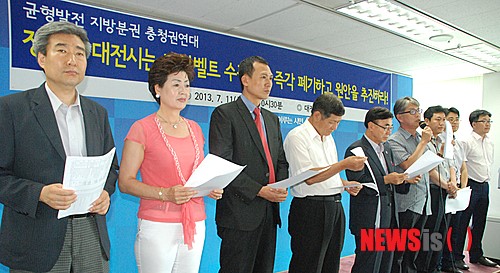
One of the most important steps in the procedure for changing administrative jurisdictions under the Local Autonomy Act is directly hearing the opinions of residents, who are the stakeholders. Residents or interested parties who have opinions for or against the announced content may submit a written opinion within the designated period. During the opinion-gathering period, the relevant departments of Dong-gu and Jung-gu offices will provide detailed guidance and counseling to help residents easily understand the announcement. For example, various channels such as online portals and mail submissions are available to accommodate working professionals who may find it difficult to visit in person on weekdays. Residents’ opinions are not merely for reference; they serve as a crucial basis for judgment in the subsequent deliberation process of the Central Dispute Adjustment Committee. Therefore, it is vital to express opinions based on clear grounds, whether positive or negative, regarding the boundary change in one’s area. Administrative agencies have the responsibility to fairly collect diverse resident perspectives to ensure a rational adjustment that does not favor one side. Missing the inspection period could mean losing the opportunity to assert one’s rights, so it is wise to mark the schedule in your calendar from the date of the announcement.
A procedure to gather resident opinions will be conducted within a set period, which will significantly impact the final decision.
4. Deliberation and Role of the Central Dispute Adjustment Committee
When disagreements between local governments cannot be resolved or a formal adjustment application is received, the Central Dispute Adjustment Committee under the Ministry of the Interior and Safety begins its formal deliberation. The boundary change application between Dong-gu and Jung-gu in Daejeon will also undergo the committee’s thorough review and verification of legal validity. Composed of experts, the committee objectively mediates the positions of both local governments and makes decisions prioritizing the welfare of local residents. During the deliberation process, the committee strictly examines various factors, including not only administrative convenience for local governments but also historical background, resident convenience, and changes in local tax revenue. For example, they may conduct on-site investigations to determine how student commuting routes or fire station jurisdictions would change due to the boundary adjustment. The committee’s deliberation results carry the core advisory authority to determine the direction of final administrative district reorganization, surpassing the authority of local government heads. Consequently, both local governments will make every effort to faithfully represent resident public opinion and submit persuasive materials during the committee’s deliberation. For residents, it is also helpful to keep a close eye on the criteria the Central Dispute Adjustment Committee uses for its review.
The Central Dispute Adjustment Committee will mediate disagreements between the two local governments through objective deliberation and make the final decision.
5. Impact on Residents’ Lives and Property Rights

Changing administrative boundaries is an issue directly related to residents’ daily lives, requiring careful attention and analysis. Once boundaries are adjusted, residents’ registered addresses will change, and details such as garbage collection days or the method for affixing large waste stickers may also differ. Additionally, adjustments to school districts for children, or changes in jurisdiction for local health insurance corporations and tax offices, may cause initial minor confusion. Regarding property rights, owners need to be aware of the procedures involved in organizing land ledgers, building ledgers, and cadastral maps. Fortunately, in cases of large-scale boundary changes, it is common for relevant local governments to form dedicated task forces to provide one-stop services aimed at minimizing resident inconvenience. For example, systems are put in place to handle resident registration reissuance and address changes for various permits collectively, rather than requiring individuals to visit each office separately. In the long term, aligning living areas with administrative districts is expected to significantly improve living convenience and yield positive effects on real estate values. Therefore, it is beneficial to view this as a change for the long-term development of the neighborhood rather than a short-term hassle and to prepare calmly.
While administrative boundary changes involve changes in addresses and jurisdictions, they ultimately enhance residents’ living convenience in the long run.
6. Future Outlook and the Importance of Resident Participation
The announcement of this boundary adjustment application between Dong-gu and Jung-gu in Daejeon Metropolitan City is a significant turning point for the two districts to move toward a better future. It will take considerable time before the final boundary adjustment plan is confirmed, following the processes of gathering resident opinions and deliberation and resolution by the Central Dispute Adjustment Committee. In this process, the smoothness of communication between the administration and residents will be the key to the success of the entire project. Residents are urged to maintain continuous interest in administrative announcements and actively voice their opinions within the inspection period to play a proactive role. As this is a historic moment where the administrative map of our neighborhood and community is being redrawn, warm interest and participation are urgently needed rather than indifference. Local governments must also exercise meticulous administrative effort to listen to residents’ voices and ensure that no resident is left behind or subjected to unfair inconvenience. If this adjustment is successfully completed, it is expected that administrative efficiency in Daejeon’s old city area will be maximized, and residents’ quality of life will be further elevated. Please do not miss the upcoming follow-up schedules and additional notices, and check them step by step to respond wisely.
Residents’ continuous interest and active participation in providing opinions are paramount for a smooth boundary adjustment.
Frequently Asked Questions
=