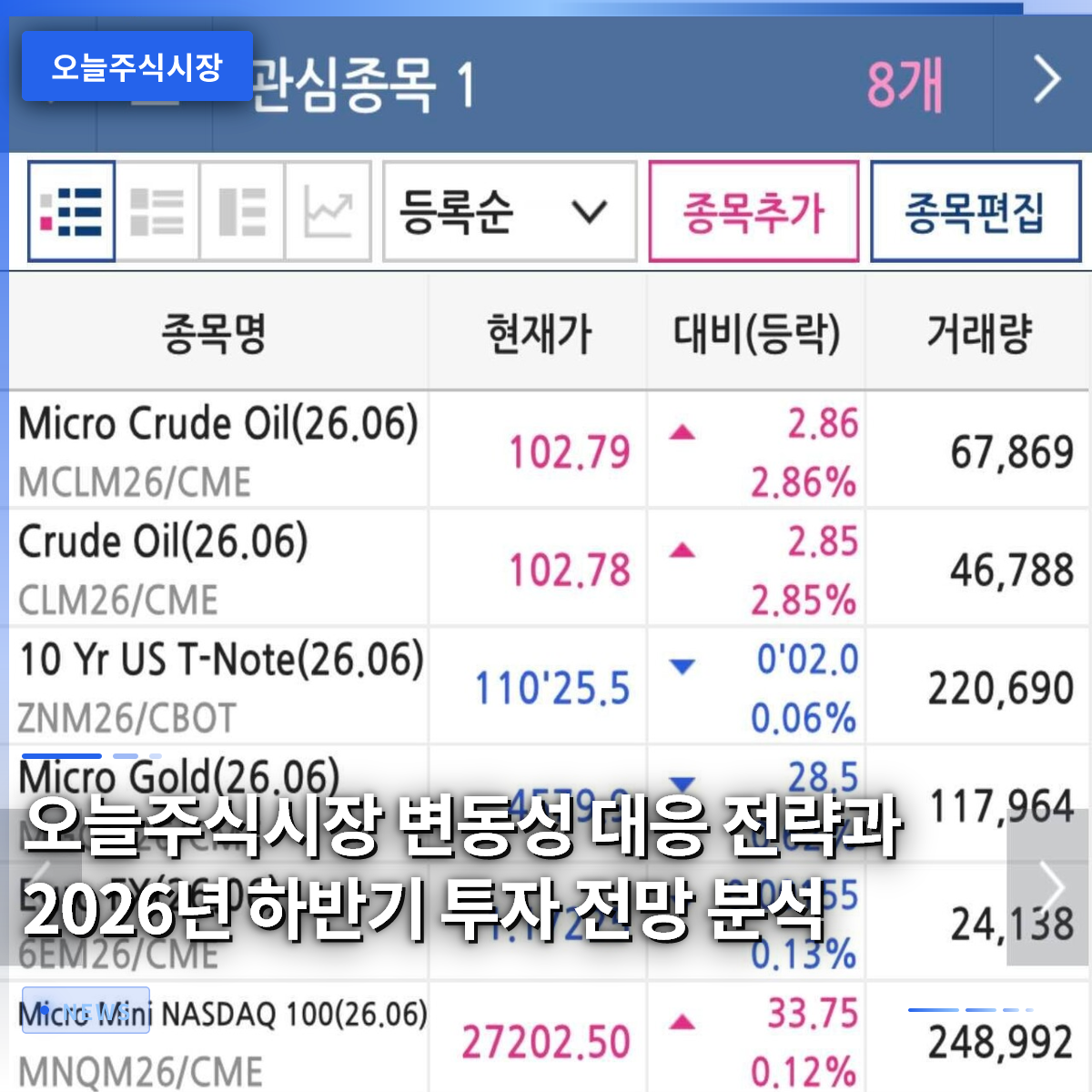
Today’s stock market is showing signs of rapidly improving investor sentiment as expectations for negotiations between the United States and Iran rise, leading to a decline in international oil prices. As Warren Buffett emphasized, it is more important than ever to focus on high-quality assets that you would be willing to hold even if the stock market closed tomorrow. While AI technology stocks are leading the market, semiconductor and power infrastructure-related stocks are gaining attention as new growth drivers. Amidst various changes, including reforms to the capital market system and the extension of after-hours trading, investors must make even more discerning judgments. In this article, we will specifically examine the macroeconomic trends surrounding the current stock market and practical response strategies. Let us review the key criteria for generating long-term returns without being swayed by diverse market volatility.
=
Strategies for Navigating Today’s Stock Market Volatility and Investment Outlook for the Second Half of 2026
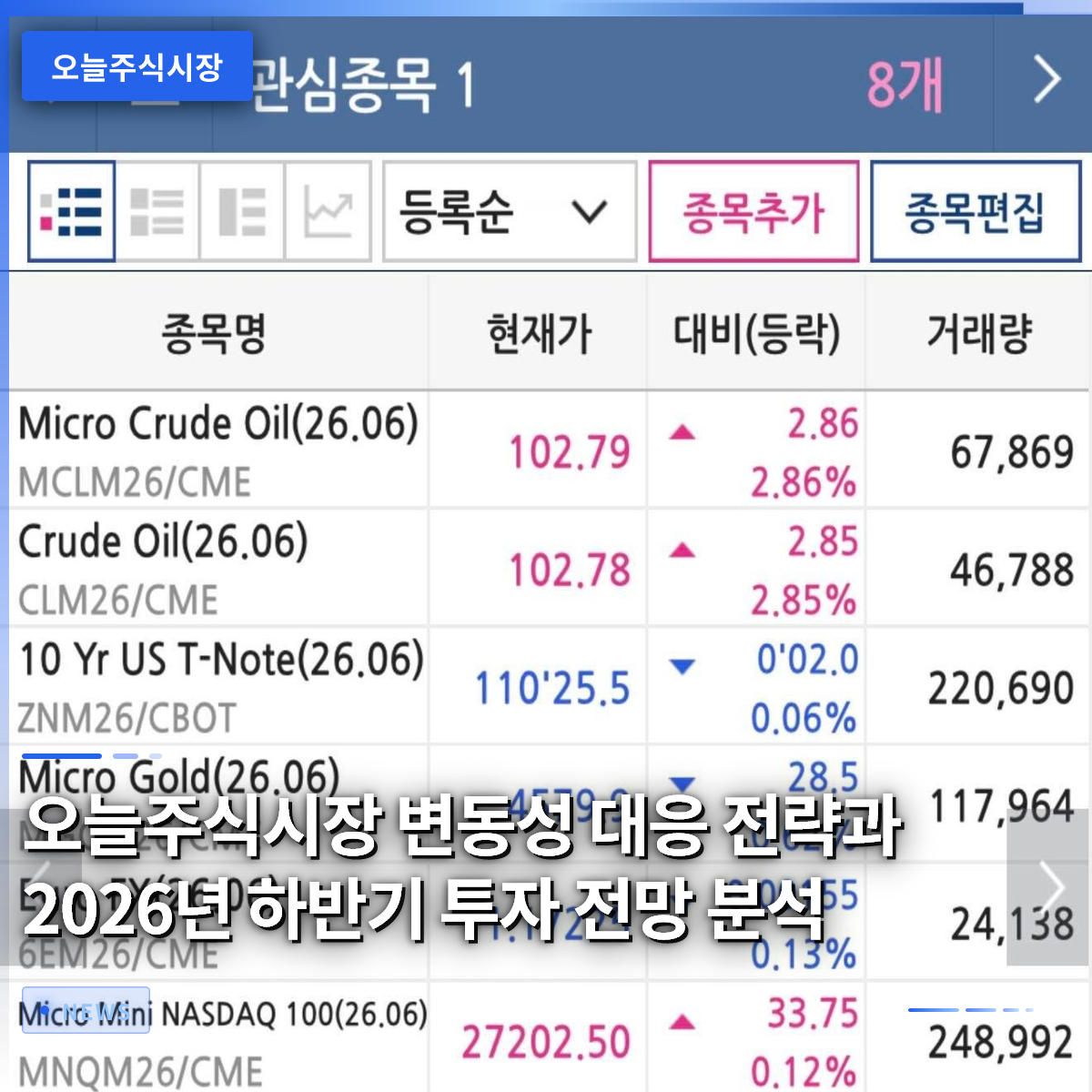
1. Trends in the US New York Stock Market and International Oil Price Fluctuations
The New York Stock Market, which has the most direct impact on today’s stock market, is reacting sensitively to the atmosphere of US-Iran negotiations. As geopolitical risks have eased, international oil prices have plunged, acting as a positive catalyst that boosts overall investor sentiment. In particular, AI-related technology stocks have led the rally, with major tech companies like Microsoft taking center stage. Investors should calmly analyze the ripple effects of macroeconomic indicators on the real economy, rather than reacting with fleeting joy or sorrow to simple positive news. Understanding the organic relationship between exchange rates, interest rates, and commodity prices is the first step toward successful investing. In a situation where various global variables are intertwined, predicting the market’s direction is by no means an easy task. Experts recommend focusing on the intrinsic value of companies rather than being preoccupied with short-term stock price fluctuations. In fact, over the past few years, companies with excellent performance have survived despite changes in global supply chains and inflationary pressures. The ability to read the subtle trends of the New York Stock Market serves as a crucial indicator for gauging the pre-market atmosphere of the domestic stock market. Therefore, it is essential to develop the habit of carefully reviewing the overseas market closing reports published every morning.
The easing of geopolitical risks in the New York Stock Market and the strength of AI technology stocks are improving investor sentiment in today’s stock market.
2. Long-term Outlook for Semiconductors and AI-Related Stocks

The hottest topic in today’s stock market is undoubtedly stocks directly linked to the semiconductor and AI ecosystem. Experts analyze that the semiconductor boom will continue for several years and that the status of memory semiconductors has changed completely from the past. With the explosive growth of AI data centers, stocks related to power supply and power grids that support them have emerged as new investment destinations. Since a good industry and a good stock do not necessarily mean the same thing, one must select companies that receive substantial benefits within the value chain. For example, rather than companies simply riding the AI hype, power equipment companies capable of stably supplying massive amounts of electricity are attracting attention. As the pace of technological evolution accelerates, the characteristics of companies that survive in the market are becoming clearer. In the past, companies that simply produced large quantities of semiconductors were favored, but now the trend is toward those handling high-value-added products like High Bandwidth Memory (HBM). Companies in materials, components, and equipment (often referred to as “So-Bu-Jang”) should also be approached selectively, focusing on those with technological independence and monopoly power. Chasing only the trends popular in the stock market often leads to buying at the peak, so thorough verification of performance is essential. Wise investors are already restructuring their portfolios with stocks that have high earnings visibility for next year and beyond.
The semiconductor supercycle and the demand for power infrastructure driven by the expansion of AI data centers are the core growth drivers of the stock market.
3. The Wisdom of Warren Buffett, the Master of Value Investing
No matter how much today’s stock market fluctuates, the principles of value investing, proven over a long period, serve as a reliable compass for investors. Warren Buffett, known as the Oracle of Omaha, advised buying only stocks that one would be willing to hold for years, even if the market closed tomorrow. His philosophy, which built a massive conglomerate with a market capitalization in the trillions, resonates deeply with modern investors weary of short-term trading. In fact, looking around, we can see that even when bad news causes stock prices to be cut in half, if the essence of the company has not changed, it eventually finds its true value. One must invest in companies with robust business models, as solid as the fence of a family, to maintain peace of mind even in the storms of the market. There are also many people who suffer the misfortune of their assets being halved by an unexpected crash right after retirement. However, those who secure sufficient cash flow and hold strong blue-chip stocks gain the time to wait calmly for the market to recover. Only when one refrains from selling stocks and adopts the mindset of being a partner in the business can one fully enjoy the magic of compound interest. It is wiser to examine the quality of the products made by the company and customer reactions rather than constantly checking stock price windows on a smartphone. This is because true investing is not about trading stocks, but about the process of becoming the owner of a good company.
Long-term value investing, which trusts and waits for the value of high-quality companies without being swayed by short-term volatility, is the best defense.
4. Understanding the Role of Gold Prices and Safe-Haven Assets
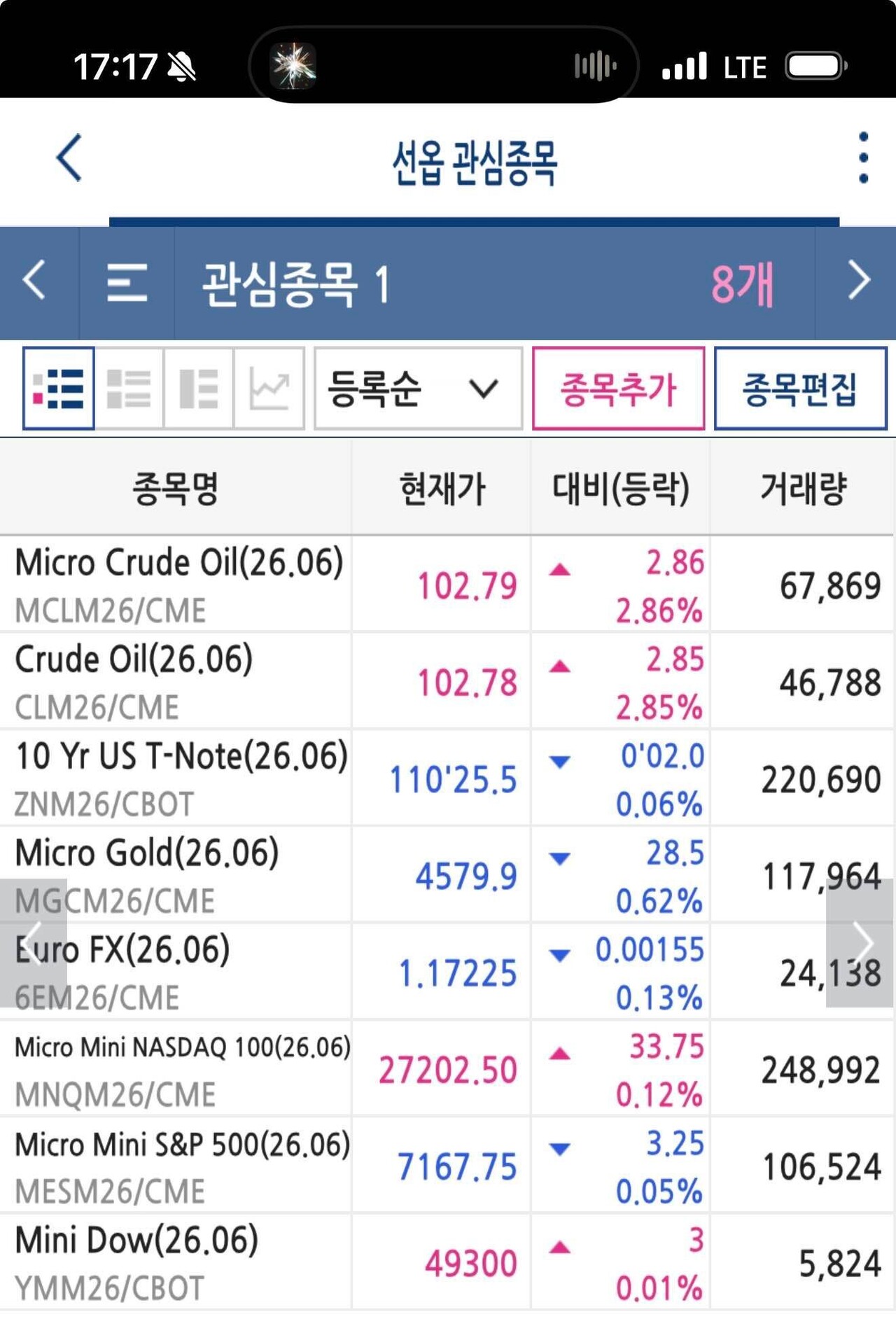
As volatility in today’s stock market increases, interest in gold, a traditional safe-haven asset, naturally rises. When the stock market is unstable or inflation concerns emerge, investors flock to gold to preserve the value of their assets. In fact, gold prices have consistently drawn a steep upward curve during economic crises or heightened geopolitical conflicts, serving as a defensive shield for portfolios. Stocks and gold are grouped as asset classes with low correlation, so appropriate allocation significantly reduces overall risk. If the stock allocation is too high, it is a wise asset management secret to diversify some into safe-haven assets like gold or bonds. Protecting assets is as important as growing them, and sometimes requires more patience and strategy. It is easy to become impatient hearing news about stocks that have risen several times, but the principle is to make investments that fit one’s capacity. The reason to check gold prices daily is not simply to buy gold, but to gauge the level of global macroeconomic instability. When the stock market is filled with greed, looking at the price of safe-haven assets allows for an objective judgment of market overheating. Only investors with a balanced perspective can smile to the end in the long-term marathon of investing.
During periods of increased stock market volatility, asset allocation through safe-haven assets like gold enhances portfolio stability.
5. Capital Market System Changes After the Chuseok Holiday
After the holiday break, significant capital market system reforms and changes begin to unfold in our stock market. With the introduction of the Korea Exchange’s after-hours trading system, stock trading hours have increased, and the convenience of trading for investors has been greatly improved. These systemic changes go beyond simply extending trading hours, causing subtle ripples in market liquidity and supply-demand patterns. Long-term investment strategies utilizing retirement pensions or individual retirement accounts are also gaining importance in conjunction with new tax benefits. As new systems are introduced, market participants must quickly adapt to changes and secure a favorable position. Individual investors often face information asymmetry compared to institutions or foreigners, but they can sufficiently compensate for this by understanding systemic changes first. For example, practical techniques exist, such as exploiting order book gaps during after-hours trading or utilizing the characteristics of off-hours trading. One should watch for trends where undervalued stocks are re-evaluated in line with the government’s policy direction for capital market activation. Since information known to everyone is likely already reflected in stock prices, it is important to grasp the pros and cons of the system one step ahead. The only secret to surviving is investing that continuously studies and evolves.
Trading strategies must be flexibly adjusted to keep pace with capital market system reforms, such as the extension of after-hours trading.
6. EV Chasm and Outlook for Next-Generation Power Semiconductors
Looking at the current stock market atmosphere, related stock prices are somewhat subdued due to a temporary demand stagnation in the electric vehicle market, known as the “chasm.” However, this correction phase is the right time to discover core technology value chains that will change the future, such as next-generation power semiconductors or front-end metal processes. Although the component technologies that make the heart of an EV beat may see sluggish performance for now, they are fields that must inevitably grow in the long term. Buying high-quality companies with strong technological capabilities at low prices when the market is pessimistic is the investment style of the masters. One must cultivate the discernment to find companies that quietly build their capabilities in sectors that others are ignoring. Only those who do not react with fleeting joy or sorrow to the ups and downs of today’s stock market, but draw the map of future industries to come, will be the true winners. The world is changing rapidly, from AI and power to next-generation semiconductors and eco-friendly energy, and the flow of money is moving accordingly. The tedious process of reading economic news and checking company disclosures every morning accumulates to eventually become a shield protecting my assets. If you discard impatience and practice split buying and thorough risk management, you will not fear any market crash. I encourage you to make wiser choices in your practical trading from tomorrow onward, based on the investment wisdom learned today.
The crisis of the EV demand stagnation should be used as an opportunity to select future core technology stocks, such as next-generation power semiconductors.
Frequently Asked Questions
=