The IRP (Individual Retirement Pension) account is an essential asset management tool and a crucial means of preparing for retirement that every office worker should pay attention to. To get straight to the point, the shortcut to maximizing returns is to make additional contributions up to the tax deduction limit when you receive bonuses or have surplus funds, and to diversify your investments in equity-based Exchange-Traded Funds (ETFs). Many office workers often struggle with where to use their retirement benefits or holiday bonuses, or they focus solely on repaying high-interest overdraft accounts. However, to avoid missing out on year-end tax settlement benefits, it is wise to actively utilize your IRP account. The retirement pension market, which was once dominated by bank deposits and savings, has completely changed its atmosphere, now allowing for systematic accumulation of ETFs from various securities firms and the inclusion of government bonds for individual investors. In this article, we will thoroughly cover the basic concepts of IRP retirement pensions, how to maximize tax deduction limits, successful investment strategies, and tax knowledge to keep in mind when receiving pension payments. Through the case of a typical office worker, Manager Kim, we will provide realistic advice on how to grow your retirement funds.
=
The Ultimate Guide to IRP Retirement Pensions: From Tax Deduction Limits to Withdrawal Methods
1. What is an IRP Retirement Pension and Why Should You Join?
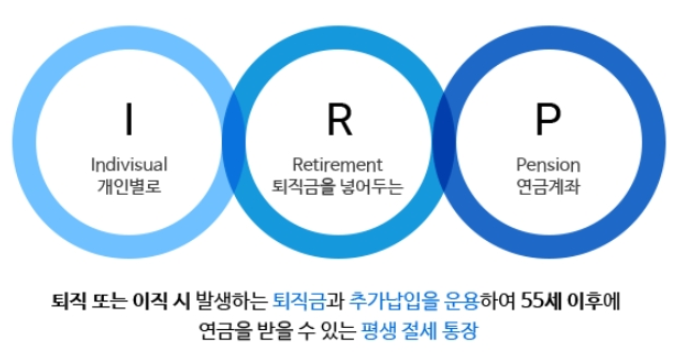
Defined Contribution (DC) retirement pensions and Individual Retirement Pensions (IRPs) have now become the key accounts that determine the success or failure of office workers’ retirement preparations. Their most significant feature is that in addition to the retirement benefits deposited by the company monthly or annually, individuals can make additional contributions with their own surplus funds. Last year, Manager Kim was unsure where to use the 1 million won he received as a holiday bonus, so he immediately deposited it into his IRP account. He opened the account in time after seeing his senior colleagues receive tax refunds during their year-end settlements. In reality, many people view retirement pensions as “dead money” that should not be touched until retirement, but if managed actively, they can become an excellent wealth management tool. Recently, with the introduction of systematic automatic purchase features for ETFs centered around securities firms, it has become possible to steadily grow assets by setting a regular schedule, even amidst a busy daily life. The government also provides various tax incentives to strengthen retirement income security, so it is wise to utilize them actively. As the scale of retirement pension assets rapidly grows, the range of financial products available to office workers has also expanded. In the past, assets had to be managed primarily in safe assets, leading to many complaints about low returns. However, now you can include ETFs that invest in high-quality global indices while adhering to the limits on risky assets. To avoid the state of panic caused by poor returns on retirement funds, you must find a product combination that suits your own investment style. Ultimately, the IRP retirement pension serves not just as a simple savings account, but as an active investment platform where you can grow your own money. It is important to check how your account is being managed and take necessary actions, even now.
The IRP retirement pension is not just a passbook for storing retirement benefits, but an essential retirement asset management account that allows for active investing.
2. Smart Contribution Strategies to Maximize Tax Deduction Limits
As the year-end tax settlement season approaches, the biggest concern for office workers is undoubtedly how much tax they can get back. Amounts directly contributed to an IRP retirement pension are eligible for tax deductions during the year-end settlement, making it a core channel for tax savings. While the deduction rate varies depending on total income, filling up to the limit can yield significant tax savings. For example, Manager Kim makes automatic monthly transfers and, if there is a shortfall in the limit by year-end, makes additional deposits to fully utilize the deduction cap. If you have high-interest debt, prioritizing its repayment is essential, but if you have even a small amount of surplus funds, putting them into an IRP account is much more advantageous. The tax deduction limit is applied in combination with pension savings accounts, so you must accurately understand the overall limit. Since not all contributions are deductible just because you deposit a large amount, it is necessary to develop the habit of calculating your annual contribution limit in advance. Instead of rushing to deposit a lump sum at year-end, choosing a systematic accumulation method by spreading contributions throughout the year can significantly reduce the perceived financial burden. Using securities firm apps, you can check in real-time how much you have contributed so far and how much more you can contribute to reach the deduction limit. Saving on taxes is the same as earning returns, so it is a wealth management strategy that office workers must definitely take care of.
Filling up the year-end tax deduction limit through additional contributions to your IRP retirement pension is a surefire tax-saving strategy.
3. Investment Secrets Using ETFs and Government Bonds for Individual Investors

The size of the assets you hold at retirement varies greatly depending on which products you choose within your retirement pension account. Recently, the number of investors including domestic ETFs that track global high-quality indices like the S&P 500 or Nasdaq in their IRP accounts has exploded. This is because investing in indices that include world-leading innovative companies like Apple and NVIDIA allows you to enjoy the effects of long-term compound interest. Manager Kim has also built his portfolio primarily around ETFs of representative global indices since opening his IRP account, achieving stable results. The options available to meet the mandatory ratio for safe assets have also diversified, leading to high investor satisfaction. With recent regulatory improvements, a path has been opened for directly purchasing government bonds for individual investors through DC or IRP accounts. This has provided a new investment foundation for long-term government bonds, which had previously seen sluggish demand, allowing retirement funds to be protected more safely. Even if controversies arise about bubbles in AI-related industries, you can withstand the volatility by diversifying into assets that trend upward in the long term. The secret to success is not blindly buying products just because they are ranked #1 in returns, but consistently accumulating high-quality products according to your own investment philosophy.
You should appropriately allocate global index ETFs and government bonds for individual investors to achieve both stability and profitability.
4. Practical Guide to Early Withdrawal Requirements and Switching Financial Institutions
It is easy to think that retirement pension funds are money that can absolutely not be touched until retirement, but early withdrawal is possible if there are legally defined reasons. A representative legal reason is when a non-homeowner subscriber needs to purchase a house in their own name or secure a deposit for a lease. However, since the legal basis and system differ from general interim settlement of retirement benefits, you must carefully examine the specific requirements. Manager Kim’s colleague, who was worried about having to withdraw money from his account due to an increase in his lease deposit, also looked into the qualification requirements in detail. If you are dissatisfied with the returns or find management fees too high, you can utilize the in-kind transfer system to switch to another financial institution. This is very convenient because you can transfer your existing products to an IRP account at another securities firm or bank without selling them. You can compare fee conditions and service quality at each institution through the Financial Supervisory Service’s Integrated Pension Portal and choose the one most advantageous to you. When transferring your account, it is essential to consult closely with a dedicated advisor to prevent unnecessary losses.
Early withdrawal is possible for legal reasons such as purchasing a house, and you can switch to a financial institution with better conditions through the in-kind transfer system.
5. Everything About Withdrawal Methods and Taxes After Age 55
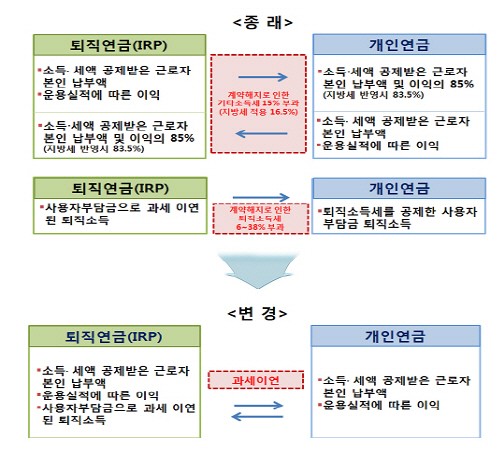
As retirement approaches, you will intensely consider how to withdraw your accumulated funds to save the most on taxes. Funds in an IRP retirement pension account can be received as a lump sum or in the form of a pension after the age of 55. You need to be careful not to simply withdraw a lump sum just because you need a large amount of money at once, as this would require you to bear high retirement income tax rates. Manager Kim’s senior chose the pension receipt method after retirement, significantly reducing his tax burden and creating a stable monthly cash flow. The tax imposed differs depending on whether the funds in the account are retirement benefits contributed by the company or money you directly contributed while receiving tax deductions. The longer you receive the pension, the greater the tax reduction benefits, so you must consider this when planning your retirement living expenses. You must keep in mind that applying the pension income tax rate is much more advantageous in terms of taxes than simply withdrawing and using the money quickly. To make your post-retirement life abundant, a wise retiree’s attitude is to thoroughly master tax-saving strategies for the timing of receipt.
Receiving funds in the form of a pension rather than a lump sum after age 55 significantly saves on taxes and secures a stable cash flow.
6. Outlook for Utilizing IRP Retirement Pensions for a Successful Retirement
In the future asset management market, the IRP retirement pension will firmly establish itself as an essential survival tool rather than an option. This is because as the aging population accelerates, the ability to prepare for one’s own retirement will become a key indicator determining the quality of life. Manager Kim has also deeply realized the importance of his retirement pension account through this opportunity and is practicing regular monthly contributions and purchasing high-quality products. With the government’s regulatory improvements and financial firms’ service innovations, an environment has been created where ordinary office workers can easily manage their assets like professionals. The small action of opening your account now to check your tax deduction limit and portfolio will create future abundance. If you continue systematic investing from today, your post-retirement life will come with excitement rather than worry.
By managing your IRP retirement pension with consistent accumulation and wise asset allocation, you can look forward to a secure and comfortable retirement life.
Frequently Asked Questions
=