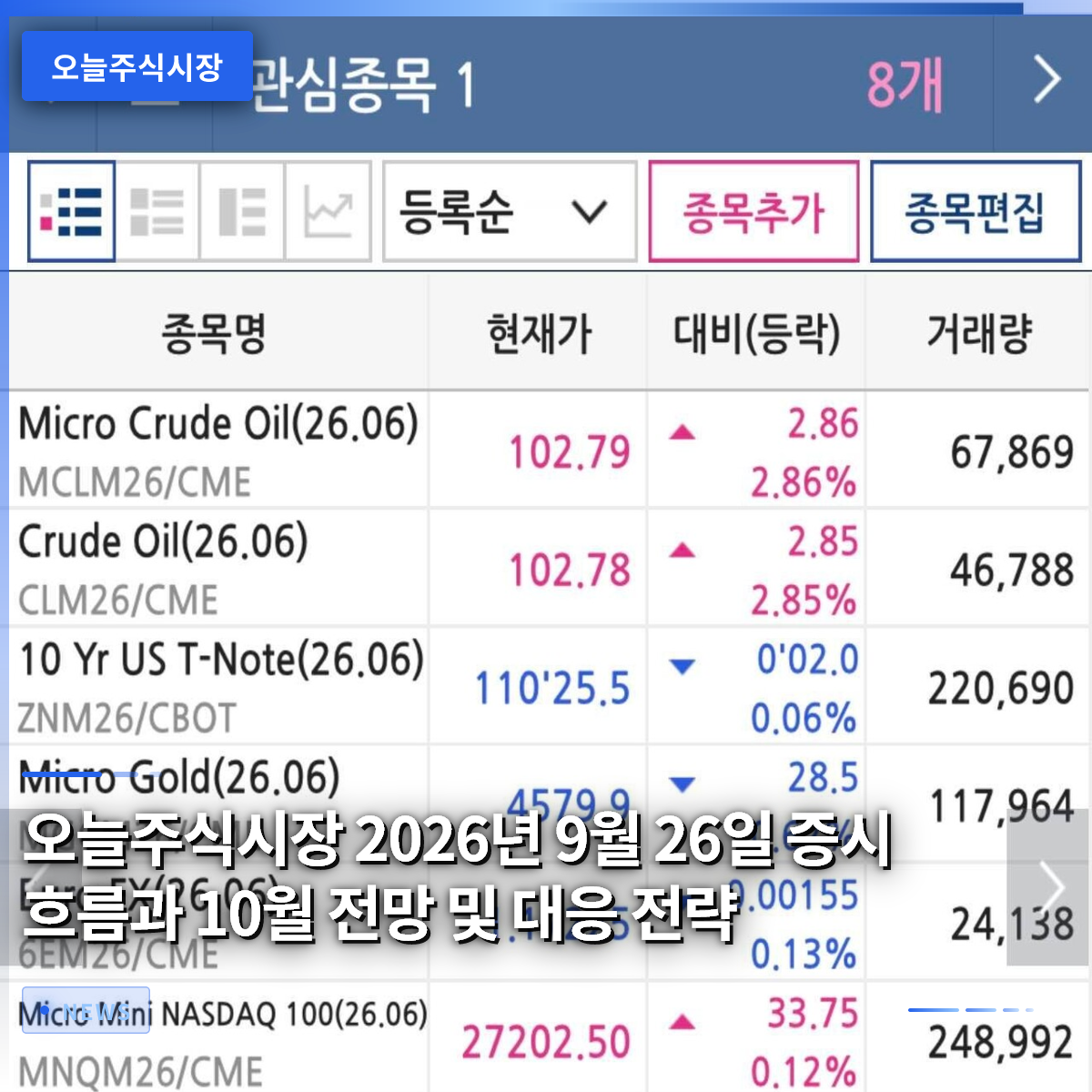
Today’s stock market is showing signs of gradually improving investor sentiment, driven by falling international oil prices due to expectations of negotiations between the US and Iran, as well as the strength of AI technology stocks. It is easy to lose one’s way amidst the flood of daily news in the stock market, but ultimately, the most important attitude is to trust the value of solid companies and wait patiently. Mr. Kim, an office worker, used to sigh every morning while checking his stock portfolio, but he says he feels much more at ease after shifting his direction to a long-term holding strategy centered on blue-chip stocks. In this article, we will examine the core trends of today’s stock market and explore specific methods to prepare for the upcoming October stock market. Let us share the wisdom of wisely protecting assets without being shaken by market volatility.
=
Today’s Stock Market: September 26, 2026 Market Trends, October Outlook, and Response Strategies
1. Today’s Stock Market Trends and Correlation with the New York Stock Exchange
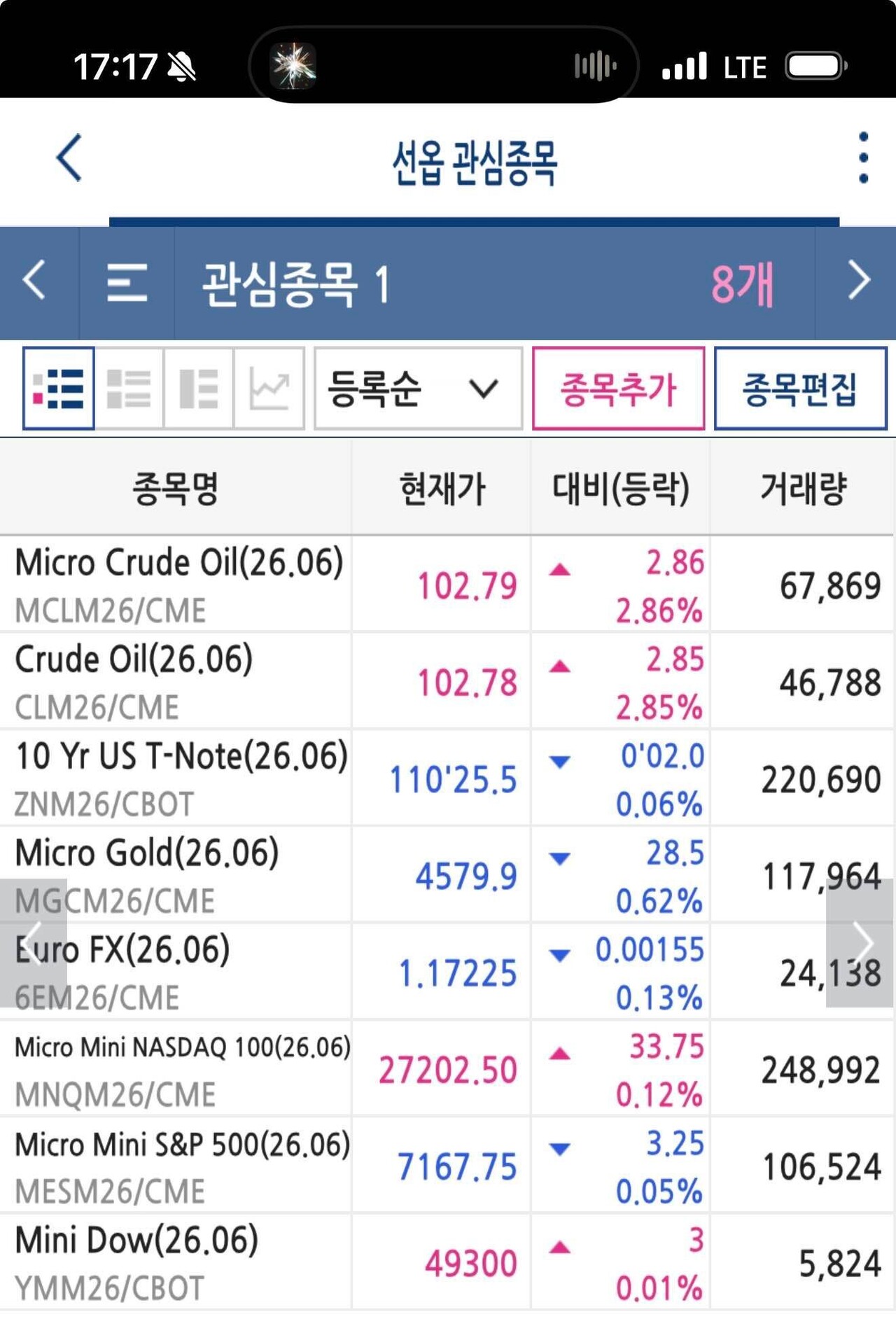
To understand today’s stock market, it is necessary to first closely examine the movements of the New York Stock Exchange last night. As expectations for negotiations between the US and Iran rose, international oil prices plummeted, significantly easing overall market risk perception. Major tech stocks like Microsoft led the upward trend by unveiling AI agent services that have evolved beyond chatbots. The domestic stock market is also seeking a rebound, following these positive signals from overseas markets, centered on semiconductors and key technology stocks. Experts advise that since subtle changes in the global economy are immediately reflected in the domestic stock market, it is crucial to consistently monitor exchange rates and oil price trends.
Investors must develop the habit of checking the closing status of overseas markets every morning to avoid missing the broader market direction. When trading stocks, it is essential to have the insight to analyze macroeconomic indicators alongside simply looking at stock charts. Rather than blindly selling just because stock prices are falling, one should strive to read the essential trends indicated by the data. An attitude of not being overly elated or depressed by the minor fluctuations encountered in today’s stock market becomes the foundation for long-term investment success. Ultimately, the wisdom to believe in the process of the overall market strengthening its health and wait calmly is required.
Today’s stock market is showing a stable trend, influenced by the strength of AI tech stocks in the New York Stock Exchange and the decline in international oil prices.
2. Long-term Outlook for the Semiconductor and AI Industries

With forecasts suggesting that the semiconductor boom will continue until 2028, expectations among investors holding related stocks are growing. The status of memory semiconductors has changed completely from the past, establishing itself as an essential core resource in line with the growth of the AI industry. Investors who once struggled in the stock market are now feeling the structural increase in demand for memory semiconductors. Mr. Park, who works for a large corporation, says he feels a sense of security every time he hears news of improved performance from the semiconductor companies he has invested in.
As the first week of October approaches, the stock market may show signs of a short-term pause, but expectations for the Q3 earnings season will form the central axis. As long as AI-related capital investment continues steadily, revenue growth across the entire semiconductor ecosystem is beyond doubt. One must be careful not to make the mistake of panicking over short-term stock price drops and selling good stocks at a low price. Understanding the growth cycle of the entire industry and investing with a long-term perspective is a common trait among successful investors. The magnitude of wealth that memory semiconductors will create over the next few years could be beyond imagination.
The semiconductor boom is likely to continue until 2028, strongly supported by AI demand.
3. Gold Price Fluctuations and Preference for Safe Assets
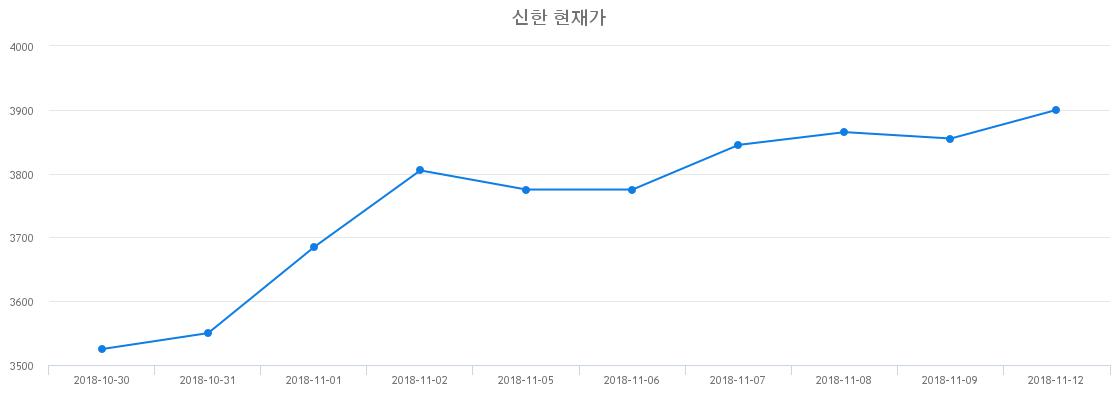
Every time volatility in the stock market increases, there is a clear tendency for many investors to turn their eyes to safe assets like gold. The reason why the spot price of pure gold remains at a high level as of the weekend is ultimately due to demand to prepare for the uncertainty surrounding the stock market. Not only wealthy individuals but also ordinary office workers are purchasing small amounts of physical gold or related products to diversify the risk in their portfolios. When one’s mind wavers between the red and blue lights of a stock account, gold plays a solid role as a defensive barrier.
An asset allocation strategy that appropriately adjusts the ratio of stocks to safe assets according to the level of risk one is willing to take is essential. Rather than concentrating all funds in one place, one should keep a reserve of flexible funds that can be deployed according to market conditions. To avoid being more frightened than others when the stock market crashes, it is advisable to secure a certain portion of safe assets in advance. Wise investors place greater value on how to protect their assets when a crisis hits, not just when making profits. The movement of gold prices is not merely a change in precious metal prices but a mirror reflecting the psychology of the entire financial market.
When stock market volatility increases, gold prices tend to rise, highlighting the importance of diversifying into safe assets.
4. Managing Credit Loan and Forced Liquidation Risks
While the number of people using credit loans to seize additional investment opportunities in the stock market is increasing, the associated risks must also be carefully noted. During periods of high stock price volatility, investing with borrowed money can backfire, so limits and interest rates must be compared meticulously. If you invest with borrowed funds from a securities company and the stock price plunges, you may face forced liquidation, where your stocks are forcibly sold at an unwanted time. Mr. Lee, a self-employed individual, established a principle of never investing with debt after experiencing the pain of forced liquidation from a past credit loan investment.
While credit terms can be easily checked through investment platforms or mobile apps, one should not take the risks hidden behind this convenience lightly. Excessive borrowing that exceeds one’s repayment capacity can become a shortcut to losing assets in an instant. One must keep in mind that accounts with loans will suffer the most fatal blows when the market turns downward. Do not forget that trading stocks only with spare funds is beneficial for both mental health and asset growth. Investing with debt not only has a low win rate but also makes it impossible to survive long in the market.
Stock credit loans increase the risk of forced liquidation in volatile markets, requiring strict limit management and caution.
5. October Stock Outlook and Formulating Investment Strategies
The stock market in the first week of October is expected to undergo a short-term pause, with intense strategic maneuvering ahead of Q3 earnings releases. Blue-chip companies backed by solid performance are likely to continue serving as the market’s central axis and succeed in defending their stock prices. On the other hand, companies with unclear performance improvements may face stock price adjustments as they are ignored by investors, so caution is needed in stock selection. To survive in the stock market, one needs the habit of thoroughly analyzing a company’s fundamental strength without being swayed by others’ rumors.
As more investors utilize the after-hours trading market after work, active information exchange is taking place during evening hours. It is an era where the ability to grasp intraday trends without missing them by utilizing various investment information platforms directly translates into returns. In October, a strategy of maintaining weight in leading semiconductor and AI-related stocks while converting some funds to cash to watch for opportunities is effective. Rather than reacting to every complex piece of stock market news, the wisest approach is to stick to one’s established investment principles. Please take the time to calmly observe market trends and prepare for the next bull market.
The October stock market will see a mix of Q3 earnings expectations and short-term pauses, requiring a selective strategy centered on blue-chip stocks.
6. The Value of Long-term Investing and Practical Steps
As Warren Buffett emphasized, true investing means buying only stocks that you would be willing to hold even if the stock market were to close for several years starting tomorrow. A life of chasing short-term price differences and staring at charts every day is not only exhausting but also likely to lead to being eliminated from the market. Just as one sets the stage for a family’s future, one must build a solid, personal investment system in the stock market. One must realize the value of long-term investing in accumulating stocks of robust companies, even if just to leave behind assets that are not embarrassing to pass on to one’s children.
Do not let your heart be captured by the ups and downs of today’s stock market; instead, cultivate an attitude of quietly walking alongside good companies. Stock investing is like a marathon; if you cannot control your pace, you are likely to collapse from exhaustion halfway through. While digesting the economic news released every morning, one must maintain a firm mindset so that it does not shake one’s long-term investment philosophy. If you continue to stick to your principles and move forward without wavering in the coming October as well, your account will surely smile again. From this moment, I sincerely recommend resisting the temptation of short-term trading and becoming a shareholder of valuable companies.
In the stock market, the value investing philosophy of holding blue-chip stocks long-term without being shaken by short-term volatility is most important.
Frequently Asked Questions
=