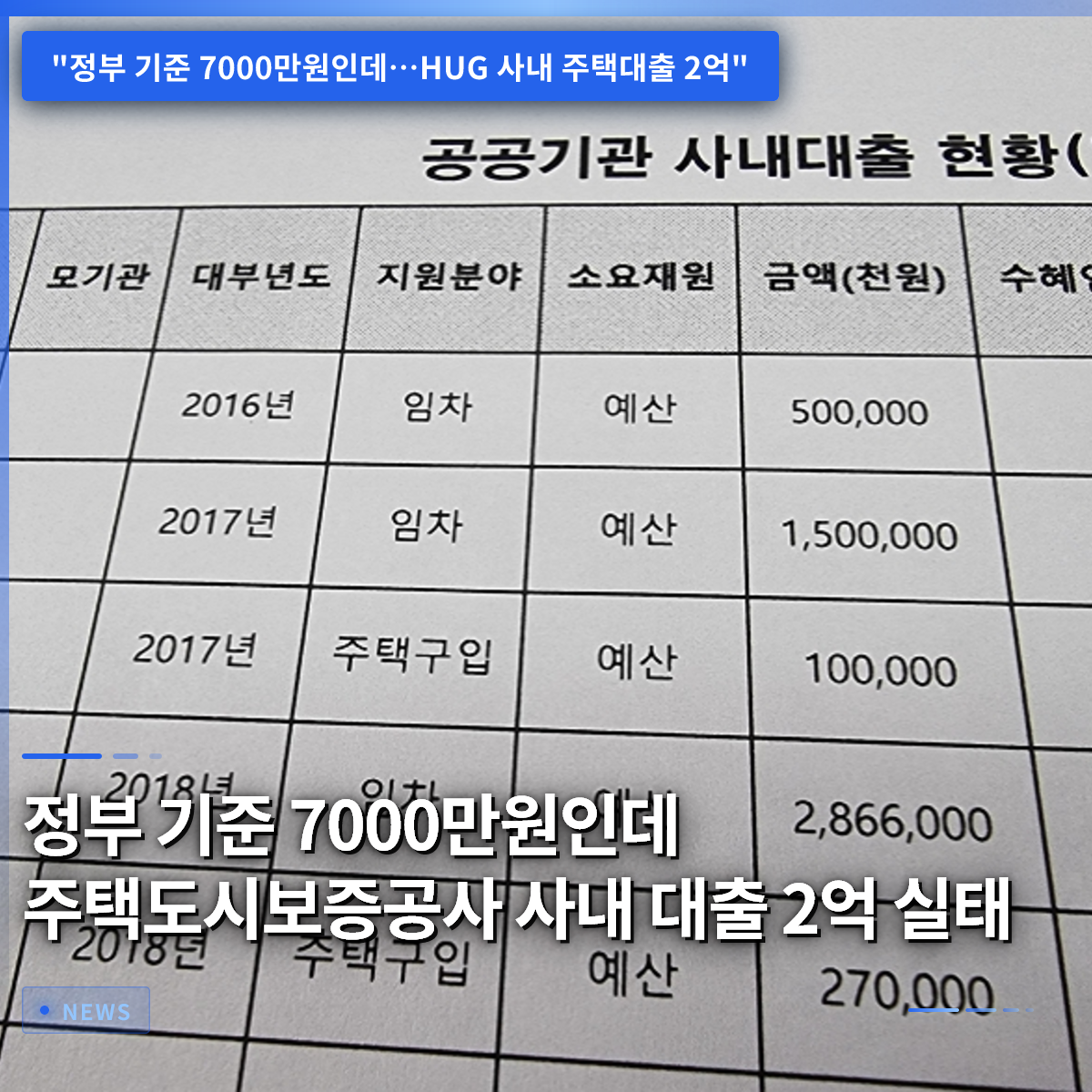
It has been revealed that several public institutions under the Ministry of Land, Infrastructure and Transport, including the Housing and Urban Guarantee Corporation (HUG) and the Korea Land and Housing Corporation (LH), have been providing employees with housing loans that significantly exceed the official government limit, sparking major controversy. While the government has strictly capped housing purchase and rental loans at 70 million won per person to prevent excessive welfare benefits at public institutions, these agencies have lent out sums reaching up to 200 million won, seemingly mocking the guidelines. As ordinary citizens struggle to even dream of owning a home due to soaring interest rates and strict lending regulations, criticism is mounting that only public institution employees are enjoying such privileges. Through recent National Assembly audit materials, we will examine in detail the lax management of housing loans by these public institutions and the specific figures involved. We will carefully analyze how they have circumvented government guidelines to maintain these privileges and what management measures need to be implemented in the future. We will also clearly analyze why these institutions, which should work for the public interest, are being criticized for using regulatory loopholes to enrich themselves.
=
Government Cap Is 70 Million Won, Yet Housing Guarantee Corp. Offers 200 Million Won in Internal Loans
1. The Gap Between Government Guidelines and Reality
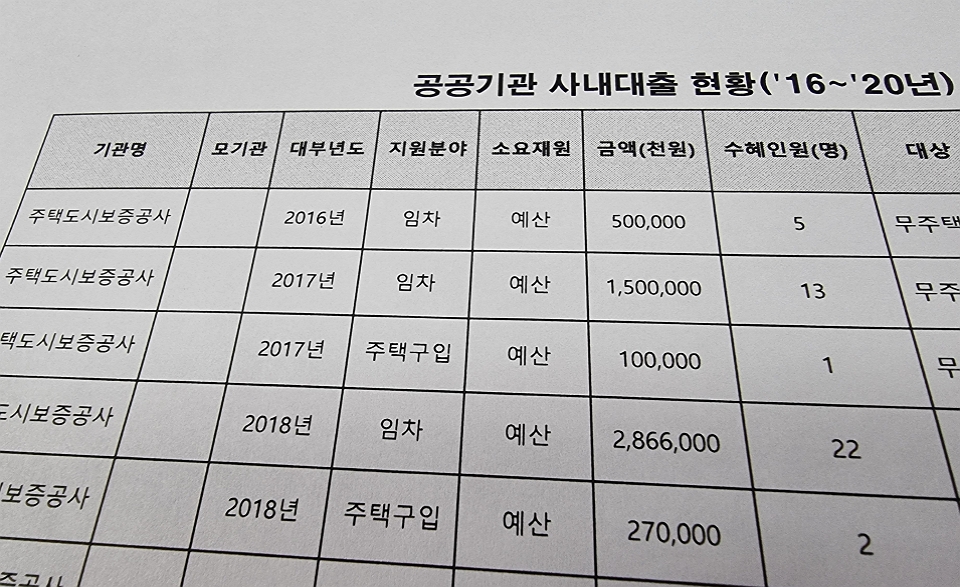
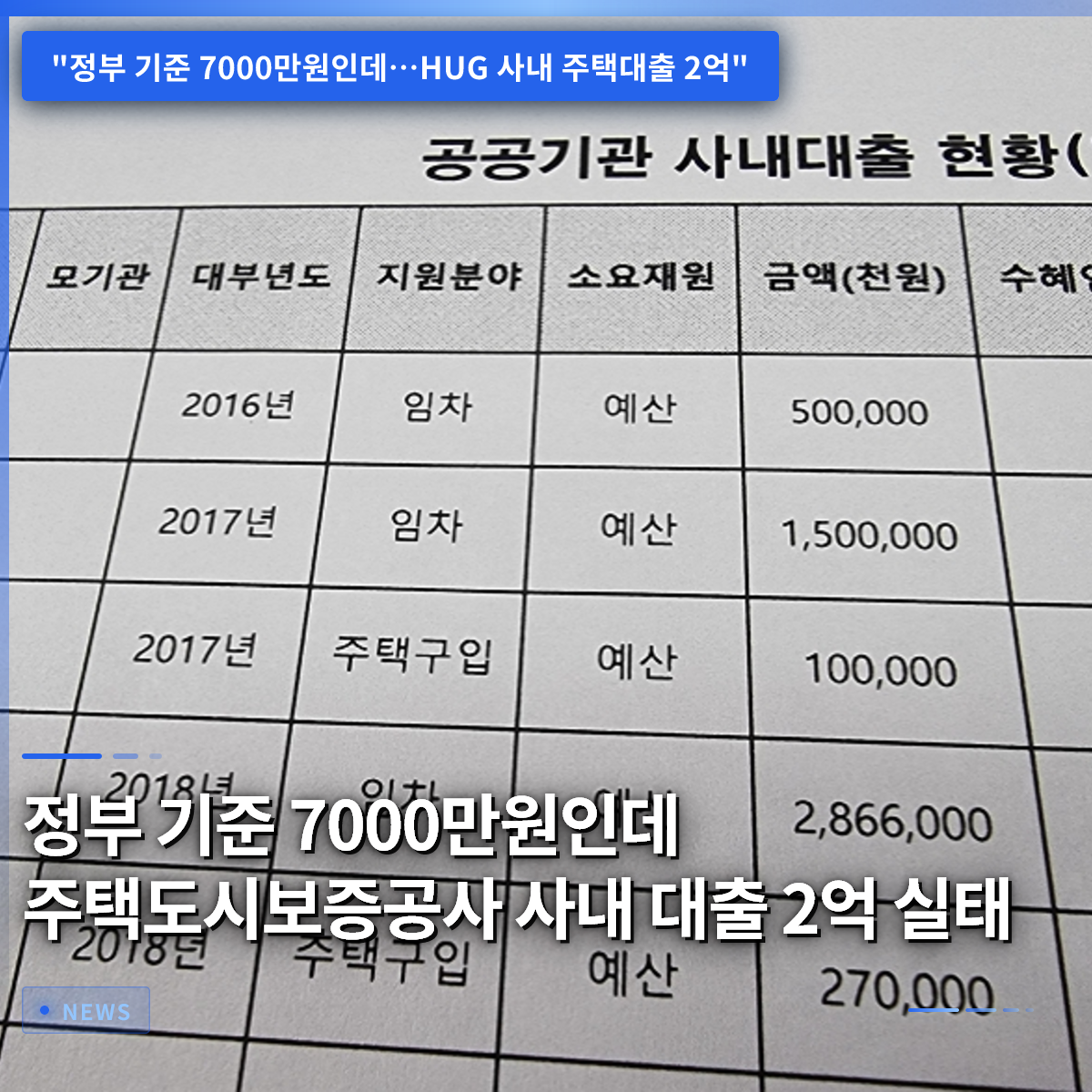
According to the Ministry of Economy and Finance’s guidelines on public institution innovation, designed to prevent lax management, the loan limit for housing purchase and rental funds is capped at 70 million won per employee. However, documents submitted by the Ministry of Land, Infrastructure and Transport to a member of the National Assembly’s Land, Infrastructure and Transport Committee reveal that multiple institutions, including HUG, have openly operated loan programs that far exceed this limit. Ordinary citizens face numerous regulations and rigorous scrutiny when applying for mortgage loans from banks, often finding the limits suffocating. In contrast, employees of these public institutions have been able to easily access funds several times the government guideline amount under the guise of internal welfare, leaving the public feeling frustrated. As public institutions are operated with tax revenue and public funds, they are organizations that require strict ethics and compliance with regulations aligned with the standards of ordinary citizens. Nevertheless, the practice of prioritizing internal rules over government guidelines and allowing loans amounting to hundreds of millions of won can be seen as a typical example of lax management that cannot be tolerated. Let’s look at the list of representative public institutions that violated government guidelines by increasing loan limits and the specific scale of the excess amounts.
It has been revealed that public institutions have been operating internal loans of hundreds of millions of won, ignoring the government’s 70 million won housing loan limit guideline.
2. Status of Loan Limit Exceedances by Institution

HUG’s housing purchase loan limit reaches a staggering 200 million won, nearly three times the government standard of 70 million won. The Korea Real Estate Board (REB) has also been found to maintain loan limits of 140 million won for both housing purchase and rental funds, exceeding the government standard by more than double. The Jeju International Free City Development Center (JIFDC) also exceeded the standards with a purchase fund limit of 120 million won and a rental fund limit of 80 million won, while LH maintained a limit of 90 million won for rental funds. All four major public institutions included in the survey have directly violated government guidelines by setting and operating their own high limits. This means that the amount employees could borrow under the name of internal welfare was set at a scale unimaginable to ordinary office workers or common citizens. These institutions have carelessly allowed these privileged loan systems to continue for years, bypassing government control on the grounds that they had gone through labor-management consultations. While citizens are fiercely competing for home ownership and bearing the burden of high-interest loan payments, public institutions have been granting privileges to their internal employees.
The internal housing loan limits of four public institutions, including HUG, significantly exceeded the government standard of 70 million won, reaching up to 200 million won.
3. Privileges Compounded by Low Interest Rates

It has been revealed that not only are the loan limits high, but the interest rates applied are also significantly lower than the government standard, causing even greater shock. Current government guidelines stipulate that the lower limit for interest rates should be the bank household loan rate published by the Bank of Korea, to align with market conditions. Despite the government guideline interest rate for this year being in the mid-4 percent range, the actual loan interest rates at these institutions were much lower. REB was providing loans for both purchase and rental funds at exceptionally low interest rates in the low 2 percent range, while HUG also applied low interest rates in the mid-2 percent range. LH’s rental fund loan interest rate also remained in the low 3 percent range, falling well below the government standard. Except for JIFDC, the other three institutions clearly violated government guidelines regarding interest rates, granting privileges to employees. This low-interest benefit, which feels like a slap in the face to citizens struggling with the brutal interest rates of commercial banks, was being quietly carried out within public institutions.
In addition to exceeding loan limits, they executed loans at interest rates of 2-3 percent, significantly lower than market rates, fueling the privilege controversy.
4. Massive Loan Scales Executed Over Several Years
An analysis of documents submitted by the Ministry of Land, Infrastructure and Transport to the National Assembly shows that the total amount of internal housing loans executed by these four public institutions over the past few years is enormous. From 2022 to August of this year, the total housing funds lent to employees amounted to 69.386 billion won, approaching 70 billion won. Looking at the execution amounts by institution, LH accounted for the largest share with over 44 billion won, followed by HUG and REB. Massive public funds, ranging from hundreds of millions to over a billion won annually, flowed into employees’ housing funds and were consumed under the name of internal welfare. Even between January and August of this year, over 8 billion won in loans were executed, blatantly revealing that they have not yet broken away from these old practices. While such massive funds were siphoned off through privileged loans, the institutions’ core missions of ensuring fiscal soundness and securing housing for the common people were pushed to the back burner.
The total amount of internal housing loans executed by these four institutions from 2022 to August of this year reached 70 billion won.
5. Negligence in Management by the Ministry and Public Criticism
The reason why the behavior of public institutions blatantly violating government guidelines has been left unaddressed for years lies in the lax management and supervisory negligence of the Ministry of Land, Infrastructure and Transport, the competent authority. It is difficult to avoid criticism that the government ministry, which should monitor lax management at public institutions, has either tolerated or failed to even properly grasp the illegal internal rules of its subordinate agencies. At a time when public concern is growing due to a surge in rental deposit accidents and deteriorating fiscal soundness of public institutions, they were only focused on enriching their employees. Political circles and civil society are fiercely condemning the public institutions for abandoning the public interest and falling into moral hazard. Recognizing the severity of the situation late, the Ministry stated that it would manage the issue by ensuring the problematic institutions revise their systems to comply with guidelines through labor-management consultations. However, voices are rising daily that rather than just demanding improvements in words, the government must conduct a thorough comprehensive investigation and impose strong penalties.
Amid the negligence of the competent Ministry of Land, Infrastructure and Transport, the lax loan systems of public institutions have been left unimproved for years.
6. Outlook for Future System Reforms and Countermeasures

In light of this incident, public demand is growing for a comprehensive re-inspection of the internal welfare systems of all public institutions under the government. Each institution should immediately revise its internal rules and regulations to establish loan limits and interest rate systems that comply with government guidelines. The Ministry of Land, Infrastructure and Transport should also take this incident as a lesson, conduct a thorough comprehensive investigation of all subordinate agencies, and build a strict monitoring system. Lax management at public institutions is ultimately a major factor in undermining public trust, making transparent and fair operations more urgent than ever. We must closely watch how strongly the government is willing to uproot these privileged systems and restore discipline at public institutions. We also urge readers to continue paying attention to the transparent operation of public institutions and the proper execution of their budgets. For public institutions to truly become organizations that work for the people, thorough reflection and a complete transformation must accompany the response to this incident.
The government and the National Assembly must immediately revise the unfair internal loan rules of subordinate agencies and establish measures to prevent recurrence through thorough comprehensive investigations.
Frequently Asked Questions
=