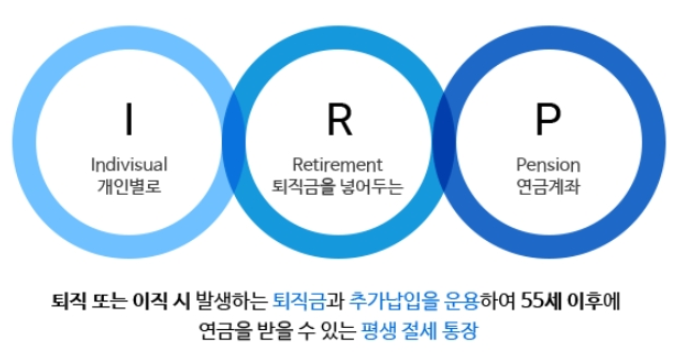
To make the most of your IRP (Individual Retirement Pension), you must build a portfolio that balances tax deduction benefits with the mandatory ratio of safe assets. Many employees rush to sign up during the year-end tax settlement season, but setting up automatic monthly transfers is far more advantageous for tax savings. In particular, the range of investment options has expanded significantly this year with the ability to purchase government bonds for individual investors. It is not uncommon for people to sign up impulsively after hearing colleagues talk about receiving hundreds of thousands of won in refunds, only to leave their accounts unmanaged because they lack knowledge on how to operate them. This article provides a clear summary of everything busy professionals need to know, from tax deduction limits to efficient asset management strategies and precautions for cancellation. Even if you are new to pension accounts, following this guide step by step will help you achieve both retirement preparation and tax savings.
=
IRP Pension: A Complete Guide to Tax Deduction Limits, Cancellation Documents, and Investment Tips
1. Subheading

Everything about IRP Pension Tax Deductions and Annual Contribution Limits The primary reason employees seek out IRP pensions is undoubtedly the overwhelming tax deduction benefits. Since you can receive tax deductions within the combined annual contribution limit of pension savings and IRP, it is considered an essential tax-saving product for employees. If your total annual salary is 55 million won or less, you can receive a high percentage of your contributions back, making the tangible benefits very significant. Consistently contributing a fixed amount each month will eventually result in a substantial year-end tax refund and accumulated retirement funds. While making a lump-sum contribution at year-end is an option, choosing monthly contributions reduces financial burden while allowing you to benefit from compound interest. To fully enjoy the tax benefits, it is wise to carefully assess your annual income level and existing pension savings contributions to ensure you reach the limit. Contributions exceeding the tax deduction limit can be carried over to the next year or withdrawn without tax, offering flexibility. Therefore, even if you lack immediate surplus funds, you should adjust your contribution amount to match your income flow rather than forcing yourself to meet the limit. Since pension accounts are long-term products, canceling them midway requires returning the tax benefits received, so it is essential to maintain the account for a long period. Instead of blindly following the success stories of acquaintances, setting a monthly contribution amount that fits your financial situation is the first step to successful tax savings. Developing the habit of checking your contribution history and deduction limits in advance through services like the National Tax Service’s Home Service can prevent surprises during year-end tax settlement.
IRP pensions offer strong tax deduction benefits within annual contribution limits, so you should plan your contributions strategically based on your income.
2. Subheading
Overcoming the 30% Safe Asset Regulation and Utilizing Bond-Hybrid Products One of the most challenging regulations when managing a pension account is the mandatory safe asset ratio. Since a certain percentage of the total accumulated funds must be invested in safe assets, aggressive stock-focused investment strategies may be limited. However, recent developments have introduced bond-hybrid products that appropriately mix stocks and bonds, as well as various index-tracking products, allowing investors to navigate this regulation effectively. For example, investors who want a higher stock allocation but must meet safe asset requirements can actively utilize listed index funds with a bond-hybrid structure. These products help maintain portfolio balance even during periods of high market volatility, enabling you to continue long-term investing with peace of mind. Utilizing parking-type products or short-term bond products, which fall under the safe asset category, allows you to earn stable interest on idle funds. When the stock market is declining or you cannot find a suitable investment target, keeping cash-like assets in safe asset category products can defend against asset loss. The key to improving long-term returns is not just locking money into principal-guaranteed products but combining various performance-linked products with different structures. You need to frequently check via financial company apps whether the safe asset ratio in your portfolio meets the standards. This process must be accompanied by finding the optimal ratio that suits your investment style, referring to asset allocation strategies proposed by experts.
The mandatory 30% safe asset regulation can be managed to achieve both returns and stability by utilizing bond-hybrid products and parking-type assets.
3. Subheading
New Options: Government Bonds for Individual Investors and Guaranteed Performance-Linked Insurance In line with recent changes in the financial market, the range of investment products available in pension accounts has expanded significantly. Government bonds for individual investors, which were previously only tradable through specific securities firms’ accounts, can now be purchased directly in IRP accounts. Including long-term government bonds, such as 10-year or 20-year bonds, in your pension account allows for stable interest income until retirement and enables long-term asset allocation. Additionally, guaranteed products that combine the benefits of principal protection and performance-linked returns are gaining popularity among investors looking to hedge against global market volatility. These new products serve as a sturdy support for subscribers aiming to create a stable monthly cash flow after retirement. As new investment means increase, you must regularly review and rebalance your portfolio according to your retirement timeline. For younger generations, it is standard to increase the weight of index-tracking products expected for long-term growth, while those approaching retirement should increase the weight of government bonds or guaranteed products. Rather than blindly following products that others say are good, you need the wisdom to carefully compare the characteristics and fee structures of each product before making a selection. Using asset diagnosis services provided on financial company websites or mobile apps allows you to grasp at a glance where and how your assets are invested. In a rapidly changing investment environment, those who pay attention to new systems and product changes will ultimately secure more retirement assets.
Utilizing the newly introduced government bonds for individual investors and guaranteed performance-linked insurance in IRP accounts allows you to build a more robust post-retirement income pipeline.
4. Subheading
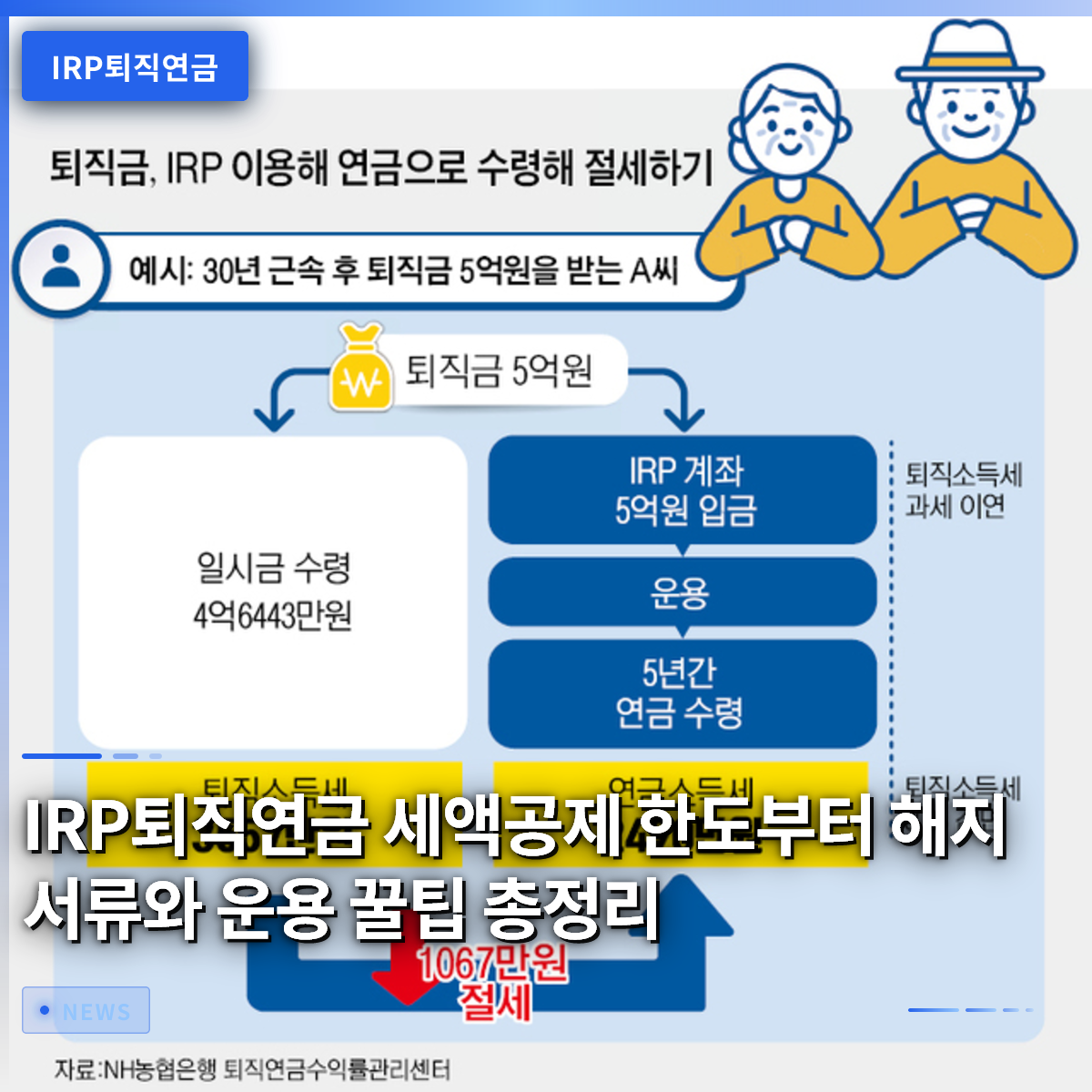
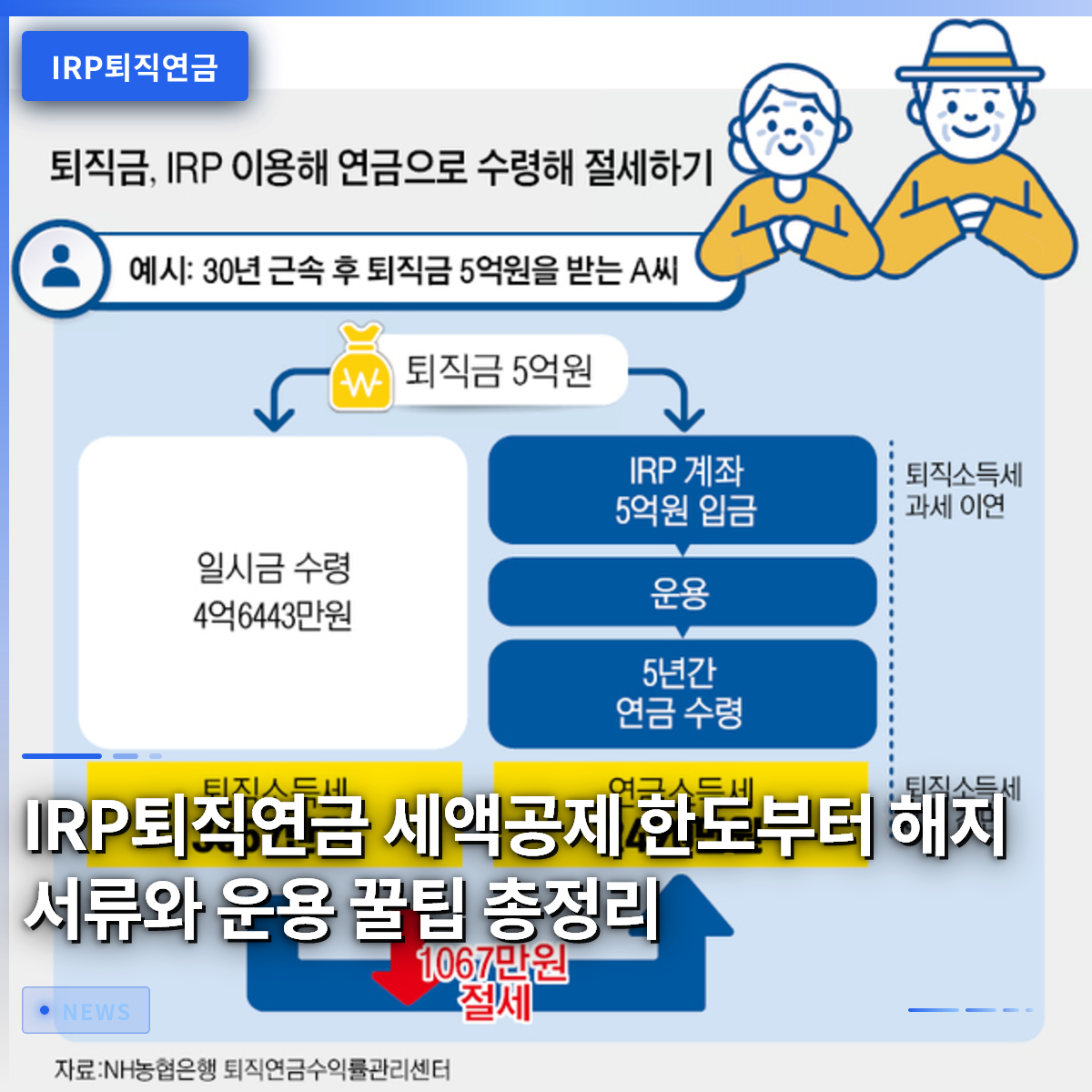
Smart Utilization of Severance Pay Transfer and Tax Deferral System When Changing Jobs There are surprisingly many employees who feel lost about how to manage their severance pay when changing jobs. To avoid immediate taxation and save your valuable money, the severance pay received upon leaving a company must be transferred to an IRP account in your own name. This is called the tax deferral system, a highly beneficial perk that delays tax payment until you actually receive the funds as a pension after retirement. If you accidentally receive your severance pay in a personal account during a job change and use it immediately, you will have to bear an unexpectedly high severance income tax. If your new employer operates a Defined Contribution (DC) plan, you can naturally link and integrate it with the IRP received from your previous employer for unified management. Receiving funds in pension installments rather than a lump sum at retirement significantly reduces the tax burden, making it a more advantageous choice. The longer the pension receipt period, the lower the applicable tax rate, so planning your receipt schedule from a long-term perspective is a wise asset management method. Knowing how your pension account moves during major life changes like job changes or retirement can prevent unnecessary tax expenditures. You can easily complete the transfer application without complex paperwork by visiting a financial company branch or using a mobile app. There is also a certain satisfaction in watching the severance pay from various companies you worked for accumulate in a single account, growing like a snowball.
When changing jobs, you must transfer your severance pay to an IRP account to receive tax deferral benefits, and later receive it as a pension to minimize taxes.
5. Subheading
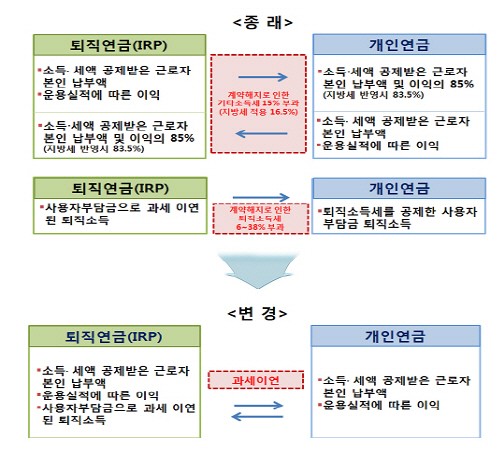
From IRP Cancellation Documents to Mid-Term Withdrawal Conditions and Tax Tips When you urgently need a large sum of money and have to cancel or withdraw from your IRP midway, anyone would be flustered. Mid-term withdrawal is only permitted under special circumstances defined by law, such as purchasing a home or securing a deposit for a lease as a non-homeowner, or medical treatment for oneself or family members requiring more than three months. If you cancel for personal reasons rather than these unavoidable circumstances, other income tax will be imposed on the tax deductions received and the investment returns. If you decide to cancel, you must gather all required documents, such as ID, family relationship certificate, and severance income withholding receipt, which vary by financial company, to avoid having to make multiple trips. You can significantly shorten processing time by obtaining documents online in advance and submitting them via mobile, or by visiting a branch. To avoid the tax bomb associated with mid-term cancellation, you should prioritize partial withdrawals while maintaining the account, rather than full cancellation. If you are in a situation where cancellation is unavoidable, remember that no tax is applied to the principal of contributions that were not deducted during year-end tax settlement. You can be excluded from the tax imposition target by contacting the financial company’s customer center and submitting your non-deduction proof documents, so do not miss this process. The fact that a small amount of attention and one document can save hundreds of thousands of won in taxes is essential information for busy modern people. Before canceling, it is safe to always calculate the estimated tax in advance through an expert or financial company counselor before making a final decision.
Mid-term IRP cancellation requires strict justification, and you should actively utilize non-deduction proof documents and the partial withdrawal system to prevent tax disadvantages.
6. Subheading
IRP Pension Management Strategies and Wise Outlook for Changing Retirement Creating a stable monthly cash flow after retirement is becoming a necessity rather than a choice. IRP pensions have established themselves as a core financial infrastructure that determines the quality of life in retirement, going beyond simple tax-saving products. The habit of consistently accumulating funds each month and flexibly adjusting your portfolio according to market conditions is paramount. It is expected that institutional support surrounding pension accounts and the variety of investment product choices will become even more diverse in the future. Actions such as setting up automatic transfers, even for small amounts, and regularly checking the returns of your account today create future prosperity. Do not forget that retirement preparation begins not with a perfect plan, but with a small step taken immediately today. As retirement approaches, it is wise to reduce the weight of high-volatility assets and shift the focus to stable dividend-paying assets or government bonds. You should actively utilize asset management tools and return checking services provided by financial companies to periodically diagnose the health of your assets. Calculate your expected post-retirement income in advance, and if there is a shortfall, make an effort to fill the limit through additional contributions. If you stick to principles and continue long-term investing without being swayed by hearsay, you will surely bear the fruit of solid retirement assets. We hope you will take the time to open your pension account app today, check its current status, and explore new investment products.
By managing your IRP pension through consistent contributions and regular portfolio reviews, you can welcome a prosperous and stable life after retirement.
Frequently Asked Questions
=