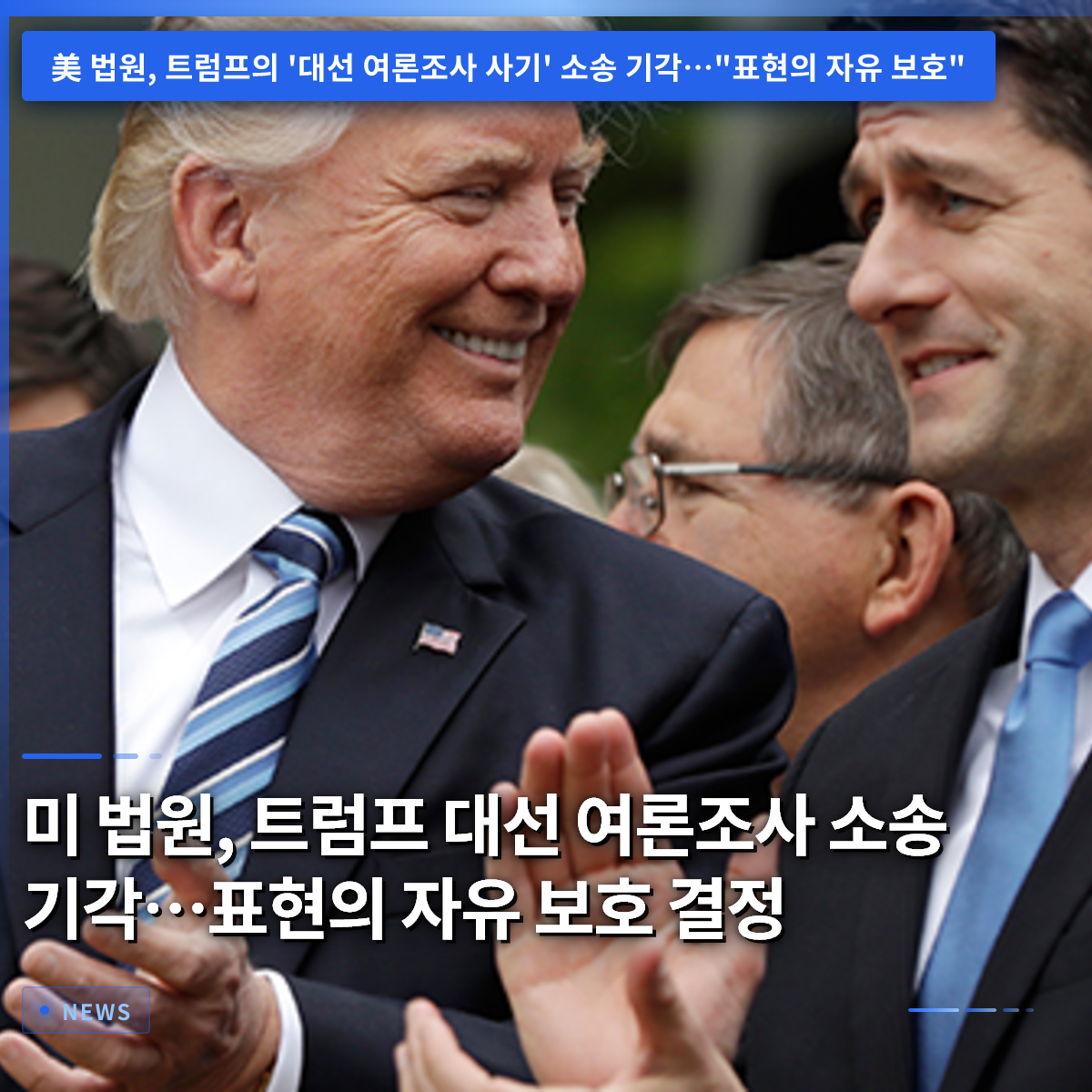
A lawsuit filed by U.S. President Donald Trump against media outlets and experts who reported unfavorable polling results just before the recent election has been finally dismissed by a local court, sparking significant attention. A judge in the U.S. District Court for the District of Iowa clearly ruled that opinion polls and the subsequent media coverage constitute political expression protected at the highest level under the U.S. Constitution. Despite the significant discrepancy between predictions within the margin of error at the time of the election and the actual vote counts, the judiciary’s final judgment is that this cannot be legally punished as fraudulent conduct. This decision serves as a prime example of how the core democratic value of free speech is preserved amidst fierce legal battles between politicians, the media, and the public. Many are watching closely to see what ripples this ruling will cause in future political reporting and the polling industry. In this article, we will examine in detail the specific background of this lawsuit, the court’s reasoning, and the recent trend of judicial decisions.
=
US Court Dismisses Trump’s Election Polling Lawsuit, Ruling in Favor of Free Speech
1. The Origin and Progression of the Lawsuit
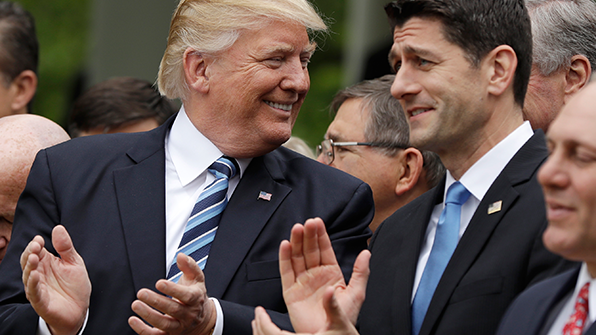
The background of U.S. President Donald Trump’s legal action against a prominent daily newspaper in Iowa and a polling expert lies in the conflicting prediction results from the recent election. At the time, the media outlet reported a shocking survey result just days before the election, showing that former Vice President Kamala Harris, the Democratic candidate, was leading President Trump in Iowa within the margin of error. However, the actual results when the ballot boxes were opened were completely different, with President Trump winning a landslide victory by a margin of over 13 percentage points. In response, Trump’s side strongly objected, claiming that the media outlet’s report was a fake poll intended to deliberately deceive voters and shake up the election landscape. Ultimately, they filed a lawsuit seeking damages under charges such as consumer fraud. This measure strongly reflected their determination to hold the polls that diminished them accountable, even amidst the joy of electoral victory.
The plaintiff side, the Trump camp, argued that the poll was not merely a statistical error but was manipulated with the intent to adversely affect the election results. Their logic was that a media outlet with immense influence over the public had packaged incorrect information as fact, clouding voters’ judgment. In response, the defendants argued that the poll was based on rigorous statistical techniques and subjective predictive models and was not an act of intentional deception. The fierce back-and-forth between the two sides eventually led to court, awaiting the judiciary’s judgment, with the attention of the entire political and media sectors focused on the Iowa court. The debate over how much legal responsibility should be held between the accuracy of election predictions and the media’s reporting responsibility is one of the long-standing challenges in a democratic society. This lawsuit served as a litmus test showing what criteria the judiciary would use to draw the line on this sensitive boundary.
The Trump side filed a lawsuit labeling the unfavorable pre-election poll report as fake, drawing attention to the court’s judgment.
2. The First Amendment to the U.S. Constitution and Freedom of Speech

Judge Scott Beety of the U.S. District Court for the Polk County, Iowa, which heard the case, abruptly dismissed the plaintiff’s claims, reaffirming the foundation of the U.S. Constitution. In the ruling, the court stated that the First Amendment to the U.S. Constitution, which thoroughly guarantees freedom of speech and the press, is the core criterion for judgment in this case. The First Amendment prohibits any law or judgment by the government or judicial bodies that infringes upon the people’s freedom of religious belief, expression, press, and assembly. This has long been established as the most powerful and essential protective mechanism for maintaining the U.S. democratic system. The court emphasized that these constitutional values exist to ensure free debate on political issues and media reporting activities. Therefore, it was ruled that a politician suing a media outlet in court because of unfavorable reporting or poll results is contrary to the spirit of the Constitution.
This ruling is not merely the dismissal of a single civil lawsuit but a significant legal precedent reaffirming the absolute supremacy of freedom of the press and expression. The court explicitly stated that opinion polls and the resulting media coverage fall under the category of political expression that receives the highest level of constitutional protection in a democratic society. Diagnosing political situations and predicting future outcomes is an area where high-level subjective judgment and statistical estimation are inevitably involved. Therefore, the court’s logic was that even if such predictions turn out to be wrong, they cannot be definitively labeled as false statements of objective facts that can be proven, nor can the crime of fraud be applied. This reflects the judiciary’s deep philosophy that a healthy public sphere can only be formed when diverse voices and predictions can flow freely in a democratic society. As a result of this decision, it is expected that the practice of politicians indiscriminately filing lawsuits against unfavorable media reports will be significantly checked.
The court ruled based on the First Amendment that polls and reports are political expression protected at the highest level.
3. Plaintiff’s Rebuttal and Appeal Plans

Upon the court’s dismissal decision, President Donald Trump’s side immediately expressed strong dissatisfaction and clearly stated their intention not to back down. The legal representatives leading the lawsuit strongly criticized the ruling, stating it was no different from granting a free pass for acts that deceived the public. They indicated their intention to immediately file an appeal with the Iowa Supreme Court to overturn the first-instance ruling and seek a wise judgment from a higher court. The Trump camp still believes that the poll was not a mere expression of opinion but a meticulous political operation aimed at distorting election results. Therefore, they maintain a tough stance, intending to hold legal accountability to the end for the reputational and political damages they suffered through higher-level trials. The likelihood that this case will not end with the first-instance dismissal but enter a long-term battle in higher courts has become very high.
The sight of a political leader directly engaging in legal battles against media outlets and polling organizations has sparked strong pro and con debates even within U.S. society. Supporters praise President Trump’s actions as a legitimate exercise of rights against a biased media landscape, while opponents fiercely criticize it as a dictatorial notion of using the judicial system to pressure the media. These political factional conflicts are expected to intensify further during the appeal process to higher courts. Polling organizations and media outlets also view this lawsuit as an important defensive line protecting their unique professional domain and freedom of expression, and are preparing to respond in solidarity. The upcoming legal battles will be a massive litmus test showing how freedom of the press and the reputation of those in power collide and compromise in U.S. society, going beyond a simple damages lawsuit. Depending on whether the appellate court upholds the first-instance decision or offers a new interpretation, the U.S. political and media landscape will once again be swept into a major vortex.
The Trump side is strongly objecting, stating they will appeal to a higher court against the ruling.
4. The Confrontation Between the Executive and Judicial Branches
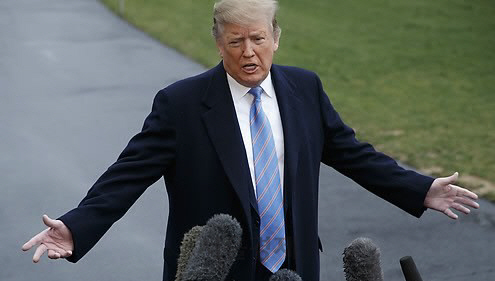
This dismissal of the polling lawsuit is another symbolic incident emerging amidst a series of major frictions recently occurring between the Trump administration and the judiciary. The Trump administration has recently implemented tough media control measures, such as abruptly banning major media outlets with critical tendencies from accessing the White House. In response to these administrative measures by the White House, the judiciary immediately intervened, with a federal district court issuing a temporary restraining order mandating the immediate restoration of the media outlets’ access rights. As the pressure on the media by the administration and the check by the judiciary intertwine, tension permeates the U.S. political scene daily. The invisible power struggle between the administration and the courts over whether the President’s exercise of power infringes on the constitutionally guaranteed freedom of the press is becoming increasingly fierce.
This series of developments aligns with the strategic moves of the Trump administration as it enters the latter half of its term, aiming to restructure the media environment and block unfavorable reporting flows. However, in accordance with the principle of separation of powers, the judiciary is imposing strict constitutional standards on the President’s administrative measures and lawsuits, putting on the brakes. Following the court’s block on the media access restriction measures, the dismissal of the polling-related lawsuit has dealt a significant blow to the administration’s media pressure strategy. This scene, where the President’s strong will directly collides with the independence of the judiciary seeking to uphold constitutional values, clearly demonstrates how the self-correcting ability within the democratic system functions. Frictions between the administration’s policy decisions and the judiciary’s function of constitutional review are expected to continue, and the U.S. political and media ecosystem will face significant changes depending on the outcomes.
The court has put the brakes on the White House’s recent media access ban measures, deepening the confrontation between the executive and judicial branches.
5. Practical Impact on the Polling Industry
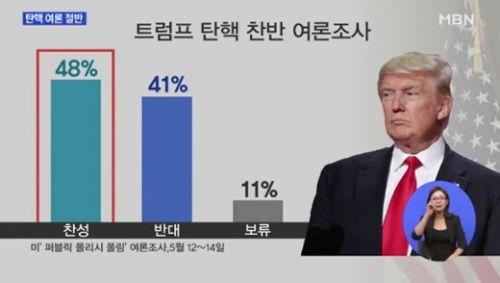
This court ruling is a significant milestone that provides great relief to the global polling industry and statistical experts, going beyond the clash between Trump and the media outlet. If the Trump side’s argument had been accepted, opening the door to legal accountability for polling errors or prediction failures, numerous polling organizations worldwide would have been plagued by massive lawsuits. Accurately predicting the future is essentially close to impossible, and opinion polls, which handle numerous variables and statistical techniques, must always live with a certain level of error. This ruling carries the great significance of legally recognizing that such statistical estimation and subjective weighting are expressions in an academic and professional domain, not crimes or fraud. Thanks to this, polling experts have established a foundation to collect and publish statistical data with more confidence, free from the fear of political pressure or legal retaliation for results.
Of course, voices are growing that polling organizations should more transparently disclose their methodologies and improve accuracy in light of this incident. They have suffered the side effect of rapidly declining public trust whenever there is a large gap between actual vote counts and poll results, making self-purification efforts to restore trust an unavoidable task. Although this lawsuit was dismissed after being recognized as freedom of expression legally, it proved that polling is not just a game of numbers but has a powerful impact on actual election landscapes and voter psychology. In the future, polling organizations will need to develop more sophisticated models and strengthen internal verification systems to reduce errors in order to survive the public’s cold gaze. Having gained legal protection, the industry as a whole now bears the heavy task of strengthening corresponding ethical responsibility and professionalism.
With this ruling, polling organizations are free from the risk of legal punishment but are now required to demonstrate higher levels of professionalism and transparency.
6. Future Outlook and the Media’s Challenges
The dismissal of President Donald Trump’s election polling lawsuit will leave an indelible mark on the future U.S. political landscape and media environment. This ruling, which proved that the shield of the First Amendment’s freedom of speech once again functioned as a powerful judicial protective barrier, will serve as an important benchmark for redefining the relationship between those in power and the media. Although the appeal process to higher courts remains, meaning the final legal conclusion is not completely tied up, the clear reasoning of the lower court’s ruling is expected to significantly influence similar lawsuits in the future. Attempts by politicians to use legal weapons to retaliate against unfavorable polls or reports will likely continue, but if the judiciary maintains strict constitutional principles as it did this time, such attempts will inevitably face significant constraints. This ruling holds historical significance in that the judiciary, the last bastion for safeguarding the health of democracy, upheld its principles without wavering under political pressure.
From the perspective of readers and the general public, this incident is a valuable opportunity to reflect on the role of media and the attitude toward consuming information. Rather than blindly following one side’s claims amidst a flood of numerous polling results and sensational news, a critical perspective that coldly views statistical limitations and context is more urgently needed than ever. The media also must confront the massive impact their reporting has on society and remain more faithful to their original mission of objective and fair information transmission beyond partisanship. Only when the media’s efforts to diligently pursue the truth and defend freedom of speech continue, even under the pressure of power and public distrust, can the democratic public sphere be maintained healthily. This is precisely why we must continuously watch with interest how the triangular conflict between the Trump administration, the judiciary, and the media will conclude.
This ruling has become a historical benchmark for defending freedom of speech, and readers must monitor the media environment with a critical eye.
Frequently Asked Questions
=