When depositing money in a bank, you should not rely solely on the nominal interest rate; instead, you must accurately calculate the actual after-tax amount that will be credited to your account. In times like the present, where the gap in investment returns is widening, knowing the precise method for calculating interest is crucial alongside safe asset management. For instance, a 3% annual interest rate does not mean that rate is fully applied to the entire principal; rather, the amount paid is reduced by interest income tax and local income tax. Given that the average base interest rates of the five major commercial banks are at low levels, it is essential to adopt strategies that take advantage of tax benefits. This article provides an easy-to-understand overview of the scope of the Deposit Insurance Act, how to calculate after-tax interest, and efficient savings strategies.
=
A Complete Guide: From Calculating Deposit Interest to Comparing Tier 1 Bank Rates and the 100 Million Won Protection Limit
1. The Truth About Deposit Interest Calculation and After-Tax Take-Home Amounts

The annual interest rate offered by banks is the pre-tax rate, so the actual amount deposited into your account will be less than the nominal figure. For example, if you deposit 10 million won in a 3% annual fixed deposit for one year, a simple calculation suggests you should earn 300,000 won in interest. However, all South Korean residents are subject to a 15.4% withholding tax on interest income. This figure combines a 14% interest income tax and a 1.4% local income tax, meaning the actual amount you receive is reduced to approximately 253,000 won. Understanding this tax deduction structure in advance helps minimize unexpected discrepancies when creating your budget. Therefore, when opening a savings account or depositing a lump sum, it is a good habit to always evaluate returns based on the after-tax interest amount. According to the withholding tax standards and interest income guidelines announced by the National Tax Service, the method of tax application can vary slightly depending on the type of financial product. In particular, when using mutual financial cooperatives, it is advantageous to carefully review the membership conditions that qualify for tax-exempt or low-tax benefits. The difference in take-home amounts between regular taxable accounts and tax-advantaged accounts becomes a significant variable in asset growth over time. Rather than relying on hearsay from acquaintances, you need to take the initiative to verify the exact interest calculation formulas listed in the product descriptions. You can also request that bank staff calculate the after-tax take-home amount for you, and they will typically provide this guidance willingly.
To accurately determine the actual amount received, a 3% pre-tax rate must be calculated after deducting the 15.4% withholding tax rate.
2. Comparing Fixed Deposit Rates Between Tier 1 and Tier 2 Financial Institutions
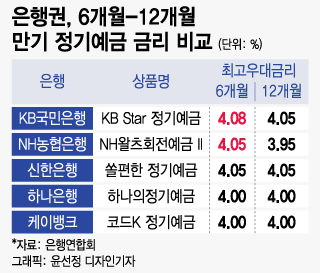
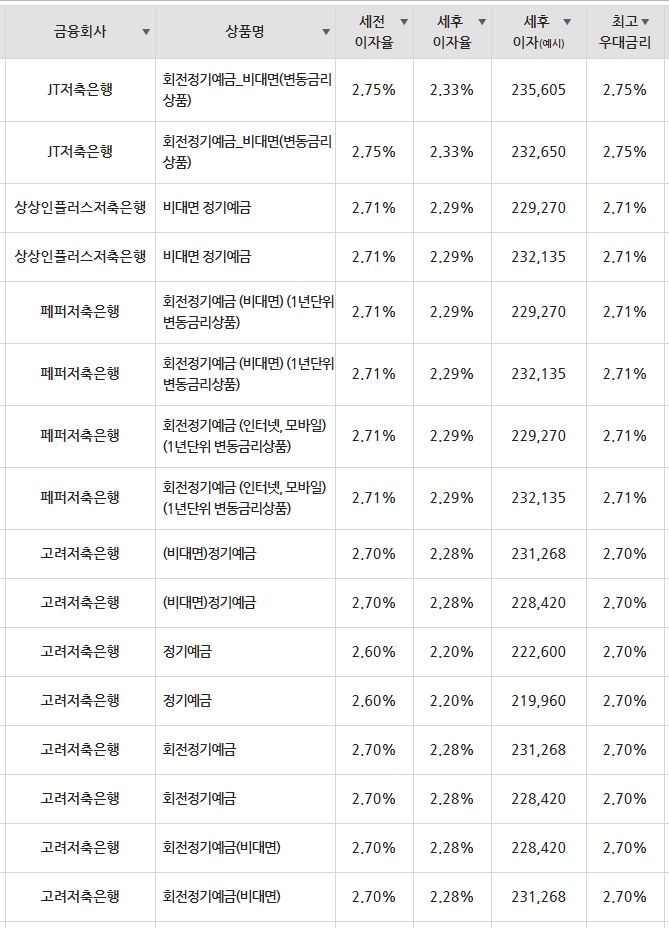
There is a noticeable difference in deposit interest rates between Tier 1 commercial banks and Tier 2 financial institutions such as savings banks. Those who prioritize stability typically choose commercial banks, while those seeking slightly higher interest rates keep an eye on special promotional products from savings banks. For example, while Tier 1 banks may offer base deposit rates in the high 2% range, some savings banks may offer products with rates in the high 3% to 4% range. Even for the same 100 million won deposit, a 1% difference directly translates to hundreds of thousands of won in interest over a year, making thorough comparison essential. However, since savings banks may have less convenient branch access or unfamiliar mobile app interfaces, you should also consider your own financial convenience. Even products with similar names can have vastly different actual interest rates depending on enrollment conditions and the application of preferential rates. It is convenient to use the Financial Supervisory Service’s consumer portal or various comparison platforms that allow you to compare all deposit products nationwide at a glance. The extent of interest rate preferences also varies significantly depending on whether you choose a 6-month, 1-year, or 2-year term. To avoid the disadvantage of forfeiting agreed-upon interest and receiving only a low rate upon early withdrawal, you must accurately predict when you will need your funds. It is wise to simulate whether your living expenses will be affected during the period your lump sum is locked in before selecting a deposit product.
Tier 1 and Tier 2 institutions differ in interest rates and stability, so you should choose based on the nature of your funds.
3. Everything About the 100 Million Won Limit Under the Deposit Insurance Act
The Deposit Insurance Act is a system that protects up to 100 million won per person, combining principal and interest, in the event that a financial institution faces business suspension or bankruptcy. In the past, the protection limit was 50 million won, but it has been raised to align with changes in the financial environment, allowing for more secure savings. An important point is that the 100 million won limit is calculated by summing both the principal and the accrued interest. For example, if you deposit exactly 100 million won in a bank and interest begins to accrue, the interest portion may exceed the protection limit, so caution is required. If you want to ensure full protection, it is wise to keep the principal in the mid-90 million won range or to calculate the accrued interest in advance and distribute the deposits. Many people are confused about whether the protection limit applies separately if the legal entities or branches differ, even within the same financial group. To be clear, multiple accounts under the same financial institution’s head office are aggregated, and the 100 million won limit applies to the total amount. Therefore, you should remember that splitting a 100 million won fixed deposit into multiple accounts at the same bank does not increase the deposit insurance limit. To truly benefit from diversification, the correct approach is to distribute your funds among different financial institutions or unrelated savings banks. The habit of diversifying your assets to prepare for unforeseen events is the most fundamental safety mechanism in lifelong asset management.
The 100 million won deposit insurance limit includes both principal and interest, so it is necessary to diversify deposits for any amount exceeding this limit.
4. The Secret to Early Withdrawal and Early Termination Interest Rates
If you need funds urgently and have to withdraw your deposit before maturity, you will receive a surprisingly low amount of interest. Because you are breaking the agreement with the bank, the accrued agreed-upon interest is forfeited, and a very low early termination interest rate is applied. For example, if you maintain a 1-year fixed deposit with a 4% annual rate for 11 months and then withdraw it one month before maturity, you might only receive interest at a rate of around 0.1%. One good way to avoid this disadvantage is the so-called “split deposit” strategy, where you divide a lump sum into multiple smaller accounts. Instead of putting the entire amount into one account, you can split it into units of 30 million, 30 million, and 40 million won. This way, if you need cash urgently, you only need to withdraw from one specific account. Some commercial banks and savings banks offer deposit-secured loans as an alternative to early termination interest rates. A deposit-secured loan is a useful system that allows you to borrow money within a certain percentage of your deposit balance without withdrawing the deposit. Although the loan interest rate is slightly higher than the deposit rate, it can be much more economical than the interest loss incurred from early termination. Additionally, once you have resolved the urgent need, you can quickly repay the loan principal and interest, allowing you to retain the full maturity interest originally agreed upon. Please exercise the care to check the early termination clauses and the availability of secured loans in the product description before signing any contract.
Since interest loss is significant upon early withdrawal, it is advantageous to diversify amounts or utilize the deposit-secured loan system.
5. Payment Orders and Statute of Limitations: Finding Dormant Deposits
Finding dormant deposits or hidden money that has not been claimed after maturity is a surprisingly easy part of wealth management. Assets sleeping in the financial sector can revert to the state or the Korea Microfinance Foundation if the statute of limitations expires, so regular inquiries are necessary. Generally, rights related to deposits or claims become time-barred after a certain period following confirmation, so neglecting them can result in the loss of valuable assets. In practice, you must protect your rights by taking measures such as proceeding with legal procedures for claim attachment and collection orders or extending the statute of limitations. Using the integrated inquiry service operated by the government, you can check all financial assets under your name in just a few minutes. If you discover an old account tucked away in a wallet or drawer, do not throw it away; instead, visit a nearby branch or check via the mobile app. Even for dormant accounts with no transactions for a long time, you can receive the full balance, including accrued interest, after completing the identity verification process. In rare cases where there are attachments or payment orders, you must fulfill the release conditions through legal procedures to make a normal withdrawal. Asset management begins not only with earning new money but also with finding money that already exists under your name but has been forgotten. Why not turn on your smartphone today and use the hidden deposit search service to wake up your sleeping money?
Dormant deposits must be found through the integrated inquiry service before the statute of limitations expires to protect valuable assets.
6. Deposit Utilization Strategies for Successful Asset Management
Even in an economic environment with volatile interest rates, fixed deposits remain the most certain and reliable bulwark for protecting principal. Rather than focusing solely on high-risk assets, you should use safe deposits as the basic framework of your asset portfolio to maintain psychological stability. For example, it is advisable to lock a certain percentage of your total investment funds in safe deposits and use the remaining surplus funds to try various financial products. A balanced perspective is needed to avoid being swept away by news of high returns in the stock market or specific index products this year. You must coldly assess your investment style and risk tolerance before formulating a fund allocation strategy to prevent failure. Please actively practice the ladder technique of diversifying deposit maturities to prepare for upcoming interest rate changes. By splitting accounts so that maturities fall in 3-month, 6-month, and 1-year increments, you can respond flexibly when interest rates rise. There is also satisfaction in regularly reinvesting the principal and interest generated from maturing lump sums, which also improves cash flow. Although bank interest may seem small, it plays an irreplaceable role in defending against inflation and strengthening the fundamental health of your assets. Based on the after-tax interest calculation methods and deposit insurance limits learned today, we hope you will begin a wiser and safer savings life.
You must build a stable asset management system through deposit maturity diversification strategies and thorough after-tax interest calculations.
Frequently Asked Questions
=