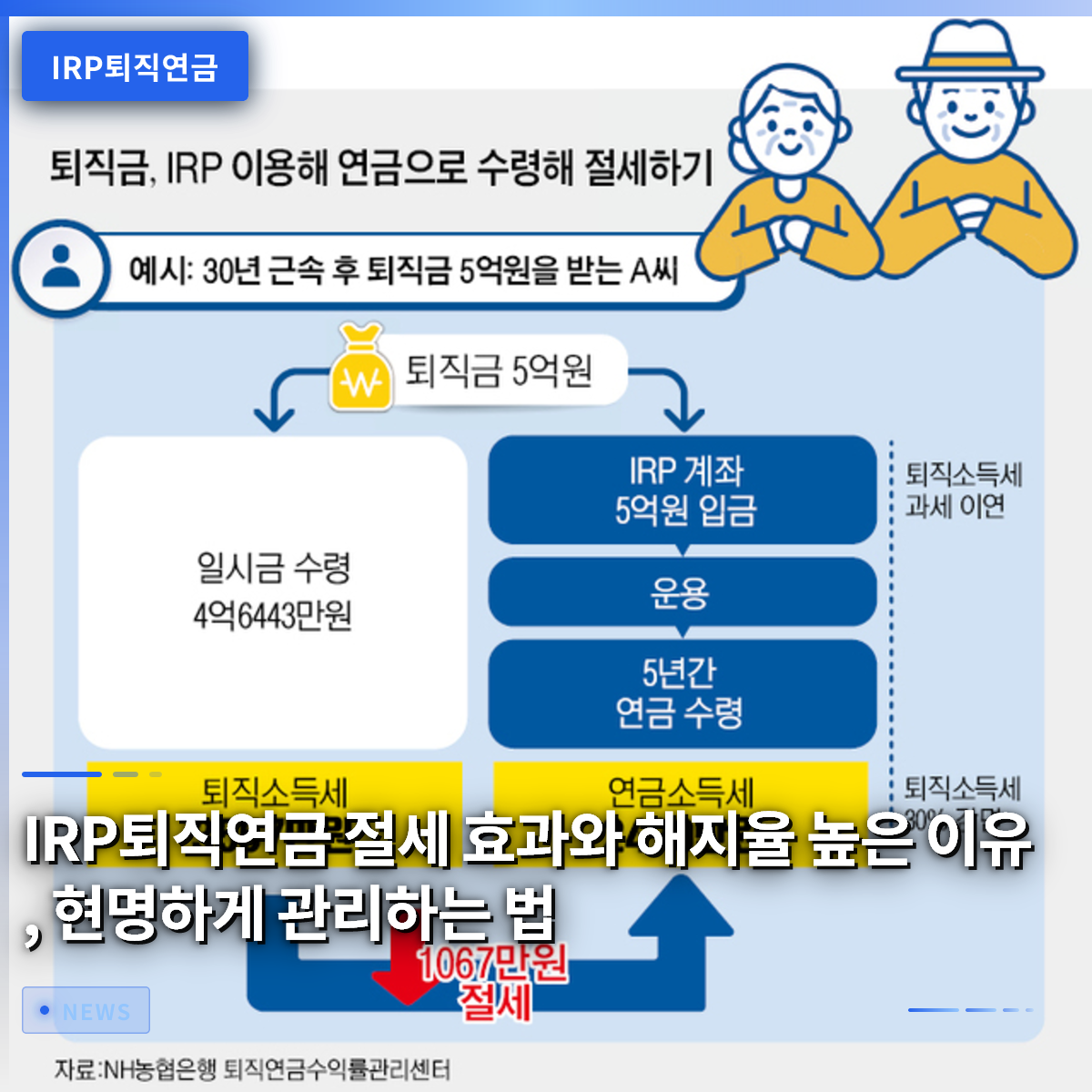
If you carelessly receive your severance pay into a regular checking account, you may face a tax bomb. Therefore, you must receive it into an IRP (Individual Retirement Pension) account. Many employees, upon changing jobs or retiring, often cancel their accounts to use the lump sum for immediate needs. In fact, over the past few years, substantial amounts have been transferred to these accounts only to be canceled at high rates, creating significant holes in retirement assets. In this article, we will go through specific tips to safely protect your severance pay and maximize tax benefits. We have meticulously organized everything from how to fill the tax deduction limit to tips for reducing fees through non-face-to-face conversion at securities firms.
=
Tax Savings of IRP Retirement Pensions, Reasons for High Cancellation Rates, and How to Manage Them Wisely
1. Why You Should Receive Severance Pay in an IRP Account

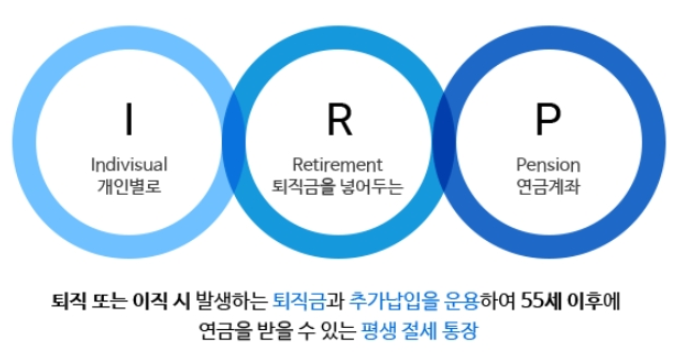
When an employee changes jobs or retires, the valuable severance pay they receive should, as a rule, be paid into a designated IRP account, with certain exceptions. If you receive severance pay directly into a regular account, you will have retirement income tax withheld immediately, significantly reducing the amount you actually take home. On the other hand, transferring it to an IRP account allows you to enjoy the benefit of tax deferral on retirement income tax. Since you do not have to pay taxes immediately and can continue to invest that money, you can maximize the effect of compound interest. In fact, when you receive it as a pension ten or twenty years later, you only need to pay pension income tax at a rate much lower than the general tax rate, resulting in enormous tax savings. This is the wisest first step to fully retain the severance pay you have accumulated over your working life as retirement funds.
This individual retirement pension is the safest framework for managing lump sums when employees change companies or retire. It has established itself as a core financial product that reduces tax burdens and provides a solid foundation for life after retirement.
Receiving severance pay in an IRP account allows you to defer retirement income tax and apply a lower tax rate upon pension receipt, maximizing tax savings.
2. Tax Deduction Limits and Year-End Tax Settlement Strategies
Every year during the year-end tax settlement season, the IRP retirement pension, which offers tax deduction benefits, attracts significant attention from employees. It is considered an essential wealth management tool for employees because you can receive tax deductions up to the maximum limit when combined with personal pension savings products you contribute to regularly. Since you get a certain percentage of taxes refunded based on the annual contribution limit, it is always beneficial for employed individuals with income to join. By automatically transferring a fixed amount each month, you can enjoy the pleasure of receiving a substantial refund before you know it. However, you should adjust your contribution amount according to your income level to avoid restricting your liquidity by trying to fill the limit recklessly. Creating a virtuous cycle of reinvesting your year-end tax settlement refunds will greatly help in growing your retirement assets.
To enjoy the practical benefit of getting taxes back during the annual year-end tax settlement, it is important to make good use of the contribution limits for this account. It is one of the essential wealth management formulas that employees should not miss.
By combining pension savings and IRP account contributions, you can secure tax deduction benefits up to the maximum limit during year-end tax settlement.
3. The Trap of High Cancellation Rates and Retirement Asset Management
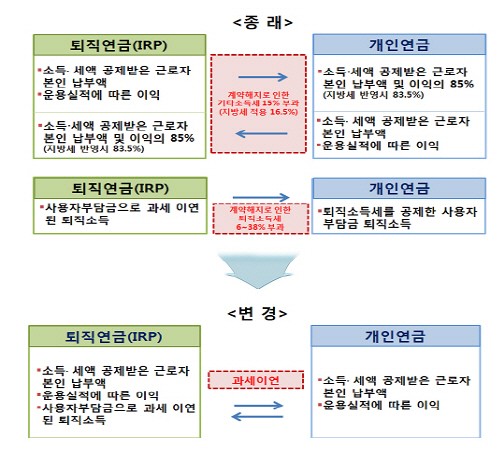
Unfortunately, many people make the mistake of canceling their IRP retirement pension accounts midway, unable to resist the temptation of having a lump sum. Statistics show that while a significant amount has been transferred to these accounts, a considerable proportion is canceled midway, recording high cancellation rates. If you break the account because you urgently need cash, you face the disadvantage of having to return all the tax benefits you have received so far. Additionally, other income tax is imposed, resulting in little to no net gain and even a loss of principal. It is absolutely necessary to have the mindset that severance pay should be kept solely as funds for life after retirement. Canceling a pension account, which is like a lifeline for your old age, just because you lack immediate spending money will lead to great regret later.
The greatest enemy to guard against in the process of accumulating retirement assets is the temptation of mid-term cancellation. To fully enjoy tax benefits, you need the perseverance to maintain the account until the end.
Mid-term cancellation requires returning previously received tax deduction benefits and paying other income tax, so you should refrain from canceling to preserve retirement assets.
4. The 30% Safe Asset Regulation and Investment Portfolio
When managing equity products or index-linked products in a retirement pension account, you may experience situations where buy orders are blocked. This is due to regulations requiring a certain percentage of total assets to be allocated to safe assets. To meet the safe asset ratio, you must construct a portfolio by appropriately mixing bond products or principal-and-interest guaranteed products. Recently, as bond-hybrid products and various active products have gained popularity, strategies that meet regulations while securing profitability are attracting attention. It requires the wisdom to check market conditions monthly and balance the proportions of stocks and safe assets. Rather than putting everything into risky assets, practicing stable asset allocation from a long-term perspective is the secret to successful pension investing.
Even if you want to increase the proportion of equity assets to pursue high returns, you must strictly adhere to the legal safe asset ratio regulations. The key is to create a balanced portfolio from a long-term perspective.
You should construct a long-term investment portfolio by appropriately including products like bond-hybrid funds in accordance with the mandatory safe asset ratio regulations.
5. How to Convert to Non-Face-to-Face Accounts to Reduce Fees
Simply saving on various fees paid to financial institutions can significantly boost long-term investment returns. Converting to a non-face-to-face account using a smartphone app, rather than visiting a branch directly to sign up, can greatly save on management fees. For example, when managing amounts under 50 million won, the difference between offline and non-face-to-face fee rates is quite large. Although it may seem like a small difference, given the nature of pension accounts that must be managed over decades, the fee-saving effect grows over time. Recently, many financial companies are actively running events to attract non-face-to-face customers by lowering or waiving fees. Do not neglect this out of laziness; it is recommended that you check your account status and convert to non-face-to-face immediately.
As the saying goes, “a little by little makes a heap,” saving on the fees deducted annually is a hidden secret to increasing retirement funds. You can significantly reduce costs with simple operations using a smartphone.
Converting to a non-face-to-face account instead of visiting a branch lowers management fees, effectively increasing long-term returns.
6. Including Individual Investor Government Bonds and Future Outlook
Recently, the path has been opened to directly purchase individual investor government bonds in IRP retirement pension accounts through various securities firms. The inconvenience of having to open accounts only at specific securities firms has disappeared, making asset allocation using government bonds much easier. Being able to include long-term government bonds with maturities of 10 or 20 years in pension accounts has further strengthened the stability of retirement portfolios. It is as if a powerful weapon has been created that allows for long-term investment in government-guaranteed safe assets while simultaneously securing tax benefits. Going forward, pension systems will continue to evolve in an investor-friendly direction, such as expanding contribution limits and allowing the inclusion of diverse products. Those who quickly read these changes and actively incorporate them into their retirement preparation strategies will be the winners after retirement.
As new financial products and systems are being introduced to pension accounts one after another, the range of choices is expanding. You must quickly utilize changing systems to prepare for a solid retirement.
You should utilize system changes, such as the allowance of individual investor government bonds in pension accounts, to simultaneously increase portfolio stability and tax savings.
Frequently Asked Questions
=