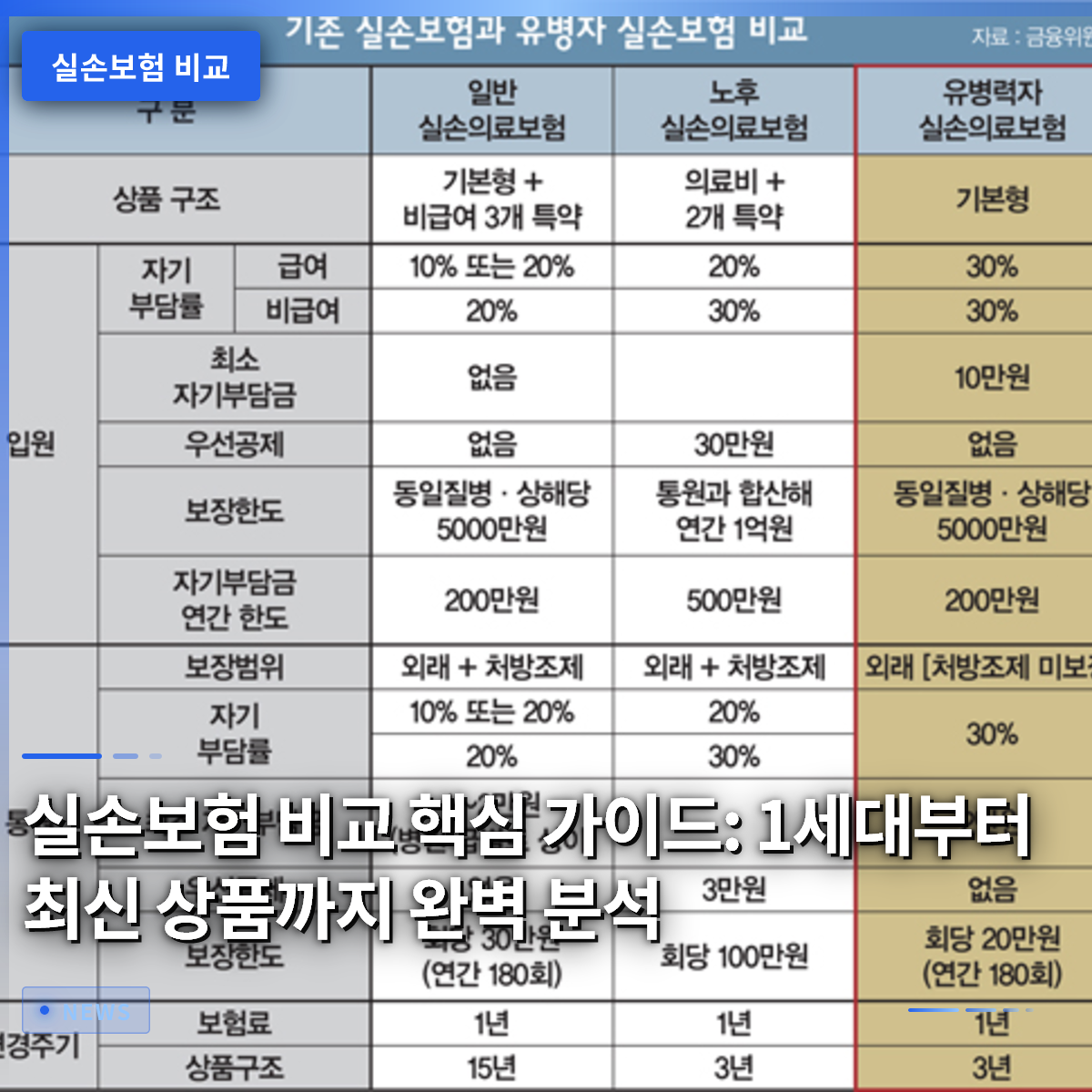
Just because the renewal premium for your existing expense insurance has risen to an unmanageable level, you should absolutely avoid canceling it and blindly switching to the latest product. There are many people around us who hastily switched based solely on the monthly premium difference and ended up in tears when they fell seriously ill, only to find that their coverage was inadequate. Older policies often have low deductibles or very broad coverage ranges, so judging solely by the monthly payment can lead to significant financial loss. Therefore, you must carefully consider your current health status and frequency of hospital visits before proceeding with a cautious comparison process. In this article, we will clearly explain the characteristics of expense insurance by generation and how to make the most advantageous choice for you.
=
Essential Guide to Comparing Expense Insurance: A Complete Analysis from 1st Generation to the Latest Products
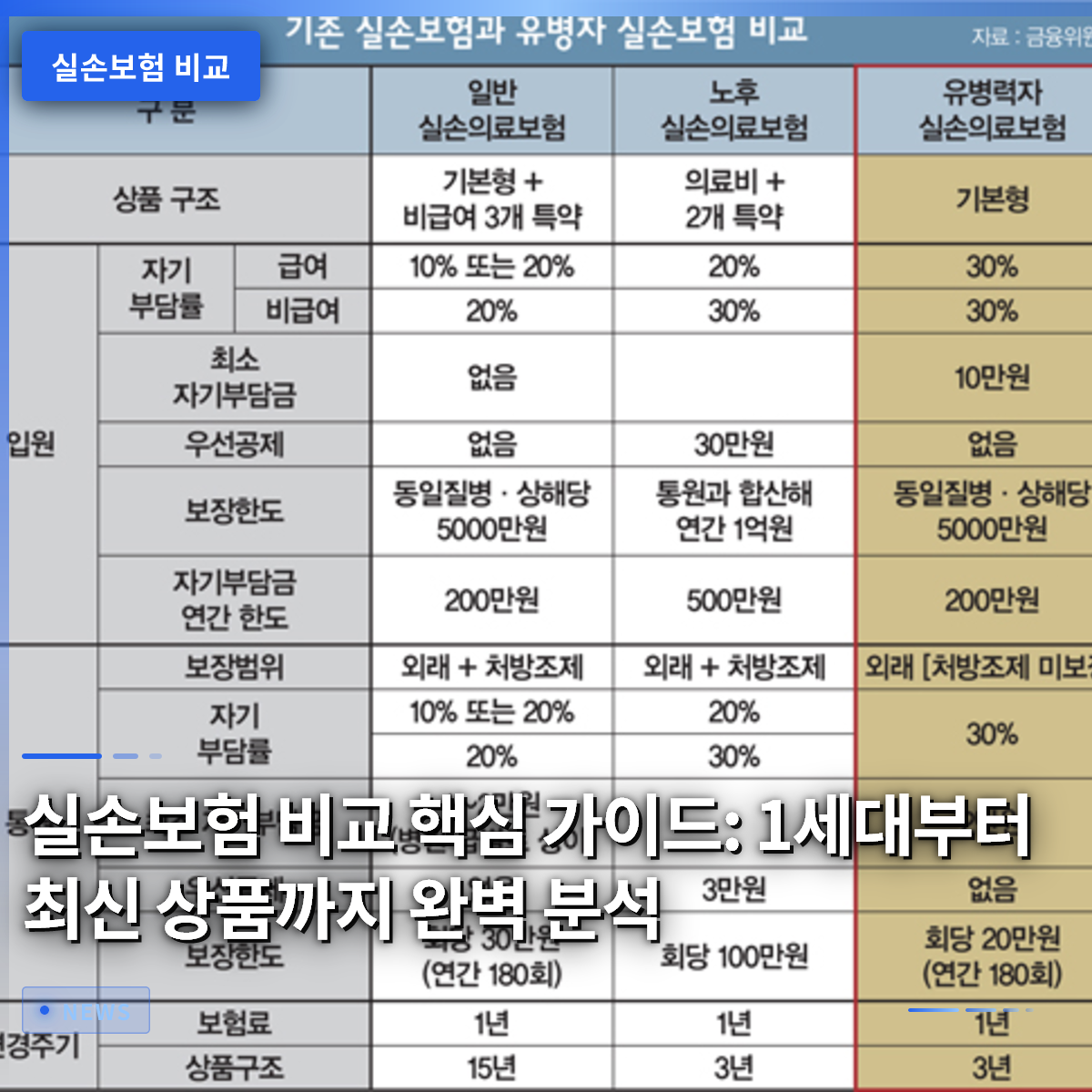
1. The History and Evolution of Expense Insurance by Generation
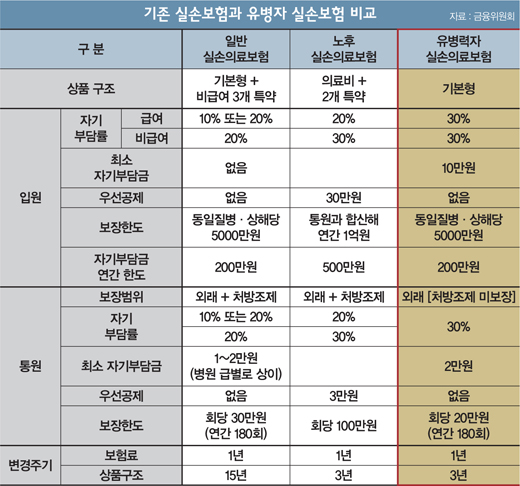
1st-generation expense insurance offered such broad coverage that it could reimburse nearly the full amount of hospital bills, but this came with significant premium increases. These older products had no deductibles or only negligible ones, meaning policyholders faced almost no financial burden for hospital expenses. However, as loss ratios skyrocketed, insurance companies gradually raised deductibles through continuous policy amendments. As the market moved through 2nd and 3rd generations, controls on non-covered medical services were strengthened, and mechanisms to prevent excessive treatment were introduced. To make the right decision on whether to keep your current contract or switch to a new product, you must accurately understand this trend of changes. You should avoid extreme choices, such as stubbornly sticking to old products or blindly switching to the latest ones just because they are cheaper. The latest expense insurance products feature a structure where premiums are differentiated based on the usage of non-covered items that may induce excessive treatment. If you rarely visit hospitals, you can receive premium discounts; conversely, if you frequently receive non-covered treatments, the amount you pay may increase significantly. Therefore, objectively reviewing your usual hospital usage habits is the first step toward a wise comparison. If you are maintaining a 1st or 2nd-generation product, you should consider the expected future renewal increases and your planned medical expenses for retirement together, rather than switching immediately.
Expense insurance varies significantly in coverage and deductibles by generation. Instead of blindly switching, you should first check your medical usage patterns.
2. Why You Should Not Blindly Cancel 1st or 2nd Generation Contracts

It is common to see cases where people, frustrated by renewal “bombs,” canceled their long-held 1st-generation expense insurance and later regretted it deeply. Older products purchased in youth serve as a reliable shield that truly shines when you get seriously ill in old age. Since the latest products have high out-of-pocket costs, surgical bills exceeding several million won can severely impact your household economy. In contrast, older products have high coverage limits and low personal burdens, offering excellent defense against actual hospital costs. Abandoning such substantial coverage just because the premium is slightly expensive is, in the long run, inviting much greater loss. Of course, the fixed monthly premium can be a heavy burden when income stops after retirement. Therefore, rather than simply enduring it, you need to coldly assess your current payment capacity and listen to your family’s opinions. Instead of being swayed by insurance agents’ pitches or forced into a switch, you should check objective figures through independent comparison sites. If you find it difficult to judge for yourself, seeking advice from public financial institutions or consumer groups is also a wise approach. You must also make an effort to predict how your health status will change and simulate the scale of your medical expenses.
Older expense insurance has low out-of-pocket costs, making it advantageous in case of serious illness. Blindly canceling it just because renewal premiums are burdensome is risky.
3. Comparison of Features and Pros/Cons of the Latest 5th Generation Expense Insurance
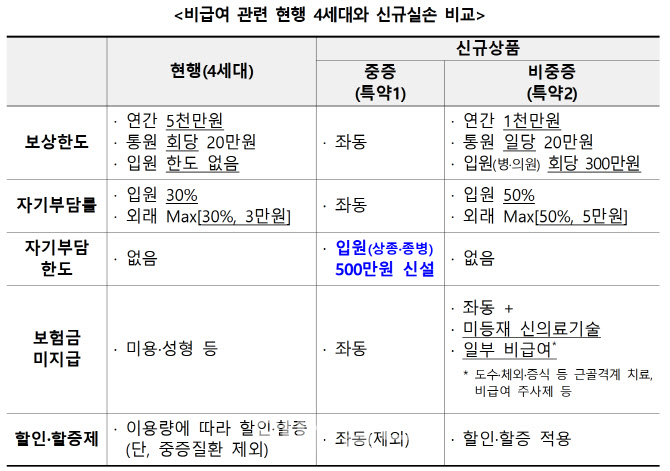
The latest expense insurance features a rational structure that separates coverage for covered medical services and non-covered services focused on severe illnesses. To prevent excessive use of items like unnecessary physical therapy or non-covered injections, a unique system called the “non-covered premium differentiation system” has been introduced. This system operates by discounting or increasing the next year’s premium based on how much non-covered insurance money was claimed in the past year. For people who manage their health well and rarely visit hospitals, this is a golden opportunity to save on monthly payments. However, it has a dual nature, as it can increase economic pressure for patients with chronic diseases or those requiring regular non-covered treatments. When switching to a new product, you must carefully compare these pros and cons to see if they align with your health status. In particular, if non-covered treatment surcharges continue to apply as you age, you may end up paying more than with older products. Since underwriting criteria and specific discount rates vary slightly by insurance company, it is advantageous to examine conditions from multiple companies simultaneously. By actively utilizing internet comparison sites and related disclosure materials, you can easily find the product that best suits you. Only after going through a thorough comparison process should you enroll to ensure a regret-free choice.
The latest expense insurance applies a differentiation system where premiums vary based on hospital usage. You should enroll considering your health status and treatment frequency.
4. Tips for Using Expense Insurance Comparison Sites That Suit You
While there are numerous insurance comparison platforms and sites on the market, choosing a reliable, accredited one is paramount. You should use sites that fairly compare data from all non-life insurance companies, rather than those that unilaterally recommend specific products. Utilizing the official comparison disclosure system operated by the Korea Insurance Association allows you to grasp objective premiums and coverage details at a glance. By entering your age, gender, and basic health information, estimated payments from dozens of companies are calculated and displayed in real time. Through this process, you can filter out inflated prices and select a product at a reasonable level that fits your budget. When comparing, you must carefully check not just the size of the monthly payment but also the renewal cycle and coverage limits. Some products have low initial premiums but short renewal cycles, causing costs to skyrocket as you age, so caution is required. Additionally, it is essential to check if you are unnecessarily wasting money by having duplicate coverage for various diagnostic or surgical fees attached as riders. Before making a final decision after comparing quotes from multiple places, you must develop the habit of reading the detailed terms and conditions yourself. Thorough comparative analysis is the only defense that safely protects your wallet from future hospital bill bombs.
Use accredited comparison disclosure sites to objectively examine conditions from multiple insurance companies, checking both monthly payments and renewal cycles.
5. Tips for Selecting Customized Expense Insurance for Parents and Those with Pre-existing Conditions
When looking into expense insurance for elderly parents, you should compare senior expense medical insurance or products exclusively for those with pre-existing conditions, rather than general products. This is because general products have a high probability of being rejected due to age limits or past medical history. Expense insurance for those with pre-existing conditions is designed to allow people with chronic diseases like hypertension or diabetes to enroll relatively easily through a simplified review process. However, you should be aware that out-of-pocket costs are somewhat higher and coverage may be partially limited compared to general products. Since the maximum enrollment age varies by company, ranging from 75 to 80 years old, carefully comparing underwriting criteria is key. Since insurance for parents is held for a long time once enrolled, you must simulate whether the renewal premiums are at a manageable level. If children help with payments but face financial difficulties midway and cancel, the parents’ medical safety net disappears instantly. Therefore, you need the wisdom to place quotes for senior-specific products from various companies side by side and thoroughly compare price efficiency relative to coverage. Do not rely solely on recommendations from others; make the optimal choice by considering your parents’ actual hospital visit frequency and expected illnesses. Reliable medical coverage serves as a precious fence that protects the peace of mind of both parents and children.
For parents, you should carefully compare the enrollment ages and underwriting criteria of products for those with pre-existing conditions and seniors, rather than general products.
6. Wise Expense Insurance Comparison and Future Outlook
The insurance market is expected to change rapidly in the future, moving towards preventing excessive treatment and providing practical coverage. The government and industry are continuously preparing supplementary measures to ensure the system works effectively in the field, and mechanisms to protect policyholders’ rights are increasing. Amidst this wave of change, the wisest attitude consumers can take is to constantly search for and compare information. You must move away from the blind attitude of enrolling just because others say it’s good and establish a customized strategy that fits your financial situation and health. If you are currently paying unnecessary premiums or feeling anxious about insufficient coverage, start the comparison process today. Small attention and thorough comparisons will collectively protect you and your precious family from future major economic crises. Since expense insurance is a long-term contract that you must carry like a partner for life, it is most important to button up correctly from the start. As medical technology advances and new treatments emerge, the role of insurance will grow, and product structures will continue to evolve. You must cultivate the habit of consistently monitoring the latest trends, referring to expert advice, and regularly checking your contract status. The path to becoming a smart consumer who reduces premiums while maximizing coverage is not as far away as you think. I sincerely hope you will gradually apply the comparison tips learned today and wisely find the optimal insurance that suits you best.
To prevent unnecessary expenses and maintain reliable medical coverage, you must continuously compare and check your policy in line with changing insurance regulations.
Frequently Asked Questions
=