The Individual Retirement Pension (IRP) account is an essential financial product that must be utilized to maximize year-end tax deduction benefits and build stable retirement assets. Mr. Kim, an office worker, almost faced a tax bomb when checking his year-end tax refund last year, but he was able to breathe a sigh of relief by joining an individual retirement pension late. As such, while many people rush to sign up as the year-end approaches, few start with a proper understanding of the exact eligibility conditions and benefits. It is not uncommon for people to open accounts blindly because they hear good things from others, only to incur early termination fees or find their funds tied up in unwanted products. In this article, we will thoroughly examine everything from the precise eligibility conditions for individual retirement pensions to year-end tax deduction limits, and smart management strategies for growing retirement funds. Let us now carefully look at specific methods to protect and grow your valuable lifetime assets.
=
A Complete Guide to IRP Pension Account Eligibility and Tax Deduction Limits
1. What is an IRP Pension Account?

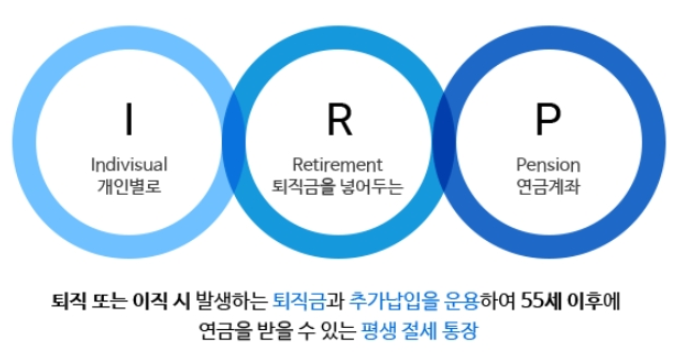
An IRP pension account is an individual retirement pension account that allows employees to voluntarily join during their employment or consolidate severance pay received upon changing jobs, enabling them to continue investing until retirement. In the past, people relied solely on the severance pay provided by their companies, but with the concept of lifelong employment disappearing, it has become an era where individuals must prepare for their own retirement. This account has the significant advantage that subscribers can directly invest in various financial products to generate investment returns. It can be easily opened non-face-to-face through financial institutions such as banks or securities firms, and it is available to all economically active individuals with income, including office workers, self-employed individuals, and public officials. Since you can save a fixed amount monthly while simultaneously receiving tax benefits, it has become an essential course for office workers’ wealth management. However, as it is a long-term product where funds are generally inaccessible before retirement, you should carefully consider the nature of your surplus funds before joining.
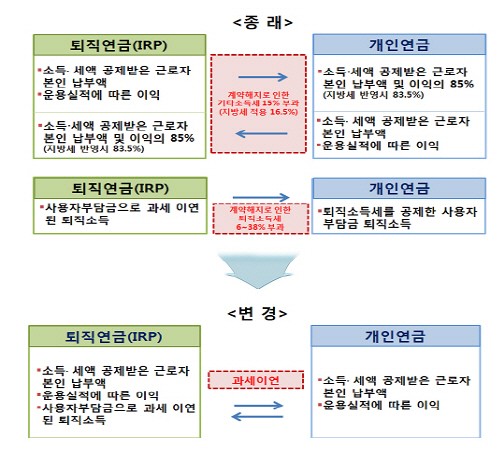
The eligibility criteria include all citizens with regular income, with freelancers and small business owners also eligible without exception. If you are an office worker, you can open an account at any time if you wish to make additional personal contributions beyond the Defined Benefit (DB) or Defined Contribution (DC) pension plans provided by your company. If you transfer your valuable severance pay received upon changing jobs or retiring directly to this account without using it elsewhere, you can enjoy the benefit of tax deferral without paying taxes immediately. As retirement approaches, asset management becomes complex, and this account serves as a channel to consolidate retirement assets scattered in various places for systematic management. Depending on the financial institution, various promotions are offered that waive management fees for non-face-to-face sign-ups, so it is advantageous to compare carefully before choosing.
The IRP is an individual retirement preparation account available to anyone with income, allowing for the consolidation of severance pay and asset management.
2. Year-End Tax Deduction Limits and Benefits
The biggest reason to join an IRP pension account is the substantial tax deduction benefit that can be reclaimed during the annual year-end tax settlement. According to current tax laws, if you use only a Pension Savings account, the tax deduction limit is recognized up to 6 million won annually. However, if you also hold an IRP account and make additional contributions, the tax deduction limit increases significantly to a maximum of 9 million won when the two accounts are combined. If you are an office worker with a total annual income of 55 million won or less, you can benefit from a high deduction rate of up to 16.5%, reclaiming a massive amount of up to 1.485 million won in taxes. Even high-income earners with a total annual income exceeding 55 million won can secure a refund benefit of up to 1.188 million won by applying a 13.2% deduction rate. If you want to avoid the “year-end tax bomb” often referred to as the 13th-month salary, the most wise tax-saving strategy is to consistently set up automatic transfers of a fixed amount to this account every month.
Mr. Park, an office worker, had been in the position of having to pay out taxes every year-end tax season, but last year, he made up his mind to start contributing up to the limit. As a result, he received an unexpectedly large refund during this year’s year-end tax settlement, allowing him to take a meaningful trip with his wife. Like this, the tax deduction is a magical system that offers guaranteed investment returns while saving, going beyond simply reducing taxes. Rather than rushing to deposit money at year-end, making split payments monthly can reduce the financial burden while still fully enjoying the year-end tax settlement benefits. Occasionally, for young professionals with lower salaries who do not pay much tax, it is better to set an appropriate amount according to their income level rather than forcing themselves to fill the limit. Since the 9 million won tax deduction limit includes the 6 million won for Pension Savings, wisdom is needed to appropriately allocate the ratio between the two products according to your investment style.
Combining Pension Savings and IRP allows for a maximum annual tax deduction limit of 9 million won, enabling a refund of up to 1.485 million won.
3. Clear Differences Between Pension Savings and IRP
Many people confuse Pension Savings and the Individual Retirement Pension (IRP), but there are clear differences between the two in terms of eligibility and the risk level of investable products. While Pension Savings can be joined by anyone, including housewives or students without income, IRP requires proof of income to join. The most important difference lies in the regulations regarding the risk level of investment assets; IRP mandates that safe assets must constitute at least 30% of the total assets. For aggressive investors who want to go all-in on equity funds or stocks, this mandatory 30% safe asset holding requirement might feel restrictive. However, as it is a safe account handling retirement funds, it is reasonable to understand this as a minimum safety device to protect assets in the volatile stock market. On the other hand, Pension Savings has slightly more flexibility in risk asset limits or minor differences in management methods, so it is essential to understand the characteristics of both products well.
It is common to see investors who open accounts blindly based on advice from others, only to be surprised when they cannot freely adjust their stock allocation. Mr. Lee, an office worker with an aggressive investment style, wanted to maximize returns with equity products only, but due to the IRP’s safe asset regulations, he had to mix in bond funds. Although he was initially dissatisfied, when the market recently plunged, the bond assets served as a sturdy support, allowing him to continue investing with peace of mind. Like this, these two products function best as complements that fill each other’s gaps, rather than competitors. This is why the combination of putting 6 million won into Pension Savings and filling the rest into IRP to reach the 9 million won tax deduction limit is the most common approach. Carefully considering whether your investment style is stable or aggressive and adjusting the ratio between the two accounts is the shortcut to successful retirement preparation.
Pension Savings is available to everyone, while IRP requires income and mandates a 30% allocation to safe assets.
4. Non-Face-to-Face Account Opening and Fee Waivers
These days, using the mobile apps of securities firms or banks, you can open an IRP account from home in just 10 minutes without visiting a branch. After launching dedicated apps such as Namu Securities or Samsung Securities mPOP, you can easily proceed with the non-face-to-face sign-up process by navigating to the pension and tax-saving menus. In the past, many people hesitated to join due to the burden of annual asset management fees charged upon account opening. However, recently, most securities firms and banks are offering exceptional benefits, such as waiving management and asset management fees entirely for customers who sign up non-face-to-face. The 0% fee benefit is a core element that must be secured, as it creates a significant difference in the final payout amount given the long-term nature of pension accounts. The account opening process involves identity verification and entering employment information, and the account number is generated immediately after completing a few simple agreements.
Mr. Choi, an office worker active in wealth management communities, opened an account non-face-to-face during his lunch break through a securities firm app that was running a fee waiver promotion, recommended by a friend. He was amazed that the account was opened instantly with just a few taps following the smartphone screen instructions, without complex paperwork or in-person consultations. As the digital environment has developed remarkably, the barriers to financial transactions have lowered, laying the foundation for anyone to easily enjoy the best tax-saving benefits. However, it is necessary to carefully check the event terms to determine whether the fee waiver benefit applies permanently or is only provided temporarily for a specific period. Occasionally, you may need to press a separate event application button to receive the fee waiver benefit, so you must read the instructions carefully before completing the sign-up. Small fee differences can translate into asset differences of several million won at retirement 10 or 20 years later, so you should not overlook even minor details.
It is advantageous to choose financial institutions that offer management fee waivers when opening accounts non-face-to-face via mobile apps.
5. Severance Pay Receipt, Pension Payout Methods, and Tax-Saving Strategies
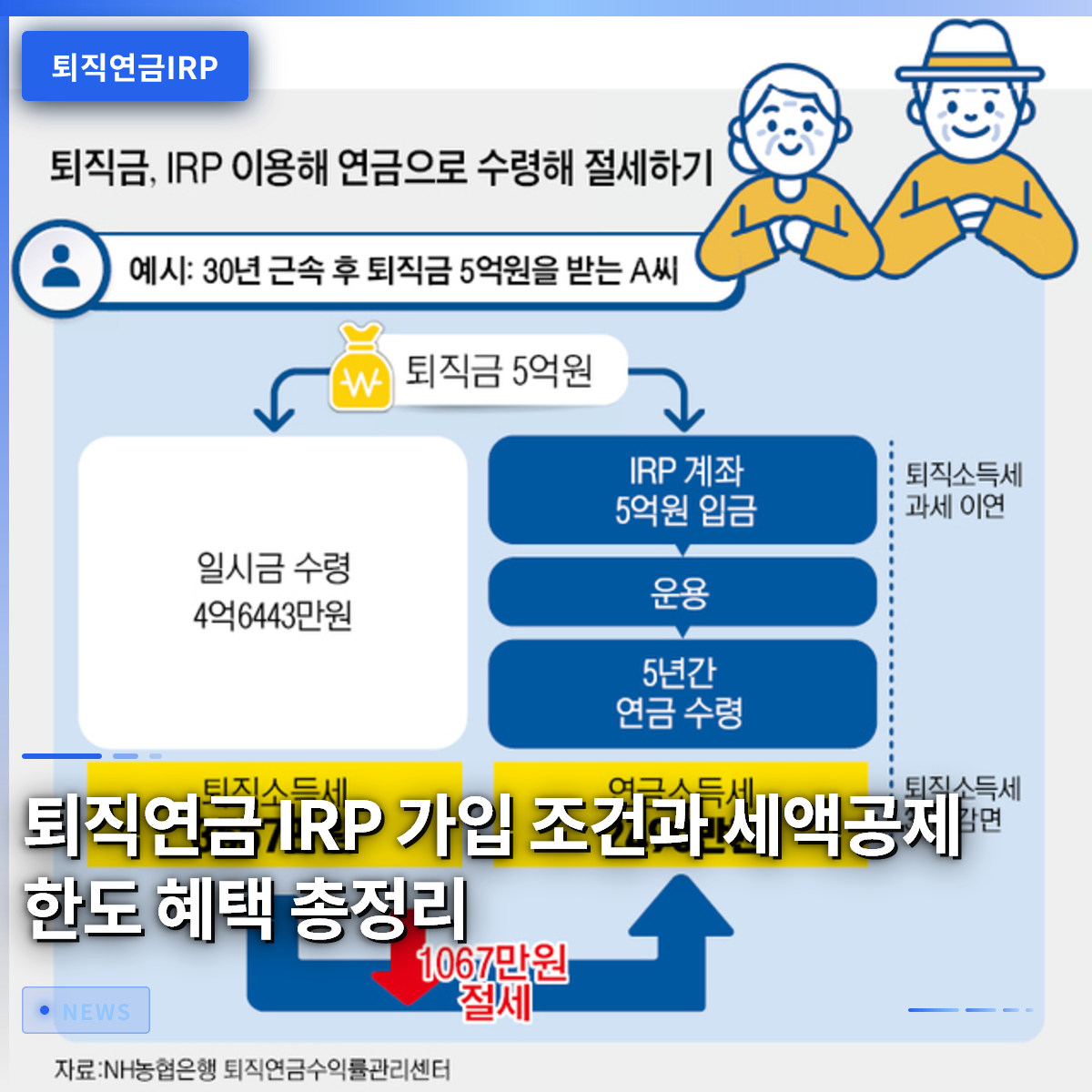
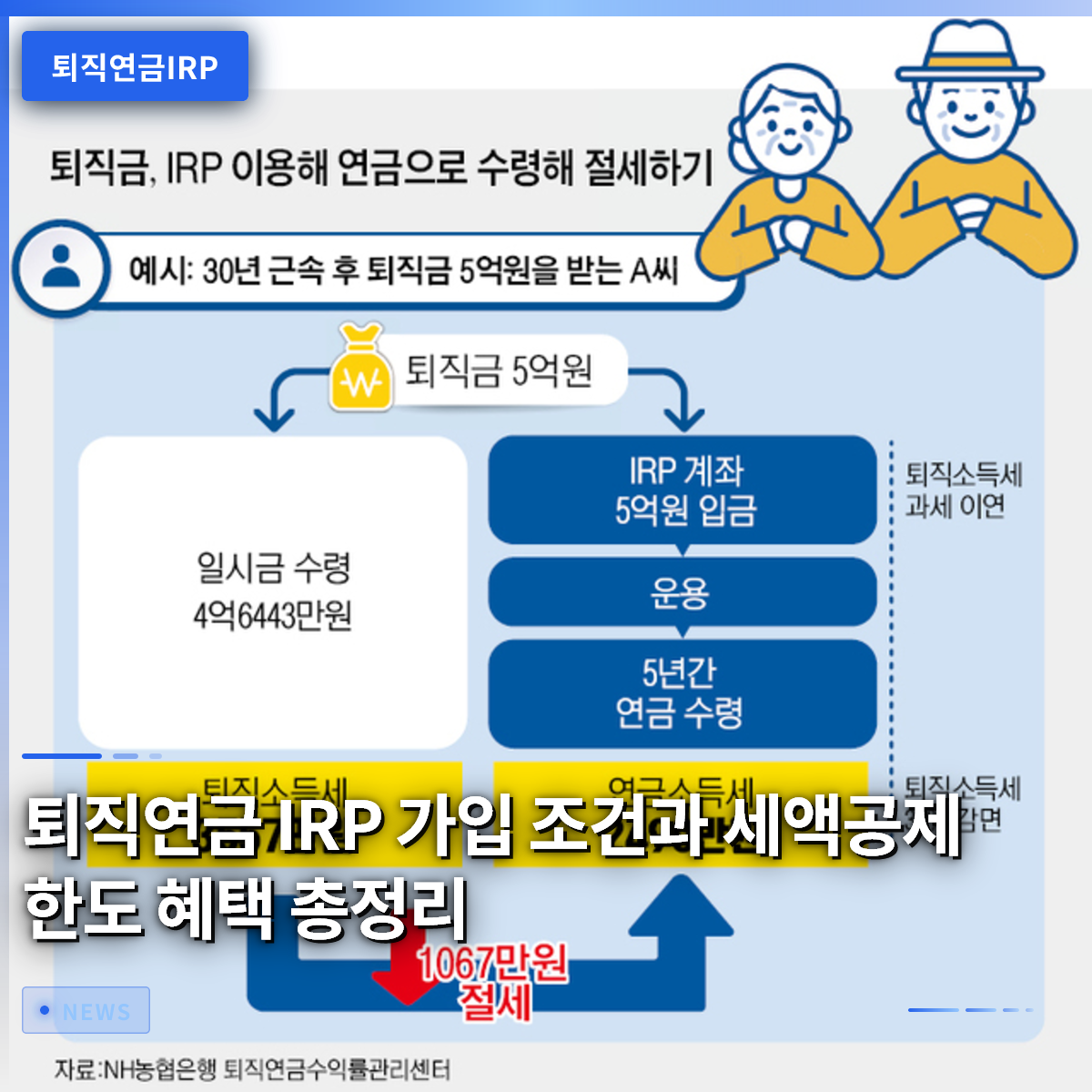
When changing jobs or retiring, you must transfer your accumulated severance pay to an IRP account to fully invest it as retirement funds. If you receive your severance pay directly into a regular bank account, it will be subject to immediate withholding of severance income tax, resulting in a tax bomb and a significant reduction in your assets. However, if you transfer the severance pay to this account, you can enjoy the benefit of tax deferral, allowing you to utilize the entire principal as investment capital without immediate tax deduction. Later, when you receive it in the form of a monthly pension after retirement, you can enjoy a massive tax-saving effect by reducing the original severance income tax by 30% to a maximum of 40%. In particular, if you are a high-net-worth individual with severance pay exceeding 15 million won, you must meticulously design the timing and order of receipt to prevent tax leakage. If you do not appropriately disperse the amount withdrawn monthly for living expenses, it may become subject to comprehensive income tax, leading to a tax bomb; therefore, you should seek expert advice or adhere to pension receipt limits.
Mr. Jung, who retired after working at the same company for a long time, almost received his large severance pay into a regular account carelessly, but he opened this account and transferred the funds safely due to advice from others. As a result, he was able to invest the money without paying taxes immediately, and he is currently fully enjoying the tax reduction benefits by receiving it in the form of a monthly pension. Since fixed income disappears after retirement, saving even a single won in taxes is the most certain way to increase retirement assets. You must remember that even when receiving severance pay as a pension, you should receive it within the annual receipt limit to fully enjoy the low-rate separate taxation benefit. Choosing a method to receive it as a pension over a long period of 10 years or more allows you to minimize the tax burden while securing a comfortable retirement living expense. Retirement is not an end but a new beginning, so you must establish a meticulous tax-saving strategy from the stage of receiving severance pay to enjoy a peaceful retirement.
Transfer severance pay to an IRP to receive tax deferral benefits, and receive it in the form of a pension to significantly reduce taxes.
6. IRP Utilization Prospects and Practices for Retirement Preparation
In modern society, where people live to be 100, the IRP is no longer an option but a survival strategy and essential financial product that everyone must secure. The government is continuously improving various systems, such as raising tax deduction limits, to solve the problem of retirement poverty in the aging era. Financial institutions are also enhancing convenience by introducing various investment products and mobile asset management services to attract customers. As prices continue to rise and it is difficult to expect a comfortable retirement life relying solely on public pensions, the proportion of private pensions led by individuals will grow even larger. Rather than delaying with the excuse that you don’t have the luxury right now, it is important to start consistent contributions, even in small amounts, with the mindset of saving a few cups of coffee each month. The moment you see the tax deduction refunds and investment returns accumulating over one or two years, your anxiety about retirement preparation will have turned into solid confidence.
Looking around, you can easily find people who are regretting and pacing around only when retirement is just around the corner, but for those who prepare, the post-retirement period becomes a second golden age. I strongly recommend that you turn on your smartphone today and start by opening a non-face-to-face account through the securities firm or bank app you use most frequently. Carefully check for fee waiver benefits, set the ratio of safe and risk assets according to your investment style, and complete your first contribution. The key is to consistently continue systematic investment while imagining yourself smiling as you receive refunds every year-end tax season. This small practice will become the most reliable shield that fills your retirement decades later with financial freedom and peace. I believe without a doubt that the small step you take today will be the most certain investment to complete a prosperous retirement tomorrow.
Consistent saving and investing through IRP is the most certain and powerful practice for preparing for the 100-year-old era.
Frequently Asked Questions
=