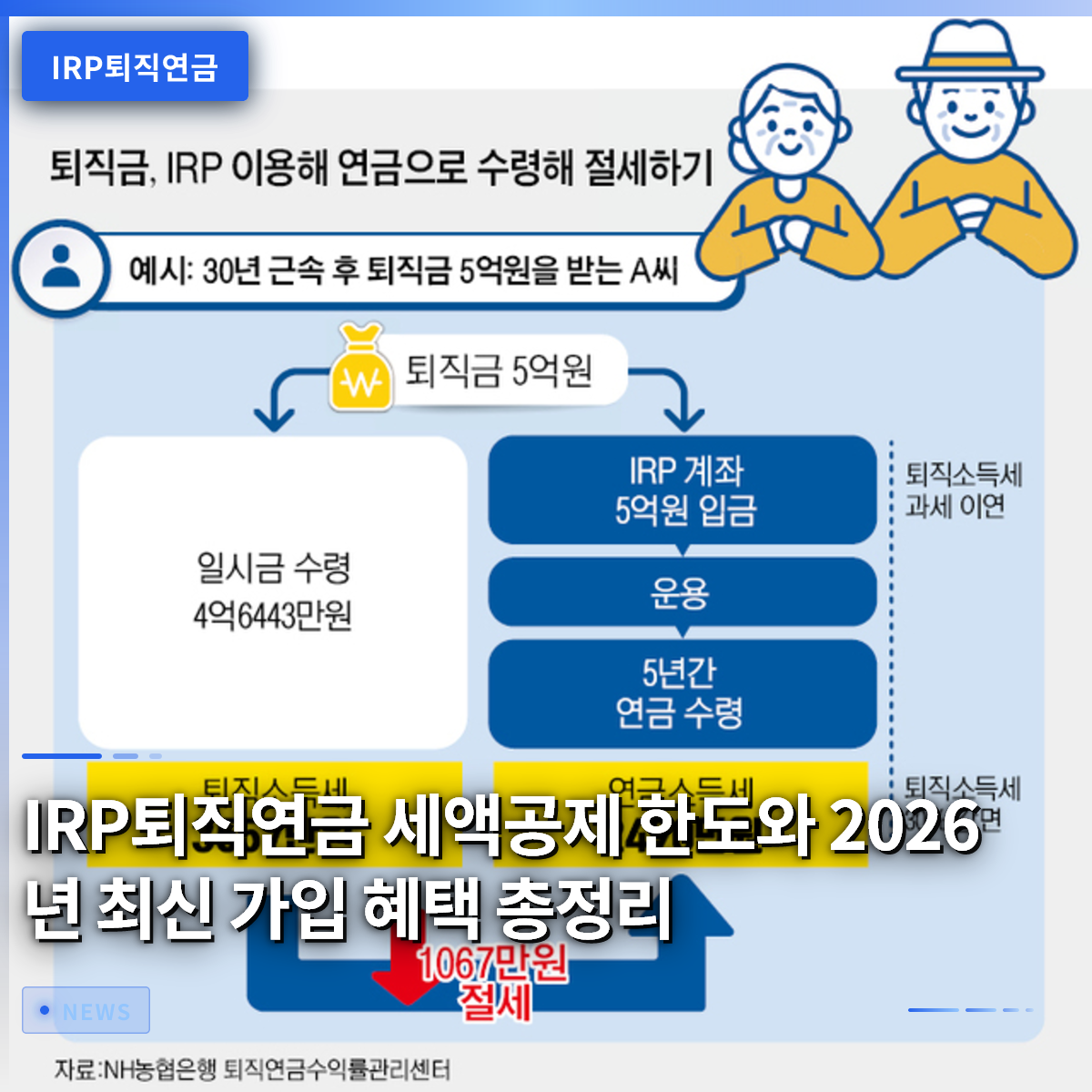
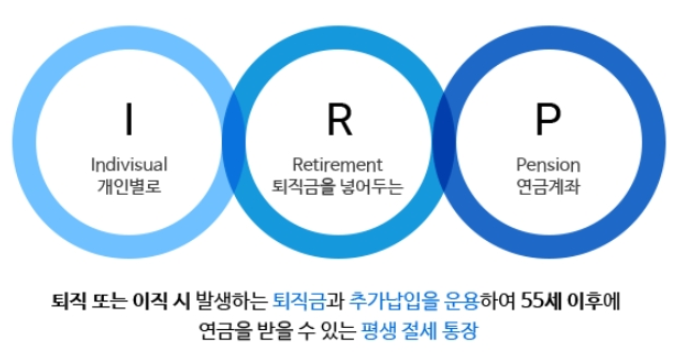
If you properly utilize an Individual Retirement Pension (IRP), you can receive a tax refund of several hundred thousand won during your annual tax settlement. Many employees view retirement fund management as an area handled entirely by their company, but the tax-saving effects gained through self-enrollment and contributions to an IRP account are surprisingly significant. For example, Mr. Kim, an employee who consistently saves a fixed amount each month, was pleasantly surprised by the tax deduction benefits he received during his year-end tax settlement. In this article, we will carefully examine everything from the precise calculation of tax deduction limits to the core rules for safe asset management. We will also clearly address the common confusion regarding the differences between IRPs and general pension savings. The comprehensive information provided here will serve as a solid foundation for building your secure retirement assets. We will break down these complex financial systems in a very easy-to-understand manner.
=
IRP Retirement Pension Tax Deduction Limits and 2026 Latest Enrollment Benefits: A Complete Guide
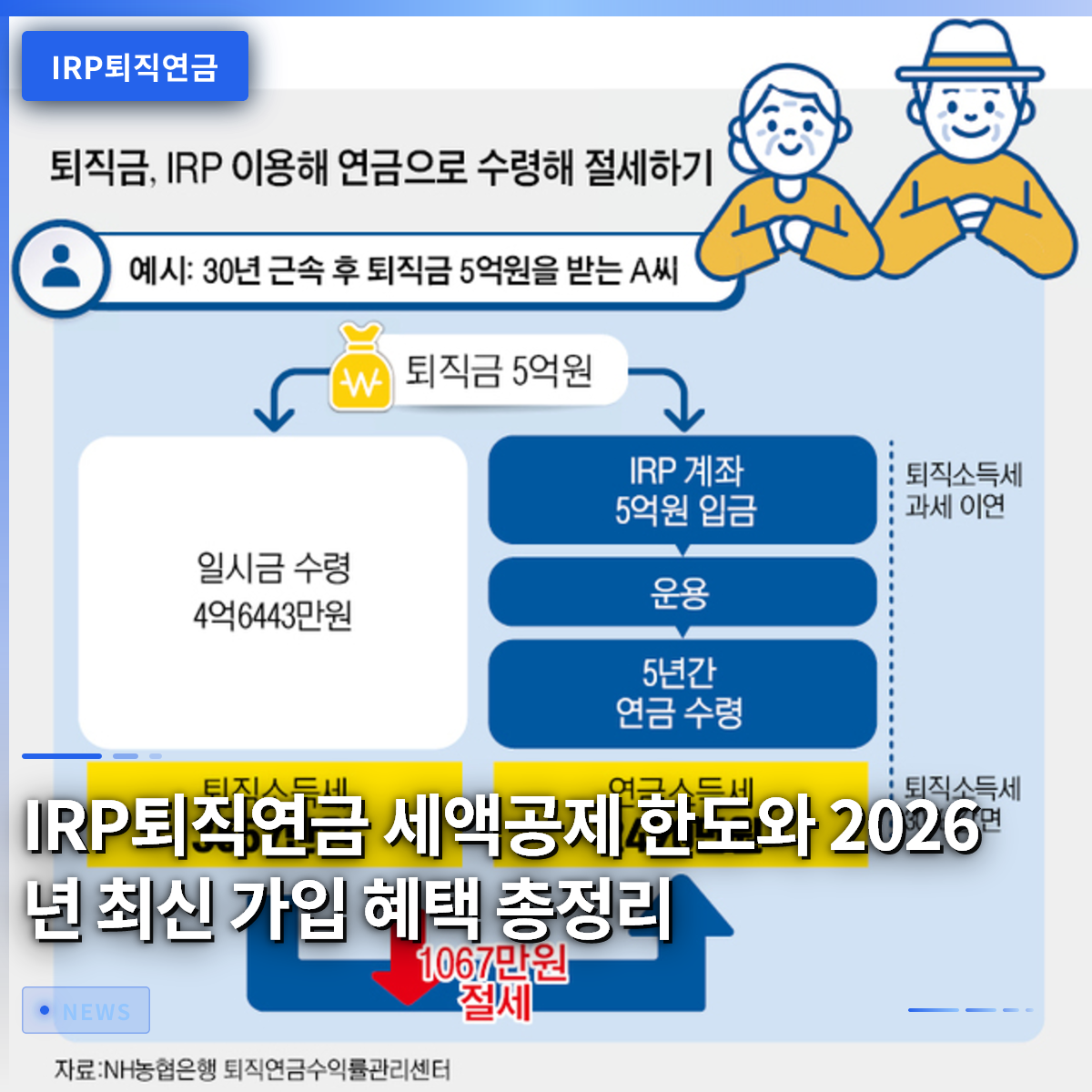
1. The Secret to Tax Deduction Limits for Pension Savings and IRPs

The formula for calculating the tax deduction limit when holding both a pension savings account and an IRP is a crucial element that you must remember. The general calculation structure involves summing a specific amount of pension savings contributions with the additional retirement pension contributions made by the individual. The total recognized amount from both accounts is eligible for tax benefits only up to the maximum limit. If you fill a certain amount into your pension savings account and put the remainder into your IRP, the amount of tax refunded will vary depending on the deduction rate. A common mistake made by employees is forcing contributions that exceed the total limit, which actually reduces the efficiency of fund management. Therefore, setting the optimal contribution amount according to your annual income level is the key to a wise tax-saving strategy. You should carefully review the various informational materials provided by financial institutions and choose the method most advantageous to you.
There are also subtle differences in deduction rates applied to different income brackets, so it is necessary to closely monitor changes in your salary. Accurately understanding the tax standards that change every year is essential to prevent unnecessary tax losses.
To maximize tax savings, you must accurately understand the combined limit for pension savings and IRPs and make contributions according to the deduction rates for your income bracket.
2. Why an IRP Account is Essential When Receiving Severance Pay
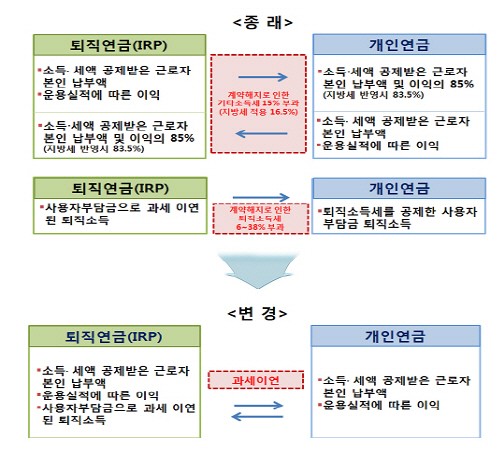
When an employee leaves a company, the severance pay must, as a rule, be transferred to and received in an Individual Retirement Pension account in their own name. Under the current Act on the Guarantee of Employees’ Retirement Benefits, companies are required to deposit severance pay into a designated account, which provides the benefit of tax deferral rather than immediate income tax deduction. If you receive this directly into a regular bank account without going through this process, you would have to pay a massive amount of severance income tax immediately. Deferring the tax allows you to invest the money that would have gone to taxes, thereby maximizing the compound interest effect. However, if you are over 55 and receive the funds in the form of a pension, or in exceptional cases where the amount is very small, other options may exist. Just because the severance pay has entered the account does not mean the investment is complete; the subsequent management method is extremely important.
To make life after retirement comfortable, you must seriously consider how to manage the lump sum of funds received. It is advisable to build a product portfolio that balances safety and profitability through banks or securities firms.
Transferring severance pay to an IRP allows you to save on taxes through tax deferral benefits and grow your assets efficiently.
3. Harmonizing Principal-and-Interest Guaranteed Products with Performance-Based Products
When managing retirement assets, it is unwise to pursue only stability or, conversely, to invest everything in high-risk assets. Principal-and-interest guaranteed products, such as deposits and savings, provide psychological peace of mind because the principal is safe, but they struggle to beat inflation. On the other hand, equity products and Exchange-Traded Funds (ETFs) offer the potential for high returns but come with the risk of principal loss depending on market conditions. Therefore, you need the wisdom to allocate assets in appropriate ratios, considering your investment style and the remaining time until retirement. Setting up automatic monthly investments to diversify into various funds or bonds through financial company apps can be greatly helpful in the long run. Those who consistently manage their assets without being swayed by market volatility are the ones who will ultimately smile in their retirement.
It is essential to regularly review and rebalance your asset portfolio, referring to expert advice. Small acts of attention and practice accumulate to become the critical turning point that determines your economic freedom in old age.
You must harmonize safe and risky assets in a balanced way to secure stable retirement funds while defending against inflation.
4. The 70% Risk Asset Rule and Wise Asset Allocation
One of the most frequently mentioned restrictions when managing a retirement pension is the regulation regarding the limit on risk asset investments. By law, equity-heavy ETFs and equity products can only be held up to a certain percentage of the total accumulated funds. Due to this rule, even if you want to fill your account entirely with equity products, the available order amount may be lower than expected. Since the remaining 30% must be filled with safe assets, investors may find this somewhat frustrating. However, this system effectively serves as a minimal safety device to protect retirement assets from sudden market downturns. By utilizing bond products or government bond-based ETFs, which are classified as safe assets, you can make efficient investments while complying with the regulations.
To extract maximum efficiency within the legal framework, you should research various combinations of financial products. Rather than viewing the system’s limitations as a complaint, you should use them as an opportunity to cultivate a robust investment style.
It is important to build a portfolio that harmonizes with safe assets while adhering to the 70% risk asset investment limit rule.
5. Leveraging 2026 Financial Industry IRP Enrollment and Management Events
Recently, many financial institutions are running various campaigns to encourage new enrollments and asset management among IRP customers. For example, certain banks are offering mobile gift vouchers to new enrollees or customers managing funds in equity funds and ETFs. Actively participating in these events provides a good motivation to start preparing for retirement while securing modest but practical benefits. If you have been putting off opening a pension account, now is the perfect time to secure both tax savings and gift vouchers. However, you must absolutely avoid forcing yourself into risky products that do not match your investment style just for the sake of participating in an event.
You should become a smart financial consumer who carefully reads the terms, meets the conditions within the specified period, and secures benefits wisely. Participating in small events can be a pleasant starting point for building long-term asset management habits.