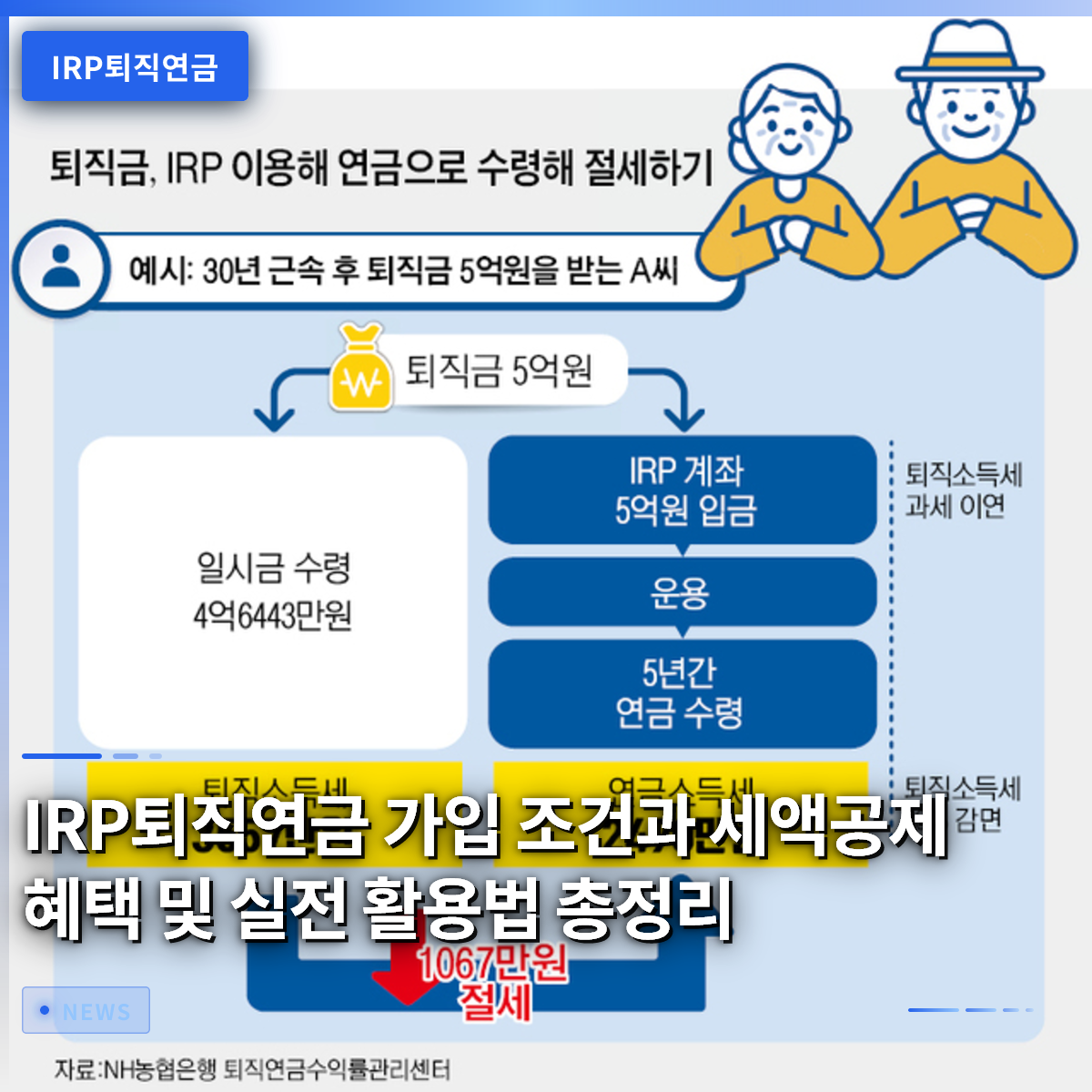
The Individual Retirement Pension (IRP) account is the most reliable tax-saving tool and a solid channel for securing retirement assets that every employee should pay attention to. While it was once viewed merely as a storage unit for the severance pay provided by employers, it is now a trend for both employees and self-employed individuals to voluntarily enroll and actively grow their assets. This is because it not only allows you to maximize tax deduction benefits during year-end tax settlement but also enables you to defend against inflation through various investment products. Every time I hear stories about neighbors receiving hundreds of thousands of won more in their year-end tax refunds, I find myself wondering if I should enroll too, but I often procrastinate due to the complex terminology and conditions. In this article, we will break down everything from the basic concepts of the account to eligibility criteria, tax benefits, and practical methods for growing your assets, step by step. If you follow along carefully, you will find a great answer to protecting your valuable retirement assets.
=
Comprehensive Guide to IRP Pension Account: Eligibility, Tax Deductions, and Practical Usage
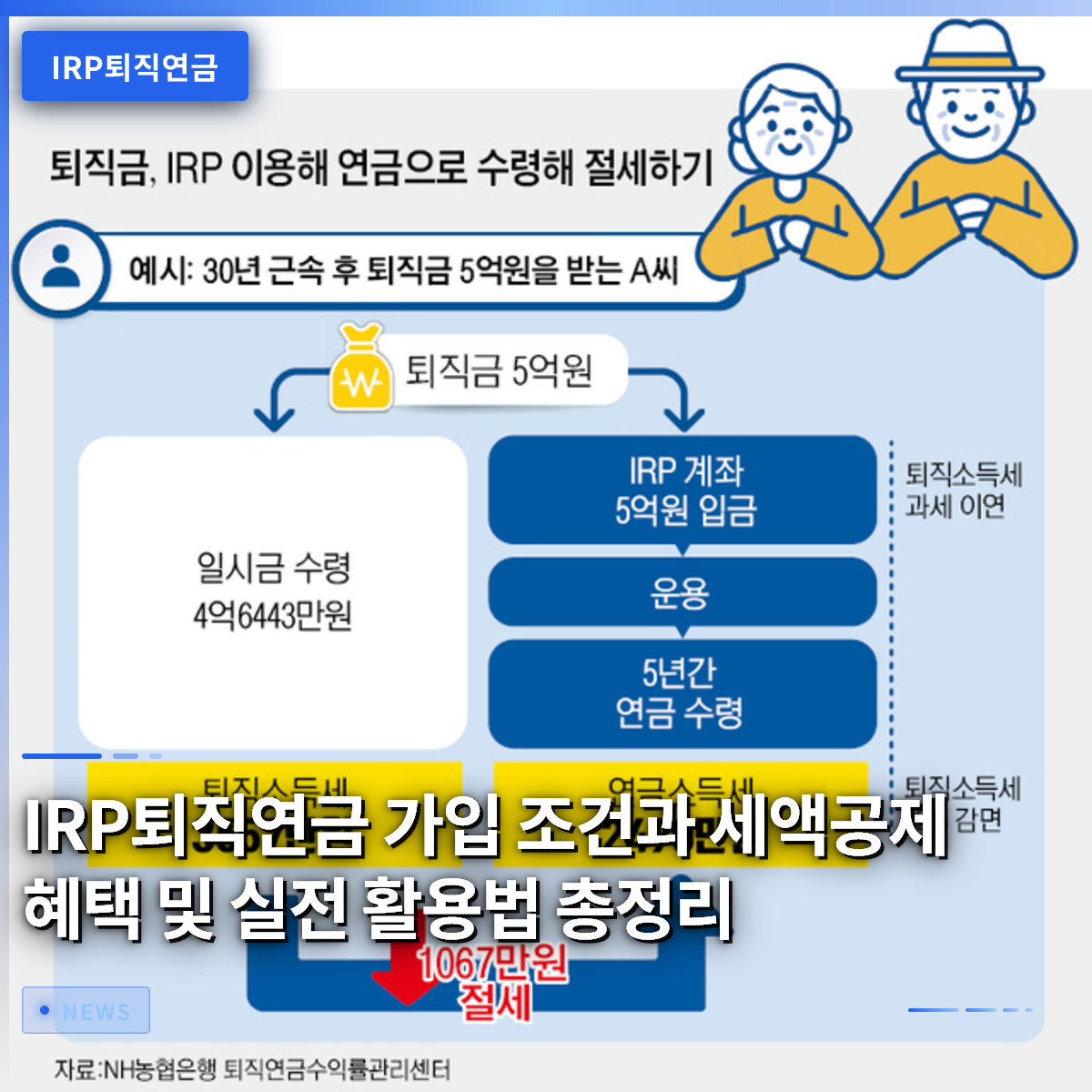
1. Basic Concepts and Definition of IRP Pension

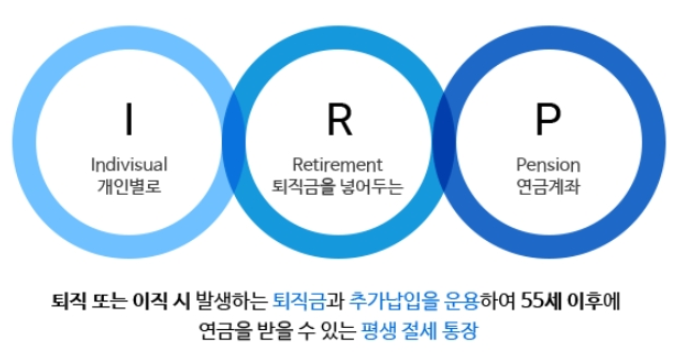
The Individual Retirement Pension is a comprehensive retirement account where subscribers can voluntarily contribute while earning income or accumulate severance pay received from their employer to receive a pension after retirement. In addition to safely transferring the severance pay received upon retirement from a company, it has the advantage that individuals can make additional contributions with their surplus funds to enjoy compound interest effects. Unlike simple savings products, it allows investment in various risk assets, such as equity products and Exchange-Traded Funds (ETFs), up to a certain percentage, thereby increasing potential returns. For example, by automatically transferring a fixed amount monthly, you can save money while simultaneously securing tax benefits, achieving a two-for-one effect. While many people easily assume it is just money that is locked away, you can flexibly structure your portfolio from conservative to aggressive types according to your investment style. Since it is a crucial source of funds that determines your quality of life after retirement, it is most important to take an interest and prepare for it early in life. Unlike in the past, the eligibility scope has been significantly expanded to include all employed individuals with income as well as self-employed persons, establishing it as a universal retirement preparation tool available to everyone. The assets diligently accumulated during your working years serve as a sturdy pillar supporting your retirement living expenses, so it is wise to understand the nature of the account right now.
The IRP pension is a comprehensive retirement account that safely protects severance pay and allows you to grow your retirement funds independently through additional contributions.
2. Eligibility Criteria and Scope of Beneficiaries Everyone Should Know
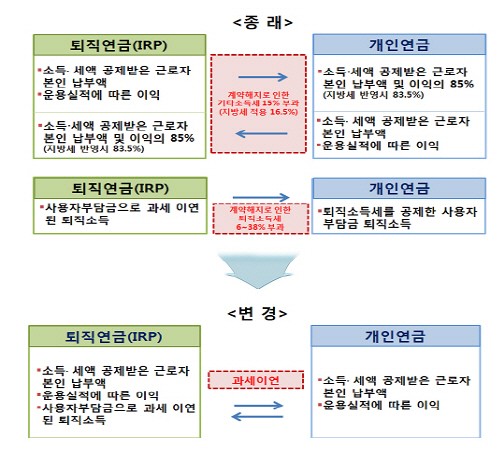
All economically active individuals who generate income, including employees, public officials, self-employed persons, and freelancers, are eligible to enroll freely. In the past, eligibility was limited to employees enrolled in their company’s pension system or individuals with a certain level of income, but the system has been improved to widen the scope significantly. Freelancers who have 3.3% business income tax withheld at source can open an account at a nearby financial institution at any time, provided they can prove their income. For housewives or individuals with no income, enrollment may be restricted or it may be difficult to receive tax deduction benefits due to the lack of income, so you should first verify your income status. For those who change jobs frequently, it is essential to transfer the severance pay generated at their previous job to this account to fully enjoy the tax-deferred benefits. Many acquaintances miss out on these benefits simply because they are freelancers, but anyone can knock on the door of eligibility with just one income certificate. Therefore, if you are currently an economically active individual earning income, it is advantageous to check the eligibility criteria immediately without delay.
Anyone with income, including employees, self-employed individuals, and freelancers, can enroll, and it is essential for managing severance pay when changing jobs.
3. Tax Deduction Benefits and Year-End Tax Settlement Savings
As the year-end tax settlement season approaches, the biggest concern for employees is undoubtedly tax-saving strategies to get money back, and this account is always at the center of it. It is considered a financial product that is not an option but a necessity for employees because you can receive a tax deduction at a certain rate on the amount contributed annually. Within the annual maximum contribution limit, you can receive refunds ranging from hundreds of thousands to over a million won depending on the deduction rate, which significantly increases your actual rate of return. For example, depending on the deduction rate applied when contributing a certain amount annually, you can recover a significant portion of the taxes paid each year and use it as a source for reinvestment. Since the contribution limits are managed in combination with pension savings accounts, wisdom is needed to set the optimal contribution amount according to your annual total income. To fully enjoy the tax deduction benefits, contributions must be completed by the end of December each year, and making regular monthly contributions via automatic transfer is a way to reduce the burden. If you use the refunded money for further savings or investments, you can maximize the compound interest effect and enjoy the joy of seeing your assets grow much larger by the time of retirement.
You can achieve powerful tax savings during year-end tax settlement through tax deduction benefits on annual contributions.
4. Practical Investment Know-How for Safely Growing Assets
If you simply leave your valuable assets sleeping in the account in deposit-rate products, they may not keep up with the inflation rate, leading to a decline in real asset value. The key to successful asset management is actively utilizing Exchange-Traded Funds (ETFs) and income-oriented funds while adhering to the legal investment ratios for safe and risky assets. Since equity assets can be held up to a maximum of 70%, a strategy of diversifying investments into high-quality index-tracking products or high-dividend products is recommended. Employee A, who has been investing monthly in domestic and international representative index products via systematic investment, is satisfied with recording returns much higher than deposit rates. Utilizing the Default Option system, which automatically rebalances assets according to a set schedule, allows you to receive the effect of professional asset management even in a busy daily life. Applying a systematic investment approach that consistently accumulates units even when the market is down can lower the average purchase price, allowing you to expect significant returns in a future bull market.
Do not stick to deposits only; appropriately utilize the ratio of risky assets such as ETFs to increase your rate of return.
5. Early Withdrawal Conditions and How to Handle Unavoidable Exceptions
Although this is an account that must be maintained for a long period for retirement, crisis situations where a large sum of money is urgently needed can arise in life, so it is necessary to know about the early withdrawal system. In principle, withdrawal is not possible until retirement age, but exceptions are recognized for reasons such as home purchase by non-homeowners or withdrawal of jeonse (deposit) funds. Additionally, the law allows for early withdrawal if you or your dependents must bear medical expenses for long-term treatment of six months or more. It can also be used as a means to put out a fire under certain conditions if you are declared bankrupt or enter personal rehabilitation proceedings. However, if you make an early withdrawal, you may have to return the tax benefits received so far or be subject to miscellaneous income tax, so you should decide carefully only in truly unavoidable situations. I have often seen cases where people around me attempted forced withdrawals simply because they were short on funds and ended up facing a tax bomb, so special caution is required.
Early withdrawal is only possible in exceptional situations prescribed by law, such as home purchase by non-homeowners or long-term medical treatment expenses.
6. Outlook and Reader Actions for Successful Retirement Preparation
In the current era where living to 100 is a reality, creating a stable cash flow has become the most important task that determines survival, not just an option. Developing the habit of making consistent monthly contributions, even if the amount is small, right now creates a decisive difference in determining a prosperous retirement decades later. Utilizing various enrollment events offered by financial companies to take advantage of small perks like mobile gift vouchers and receiving consultations from experts is also a good starting point. I recommend that you stop procrastinating and check your income status today, then proceed with account opening through the app of a nearby financial institution. When the time of retirement approaches, receiving the funds in the form of a pension rather than a lump sum allows for a significant reduction in retirement income tax, so you should plan the receipt method in advance. I firmly believe that the small practice you start today will be the most certain investment that gifts you economic freedom tomorrow.
To ensure a stable life after retirement, you should open an account immediately and start consistent contributions and investments.
Frequently Asked Questions
=