Everyone has likely experienced the shock of seeing a discrepancy between the pre-tax amount on their payslip and the actual amount deposited into their bank account. Understanding exactly what these mandatory monthly deductions are can make managing your personal finances much easier. By utilizing tools provided by portal sites, you can instantly determine the deductions applicable to your salary without needing to know complex rates. For example, an employee earning 3 million won per month can quickly find out their actual take-home pay by using a calculator. In this article, we will take a detailed look at the structure of these deduction items and how to use the tools effectively.
=
How to Accurately Check Your Net Salary Using the Four Major Social Insurance Calculator
1. What is the Four Major Social Insurance Calculator?
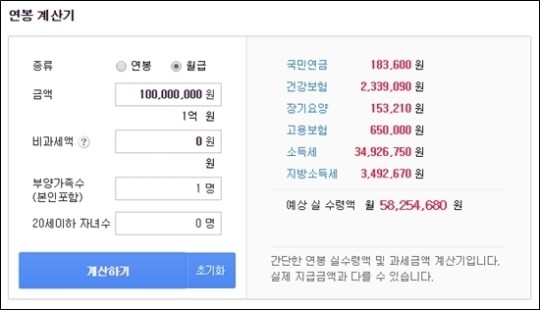
This is a tool that automatically calculates the legally mandated contributions deducted from your monthly salary. It calculates all four items at once: the National Pension, Health Insurance, Long-term Care Insurance, and Employment Insurance. You don’t need to calculate complex formulas yourself; simply enter your pre-tax amount, and it will immediately display the results. Thanks to this tool, employees can easily predict their expected net salary. Since it reflects the rates and standards that change every year, it is always a good idea to check for the latest information.
Many employees use this tool to estimate their expected income when changing jobs or negotiating salaries. Often, it reflects not just the insurance deductions but also the estimated income tax and local income tax. Therefore, the advantage is that you can verify the final amount deposited into your bank account with high accuracy. It is easily accessible anytime and anywhere through portal sites or mobile apps. It is one of the essential financial management tools that every employee should know.
The Four Major Social Insurance Calculator is a tool that automatically calculates deductions and net salary by entering your pre-tax monthly salary.
2. Understanding National Pension and Health Insurance

The National Pension is a social insurance system designed to guarantee stable income in old age, with a fixed percentage deducted monthly. Due to recent changes in rates by year, there are slight variations in the amount deducted each month. Health Insurance serves to reduce the financial burden in case of illness or injury. Additionally, the Long-term Care Insurance premium, which is calculated as a certain percentage of the Health Insurance premium, is billed together.
For example, if we calculate based on an employee earning 3 million won per month, a significant amount is deducted for each item. The National Pension applies a fixed rate to the standard monthly income and is accumulated steadily each month. Health Insurance is also structured so that the employee and the company share the burden equally. These deduction items are not just taxes but a social safety net for your future self and family. Therefore, rather than viewing the amounts deducted from your payslip as a loss, it is better to understand them as protective assets.
National Pension and Health Insurance are essential social insurances for preparing for old age and medical expenses, with a fixed percentage deducted from monthly salary.
3. The Role of Employment Insurance and Workers’ Compensation Insurance

Employment Insurance is a system operated to support re-employment when unemployed and to help stabilize living conditions during the job-seeking period. Employees pay a fixed percentage of Employment Insurance premiums monthly, which are used as a source for unemployment benefits. On the other hand, Workers’ Compensation Insurance is a system that allows for compensation in case of work-related accidents, and the entire cost is borne by the company. Therefore, Workers’ Compensation Insurance premiums are not separately deducted from a general employee’s payslip; only Employment Insurance is reflected.
These Employment Insurance premiums can also vary slightly depending on the standards and rates revised each year. When using a calculator, you should check whether this Employment Insurance deduction is accurately reflected. Occasionally, tools using outdated formulas may show discrepancies with actual deductions, so caution is needed. This is the foundational fund for fully receiving Employment Insurance benefits in situations such as unemployment or parental leave. The Employment Insurance premiums paid diligently each month will serve as a strong support in the future.
Employment Insurance supports employees in case of unemployment and re-employment, with a fixed percentage deducted from salary.
4. The Difference Between Pre-tax Salary and Net Salary
Many people wonder why the amount written in their annual salary contract differs from the amount actually deposited into their bank account. Even if the pre-tax annual salary is 30 million won, the actual received amount will be lower after deducting the Four Major Social Insurances and income tax. Because labor income tax and local income tax are additionally deducted according to tax laws, there is a difference in the final amount. The amount remaining after going through these deduction processes can be considered your true money.
For example, if an employee receives 3 million won per month, a considerable amount is pre-deducted for various insurance premiums and taxes. Young professionals who have just entered the workforce may be surprised by seeing these deductions. However, all of this is a legally mandated procedure, and some of it may be refunded through year-end tax settlement. Therefore, if you plan your spending based solely on the simple salary amount, your budget may face difficulties. You must develop the habit of creating your monthly budget based on your net salary.
The net salary is the amount remaining after various insurance premiums and taxes are deducted from the pre-tax salary, which is the amount actually deposited into your bank account.
5. Points to Note When Using the Calculator
While there are various calculation tools available, you should be aware that rates may differ depending on when they were developed. Since legal rates and minimum wage standards change every year, you must ensure that the latest data is reflected. If items such as tax-exempt allowances or meal allowances are included, errors may occur in the calculation results. To get accurate results, the tip is to enter only the taxable salary, excluding tax-exempt amounts.
Some tools are made for reference purposes only and may show slight differences from the actual payroll settlement programs of companies. Therefore, in cases of job transfers or salary increases, it is safer to wait for the official payslip. Comparing multiple calculators to understand the average deduction amount is also a good method. It is advantageous to choose a tool that reflects changes in the simplified income tax table in real time. Although small differences may seem insignificant, they accumulate monthly into a considerable amount, so careful verification is necessary.
To obtain accurate calculation results, ensure the latest rates are reflected and enter tax-exempt allowances separately.
6. Preparation for Wise Asset Management
Actively using the Four Major Social Insurance Calculator allows you to build a more concrete future financial plan. It helps you transparently understand where and how much of your salary is spent, rather than just letting it pass by. It is expected that related rates will continue to be revised according to inflation and economic conditions. It is necessary to have an attitude of periodically checking changes in your net salary in line with changing policies.
You can also calculate your expected income for next year or the near future to adjust your savings plan. It is important to reduce unnecessary expenses and grow your assets centered on your actual disposable income. Since it is easily accessible anytime via smartphone or computer, check your expected net salary today. This small attention will become the foundation for achieving solid economic freedom. We recommend that wise employees develop the habit of calculating in advance before receiving their payslip.
Regularly checking your net salary is the first step toward wise asset management in the midst of changing economic policies.
Frequently Asked Questions
=