KakaoBank has aggressively raised the interest rate on its 1-year fixed deposits to 3.7% annually, beginning to offer interest rates at the highest level in the banking sector. This is welcome news, coming at a time when major commercial banks are collectively raising rates on deposit products in line with the recent trend of rising market interest rates. For instance, a trend of switching banks is sweeping among office workers looking to safely manage their spare funds and asset holders with significant capital. With this move, interest rates for 6-month fixed deposits and free savings accounts have also been raised in tandem, broadening the range of choices. Let’s examine the specific details of how these products have changed to find ways to grow your assets. Let’s also take some time to consider together how to formulate a savings strategy that maximizes benefits for the remaining period.
=
KakaoBank Raises 1-Year Fixed Deposit Rate to 3.7%, Setting a New Benchmark in the Banking Sector
1. Details of KakaoBank’s Fixed Deposit Rate Increase
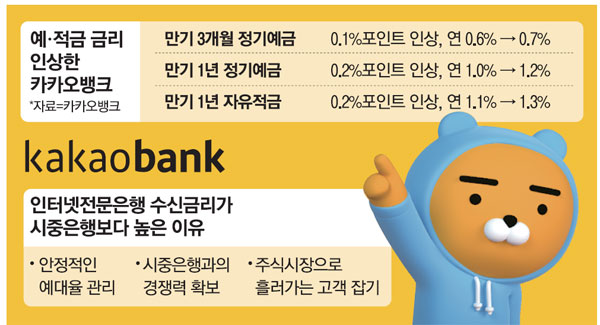
KakaoBank has uniformly raised interest rates across its fixed deposit and free savings products by 0.1 percentage points. In particular, the interest rate for 1-year fixed deposits has surged to 3.7% annually, offering the highest level of interest currently available in the banking sector. The rate for 6-month fixed deposits has also seen a slight increase from 3.4% to 3.5% annually, making it more advantageous for short-term fund management. The free savings product, which is crucial for those who diligently save a fixed amount each month, has been adjusted to 3.75% annually for a 12-month term. This dramatic rate increase is interpreted as a strategic choice to attract customers amid the intensifying competition for deposits in the banking sector. Indeed, hearing stories from friends around, one can see a bustling movement of people trying to move their money to products that offer even slightly higher interest. The rate increase implemented by KakaoBank this time covers both short-term and 1-year term products, once again awakening the joy of saving. The biggest advantage is that it offers top-tier interest on basic fixed deposits that can be opened without complex conditions. Accessibility is also excellent, as you can sign up immediately with just a few taps on your mobile device screen, without needing to visit a bank branch. Mr. Kim, an office worker, said he signed up immediately upon hearing the news while pondering where to place his maturing deposit from last year. This agile response to market trends by internet banks is giving a significant jolt to other traditional commercial banks. Ultimately, it is ordinary financial consumers who wisely seek information and act who fully benefit from these rate advantages.
KakaoBank has raised the interest rate on its 1-year fixed deposits to 3.7% annually, beginning to offer benefits at the highest level in the banking sector.
2. How to Utilize Preferential Rates for Free Savings
KakaoBank’s 12-month free savings account is popular because it offers additional benefits on top of the base rate of 3.75% annually. If you meet the automatic transfer conditions, an additional preferential rate of 0.2 percentage points is applied, allowing you to receive interest of up to 3.95% annually. For young professionals who have the habit of consistently saving, even if it’s a small amount each month, this product can be a very attractive option. Mr. Park, an office worker, said he is very satisfied because he set it up to be automatically deducted on payday, and money accumulates effortlessly without him having to worry about it. The conditions for receiving the preferential rate are not stringent and are at a level anyone can easily achieve, resulting in a fairly high actual interest yield. Thanks to these advantages, it has established itself as a representative savings product that he actively recommends to colleagues. True to its name as “free savings,” the ability to flexibly adjust the deposit amount and frequency is a major advantage for busy modern people. You can operate it by reducing the deposit amount in months with high expenses or when emergency funds are needed, and replenishing it when you have some leeway. Since all enrollment and cancellation processes are conducted within the mobile app environment without visiting a bank, it saves significant time and effort. You must definitely take advantage of the simple mission of registering an automatic transfer to secure the high interest rate of up to 3.95% annually. In the era of low interest rates, there was little joy in saving, but thanks to recent rate hikes, the sense of achievement in building up a lump sum has grown even more. The process of diligently saving, even small amounts each month, serves as a solid foundation for building assets for the future.
Free savings accounts are popular because they can offer high interest rates of up to 3.95% annually by utilizing the automatic transfer preferential rate.
3. Trends in Hana Bank’s Fixed Deposit Rates
Hana Bank has also actively reflected the rising market interest rate trend by increasing the rate on its representative deposit product, Hana Fixed Deposit. The rate for a 1-year term has been adjusted upward by 0.1 percentage points from 3.3% to 3.4% annually to welcome customers. Hana Bank had already raised rates once at the beginning of this month, so this increase clearly shows the recent sharp changes in the market. Traditional major commercial banks are actively joining the rate competition to defend their deposit base against the fierce challenge from internet banks. Mrs. Lee, a housewife, said she seriously considered signing up after being informed about the rate increase while stopping by her local branch for errands. As commercial banks continue to raise rates, the steps of depositors looking to safely park their funds have become even busier. Hana Bank’s move is part of an essential sales strategy to secure long-term customers, going beyond simply raising interest rates. By providing both face-to-face consultations utilizing its branch network and convenient mobile services, it is solidly absorbing a diverse customer base across various age groups. Banks that respond quickly to rate increases can gain consumer trust and attract more funds stably. Mr. Jeong, an office worker, evaluated that he was pleased with Hana Bank’s stability and the increased interest rate after carefully comparing product conditions from several banks. As there is a high possibility of additional rate adjustments in the future depending on financial market volatility, it is important to develop the habit of checking regularly. To become a wise financial consumer, one needs the keenness to not miss official announcements and changes from each bank.
Hana Bank has also raised its 1-year fixed deposit rate to 3.4% annually, joining the deposit competition among commercial banks.
4. Comparison of Rate Increases at Kookmin Bank and Woori Bank
Kookmin Bank has raised the rate for its representative fixed deposit product, KB Star Fixed Deposit, for terms of 1 year or more but less than 2 years, from 3.4% to 3.5% annually. Woori Bank has also joined the competition by raising the 1-year rate for its One Plus Deposit from 3.4% to 3.5% annually in parallel. With major commercial banks collectively joining the 3.5% tier, depositors now have the fun of choosing a bank that suits their preferences. Mr. Choi, a self-employed business owner, said he decided on a Kookmin Bank product after weighing the conditions of several banks to temporarily park his business funds. The reason major banks are rushing to raise rates is to secure liquidity in the market and maintain a healthy deposit ratio. Although the rates of representative fixed deposit products offered by each bank appear similar, there are differences in specific enrollment conditions and incidental transaction benefits. For example, you should carefully consider products that offer additional interest based on conditions such as salary transfers or consistent account usage. Often, it is more advantageous to combine the benefits of your primary bank, which you use frequently, rather than simply comparing basic interest rates. Mr. Kim, a university student, said he enjoys the fun of depositing money earned from part-time jobs in several banks and comparing the interest later. This convergence among major banks serves as an important indicator for gauging the future direction of market interest rates. Depositors are accelerating the money movement phenomenon by seeking financial institutions that offer favorable conditions to reallocate their assets.
Major commercial banks, including Kookmin Bank and Woori Bank, have also raised fixed deposit rates to 3.5% annually, joining the rate increase trend.
5. Background and Significance of Deposit Competition in the Banking Sector
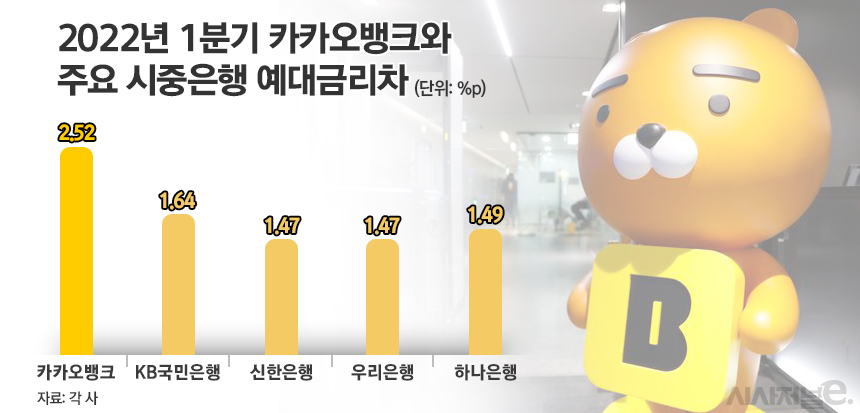
Behind the recent collective rate increases by the banking sector lie rapidly changing market interest rates and intensified competition for customer acquisition. Financial institutions are moving busier than ever to absorb market liquidity and secure a stable funding structure. When internet banks offered a dramatically high rate of 3.7% annually, traditional commercial banks followed suit by raising their rates. Mr. Kang, a company employee, said that in the past, he was disappointed that bank deposits couldn’t keep up with inflation, but nowadays he feels a bit of relief. This rate-hiking period presents a prime opportunity for depositors who want to conservatively protect their assets while securing definite interest income. The no-holds-barred deposit competition among banks ultimately acts as a positive function by providing consumers with better conditions and diverse options. In the past, one had to be satisfied with fixed rates, but now one can pick the most advantageous product tailored to their financial situation and savings period. Experts advise that since this rate-hiking phase is likely to continue for a while, one should compare options rather than automatically reinvesting maturing deposits. Mr. Han, a freelancer, smiled and said that keeping several bank apps open to compare rates has become a daily pleasure these days. These dynamic changes in the financial market create a structure that rewards those who manage their assets smartly. Going forward, we need the wisdom to closely monitor subtle rate fluctuations at each bank to safely and robustly grow our precious assets.
A domino effect is occurring across the banking sector, with rising market interest rates and customer acquisition competition driving up deposit rates.
6. Strategies for Switching Deposits and Future Outlook

As the relay of rate increases by commercial banks continues, there is active movement to cancel existing low-interest deposits and switch to new ones. However, rather than unconditionally executing early withdrawals, one should carefully consider the remaining term, contracted interest, and early withdrawal rates of the existing product. Asset managers advise calculating the cost-benefit of the new product’s rate versus the remaining term of the existing product and moving only when the practical benefit is significant. Mrs. Oh, a housewife, decided to leave her deposit as is since only one month remained until maturity, but she decisively canceled and re-enrolled in deposits with more than six months remaining. Only with cold calculation and information analysis can one achieve true asset growth. In the future, market interest rates are highly likely to fluctuate at any time depending on changes in monetary policy and economic indicator releases. Therefore, a diversified investment strategy of splitting maturities into multiple terms rather than tying up all funds in one place is safe and efficient. Mr. Bae, an office worker, boasted that he enrolled in 6-month and 1-year fixed deposits with staggered timing to secure both liquidity and profitability. KakaoBank’s 3.7% rate increase has been a definite stimulus for depositors and a turning point that will change the landscape of saving. Only financial consumers who smartly adapt to changing trends will be the protagonists who can smile in the rapidly changing economic situation. Let’s continue to monitor rate changes at each bank throughout the second half of the year to capture the optimal opportunity to fill our wallets.
A strategic approach of comparing existing product conditions and diversifying maturities is essential, rather than unconditional switching.
Frequently Asked Questions
=