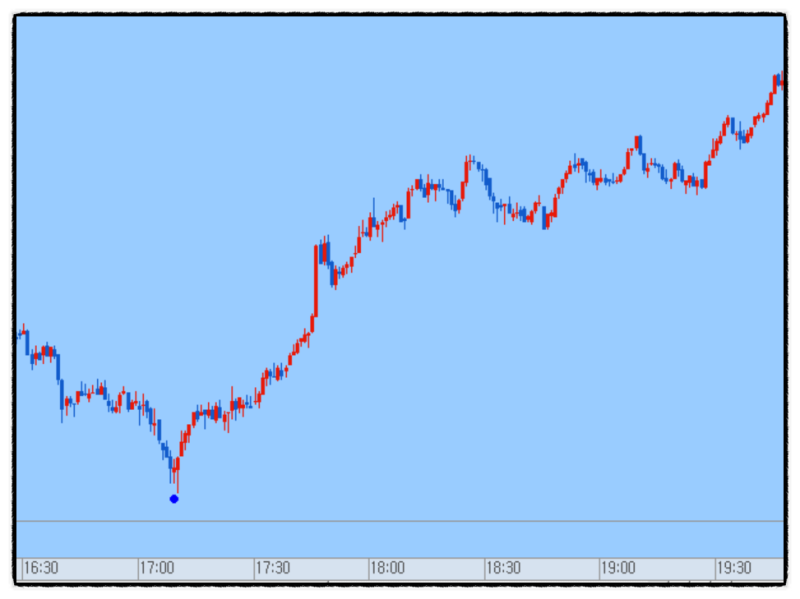
Today (September 30), Nasdaq futures are showing mixed results following the US market close, remaining in a range of slight fluctuations rather than a sharp directional shift. This is because the Dow Jones Industrial Average and the S&P 500 fell by 0.86% and 0.25%, respectively, while the Nasdaq Composite Index showed a slight 0.24% increase, indicating a differentiated trend. A key point to remember is that the defensive strength centered on the tech sector, which had been a source of market anxiety, has remained robust. Although the 10-year Treasury yield approached 5.3%, exerting downward pressure on the overall index, Micron’s better-than-expected earnings report served as a pillar supporting the semiconductor sector. However, with the probability of a rate hike in October rising to 37.1% on the CME FedWatch Tool, the possibility of increased short-term volatility cannot be entirely ruled out. Therefore, investors in the domestic KOSPI 200 futures and Nasdaq 100 futures today must consider not only index movements but also individual stock earnings outlooks and macroeconomic indicator volatility simultaneously. In this article, we will specifically examine the expected intraday flow and key indicators necessary for investment decisions amidst these complex signals. We will detail how the battle between foreign buying and institutional selling, which has continued since last weekend, will be resolved in today’s market, section by section.
=
Nasdaq Futures Turn Bearish? Micron Earnings and US Inflation Slowdown: Pre-Market Checkpoints for Today
1. Micron Earnings: A Support for Nasdaq, But Why Was the Index Mixed?
Micron ignited a tailwind for tech stocks by announcing revenue and profits that exceeded market expectations in its recent quarterly earnings. However, surprisingly, the Philadelphia Semiconductor Index closed flat compared to the previous session, failing to directly drive the index higher. This is interpreted as market participants having already largely priced in Micron’s positive earnings, with the price reflecting this in advance. In fact, it is true that uncertainty was largely exhausted as the stock price fluctuated sharply in after-hours trading before the announcement. Consequently, when the regular session opened, profit-taking selling emerged due to the disappearance of expectations, forming a barrier that prevented a sharp surge in the index. It can be seen that the overall macro environment exerted a stronger influence than the earnings improvement of individual stocks driving the entire sector. In other words, Micron’s powerful earnings served as a breakwater preventing a crash in the Nasdaq Index, but lacked the momentum to draw a new upward curve.
Ultimately, investors focused on the significance beyond simple numbers, i.e., performance “relative to expectations.” If results come in higher than market consensus, stock prices should rise further, but since that expectation has already permeated the stock price, the additional upward momentum has weakened. What needs to be confirmed in today’s Nasdaq futures is whether the focus is shifting to software and infrastructure stocks as chipmakers’ earnings reports conclude. Alphabet’s rise of over 1% amid reports of the Gemini model launch should be understood in the same context. It is a complex phase where concerns about a peak in the hardware cycle and expectations for software innovation coexist.
Micron’s positive earnings have already been priced in, limiting its role to defending against declines rather than driving index gains. One should carefully observe the phenomenon where index reactions are muted compared to individual stocks.
2. The 5.3% Treasury Yield Line: Immediate Impact on Nasdaq Futures
-5%EB%B6%84(20251014225416).jpg?type=w800 "2. The 5.3% Treasury Yield Line: Immediate Impact on Nasdaq Futures")
The US 10-year Treasury yield recorded 5.289%, approaching the psychological barrier of 5.3%. This is a factor that directly pressures growth and tech stock valuations due to rising discount rates. As interest rates rise, the rate applied to discount future cash flows to present value increases, reducing the current stock price appeal of companies that generate profits over the long term. Consequently, while value stocks like the Dow Jones Index showed relative defensiveness, Nasdaq stocks, which are highly sensitive to interest rates, became a backdrop for increased volatility. In particular, the surge in the probability of an October rate hike to 37% suggests that the Fed’s monetary tightening stance will be maintained for the time being. Investor sentiment is strongly shifting from aggressive buying to increasing cash positions.
In such a macro environment, the movement of the VIX (Volatility Index) becomes a more important signal than the high-flying trajectory of Nasdaq futures themselves. The current VIX rising 1.87% to 16.33 clearly indicates that tension within the market is increasing. Where rate fears and earnings rallies collide, it is wiser to examine the volatility premium reflected in option premiums rather than the direction of futures prices. If the VIX breaks through 17 and Treasury yields fluctuate above 5.35%, the risk of a further sharp drop in Nasdaq futures could materialize. It is essential to monitor the index reaction and yield trends in real-time from the start of today’s market.
The 5.3% Treasury yield line is a factor pressuring Nasdaq futures valuations, and combined with the rising VIX, it increases the risk of short-term volatility expansion.
3. Commodities and Exchange Rates: Ripple Effects on Nasdaq-Related Assets Amid a Strong Dollar

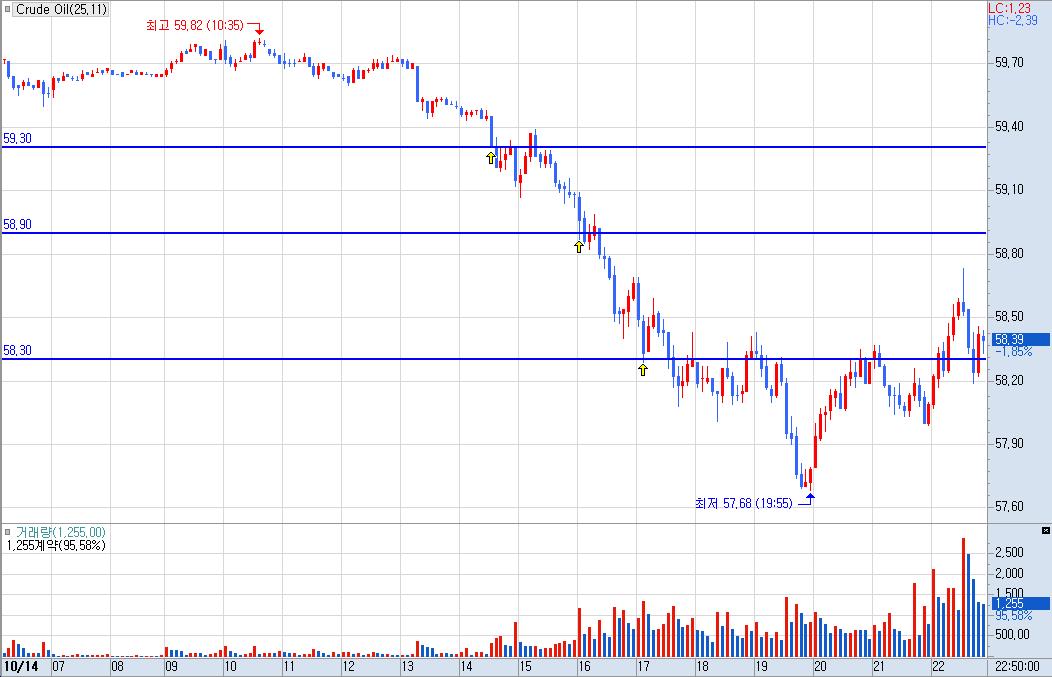
It is noteworthy that the Dollar Index showed an upward trend despite the US August Personal Consumption Expenditures (PCE) price index slowing to 3.4% year-over-year. This is a so-called “strong dollar with good earnings” scenario, which can act as a factor for capital outflows from both the stock and bond markets. In the commodity market, gold rebounded based on December delivery, but this is analyzed as a result of a complex interplay of safe-haven demand rather than a weak dollar. On the other hand, WTI crude oil futures prices are hovering around $90 per barrel, showing an effect of fixing energy costs. While suppressing energy price increases is a factor in inflation debt, risk asset preference remains limited due to concerns over global liquidity contraction.
From an exchange rate perspective, a strong dollar is a variable that can promote the outflow of foreign capital from emerging markets and the Korean stock market. The 0.46% drop in KOSPI 200 night futures can be seen as a precursor to such global macro trends. In the high-tech sector, which moves with Nasdaq futures, the negative effects of a weak won or exchange losses for import/export companies can also act internally. Therefore, rather than trading based solely on Nasdaq futures prices, one must observe how the delta-neutralization process in the domestic options market unfolds according to the fluctuation range of the US Dollar/Won exchange rate on the day. Caution is needed when managing leveraged positions, as sharp exchange rate fluctuations can cause temporary dislocations in futures prices.
The persistence of a strong dollar despite slowing inflation acts as a capital outflow pressure on Nasdaq and global risk assets, and one must be wary of the impact exchange rate fluctuations will have on futures prices.
4. Futures Market Participant Trends: The Psychological Battle Between Retail and Foreign Investors
Typically, the trends of futures market participants observed in the Monday morning session after the weekend serve as important material for gauging the flow of the day’s market. If foreign net buying is dominant, it can be interpreted as a joint buying intention for Korean and US markets from a global liquidity perspective. However, in the current situation where specific figures are not provided, directional estimation is limited. Referring to past cases, in phases where interest rate volatility expands, institutional selling dominance often lasts longer than foreign selling. Institutions tend to dump large volumes of selling for cash position adjustment and hedging purposes, fueling index declines. Retail investors, as latecomers, are easily caught between stop-loss selling and chasing buying amid such volatility.
In the case of Nasdaq futures, with high global beta, they react immediately to major events such as US interest rate decisions or Fed reports. If the net outflow of foreign capital accelerates, it means there is a high possibility that Nasdaq futures will also tilt towards weakness. Conversely, if the volume of US ETF markets buying Korea-related ETFs increases, it can indirectly help Nasdaq futures by incorporating the positive earnings of domestic semiconductor-related stocks. One must be wary of the “running away from the window” tendency until the futures closing time after 4 PM, a period when market sentiment is most sensitive. Especially as the options expiration date approaches, it is necessary to avoid excessive leveraged trading and set clear stop-loss criteria.
In phases of expanding interest rate volatility, the potential for a collision between institutional selling dominance and retail chasing buying is high, making attention to foreign capital flows and time-based trading essential.
5. Philadelphia Semiconductor Index and VIX: Gauging the Forward Direction
The fact that the Philadelphia Semiconductor Index closed in the flat range at 12,628.61 suggests that leading tech stocks have entered a pause. The fact that this index did not rise despite Micron’s strong earnings means the market is seriously considering whether the semiconductor cycle has peaked. This is because strong earnings from newer companies meet the mass production capacity limits of existing giants, raising concerns about weakened price competitiveness. This warns that the stock price support effect for semiconductor companies, which have a large weight in the Nasdaq 100, may be temporary. In today’s market, rather than the range of fluctuation of the semiconductor index, one must observe whether the weak signal of the Philadelphia Index failing to lead the overall Nasdaq Index is repeating.
Simultaneously, the VIX (Volatility Index) figure exceeding 16 is also an important checkpoint. Generally, a VIX below 15 indicates a stable bull market, 15-20 is a caution zone, and above 20 is a fear zone. The current figure is near the upper end of the caution zone, indicating that market participants are strengthening downside hedges by buying options. When looking at the real-time trend of Nasdaq futures, the scope of position management must be expanded depending on where the VIX forms a support line. If the VIX breaks through 18 and Nasdaq futures widen their decline again, short-term short forces (selling) may become dominant. Conversely, if the VIX settles after battling around 15, the rebound elasticity centered on tech stocks may revive.
The sluggish sideways movement of the semiconductor index and the rise in VIX are signals to refrain from single-directional bets on Nasdaq futures and to supplement volatility hedging strategies.
6. Pre-Market Checklist and Long/Short Position Management Guide for Today
If you are trading Nasdaq futures in today’s market, develop the habit of checking three variables simultaneously rather than just the index’s rate of change. First, check if the US Treasury yield (10-year) has broken above 5.30% and examine the VIX index reaction to this data. Second, observe the trend of the Korean KOSPI 200 futures and check how much the divergence from the global risk index has widened. Third, confirm event-driven factors such as the news timeline for major tech companies, including Alphabet’s new product announcements or Ripple’s escrow release. If all three of these show negative signals, consider waiting on the sidelines or securing a short position instead of buying a long position.
As a prescription, when entering a new long position, it is advisable to set a stop-loss price just below the immediate support line, at approximately 0.5-0.8%, to prevent panic selling. For existing long positions, it is correct to reduce risk by taking profits in thirds. If Nasdaq futures show a pattern of a sharp intraday drop followed by a VIX surge, it is more efficient to expect a trend reversal (further decline) and determine the direction rather than buying the dip. Today’s market is a phase where “positive earnings” and “negative interest rates” are in a tug-of-war, so aggressive leverage expansion is forbidden until a clear directional breakout appears. Maintain patience, monitor volatility, and enter a position only when a confirmation signal appears.
Comprehensive analysis of interest rates, VIX, and sector-specific news flows, along with a conservative position management principle of starting small until a definitive direction is confirmed, increases the probability of victory.
Frequently Asked Questions
=