As of 2026, the Employment Insurance Act is not merely an insurance policy but a fundamental pillar of the employment safety net. Many citizens suffer from loss of rights because they are unaware of when benefits end or the specific eligibility requirements. In particular, the system has diversified significantly due to the substantial expansion of protections for non-regular and special-form workers. We have analyzed recent government announcements and real-world cases to organize the regulations that directly impact our daily lives. This article explains key points, from the subtle differences in coverage targets to the principles of unemployment benefit payments. We have structured the content to translate complex legal provisions into everyday language for easy understanding.
=
2026 Employment Insurance Act Revisions: A Comprehensive Guide to Benefits and Avoiding Common Mistakes
1. Overview of 2026 Employment Insurance Coverage and Exemptions
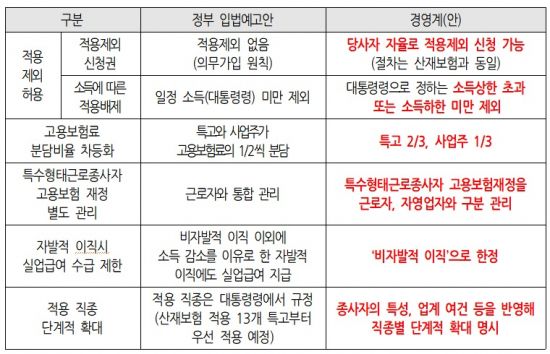
Enrollment in employment insurance is a legal obligation for both employers and employees. However, for special-form workers, premium levies apply only when specific conditions are met. As of 2026, labor sectors involving platform workers and freelancers are included in the comprehensive coverage scope. This aims to reduce blind spots in the social safety net in response to the diversification of working methods. For example, labor performed continuously and repetitively, such as public transportation drivers or delivery riders, is generally subject to coverage. On the other hand, self-employed individuals with limited periods or task counts and recognized independent business judgment are excluded. Therefore, you must carefully review your employment contract and any additional conditions. It is not just the job title that matters; the actual subordination and continuity of the work serve as the criteria for judgment.
In 2026, employment insurance covers new forms of employment relationships, including platform labor, with actual subordination and continuity serving as the criteria for eligibility.
2. Unemployment Benefit Eligibility and Review Criteria

To receive unemployment benefits, it is essential to have a history of paying premiums for at least 180 days within the last 18 months. Additionally, the reason for leaving the job must not be attributable to the individual. If you resign due to your own fault, the start date of benefits is deferred by 7 to 30 days. It is also crucial to complete job-seeking registration and prove active job-seeking activities. You must register specific plans, such as participating in job placement services or self-development, rather than just passively looking for work. If you falsely state the reason for leaving, you will be identified as a fraudulent recipient and subject to claims for restitution. This is a serious legal issue that can lead to bank account seizures or credit damage. Therefore, preparing accurate documents and maintaining consistency in your statements are key to success.
The three essential conditions for receiving unemployment benefits are a 180-day enrollment history within 18 months, non-attributable resignation, and proof of active job-seeking activities.
3. Insurance Premium Structure and SME Support Benefits
Premiums are calculated based on the employee’s working hours and wage level, with the employer bearing half the cost. For small and medium-sized enterprises (SMEs), the government provides additional benefits through training cost support and employment retention subsidies. For example, the state covers up to 90% of the costs for vocational training aimed at enhancing the skills of current employees. This measure is designed to lower economic barriers, making it easier for companies to introduce employee education. Additionally, incentives are in place to ensure that the wage levels of long-term employees are not lower than those of their peers. By utilizing these subsidies, companies can reduce costs while employees can secure income protection if they meet the eligibility requirements. However, cases of missing benefits due to missed application deadlines or missing supporting documents are frequent. Therefore, it is advisable to consult with company personnel or experts in advance to develop an optimal application strategy.
SMEs benefit from various employment insurance-linked perks, such as up to 90% support for vocational training costs, leading to significant cost savings with proper planning.
4. Penalties for Non-Enrollment and Fraud, and Conflicts of Interest
If employment insurance is not enrolled, workers cannot receive any compensation in the event of an accident or unemployment. Additionally, employers are subject to fines and surcharges for failing to report or for dishonest reporting. This means that business practices exploiting the vulnerable position of workers are subject to legal punishment. In particular, crackdowns on the unauthorized hiring of foreign workers are being strengthened. Employers who become aware of illegal residency status must immediately terminate employment and accept legal action. Otherwise, they risk getting entangled in costs and legal disputes arising from detention or deportation. Past cases show that even if a clear agreement exists, the enrollment obligation is recognized if a substantive labor relationship is confirmed. Therefore, managing the actual work environment transparently is better than manipulating documents.
Non-enrolling employers face fines and surcharges, and the enrollment obligation is triggered regardless of the contract format if a clear labor subordination relationship is confirmed.
5. Institutional Expansion for the Protection of Artists and Non-Regular Workers
The pilot project for artists’ employment insurance has enrolled over 40,000 artists as of 2026. This means that creators, previously perceived as socially vulnerable, can now enjoy insurance benefits under legitimate grounds. Simultaneously, financial support is being provided to encourage the conversion of non-regular workers to regular employees in established companies and SMEs. Chairman Park Seung-heup emphasized the protection of the social safety net for non-regular workers as his first priority upon taking office. This reflects the will to resolve the perceived conflict between economic growth and employment stability through balanced policies. The core of this is recognizing the diversity of working methods in the rapidly changing digital environment. However, errors may occur in the early stages of implementation due to conflicts of interest. Therefore, it is safer to seek individual legal advice.
Policies are accelerating to eliminate blind spots in employment insurance protection for a broad labor population, including artists and non-regular workers.
6. Future Outlook and Action Guide for Individuals and Companies
It is projected that the proportion of remote and hybrid work will surge within the next five years. Consequently, methods for calculating working hours and insurance eligibility are likely to be re-evaluated. Individuals should regularly check their insurance enrollment records quarterly. If you are a company, mark training application deadlines and tax benefit eligibility requirements on your calendar. Small mistakes can lead to significant financial losses. Use the notification subscription services on government public institution websites to stay updated on the latest legislative revisions. If you have questions, develop the habit of keeping records before consulting with the local employment center. These small preparations serve as a breakwater protecting your rights in times of crisis.
Reassessing income criteria in preparation for the increase in remote work, along with regular record checks and monitoring of public institution channels, is key to long-term asset management.
Frequently Asked Questions
If your history is unclear, it is also a good idea to call the Ministry of Employment and Labor customer center for guidance.
However, you must report your employment status immediately; concealing it is considered fraudulent receipt.
In this case, it can be advantageous as your premium payment history is not interrupted.
However, if you hire an office worker, insurance applies only to that employee.
=