Starting September 29, 2026, the Community Primary Care Innovation Pilot Program will officially begin, allowing residents aged 50 and older to select a dedicated primary care physician at a local clinic in their area. This program provides comprehensive support ranging from disease treatment to prevention and health management. Designed in response to the rapid transition into a super-aged society and the increasing number of patients with chronic diseases, this policy goes beyond simply treating ailments, aiming to organically connect everyday health management with care services. In the past, most people would simply visit a local hospital when they caught a cold or had high blood pressure, get a prescription, and leave. Going forward, residents will be able to receive tailored management by communicating closely with a physician who knows their health status intimately. In this article, we will examine the specific details of this newly introduced system and how it can be utilized in your neighborhood. If you have been interested in health management, take this opportunity to learn how to actively utilize the clinics near you.
=
Finding Your Primary Care Physician at a Local Clinic: The Community Primary Care Innovation Pilot Program
1. Background and Necessity of Introducing the Primary Care Physician System
In our daily neighborhood environment, a path has now opened to meet a primary care physician who meticulously cares for our health, going beyond just visiting a hospital when we are sick. As South Korea enters a super-aged society, the number of people suffering from chronic diseases such as hypertension and diabetes has surged, prompting significant changes in the healthcare system. The traditional way of using hospitals was limited to fragmented treatment, where patients would suddenly visit only when symptoms appeared, get a prescription, and leave. This made it difficult to prevent the root causes of diseases or manage them consistently. To address these issues, the government has established a new framework to provide continuous and comprehensive medical services centered around the patient’s place of residence. For example, Mr. Kim, a 55-year-old office worker in Seoul, had a close call where he nearly developed a serious illness because he failed to properly manage his high cholesterol levels, citing busyness as an excuse. If he had had a trusted primary care physician in his neighborhood, he could have received checks on his diet and exercise habits, as well as detailed guidance on medication, thereby preventing the risk in advance. This pilot program has been ambitiously prepared to build a robust health safety net in the daily lives of residents like Mr. Kim. If a medical environment centered on prevention and integrated management is created, moving away from the outdated treatment-focused framework, the healthy life expectancy of the entire nation could increase dramatically. There are high expectations for the role local clinics will play as lifelong health partners for residents.
The primary care physician system is introduced to provide prevention and integrated management beyond treatment, responding to super-aging and the increase in chronic diseases.
2. Tailored Services for Residents Aged 50 and Over
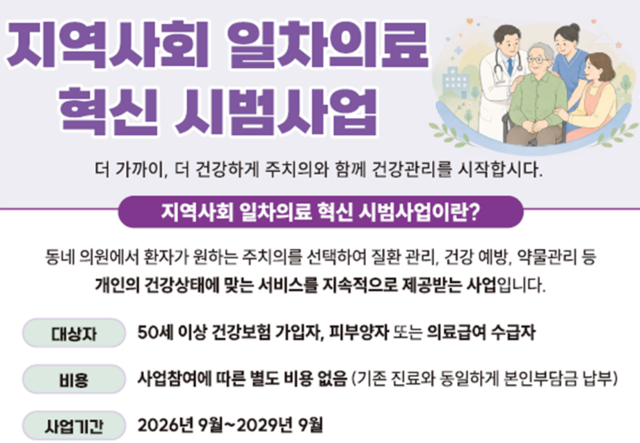
A major feature of this newly launched pilot program is its focus on residents aged 50 and over, providing them with more detailed and meticulous health management services. As people age, their physical functions decline, and they are more likely to develop multiple chronic diseases simultaneously, making it essential to have an expert who can continuously monitor their condition in one place. Residents can directly choose a primary care physician from a familiar local clinic near their home, thereby receiving regular health consultations and tailored prescriptions. This process includes carefully checking whether blood pressure and blood sugar levels are well-controlled and whether there are any side effects between medications, going beyond simply dispensing drugs. In reality, Mr. Park, a 62-year-old resident of Busan, has painful memories of suffering greatly due to duplicate medication, as he had been taking prescriptions for hypertension and arthritis separately from different hospitals. Going forward, the primary care physician will oversee all medications taken by Mr. Park, preventing unnecessary duplicate prescriptions and managing safe medication use, thus eliminating such risks. Having a primary care physician who knows the patient’s health history in detail also allows for swift response in emergencies, greatly alleviating family concerns. For those aged 50 and over, this pilot program is expected to serve as a reliable shield protecting their healthy old age, going beyond simple medical benefits. Since it takes effect immediately, it is advisable to actively encourage participation if you know anyone who qualifies.
Residents aged 50 and over can select a primary care physician at a local clinic to receive tailored services such as medication management and regular consultations.
3. From Disease Treatment to Prevention and Health Management
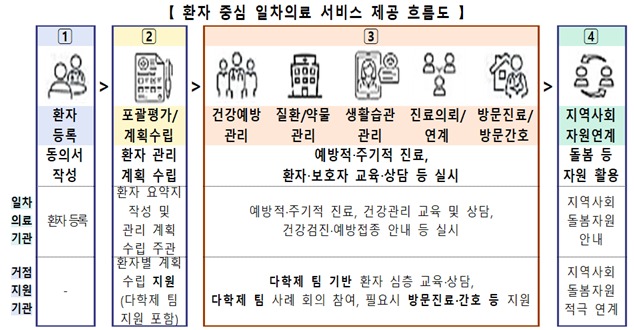
In the past, hospitals were predominantly seen as places to go when already sick, to complain about pain and receive treatment. However, this paradigm is now completely changing. The core of the primary care innovation project being promoted is to prevent illness before it occurs and help maintain health consistently in daily life. It aims to cut off the seeds of disease by establishing a close relationship between local clinic physicians and patients, jointly checking dietary habits, exercise volume, and sleep patterns. It helps prevent the deterioration into chronic diseases by identifying risk factors such as smoking and drinking early and naturally linking them to cessation programs. For example, Mr. Lee, 53, who previously did no exercise and only enjoyed stimulating foods, accurately learned his health risk level through consultations with his local clinic’s primary care physician. The physician recommended starting with light walks instead of strenuous exercise and helped him successfully manage the early stages of diabetes through periodic blood sugar tests. Establishing a system that prevents disease progression and encourages early detection and continuous management not only significantly reduces individual medical costs but also improves quality of life. Comprehensive services encompassing prevention and health promotion, moving beyond treatment-focused medicine, will serve as a catalyst for making our society’s healthcare system healthier. This will be an opportunity for local clinics to firmly establish themselves as true health primary care physicians in residents’ daily lives.
The system shifts from a treatment focus to a health management framework that prevents disease by checking daily diet and exercise.
4. Organic Linkage Between Medical and Care Services
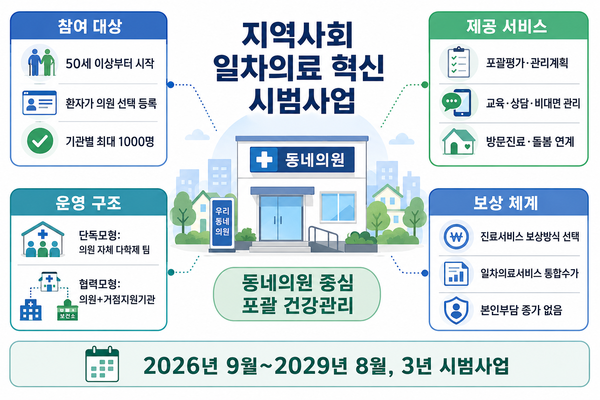
To spend a healthy old age, it is not enough to simply receive medical treatment from a doctor; various care services needed in daily life must also be harmonized. This pilot program strengthens the linkage between medical services and community care, weaving a dense safety net to ensure that elderly people with mobility issues or those living alone do not fall into blind spots. If a local clinic determines that a patient needs care assistance while assessing their health status, it will immediately connect them with local government welfare services or nursing support programs. This opens a path to provide practical help to those who struggle with eating or moving on their own after returning home from hospital treatment. For instance, Grandma Jung, a 70-year-old living alone in Daegu, felt overwhelmed after being discharged following leg surgery because she found it difficult to handle household chores and meals by herself. If this pilot program system had been in place, she could have quickly received local care services such as home nursing visits or meal delivery through her local clinic’s primary care physician, allowing for a much more comfortable recovery. True community integrated care can only be realized when medical and welfare services work closely together rather than operating separately. The inconvenience of residents having to visit hospitals and welfare centers separately to seek help will disappear, allowing them to receive necessary assistance all at once through a single local clinic. This welfare-medical network, created by the joint efforts of the government, local authorities, and local clinics, is expected to effectively resolve major challenges in an aging society.
The program actively links with community welfare and care services, going beyond hospital treatment to eliminate blind spots.
5. Changing Role of Local Clinics and Expected Effects
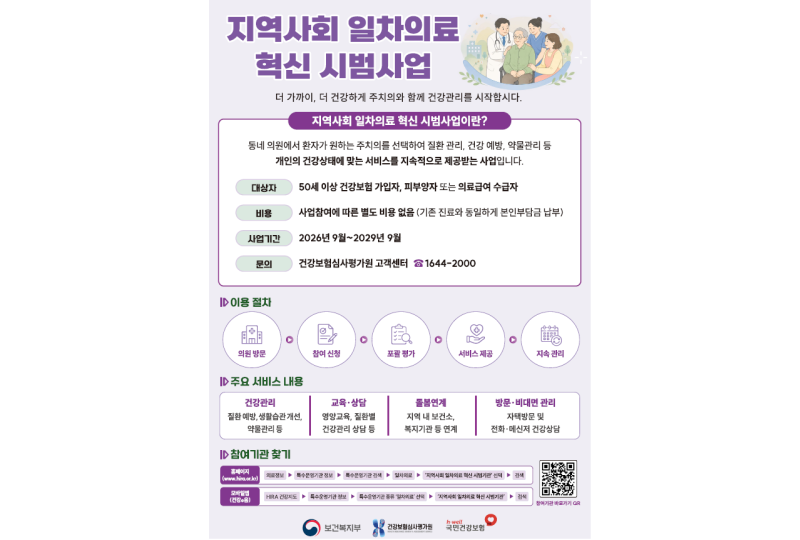
Local clinics, commonly seen in our neighborhoods, will be transformed into central hubs responsible for residents’ health through this pilot program. In the past, physicians were busy prescribing medication and sending patients away during short consultation times. In the future, they will become partners who deeply understand and manage the health history of each individual resident as primary care physicians. From the physician’s perspective, a stronger relationship of trust with patients allows for more accurate and effective treatment plans, while patients’ treatment adherence naturally increases as they trust and follow their primary care physician. This positive interaction will contribute significantly to restoring residents’ trust in local clinics and alleviating the phenomenon of patients concentrating in large hospitals. Director Park, who runs a small internal medicine clinic in Seoul, stated that it is very encouraging that an environment has finally been prepared to provide tailored health management through deep conversations with patients. He emphasized that previously, with too many patients, it was insufficient to advise each one on diet or lifestyle, but this system allows them to perform the true role of a primary care physician. If local clinics are activated, unnecessary visits to large hospitals will decrease, positively impacting the soundness of the national health insurance budget and enabling efficient allocation of medical resources. This creates a win-win structure where residents can comfortably receive high-quality comprehensive health management nearby, and physicians can feel pride as guardians of community health. In the future, many local clinics nationwide will participate in this project, healthily transforming the nature of South Korea’s healthcare system.
Local clinics will establish themselves as primary care hubs that deeply manage patients’ health histories, improving the quality of medical care.
6. Future Outlook and How Residents Can Participate
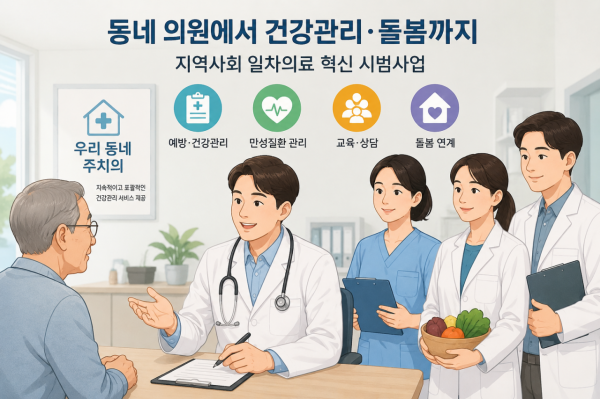
This Community Primary Care Innovation Pilot Program, which allows residents to receive comprehensive health management and care in addition to treatment in their neighborhoods, will completely redraw the health map of our society. It can serve as the most realistic and powerful measure to help individuals enjoy a comfortable and safe healthy life in their place of residence, preparing for the super-aged era. For the system to be successfully established, the active interest and participation of residents aged 50 and over in registering with a primary care physician are crucial, in addition to government policy support. If you wish to participate in this pilot program starting tomorrow, you should visit or inquire at a local clinic near your residence to check if you can designate your own primary care physician. If you want to check your health status in advance and have a reliable primary care physician by your side, even without specific symptoms, it is wise to actively utilize this opportunity without missing it. It is also a good idea to kindly inform elderly parents or neighbors about this system and encourage them to visit a nearby clinic for a consultation together. The first step has been taken toward the day when all South Korean citizens can enjoy high-quality, prevention-centered medical services without discrimination near their homes. Readers are encouraged to look at the local clinics around them today and prepare for a vibrant and healthy future with a reliable primary care physician.
Active registration and participation of residents aged 50 and over are essential for the successful establishment of the program.
Frequently Asked Questions
=