
Kogen Biotech, a leading domestic molecular diagnostics company, recently showcased its latest automated testing equipment at an international exhibition in Malaysia. This technology automatically screens for pig-derived genetic material in products such as jelly, pharmaceuticals, and cosmetics. It opens the door to rigorous analysis of not only processed foods we enjoy daily, like jelly and marshmallows, but also the ingredients in cosmetics we apply every day. The technology is drawing attention for its ability to accurately identify components, such as gelatin, which are difficult to distinguish visually by their animal source during the manufacturing process. In particular, the technology unveiled this time holds significant meaning as it goes beyond simply supplying reagents to automate the entire testing process. In this article, we will take a detailed look at the trends in the rapidly growing global market and how the impressive technological prowess of a domestic company is being applied.
=
Kogen Biotech Automates Halal Testing to Detect Hidden Pig DNA in Jelly and Cosmetics

1. Automated Equipment Debuts at Malaysian Exhibition

Kogen Biotech set up a booth at the 22nd Malaysia International Halal Exhibition, held at the Kuala Lumpur International Trade & Exhibition Centre in Malaysia last month. At this event, the company unveiled to the world an integrated testing system that seamlessly connects the gene extraction process with the preparation stage for polymerase chain reaction (PCR) to identify pig-specific genes. The numerous visitors and buyers on site were amazed to see precise results achieved without complex manual work. The machine now performs the tedious processes that researchers previously had to handle by hand, significantly reducing the possibility of errors. It can be evaluated as a product that embodies the know-how accumulated over many years in the field of molecular diagnostics.
In particular, the equipment showcased this time boasts an excellent automation specification that allows multiple samples to be processed simultaneously under the same conditions. Researchers working in laboratories often face increased fatigue and time constraints when handling numerous samples. However, by combining the proprietary extraction reagents and real-time detection reagents developed by the company with its in-house liquid handling device, operational efficiency has been maximized. It can quickly and accurately pre-treat sticky processed food ingredients like jelly and gelatin, greatly alleviating the burden on practitioners. Thanks to this high level of technical completion, it is reported that inquiries from overseas buyers at the site were non-stop.
Kogen Biotech unveiled an automated testing equipment at an overseas exhibition that handles everything from gene extraction to reaction preparation in one go.
2. The Scientific Principle Behind Detecting Invisible Animal Ingredients
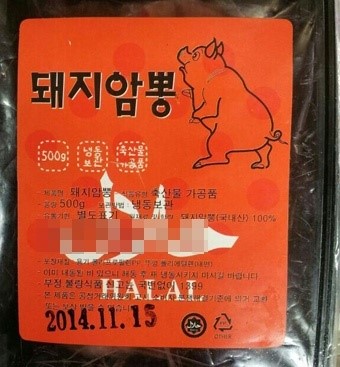
Gelatin, extracted from animal bones or skin, is widely used in the countless jellies and pharmaceutical capsules sold on the market. However, once gelatin is liquefied or processed, it is absolutely impossible to distinguish with the naked eye whether it came from cattle or pigs. Therefore, scientific verification procedures are essential to accurately identify the origin of the ingredients for consumers who strictly adhere to religious laws. The Department of Chemistry under the Malaysian government has long operated a standard testing method for analyzing pig-derived genes to address this issue. As reliable data has been accumulated based on specifications designated as national standards, the transparency of the related industry has been further enhanced.
The detection reagent unveiled this time amplifies these minute gene fragments in real-time to pinpoint the presence of pig components with remarkable accuracy. It boasts such high sensitivity that the presence of target genes can be visually confirmed even with a very small amount of sample. The timing is excellent, as movements to adopt this standard testing method are becoming active, particularly among member states of the Organisation of Islamic Cooperation. It serves as a key to providing strong confidence to consumers who wish to uphold their religious beliefs, as well as to ensure food safety. An environment is being created where processed food manufacturers will soon be unable to avoid undergoing such precise inspections from the raw material sourcing stage.
Animal-derived ingredients that are difficult to distinguish during processing are accurately detected in real-time using gene analysis technology.
3. Expanding Testing Scope Beyond Food to Cosmetics and Pharmaceuticals

In the past, these verification procedures were primarily focused on meat and simple processed foods. However, with K-Beauty products and various pharmaceuticals expanding globally, the range of testing targets has noticeably expanded. Everything from the moisturizing ingredients in basic cosmetics we apply daily and nourishing creams to the shells of pills we take is subject to meticulous scrutiny. This is because animal-derived ingredients are often hidden in products that come into direct contact with the skin or pharmaceuticals absorbed into the body. In response to these changes, related companies are building integrated diagnostic lineups that cover the entire personal care sector, going beyond food safety.
Indeed, at this exhibition, numerous companies dealing in food and beverages, as well as various daily necessities and technology services, participated, making the event a great success. The global economic scale of the related industry, as tallied by the organizers, easily exceeds trillions of won, forming a massive market. From the perspective of manufacturers, failing to meet the stringent standards of export destination countries inevitably leads to significant economic losses. Therefore, efforts are continuing to introduce advanced equipment from reliable domestic diagnostic companies to improve the accuracy of quality control. An era has fully opened where even cosmetics are tested at the gene level.
The scope of testing, previously limited to food, is rapidly expanding into the cosmetics and pharmaceutical sectors.
4. Robust Competitiveness Built on Long-Term Cooperation and Technology Internalization
It was no coincidence that a domestic diagnostic company acquired this level of global technological capability overnight. The company has been consistently developing related test kits since 2013, leading market trends. It has repeatedly worked with accredited testing institutions overseas to optimize sample-specific gene extraction methods. It has built deep trust not only by selling products but also by directly educating local researchers and transferring technology. Thanks to these efforts, the company has secured solid recognition from overseas certification bodies.
The automated equipment unveiled this time was also developed based on vivid feedback collected from the field over a long period. The company accurately identified the inconveniences researchers face in actual laboratories and immediately reflected them in the machine design. It allows the machine to perform complex manual steps after sample pre-treatment without error, shortening the overall testing time. This is an achievement made possible by internalizing and advancing its technological capabilities in-house. If this field-centric technology development continues, a gap will emerge that overseas competitors will find difficult to bridge.
Thanks to long-term cooperation with overseas institutions and reflecting field voices, the company has acquired unique technological competitiveness.
5. Scalability Covering GMOs and Food Poisoning Bacteria
At this exhibition, the company captured visitors’ attention by showcasing a diverse range of molecular diagnostic products in addition to the animal-derived ingredient testing equipment. Representative examples include diagnostic reagents that quickly identify various food poisoning bacteria that threaten food safety and technology for discriminating genetically modified organisms (GMOs). This proved that the company has a perfect portfolio capable of verifying food raw materials for safety from multiple angles. It is playing the role of a reliable partner responsible for safety at every stage, from the moment raw materials enter the food factory to the shipment of finished products. It was an occasion where the company fully demonstrated its capabilities as a comprehensive food safety diagnostic specialist.
In particular, the lyophilized reagent system, which received great interest on site, is an innovative product that maximizes convenience in storage and distribution. While traditional liquid reagents required the tedious maintenance of a strict cold chain, the application of the lyophilized method reduces this need. It allows products to be safely shipped anywhere in the world, making it a powerful weapon for targeting overseas export markets. The technological capability to simultaneously diagnose various biological hazards, not just food, will create greater added value in the future. It presents a perfect alternative tailored to the high standards of consumers seeking safe food and proper products.
In addition to animal-derived ingredient testing, the company showcased diagnostic products for food poisoning bacteria and GMOs, broadening its utility.
6. Leap Toward the Global Market and Remaining Challenges
The company’s top management expressed a grand ambition to complete an integrated testing platform that covers the entire process, rather than remaining limited to single reagent supply. It plans to further expand partnerships with key testing and certification institutions in the Middle East, as well as in the Asia region. Amid increasingly stringent global quality standards and regulations, the demand for reliable domestic diagnostic equipment is expected to continue to grow. Thorough quality control and continuous investment in research and development are the only ways to survive in the rapidly changing international arena. If field-customized equipment successfully settles into accredited institutions in various countries, remarkable growth can be expected.
Readers, when choosing various processed foods or imported cosmetics available on the market, please consider the safety of the invisible ingredients. We are in an era where the choice of product depends not only on its visible appearance but also on whether it has been produced through scientific molecular diagnostic technology. We look forward to safe products that have undergone rigorous verification becoming more deeply embedded in our daily lives. It will be a great pleasure to watch domestic technology confidently establish itself as a standard on the world stage. Please pay close attention to the steps of amazing technological innovation that will unfold in the food and beauty industries in the future.
The strategy to enter global markets such as Asia and the Middle East is being fully realized through the construction of an integrated testing platform.
Frequently Asked Questions
=