
On October 1, 2026, marking the 78th Armed Forces Day, the retention of the Navy Academy in Jinhae, a historic hub of the Republic of Korea Navy, has emerged as a critical issue for both regional and national security. The sight of citizens from Gyeongsangnam-do, university students, and business leaders gathering in front of the National Assembly to strongly demand the withdrawal of relocation plans has drawn significant social attention. This is not merely a matter of institutional placement but a critical issue directly tied to balanced regional growth and the strengthening of South Korea’s defense capabilities. In this article, we will examine the background of the Armed Forces Day commemorative events and the specific security and economic value of the Jinhae Navy Academy. We will also explore how the Navy’s role is being reinterpreted amidst discussions on the relocation of public institutions and what the future outlook looks like. Through this article, readers will understand how local communities are safeguarding the nation’s core infrastructure and how this connects to our daily lives. Additionally, we will look into the new cooperation model forming through the efforts of Navy personnel and the support of local residents.
=
The Significance of Retaining the Navy Academy in Jinhae for the 78th Armed Forces Day and Regional Balanced Development

1. Armed Forces Day and the Role of the Navy

Armed Forces Day is not simply a day to celebrate military organizations; it is a public event that affirms the collective will of all citizens to safeguard national sovereignty. The 78th Armed Forces Day ceremony in 2026 emphasized the importance of defending the nation by showcasing the unified might of the Army, Navy, Air Force, and Marine Corps. In particular, the Navy is evaluated as a core force protecting the nation’s lifeline on the front lines of the sea. While each branch previously had its own commemorative day, the current unified Armed Forces Day helps to strengthen cooperation among the branches. It is also noteworthy that President Lee Jae-myung attended directly to inspect the four branches and convey his respect to the service members. Such face-to-face events play a decisive role in narrowing the gap between the public and the military and building trust.
The Navy’s purpose is not merely the projection of force but the execution of strategic missions to protect commercial shipping and secure energy supply routes. Just as the marine creature ‘Bukang-i,’ which appears in the waters off Busan, is loved by citizens, the Navy operates quietly but is always present by our side. In response to marine environmental changes caused by climate change, such as rising sea water temperatures, the Navy blocks elements threatening national security through real-time monitoring and response. Without the Navy, the vessels carrying our food and energy could not operate safely. Therefore, examining the Navy’s example on Armed Forces Day is the most intuitive way to understand the national security system. The achievements accomplished by the united efforts of service members become the source of the peaceful daily life we enjoy.
Armed Forces Day highlights the Navy’s integrated security role, and the Navy serves as the foundation for protecting maritime strategic assets and ensuring daily safety.
2. The Historical Status of the Jinhae Navy Academy
Jinhae is a historic region that serves as the starting point of the Korean Navy and where the heart of modern naval power beats. The reason the Navy Academy is located in Jinhae is the result of long-accumulated educational traditions and military infrastructure coming together. The numerous naval talents produced here have played crucial roles in major wars and peacekeeping activities. Education in Jinhae aims to cultivate practical talents who possess not only theoretical knowledge but also the ability to operate vessels and execute operations. If the academy were relocated to another region, there would be significant concerns that this historical continuity and educational efficiency would be compromised. For local residents, Jinhae is not just an administrative district but a living place permeated with naval culture and identity.
Students at nearby universities emphasize the importance of staying in Jinhae to simultaneously accumulate naval-related academic knowledge and field experience. It is urgent to prevent the outflow of youth to the capital region and to lay the foundation for them to grow into core human resources in the Gyeongnam region. The retention of the Navy Academy means that the naval-linked educational programs, which are a strength of local universities, can continue. When an environment is created where students can pursue their dreams in their hometown, vitality returns to the regional economy. This is an issue that goes beyond individual career choices and is directly linked to national human resource deployment strategies. It is clear that Jinhae must continue to serve as the heart of the Navy.
The Jinhae Navy Academy is a historical and educational hub for cultivating naval talent, and relocation would threaten educational continuity and the regional talent pool.
3. The Resolve of Gyeongnam Citizens and the Business Community
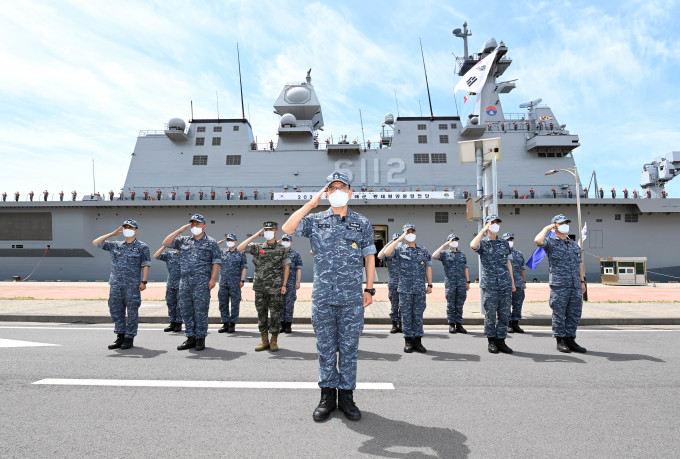
The province-wide resolution meeting, where approximately 700 citizens from Gyeongsangnam-do gathered in front of the National Assembly building, demonstrates the high level of interest in regional public opinion. They voiced their collective demand to prioritize the retention of the Navy Academy in Jinhae amidst discussions on the relocation of public institutions. Gyeongnam’s core strategic industries, such as shipbuilding, defense, nuclear power, and space aviation, are directly linked to the Navy’s presence. Simply keeping the Navy Academy in Jinhae can significantly boost the competitiveness of the defense cluster. The regional business community also actively participated in this resolution meeting, expressing a strong will to maintain the industrial ecosystem. This is significant not only as a demand for Gyeongnam but also because it contributes to national balanced growth and the enhancement of industrial competitiveness.
Citizens are raising realistic issues that cannot be solved by applause alone. If the relocation of public institutions does not yield results, the fiscal stability of local governments could be shaken. The role of the Navy Academy, which is linked to job creation for youth, must function not just as an educational institution but also as an economic hub. Representatives of local university students want to accumulate technology and experience here, without leaving for the capital region, to become the talents who will lead the growth of the Republic of Korea. This movement is a strong message that the government and the National Assembly must properly address regional realities. The retention of the Navy Academy in Jinhae is both a survival strategy for the citizens and a fundamental element of national security.
The gathering of Gyeongnam citizens and the business community highlights that retaining the Navy Academy in Jinhae is essential for maintaining the regional economy and national industrial competitiveness.
4. Discussions on Public Institution Relocation and Alternatives
The policy of relocating public institutions is a government-level effort to alleviate concentration in the capital region and promote balanced regional development. However, for institutions like the Navy Academy that are historically and strongly tied to a specific region, relocation can lead to adverse effects. In the case of the Jinhae Navy Academy, the discussion of relocation itself has caused significant uncertainty in the local community. The government should consider stabilization measures, such as withdrawing integration plans or relocation discussions and maintaining the institution at its current location. Since the Navy operates in environments closely linked to areas like the waters off Busan, the fixed location of the institution directly impacts operational efficiency. Furthermore, we live in an era where issues such as the shortage of ship maintenance personnel abroad are emerging, as mentioned in the Minister of Trade, Industry and Energy’s remarks regarding his visit to the US.
The Republic of Korea Navy’s independent capability in building and maintaining vessels is a core asset of national security. The Navy Academy must be located in Jinhae to maintain a stable supply source for personnel in ship maintenance and military technology research. If the institution were dispersed, there is a risk that this specialized talent cultivation system would operate inefficiently. This could ultimately bring a crisis to the strategy of strengthening South Korea’s independent naval power. Therefore, discussions on the relocation of public institutions must be premised on an analysis of the specific characteristics of each institution. Due to its nature, the Navy Academy has a high necessity to remain in Jinhae. Policymakers must not overlook these military specificities.
Relocating the Navy Academy would cause military specificities and reduced educational efficiency, making retention in Jinhae the rational alternative.
5. Reactions from the Media and Society
As the social issue expands, interest from the media and civil society is rapidly increasing. Voices from the actual field are being treated as more important than activities like Coupang Partners or reports from specific research institutions. Separately from issues related to the Chief of Naval Operations or changes in the judicial system such as the abolition of the prosecution service, the Navy’s security value remains unshaken. Individual stories, such as the comparison of military civil servant loans in Blog 1 or the content of the Minister of Trade, Industry and Energy’s US visit in Blog 2, come together to form a single big picture. Just as the ‘Bukang-i’ that appeared in the Busan North Port waterway has won the affection of citizens, the Navy is also narrowing the distance with society thanks to its approachable image. This emotional solidarity forms the basis for public consent regarding maritime security.
Particular consideration must be given to new ecological changes caused by rising sea water temperatures. Changes in the marine environment make the Navy’s mission more complex but simultaneously raise public awareness. Just like the case of the Nepal floods mentioned in Blog 3, global climate issues do not respect borders. The Navy is focusing on maritime information collection and capability enhancement to prepare for these global challenges. Citizens are feeling how their daily lives are connected to national security. For this reason, safeguarding South Korea’s maritime sovereignty is not a choice but a necessity. This empathy across society is adding momentum to the movement to retain the Navy Academy.
Marine environmental changes and social solidarity are re-recognizing the importance of the Navy and strengthening public opinion for the academy’s retention.
6. Future Outlook and Reader Action
Marking the 78th Armed Forces Day on October 1, 2026, the retention of the Navy Academy in Jinhae will be equipped with even stronger justification. The convergence of local community efforts and the government’s security strategy has increased the likelihood that the institution’s location will be stabilized. Going forward, the Navy needs to modernize its educational processes along with the introduction of advanced technology. Readers can show interest in local naval-related educational programs and reflect them in their children’s career plans. Additionally, it is recommended to visit the Navy Museum or open naval facilities to directly experience the importance of maritime security. Such participation contributes to increasing trust in the Armed Forces. Above all, we look forward to the Jinhae Navy Academy moving towards a new future together with the citizens of Jinhae. Our small interest becomes the foundation for building the nation’s sturdy shield.
The retention of the Navy Academy in Jinhae is central to national balanced development and security strengthening, supported by public interest and participation.
Frequently Asked Questions
=