The core of effective ETF investing lies not simply in chasing high returns, but in establishing a systematic buying strategy that manages tax benefits and cash flow. In the current 2026 market environment, uncertainty has increased, leading to a significant rise in investors who seek stable dividend income while protecting their assets. In particular, purchasing ETFs through pension accounts, which offer tax deductions of up to 9 million KRW at year-end settlement, is considered the most advantageous path for individual investors to build wealth. Major asset management companies, such as Samsung Asset Management and Korea Investment Management, strongly recommend building customized portfolios based on income brackets in their latest guidebooks. This article goes beyond theoretical explanations to provide specific buying timing and account management tips that salaried workers can apply immediately. Additionally, we will examine step by step how to build a robust financial structure that lasts until age 90 by adhering to the principle of principal preservation, which becomes increasingly important with age, and by employing a monthly dividend reinvestment strategy.
=
Optimal ETF Investment Strategies: A Specific Guide to Leveraging Pension Tax Deductions in 2026
1. Strategy to Maximize Pension Account Tax Deduction Limits
As of 2026, individuals in the 4% to 42% income tax bracket can receive a tax refund of up to 1.48 million KRW by contributing a total of 9 million KRW to their pension savings and IRP accounts. This amount is equivalent to a risk-free annual return of up to 16%, offering a more certain way to get money back than any stock market return. For example, an employee with a 15% income tax rate who fills the limit will receive approximately 1.35 million KRW in cash, which is equivalent to an immediate 15% return on the initial contribution. Many investors try to dump all their funds in December, only to struggle with market surges or crashes. The standard approach to reducing risk is the Dollar-Cost Averaging (DCA) method, which involves making small purchases on payday each month. During the year-end settlement season, you can check the tax-deductible amount in real-time via brokerage apps. Therefore, you should check the remaining limit from late November and focus on investing only the shortfall. This process is not just simple small-amount saving; it is a clear strategy to take advantage of the opportunity where the state provides subsidies before your capital grows, so it must be practiced.
2. Preventing Sector Concentration and Index Tracking Fundamentals

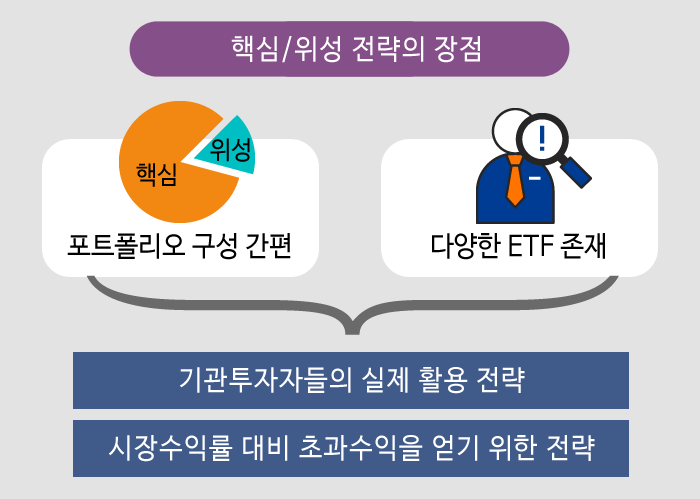
Over-concentrating in specific sector or thematic ETFs increases the risk of significant account fluctuations due to market volatility. In the 2026 market, a strategy that works well is to use representative index ETFs as the core of your portfolio and take aggressive sector bets with no more than 20% of the remaining allocation. While using KOSPI 200 tracking ETFs as a baseline, having a stable dividend yield ensures the portfolio has the fundamental strength to prevent supply and demand from detaching at market peaks. Cases of novice investors who went all-in on specific tech or biotech stocks and suffered losses of over 30% in volatile markets are recurring. A ratio of 8:2 or 7:3, where half the portfolio is filled with a safe basket and the other half with ETFs in areas of personal interest, is psychologically the most comfortable. This way, no matter how much the market shakes, big players will wait for index recovery, and you can naturally benefit from that stability.
3. Monthly Dividend Portfolios and Cash Flow Management

Even before receiving pension benefits, using the distributions generated monthly from listed index funds for reinvestment rather than as cash is the secret to maximizing the compound interest effect. The monthly dividend portfolio emphasized in the recently revised guidebook by Korea Investment Management consists of assets that serve as fixed income sources, such as stock dividends and senior bonds. Even within pension accounts, purchasing monthly dividend ETFs reduces the burden by offsetting part of the funds used for buying at the closing price with dividend income. You must separate the cash flow used for living expenses from the capital used for investment to prevent panic and hesitation during market downturns. For example, if a subscriber contributes 500,000 KRW monthly and receives 300,000 KRW in monthly dividends from existing assets, the effective reinvestment price is lowered. This structure must be maintained for capital to continue growing, and over time, a turning point will arrive where the principal itself begins to generate returns, surpassing the interest effect.
4. Default Options and Setting Investment Tendencies
The most fatal mistake when managing a retirement pension account is leaving the pre-designated management method, known as the default option, untouched. Even when taking over an account previously filled with funds or deposits, you must definitely change it to an option that matches your investment tendency. In the 2026 system, choices are diversified from ultra-low risk to high risk based on investment tendency, so you should not choose high risk solely based on return rates. As retirement approaches, it is necessary to adjust the default option toward lower risk to prioritize principal protection. If you are in your early 30s, it is reasonable to set an aggressive equity ETF portfolio to aim for long-term compound interest effects. The habit of taking a screenshot of the setting confirmation screen after completing an account transfer serves as strong evidence when consulting with a tax accountant or financial planner later.
5. Selective Trading Method Combining ESG Criteria
Using ESG ETFs verified by global rating agencies allows you to achieve responsible investment goals alongside investing in developed countries. While it is difficult for individual investors to check the ESG ratings of individual companies one by one, this is resolved by purchasing funds or ETFs that track these themes. In the 2026 market, companies’ performance in responding to climate change is directly linked to their performance evaluation, so it is wise to gradually increase the weight of related ETFs. This is essentially a bet on the growth potential of companies expected to benefit from cost savings due to reduced carbon emissions. Since asset management companies have already grouped excellent companies that meet these criteria, the risk involved in individual research is significantly reduced. Companies with ESG awareness are better equipped to handle regulatory risks, making them more likely to have solid corporate valuations in the long term.
6. Asset Defense and Action Summary from a Long-Term Perspective
You should start investing when you are afraid, and securing leading stocks to prepare for future large-scale rallies is the hallmark of a pro. To ensure you do not run out of money by age 90, designing a structure that protects your principal should take priority over setting high return missions. The moment you dismantle your principal to cover living expenses, the long-term growth engine stops, so you must solidify the tax benefit and monthly dividend reinvestment structures mentioned earlier. Focusing on the buying criteria and account settings you can do today is a strategy that truly brings you closer to building wealth, rather than engaging in debates about predicting tomorrow’s stock prices. Please try implementing the 9 million KRW tax deduction, increased index tracking weight, and monthly dividend strategy presented in this article in your brokerage app today. Mature ETF investing is built by small daily habits that accumulate to create high-quality asset growth over several years.
The best defense for assets is creating a monthly dividend-based structure that does not touch the principal and thickening your account with risk-free returns from tax benefits.
Frequently Asked Questions
Only after this process is completed is the foundation laid to aim for higher returns with excess funds.
It is also recommended to set up a separate account for dividend reinvestment in the early stages.
If you did not fill the limit this year, you can readjust by paying in advance toward next year’s target amount.
The important factor is securing the total annual contribution amount, not the volatility of assets within the account.
The key is to adjust the ratios to avoid concentrating all funds in a specific sector.
You should periodically check the weights of these two assets to match your investment tendency and planned retirement date.
However, if your investment tendency has changed, this automatic adjustment may lower your expected returns.
In early January each year, you must check the changed default option settings to ensure they align with your strategy.
=