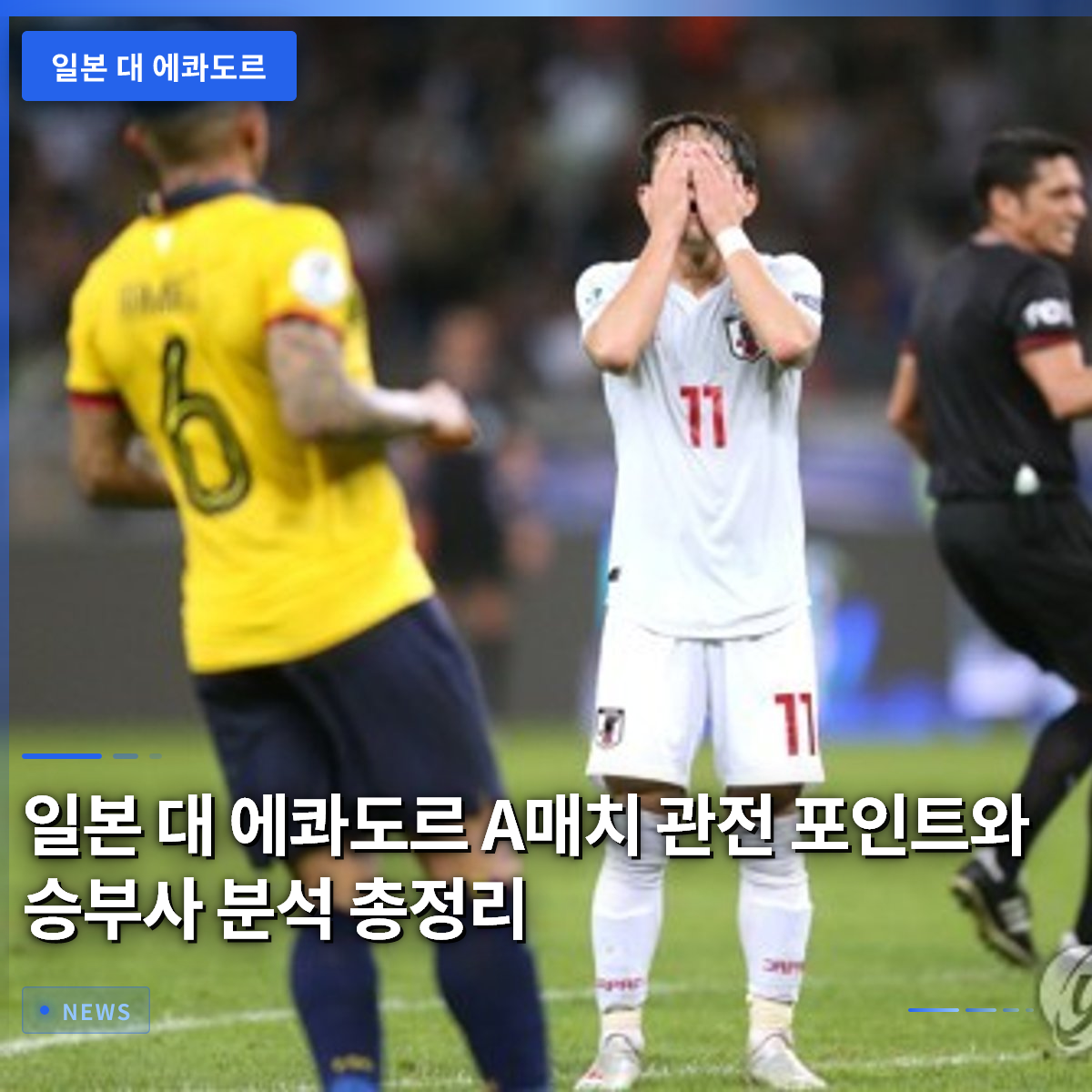
In the clash between Japan and Ecuador, Ecuador holds the upper hand in terms of overall strength, but Japan’s home advantage and their determined play will be significant variables. This match is more than just a friendly; it serves as a crucial stage to test the managerial capabilities of both coaches. The reason Ecuadorian media referred to Japan as a formidable opponent is that it reflects both Ecuador’s confidence following their recent comprehensive victory over South Korea and their acknowledgment of Japan’s resilience. In the Nations League and friendlies last September, both teams experienced a mix of wins and losses, showing fluctuating form. Especially in this match, where rotation is expected, the condition of the starting players and the utilization of bench members will likely determine the outcome. In this article, we will thoroughly analyze both teams’ recent form, key tactics, and the predicted score to provide you with proper viewing tips.
=
Japan vs. Ecuador: Key Match Highlights and Betting Analysis
1. Ecuador’s Three-Back Tactical System and Their Dominant Win Against South Korea
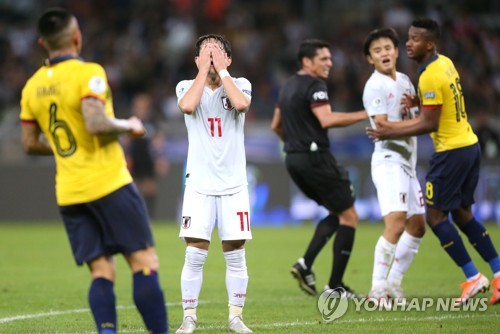
Under the management of Marcelo Gallardo, Ecuador prefers an aggressive three-back system, creating space through bold overlapping runs by the wing-backs. In their friendly against South Korea on September 28, Ecuador utilized this tactic to break down the South Korean defense and secure a 3-0 victory. At the time, Ecuador maintained possession in the midfield with precise passing, forcing South Korea to struggle against their pressing, and they added to their lead with accurate finishing from corner kicks. The confidence behind Ecuadorian media interviews suggesting South Korea is a stronger team than Japan stems from this proven objective strength and results. Much like the Da Vinci principle, even considering all variables, Ecuador’s organized defensive transition ability acted as a barrier that Asian teams found difficult to overcome. Therefore, the key point Japan must focus on in this match is how to defend the wide spaces created during Ecuador’s build-up phase.
Ecuador is armed with high confidence based on their 3-0 win against South Korea and their organized three-back tactical system.
2. Japan’s Crisis Situation and Home Game Determination
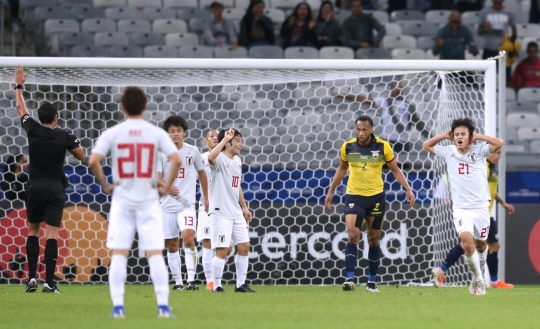
The Japanese national team has also improved their momentum with recent friendly wins, but the defensive instability revealed in their match against Uruguay remains a lingering issue that needs to be resolved. Japan struggled against the powerhouse Uruguay, confirming that their set-piece defense and exposure to space behind the defense are serious concerns. Furthermore, local reports have continued to suggest that key players need condition management and rotation ahead of this match, increasing curiosity about the best XI composition. Within the passionate support of the home fans, there is a strong will within the squad not to lose, which is a crucial momentum to maintain ahead of the World Cup qualifiers. Characteristic of Japanese football, they will maintain a style of shaking opponents with fast-paced pressing and short passing, but they must also add concentration. If the defensive line stretches due to fatigue, there is a high possibility they will suffer fatal damage from Ecuador’s quick counter-attacks.
Japan is in a desperate situation where they must supplement the defensive weaknesses revealed in the Uruguay match and utilize their home advantage to secure a victory.
3. The Core Tactical Battle Deciding Midfield Dominance
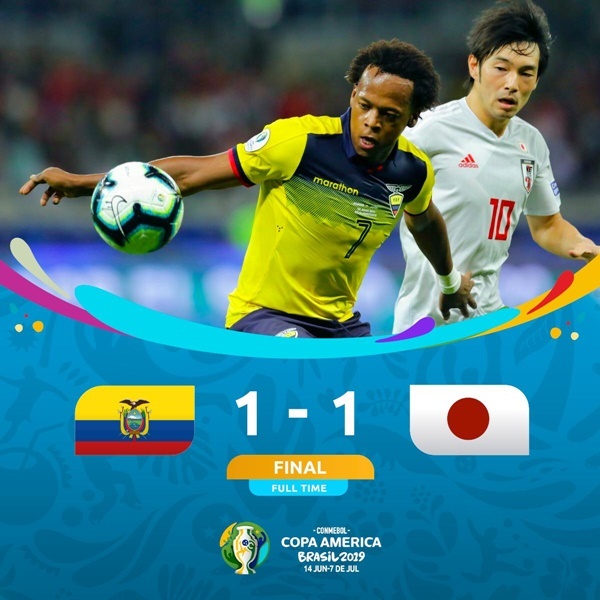
An interesting point is the prediction that both teams will engage in a back-and-forth battle to dominate the midfield. Ecuador’s main characteristic is that their positioned midfielders use a wide field of vision to distribute the ball to the left and right, which has the effect of lowering the opponent’s defensive density. On the other hand, Japan attempts instant transitions with vertical penetrating passes and dribble breakthroughs, making one-on-one duels in the midfield the key. If Japan allows Ecuador to dominate the midfield, they will inevitably lose control of the game and be dragged around for the entire duration. In the past, in various international tournaments, there have been many cases where Asian teams had to hold the ball for a long time in the midfield against South American teams to create chances. Readers should focus on who secures a higher ball possession rate in the midfield, or counting the number of touches by players can also be a good viewing point.
The battle in the midfield will completely change the game, and Japan has a chance of winning only if they can block Ecuador’s build-up.
4. Key Players’ Condition and Rotation Variables
Rotation is an inevitable choice in professional football, but taking on that risk is always like a big gamble. Japan may give opportunities to backup players to prepare for the possibility that some key players cannot play due to injury or poor condition. Ecuador also needs to manage their stamina due to consecutive matches against strong opponents, and there is a sense of a relaxed atmosphere where tired legs are rested to prepare for the new season. In this situation, the ordinary skill gap of bench members can act as the 1% variable that determines the win or loss. For example, it is common in football for a substitute player to score the opening goal within 5 minutes, completely changing the atmosphere on the ground. Fans will find the game twice as enjoyable if they pay attention to small details, such as how the bench players decide the outcome.
Both teams are highly likely to implement rotation, and the utilization and condition of bench members can dramatically change the match result.
5. Predicted Score and Goal Timing Analysis
Statistically, friendly matches between Asian and South American teams played in home stadiums rarely see decisive chances in the first 30 minutes. This is because both managers aim to manage the game smoothly, prioritizing condition management to prevent unfortunate incidents. Therefore, as the match enters the last 30 minutes, differences in stamina will emerge, and players who can move quickly at that time are likely to bring about changes. In particular, Japan is known to have trained extensively on set pieces from corner kicks and free-kick spots towards the end of the second half. Ecuador’s three-back structure may be vulnerable to such situations, making the importance of set-piece training even greater. A 1-1 draw or a 2-1 home victory for Japan appears to be the most likely scenario.
Set pieces and the second-half stamina battle will be the turning points, and Japan is projected to continue their unbeaten run with a 2-1 advantage.
6. Audience Experience Tips and the Future World Cup Journey
This match will be a final check-up for both teams heading towards the 2026 World Cup finals, going beyond a simple win or loss. When choosing your seat in the stands, it is advisable for those sensitive to vibration to avoid the North or West stands. Sitting near one of the goals can tire your eyes due to tracking the ball, so sitting closer to the center is optimal. Before and after the match, the cheering culture created by the passionate fan bases of both teams can become a work of art in itself. In particular, the orderly cheering style of Japanese fans acts as a distinctive and attractive element compared to other regions. If the two teams meet again in the World Cup finals, today’s match will serve as a decisive indicator. If you plan to visit the stadium in person, we recommend bringing a long-sleeved top to wear.
This match will provide important data for future World Cup group stage draw compositions or tactical changes.
Frequently Asked Questions
=