ETFs are the most reliable long-term tool for maximizing compound interest and growing assets. A key change in 2026 is that accessibility for individual investors has increased significantly due to a substantial rise in designated funds. The goal is not simply to pick stocks that are rising in the market, but to ride the upward trend of the entire market. While many are saying they are exhausted, this slump is actually cited as an investment opportunity for the future. In this article, we will specifically examine the main types of ETFs listed on the Korean market and the criteria for selecting them. We will also share tax-saving tips for utilizing ETFs within retirement pension and pension savings accounts. We will explain the confusing product structures in an easy and approachable way, so reading to the end will definitely be helpful.
=
The Complete Guide to ETF Investing: Practical Strategies for 2026 and Tax-Saving Pension Tactics
1. Basic ETF Concepts and Trading Principles Beginners Must Know
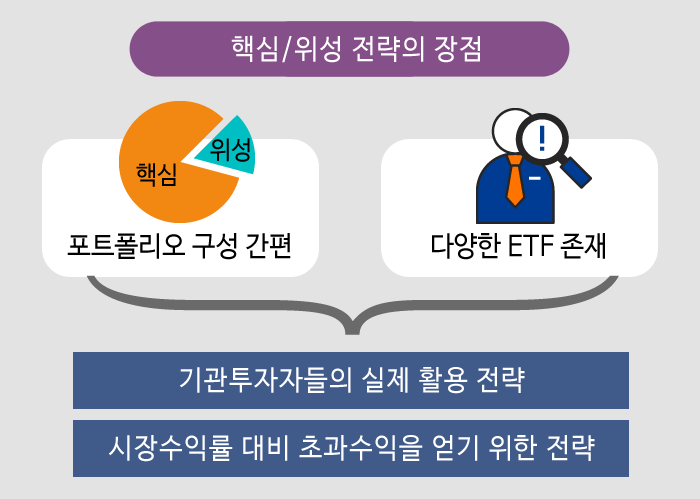
The greatest advantage of ETFs is their high liquidity and low transaction costs. This is because they are structured to generate returns based on the fluctuations of a broad index rather than buying stocks of a specific company. This significantly reduces the risk of failing to realize profits that can occur with individual stock investing. Another attractive feature of ETFs listed on the Korea Exchange is the ability to diversify investments across various domestic and international assets. For example, if you simply want to gain exposure to the U.S. stock market, buying a single ETF that tracks the S&P 500 index is sufficient. Since you can enjoy the benefits of diversification with large-scale capital, even small investors can invest like professionals managing large assets.
However, blindly believing that all ETFs yield the same returns can lead to major setbacks. You must always check the tracking error, which is the divergence between the target index set by the fund manager and the actual index. The larger this error, the more expected returns decrease from the investor’s perspective, so it is better to prefer products with low tracking errors. Additionally, you should pay attention to the number of listed shares and the trading volume relative to the total listed shares. If trading volume is low, it may become difficult to buy, sell, or realize profits due to wide bid-ask spreads, so caution is required. The most common mistake made by beginners is trying to diversify by buying too many different types of ETFs.
You must check the tracking error and liquidity of ETFs, and you should not buy an excessive number of stocks relying solely on the simple diversification effect.
2. Strategy for Selecting Major Thematic ETFs Suited to the 2026 Market Conditions

Technological innovations in semiconductors and artificial intelligence continue to be the driving force behind global stock markets. News of Samsung Electronics expanding its capital investment is expected to lead to increased sales for related equipment stocks. However, buying thematic index ETFs is safer than investing directly in individual semiconductor equipment stocks. This is because other stocks within the index act as a defensive barrier even if a specific company’s management risks or performance fluctuate. Looking at past cases, while individual stocks often experience sharp rises followed by crashes, index ETFs have drawn a smoother upward curve.
However, because thematic ETFs are highly volatile, timing is very important. Experts recommend securing a position in leading sectors during the current correction phase. This is because it allows for a quick recovery and proactive response in a future bull market. Nevertheless, it is strictly forbidden to put all your funds into one place. You should appropriately adjust the technology allocation within your portfolio and allocate the remaining funds to stable assets. In today’s environment of high market uncertainty, a balanced approach that protects assets while keeping opportunities open is essential.
Diversified investment in 2026 semiconductor and AI-led themes should strike a balance between preparing for a correction and securing a position for a bull market.
3. Utilizing Monthly Dividend ETFs and Covered Call Structures for Stable Returns

A growing number of investors are paying attention to monthly dividend ETFs for a steady monthly cash flow. This strategy is essential, especially for those approaching retirement or those who want to supplement their living expenses. It is rational to use distributions either to increase compound investing or for consumption. Interest is so high that major asset management companies, such as Korea Investment Management, have recently published monthly dividend portfolio guidebooks. This is significant because it presents a model for asset growth through dividend reinvestment, rather than just providing dividends.
Covered call ETFs, which utilize betting options, are also suitable for those seeking steady monthly rental-like income. However, they have the drawback of limited upside potential and reduced returns when the index surges. Therefore, you must establish your own criteria for judging market direction. If you are confident that the stock market will rise significantly in the future, it is better to invest in general leveraged or zero-cost ETFs instead of covered calls. Conversely, the defensive power of covered calls shines when a sideways market or a slight decline is expected. It must be designed precisely according to your investment style and time horizon.
Monthly dividend and covered call ETFs should focus on cash flow stability, accepting the possibility of opportunity loss in a bull market as a trade-off.
4. Maximizing Tax-Saving Effects When Combining Pension Accounts with ETFs
Managing ETFs within a pension account allows you to enjoy the powerful advantage of tax deductions. This effectively means getting a tax refund up to the maximum limit for your income bracket during the year-end tax settlement. This results in a significantly higher real return rate compared to a general securities account. For those concerned about principal loss, a strategy of including index ETFs as stable assets in a pension account is recommended. This allows for a perfect asset allocation structure alongside individual investment government bonds.
If you have a DB-type retirement pension, there is a portion of personal savings managed by the individual, separate from the assets managed by the company. We recommend including large-cap index ETFs in this portion to aim for aggressive growth. Since it is treated as pension income and subject to separate taxation upon receipt, the tax burden is low. However, pension accounts have the characteristic that it is difficult to withdraw funds before age 55 after contribution. Therefore, be sure to keep emergency funds for liquidity in a general account. It is wise to transfer only surplus funds that can be invested long-term into a pension account.
ETF investment in pension accounts should be designed on the premise of long-term funds to fully utilize tax deductions and tax-exempt benefits.
5. Portfolio Composition and Risk Management Principles by Investment Style
To overcome fear of investing and achieve sustainable returns, portfolio diversification is key. You must divide equity, bond, and cash assets in appropriate proportions. Generally, beginners often set the equity ratio too high, leading to panic selling during sharp declines. It is important to understand your risk tolerance based on your age. The basic principle is to increase the ratio of equity ETFs when young and raise the ratio of bonds or cash as you age.
In practice, automated investment systems or the DCA (Dollar-Cost Averaging) method of buying a fixed amount regularly is effective. For beginners who find it difficult to judge whether to buy at a low price due to market fear, this method minimizes risk. It is also a good habit to leave a buffer zone to prepare for unexpected market fluctuations. For reference, many asset management companies provide customized guides by age and family composition, so use them as a reference. Rather than blindly following, you need to tune the ratios to match your capital size and target amount. This structural diversification is the most certain way to reduce fear.
You can manage risk by determining asset allocation ratios suitable for your age and investment purpose and following mechanical investment rules.
6. Market Outlook for Late 2026 and an Immediate Action Guide
A cautious rebound is anticipated in the Korean stock market in the second half of 2026, driven by inflows of foreign capital. After several years of correction, valuations have dropped to attractive levels. It now seems possible to prepare for a bull market by securing leading stocks. However, since not all assets will rise evenly, a selective and focused approach is necessary. To seize this opportunity, log in to the exchange immediately and check the recent dividend status of ETFs you are interested in.
Create a checklist today and try registering for a regular investment in at least one stock tomorrow morning. Small beginnings create big changes, more so than complex strategies. It is also good to re-examine your investment style and seek consultation if necessary. The most important thing is to decide on the type that suits you among the index, thematic, and monthly dividend types introduced in this article and take action. Knowing it only in your head will yield no results. It is the small actions you take now that will change your asset situation ten years from now. Please fasten the first button without hesitation.
The 2026 correction market is an opportunity to secure leading sectors, and you should increase execution through small regular investments.
Frequently Asked Questions
=