While online auction sites are accessible to everyone, many people waste time and money due to poor site selection. As of 2026, the availability of accurate sale dates and rights relationship analysis data is the core criterion for choosing a site. It is not enough to simply have a large number of listings; what matters is whether the site quickly provides information tailored to your region and the specific procedures involved.
Based on actual bidding experiences, this article summarizes the characteristics and precautions for each site. In particular, it guides you through the process of preparing for a safe first bid, including common rights analysis errors made by beginners and how to prevent them.
=
How to Choose an Auction Site in 2026: Tips for Comparing Fees and Safety
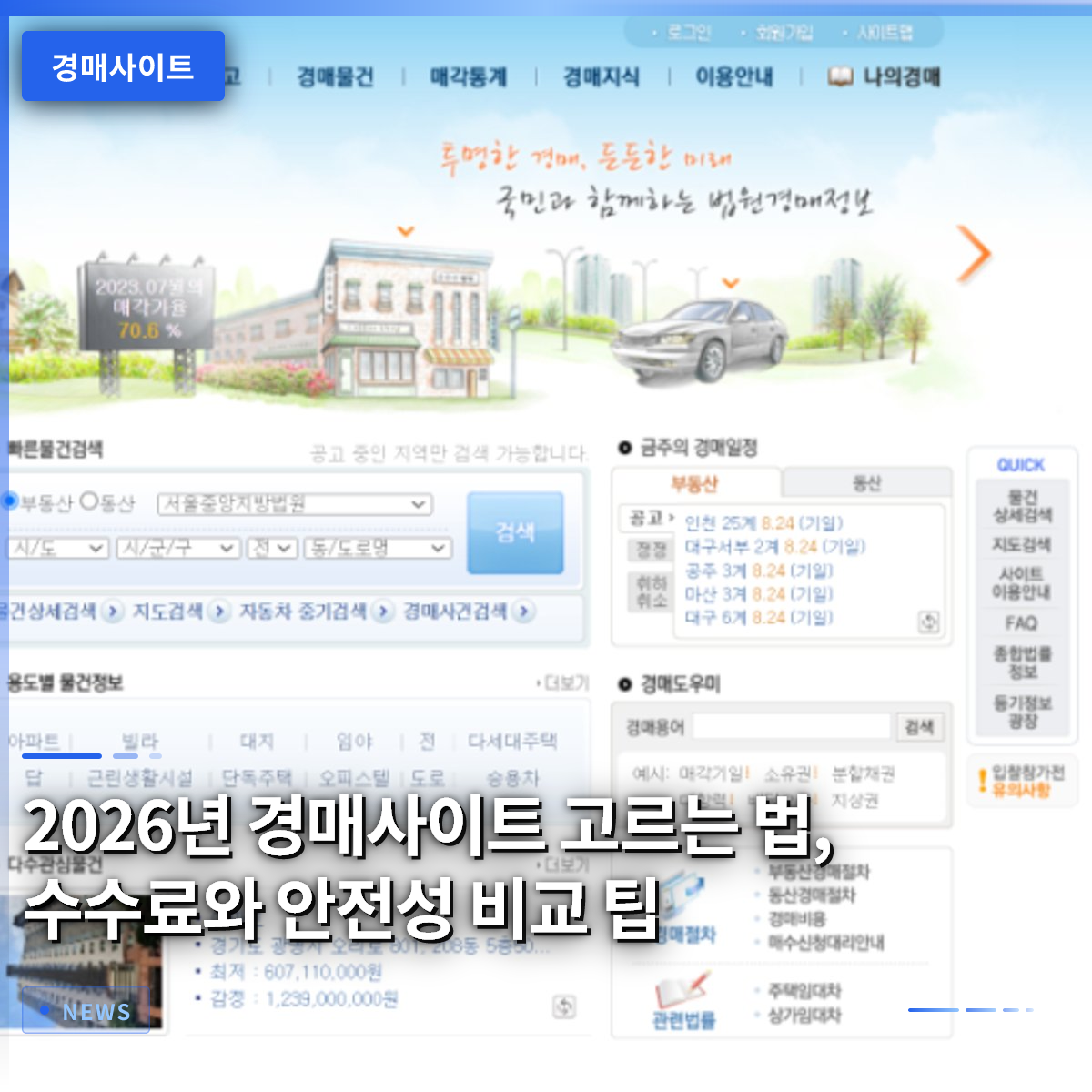
1. Why Free Searches Have Limitations

Free auction guide sites only display basic status information. Most require paid membership for detailed rights analysis or access to past winning bid cases. It is rational to use free features to explore properties initially and consider a paid contract once you have identified a property of interest.
The current market features a mix of annual fee structures and monthly subscription models. You should select the most cost-effective option based on how many properties you plan to sell. Be cautious of joining sites that are overly cheap, as they may lack necessary legal verification data. Please carefully compare the included contents.
2. Essential Checklist for Safe Transactions

The first criterion for determining if a site is trustworthy is whether it is officially registered. Since court auction procedures follow strict legal formats, dealing directly with unauthorized agencies carries risks. You must use certified channels that adhere to court bailiff office guidelines or verified data providers.
The second element to check before bidding is the “trend of winning bids compared to appraised values.” Sites that provide winning bid cases for the same complex over the last six months help you understand fair market prices and competitive psychology, reducing errors made by beginners who rely solely on appraised values. You should also consider whether the site provides detailed information, such as the status of jeonse (deposit) loans for individual properties.
Verifying official registration and accessing recent winning bid data are the two pillars of site reliability.
3. Checking Fee Structures and Hidden Costs

The fee paid upon a successful auction is the price for protecting your assets. Generally, sites charge a percentage of the winning bid or a fixed amount, but this varies significantly by site. A low fee rate is not necessarily better; you should check if consulting or legal advice is included.
Additional expenses include costs for issuing registry copies and service fees. Determine in advance whether the site pays these on your behalf or if you need to visit the bank directly. To prepare for complex document preparation processes, it is convenient to choose a site that offers robust automation services or guidelines.
4. Pitfalls Beginners Should Avoid
You should avoid most sites that promise “guaranteed low-price winning bids.” Real estate auction results vary depending on local demand and rights relationships, so marketing tactics guaranteeing uniformly low winning bids are not trustworthy. Choose sites with a track record of actual cases and reviews rather than exaggerated marketing phrases.
Be cautious of methods that induce you to target specific properties through private communities or SNS groups. Information obtained through such channels can be biased and often leads to rushed bidding while skipping proper rights analysis. It is safest to base all judgments on public court data and on-site verification.
5. How to Utilize Region-Specific Information
Auction market trends in the metropolitan area and the provinces are entirely different. The Gangnam area in Seoul has fewer winning bids and fierce competition, while small and medium-sized cities in the provinces have more failed auctions, potentially leaving room for negotiation. If a site offers a feature that displays statistics exclusively for the region where you live or plan to invest, make full use of it.
Recently, regardless of popular regions, data on changes in resident population and vacancy rates for specific complexes are also provided. This micro-level data reveals actual demand prices that cannot be discerned through simple per-pyeong price analysis alone. Developing the habit of downloading and comparing winning bid statistics for the last year by region will speed up your decision-making process.
6. Preparations You Can Start Immediately
Before joining a site, prepare a check card and ID in your name. These may be used for withdrawing bid deposits or paying for specific services. Additionally, checking your credit score and loan eligibility at a bank in advance makes it much easier to calculate your bid price based on the appraised value.
On your first day of access, postpone complex analysis and focus on becoming familiar with the list of complexes and the concepts of rights relationships. For the first month, engage in observation-centric activities and check your satisfaction with the site before making a serious bid; this is the path to lowering the probability of failure. Utilizing a free trial period to start without pressure is also a good method.
Frequently Asked Questions
=